



Does Checking Experts with AI Undermine Trust in Them?
Automatically translated
The number of people who go to a doctor and then, as soon as they get home, type the same question into ChatGPT is growing quickly. New research suggests this behavior is not just a reflex to get a "second opinion." In particular, a study shared by Monash Business School shows that the habit of checking with AI seriously strains the trust relationship with human experts. What is most striking is this: experts are now less bothered by being wrong than by being compared with AI.
Why Has Checking with AI Become a Global Debate?
Two years ago, going to a doctor and saying "But ChatGPT said something different" would have seemed somewhat unusual. Now, especially among tech-savvy users, it has become an almost standard reflex. People compare expert opinions with large language models not only in health, but also in law, finance, software, psychology, education, and even academic advising. The issue is not just about seeking accuracy. People no longer treat expert knowledge as the "only source."
That is exactly why "checking with AI" has quietly turned into a new culture. In particular, the fact that models like ChatGPT, Claude, and Gemini respond in conversational language creates the feeling that "this system really knows." Technically, these models are statistical prediction machines, but they have a different psychological effect on users. The model does not just answer you; it speaks confidently, offers alternatives, elaborates, and creates the feeling that it is listening to you.
A critical shift has happened here. In the past, expertise was hard to access. Now there is a system on your phone that synthesizes dozens of sources in seconds. People naturally started to think: "If I have such a tool, why should I rely on just one expert?"
This is where the real problem begins. Expertise is not only about producing information; it is also about building trust. A doctor's diagnosis, a lawyer's interpretation, or an academic's assessment is not just technical data. It also represents years of experience, ethical responsibility, and professional authority. The behavior of checking with AI directly questions that authority.
The research covered by TechRadar examines exactly this rupture. One of the statements in the report is particularly notable: some experts say they feel that when patients verify their advice with ChatGPT, it is like being "slapped in the face." This is because it is not only a "checking" behavior; it also carries a message that questions the expert's competence.

What Does the Monash Business School Research Say?
At the center of the research is a simple but impactful question: how do experts feel when people verify their professional advice with AI?
Researchers at Monash Business School focused in particular on professionals working in trust-based fields such as health, law, and consulting. The picture the study reveals is not surprising, but it is quite harsh. Human experts mostly perceive AI-based verification as a sign of distrust.
One of the most important points in the research is this: experts acknowledge that they can make mistakes. What bothers them, however, is not the possibility of error, but the fact that people are turning the expert relationship into an algorithmic approval mechanism.
Think of a doctor. They have been trained for years, gained clinical experience, and seen hundreds of cases. Their patient, a few minutes after the appointment, types the symptoms into ChatGPT and asks, "My doctor said this, is it right?" Technically, the patient may be acting out of a conscious consumer reflex. But on the expert's side, this is read differently. For the expert, the message is: "I don't fully trust you."
The research examines exactly this psychological rupture. It is notable that younger users in particular see AI systems as "neutral" and "unbiased." Human experts, by contrast, are seen as actors who may be driven by emotional, commercial, or personal motives. This has begun to completely reverse the concept of digital trust.
In the past, people approached technology with suspicion. Now some users trust artificial intelligence more than human experts.
One of the most striking results of the research is this: checking with AI damages the expert-patient relationship not only psychologically but also communicatively. Experts now feel a constant need to defend themselves. In the health sector, this can lead to more aggressive and more distant communication patterns.
Here a very critical ethical question arises: is artificial intelligence truly a helpful tool that supports human expertise, or is it a new form of oversight that erodes the authority of expertise?
"Asking ChatGPT Feels Like a Slap"
One of the statements in TechRadar's report went viral in many places online. Some experts who took part in the research say that when patients verify with ChatGPT, it feels like a "slap in the face."
This phrase may seem exaggerated at first glance. But from the perspective of the psychology of expertise, the situation is quite understandable. Expertise is built not only on technical accuracy. It is also built on authority, trust, and professional respect.
This is especially clear in the doctor-patient relationship. Directly comparing a doctor's recommendation with an AI system can create the feeling on the expert's side: "The value of the years of effort I have put in has been reduced to the level of a few seconds of chatbot output."
In fact, there is another transformation the tech world has experienced for a long time. People now prefer "cross-checking from different sources" over "consulting an expert." Reddit, YouTube, forums, and TikTok videos have been followed by ChatGPT in this chain.
But ChatGPT's difference is this: the system speaks to you in an extremely convincing way. That is why people often forget the possibility that the model produces incorrect information.
One of the most dangerous aspects of AI systems begins here. Even a model suffering from hallucinations can appear extremely confident. The human mind, however, often interprets confident delivery as "expertise."
In particular, a large portion of younger users now go directly to an AI chat screen instead of doing a Google search. This causes the authority of expertise to transform in a very different way than in the classic internet era.
How Is Digital Trust and Perception of Expertise Changing?
The change happening here is not just a technology story. It means that the trust architecture of modern society is changing.
For many years, the model of accessing information was quite clear. People went to experts. The doctor was the center of health information. The lawyer represented legal knowledge. The academic was the authority in producing knowledge. The internet partially changed this system but did not completely break it.
Large language models, however, did something different for the first time. They not only made information accessible; they made it conversational.
This is a critical difference, because people are no longer just reading information; they are conversing with it.
It is at this point that the concept of digital trust has begun to take a new shape. Users no longer judge expertise only by diplomas or experience. Speed, explanatory power, accessibility, and personalization are also becoming criteria for trust.
For many users, AI systems appear more patient than human experts. They do not judge, do not scold, do not keep you waiting, and they simplify complex language. In health especially, this is felt very clearly. People sometimes feel they can get from ChatGPT the explanation they could not get from their doctor.
But a large illusion also forms here. A model's calm and detailed speech does not mean that its answer is correct.
MIT Technology Review and Stanford HAI reports contain similar warnings. In particular, they note that users confuse "persuasive language" with "accuracy." This could create much bigger trust problems in the future.
Because for the first time in human history, millions of people are drawing their sense of authority not from a biological expert, but from a probabilistic algorithm.
Why Are Doctors, Lawyers, and Academics Uneasy?
Health is among the fields where the culture of checking with AI is felt most sharply. This is because the health system has been experiencing a trust crisis for years. Patients complain about short examination times, lack of communication, and overcrowding. AI systems fill this gap psychologically.
In some doctor forums in America and Europe, there are notable comments. Some physicians now say that patients come to appointments carrying ChatGPT output. Some users even openly state that they find the model's recommendation more reliable than the doctor's opinion.
A similar situation is happening in law. Instead of paying lawyer fees, people first consult ChatGPT. In academia, students receive research suggestions from AI systems instead of from their advisors.
The main reason experts are uneasy is not only the "fear of being replaced." It is also the feeling that their expertise is being devalued.
Because even though AI systems do not seem to produce information, on the user side they create the perception of an "assistant that knows everything." This psychologically pushes human expertise into the background.
The irony is that many experts also actively use AI. Doctors have it summarize reports, programmers have it write code, and academics have it do literature reviews. So the issue is not AI use. The issue is who holds the authority of expertise.
AI Ethics Debates Have Entered a New Phase
For a long time, debates about AI ethics revolved mainly around data privacy, copyright, and model bias. Now a much more social debate has begun: is AI damaging human relationships?
This question is especially important because large language models are no longer just tools; they have become mechanisms for building relationships.
People write to ChatGPT when they feel lonely. They consult AI when they cannot make a decision. They seek career advice. They look for psychological support. Some users even say they have developed emotional bonds.
Expert relationships are affected too, because the human mind constantly makes comparisons. If an AI system appears faster, more explanatory, and more accessible, users naturally make it their reference point.
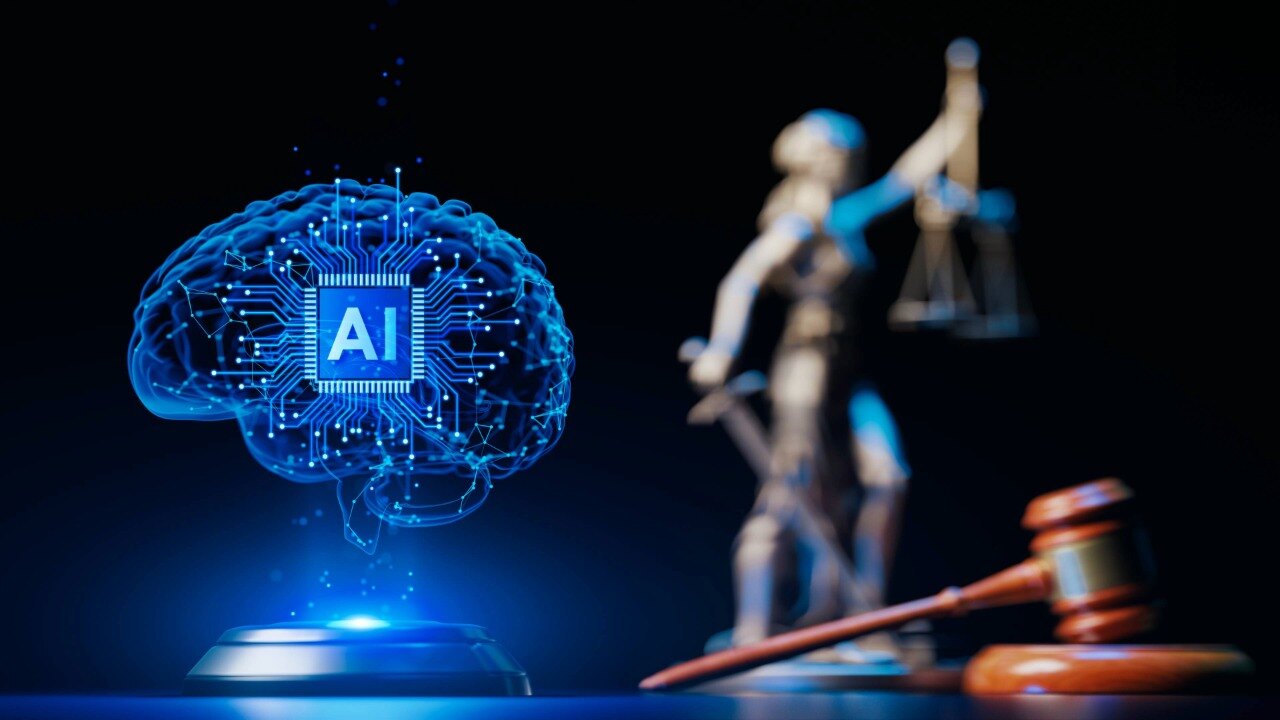
This risk is increasingly discussed in ethics documents published by OpenAI, Anthropic, and Google. In particular, the problem of "excessive trust" is one of the biggest fears of technology companies.
Because serious consequences can arise when users begin to forget the limits of a model.
For example, in health, incorrect AI recommendations can directly create physical risk. In law, misguidance can lead to serious financial losses. In finance, people can make investment mistakes based on unverified suggestions.
So the issue is not only "Is AI right or wrong?" The issue is how much people have started to trust AI.
Is Checking with AI Really Safer?
To be honest, there is no one-sided picture here. In some cases, checking with AI can indeed be useful. For example, large language models offer a real advantage for simplifying complex medical terms, seeing different views, gathering information quickly, or getting a second perspective. Especially for users with low health literacy, AI systems can sometimes explain in an understandable way what a doctor was unable to explain.
The problem, however, is that people are starting to lose the difference between a "helpful tool" and "final authority." AI systems can make mistakes. Moreover, they make these mistakes in an extremely convincing way. This is where the danger lies. When people saw different sources in a Google search, they were skeptical. On an AI chat screen, they see a single, fluent answer. This creates a psychological sense of certainty.
User Behavior Is Changing Rapidly in Turkey
In Turkey, this transformation is moving much faster than one might expect. In particular, the younger user base has begun to abandon classic search engine habits.
Many people write directly to ChatGPT:
"What does this medicine do?"
"Is this contract safe?"
"Why is this code giving an error?"
"Is this investment reasonable?"
Especially for people working in technology, software, and content production, AI has now become central to daily workflows.
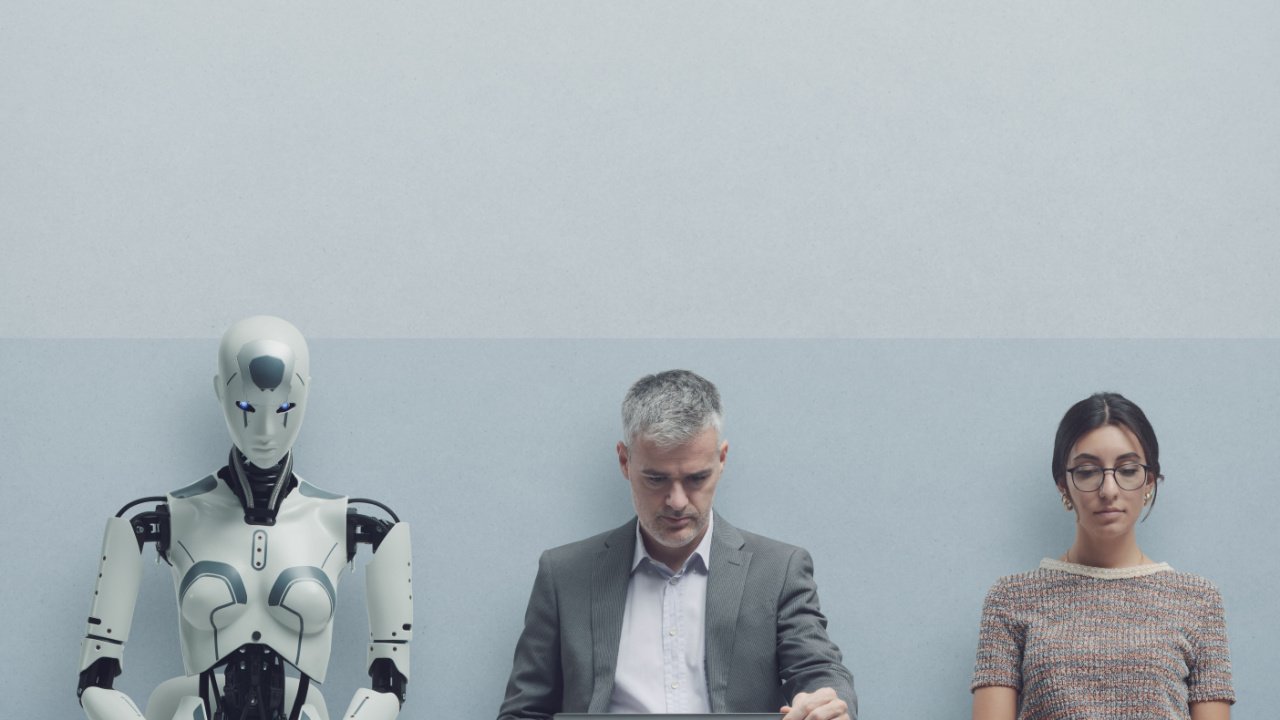
Another notable situation in Turkey is that people sometimes turn to AI because expert access is difficult. Private health fees, legal consultation costs, or educational inequalities push users toward free AI systems. That is why reading AI-based verification only as "distrust" is incomplete. Sometimes the issue is accessibility. But in the long run, a serious cultural transformation may take shape here. The new generation is building the reflex of reaching information through algorithms rather than human experts. This appears likely to directly affect the education system.
Is the Age of Expertise Ending, or Is It Being Redefined?
To be frank, the claim that "AI will replace experts" is rather superficial. What is happening now is more complex. Expertise is not disappearing entirely. It is changing form. In the past, simply having knowledge was valuable in itself. Now everyone can access information. So in the future, what will be valuable is not only information, but interpretation skills, experience, ethical responsibility, and the ability to build context. In other words, what makes a doctor valuable will not just be making diagnoses, but being able to read complex human situations.
What makes an academic valuable will not just be transmitting knowledge, but being able to develop ideas. What makes a software developer valuable will not just be writing code, but being able to design system architecture. In fact, in the age of AI, expertise is not ending. It is only ceasing to be mere "raw knowledge authority." I believe the most critical psychological rupture in the tech world is happening here too. Humanity is living, for the first time, with systems that do not produce knowledge but act as if they are providing it. This naturally transforms the perception of expertise as well.
Do People Now Trust Experts or Models?
Right now, the same question is being debated in many parts of the world: do people really trust AI, or do they turn to it simply because it gives quick answers? The real answer is probably somewhere in between.
People no longer adhere to the idea of absolute authority as they once did. The era of unquestioningly trusting a single doctor, a single academic, or a single source has largely ended. AI systems have accelerated this transformation. But a crucial truth must not be forgotten here: an AI being persuasive does not mean it is correct. Over the next few years, the biggest battle in the tech world will likely not be model performance, but a battle of trust. Rather than the race to build the smarter model, the question of "which system will people trust?" will become decisive. And the interesting part is this: perhaps the most valuable experts of the future will be people who can still build trust despite AI.
Frequently Asked Questions (FAQ)
Is Checking with AI Wrong?
No. Getting a different perspective can be useful in most cases. However, it should be remembered that AI systems can make mistakes. Especially in fields like health, law, and finance, AI outputs should not be used alone as a decision mechanism.
What Does the Monash Business School Research Examine?
The research examines the psychological impact on experts when people verify expert opinions with AI systems such as ChatGPT. It focuses in particular on the trust relationship and perceptions of respect.
Will AI Replace Experts?
Not entirely in the short term. However, it is transforming the form of expertise. Experts who can use AI are expected to have an advantage in the future.
Why Are Doctors Uneasy About Being Compared with ChatGPT?
Many experts perceive it as a sign of distrust. In addition, equating years of professional experience with chatbot responses can cause psychological discomfort.
In Which Fields Is Checking with AI Becoming Widespread?
AI-assisted verification behavior is spreading rapidly in health, law, finance, software development, academic research, and education.
Why Does AI Sometimes Give Incorrect Information?
Large language models are not truly "knowledge-holding" systems. Because they are language prediction models working with probability calculations, they can sometimes produce hallucinations.
Yapay Zeka Pazarlama İçerik Üretimini Dönüştürüyor!

Teknoloji ve Kariyer Staj İlanları | 25-31 Mayıs 2026


