Can AI Crop Bitcoin? New Tehdi before Q-Day Tags
Automatically translated
 Writer
The warning of the etherium foundation researcher’s AI and quantum computers on crypto money security was put on the agenda for Bitcoin’s future discussions. Bitcoin takes advantage of cryptographic methods to verify transactions and protect the ownership of digital assets. These systems are designed to prevent mathematical problems in reasonable time. But the increase of AI-supported attacks developments in quantumIncreases question points on how existing security approaches are maintained in the future. People who are interested in the subject may break Bitcoin with artificial intelligence.

Crypto world has been seeing quantum computers as the largest threat for years. Now this threat has a new opponent: Artificial intelligence. The Etherium foundation researcher Justin Drake has found a warning that artificial intelligence-supported breakthroughs can break before Bitcoin and Ethreium’s signature chart. At this stage, the main threat is the possibility of direct targeting some cryptographic algorithms of artificial intelligence.
What is Q-Day? Why Important for Bitcoin?
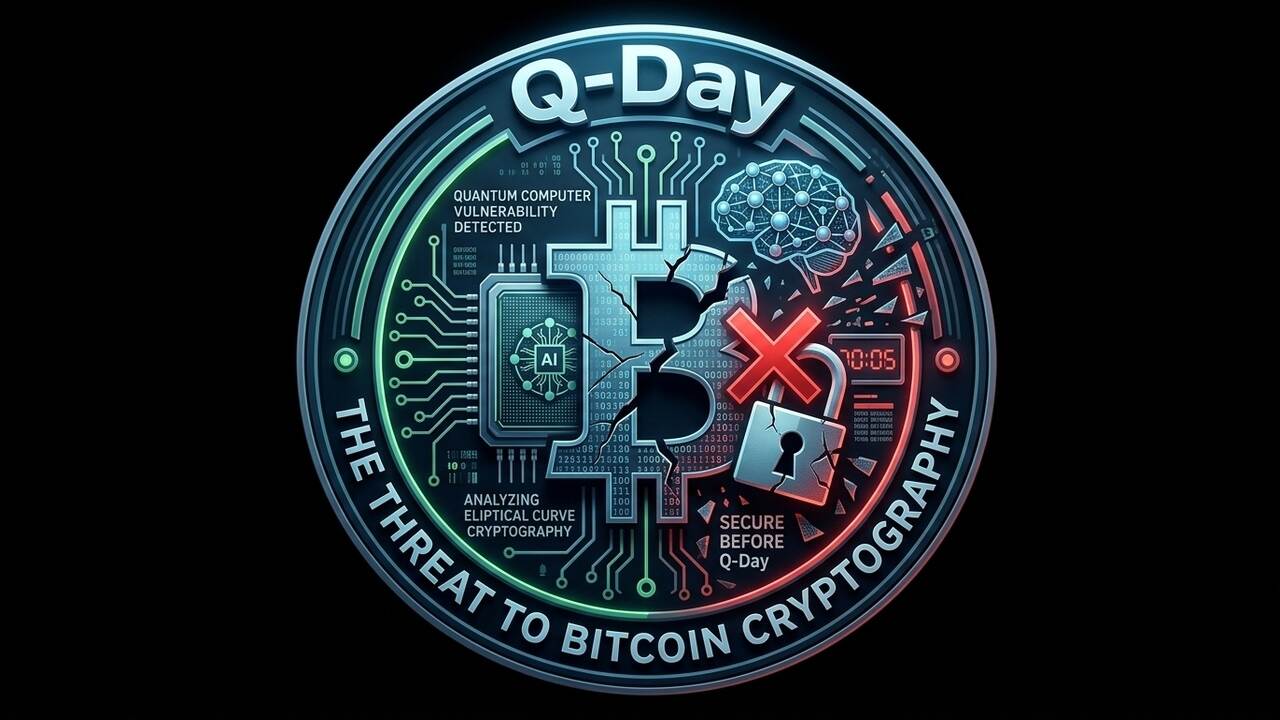
Q-day refers to a assumptional era that a powerful quantum computer can break some open-key encryption and digital signature systems that are widely used today. This concept is actually discussed for a long time in the world of crypto assets. Because bitcoin transactions work with digital signature system to verify that they are authorized by certain private key owners. Bitcoin’s cryptography security provides a strong protection for computers used daily. However, a quantum computer that reaches a sufficient level can overcome the firewalls of this system.
For a long time, a problem of 2030 years was considered, this date was highlighted recently. Google points 2029 for Q-Day. If the new alert makes it different, the artificial intelligence, the quantum computer before the problem without ready. This situation carries new size to Kuantum bitcoin discussion. Therefore, it is necessary to take the threat of quantum seriously.
What Does Ethereum Foundation Researcher Understand?
The Ethereum Foundation researcher Justin Drake invited to stay in bunker mode by calling the sector in the share he made from the X account. Bunker mode is called a proposed fund handling and security strategy for the protection of existing cryptocurrency wallets and elliptical curve cryptography (especially ECDSA). According to the researcher, the ECDSA signature scheme is quite likely to break before Q-day. Drake said that it can happen in months not years, given the worst scenario.
The main issue can adapt how quickly the crypto money networks can adapt if future quantum computers reach the current digital signature system. The role of artificial intelligence in this process stands as a chance to speed up research, attack development stages. Home AI and quantum m technology is misleading to detect as the same technology. Moreover, this two technologies can facilitate future improvements. In order to achieve the conclusion that Bitcoin can be broken directly, the algorithms need to separately examine the hardware capacities.
Effect of Artificial Intelligence to Bitcoin Safety
Artificial intelligence stands out as a factor that can change timeline in crypto security discussion. When waiting for hardware maturation for quantum threat, artificial intelligence can only combine with software and existing gpu power. According to Drake’s explanations, leaps in mathematical field increase the risk of rapid emergence of cryptographic attacks. The effect is not only limited to technical levels. The risk of artificial intelligence creates preparation pressure in a wide area from wallet management to protocol road maps. Despite this, experts remind that artificial intelligence does not have a proven attack for today to break ECDSA. The risk manifests itself in the form of preparation and incertainty.
What Can Quantum Bitcoin Risk Affect Wallets?
When the quantum bitcoin risk is evaluated, the open key status is highlighted as an important element. Open key in Bitcoin transactions can appear in some addresses. A strong quantum computer can work to produce special switch from this open switch in the appropriate environment. On the other hand, all bitcoin addresses do not pose the same risk. It may create different situations in terms of quantum attacks to be clear key visible in addresses that have previously done open transactions. Therefore, infrastructure operations should be evaluated as different stages.
Bitcoin’s hash functions can be affected by quantum calculations, but this effect does not mean distortion of signature systems. Bitcoin mining or network security does not give results as they are eliminated by one reason or by move.
Can Bitcoin Protect itself against Quantum Threat?
Bitcoin developers and cryptography experts evaluate quantum-resistant cryptographic methods against quantum threats that may arise in the future. Drake’s shallow mode recommended(bunker) gradually open switch contains no unopened addresses. The basic strategy for Bitcoin is to keep assets only in the addresses that have never been spent on the coins. Justin Drake also adds that the transition to a hurry can also damage the benefit.
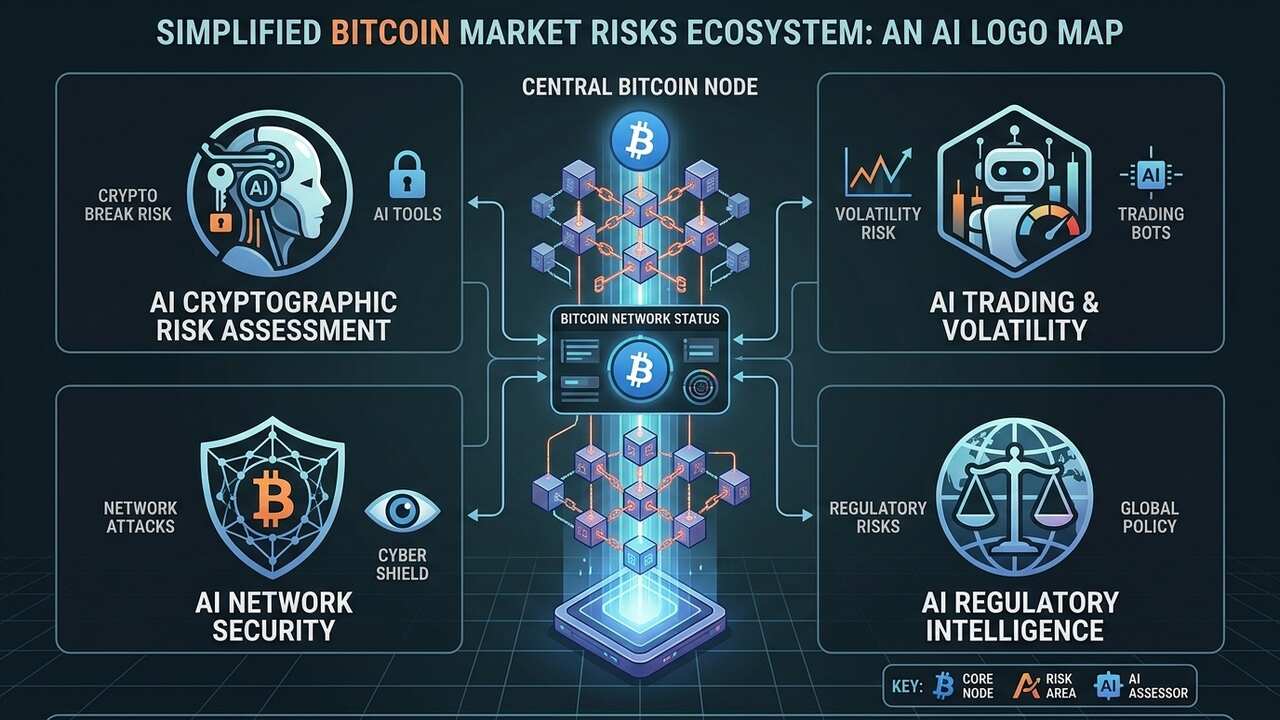
The available information does not show that artificial intelligence may break bitcoin cryptography alone. On the other hand, cyber attacks supported by artificial intelligence appear highly the potential for creating threats for users today. The risks that may occur in the long term emphasize that the bitcoin ecosystem should be prepared.
Can AI Crop Bitcoin? Frequently Asked Questions
1. Can artificial intelligence break Bitcoin?
There is no proven practical attack for today. Ethereum Foundation researcher Justin Drake warns that artificial intelligence-supported math advances can weaken the ECDSA signature chart used by Bitcoin and Ethereum before Q-Day.
2.What is Q-Day?
Q-Day is the moment the quantum computers have the power to break the encryption systems used today. Google points 2029 for this date. Drake sees 10 percent or higher the possibility of Q-Day to 2032 percent.
3. What does “Spot mode” mean?
This approach that Drake recommends contains gradually open switch of funds yet unopened addresses. In Bitcoin, this means that it has only received coins and keep assets in unpaid addresses. Drake also warns that a transition to be done with a hurry can damage.
4. What is the solution?
Drake defends acceleration of transition from SHA or BLAKE family to hash-based cryptography based on summary functions. Ethereum Foundation founded a team after quantum at the beginning of this year and plans to be ready around 2029 of quantum safe infrastructure.
Writer