



DeepSeek Draws Attention With Its Open-Source AI Model
Automatically translated
 Writer
Chinese AI company DeepSeek is making a name for itself with its open-source approach and low-cost models. It has also drawn attention with the large language models it has released recently in the AI race. DeepSeek is not only producing high-performance outputs; it is also pursuing an approach that significantly reduces development costs in the technology sector.
Billions of dollars in investment by US-based AI companies is a well-known fact among those familiar with the field. DeepSeek is being closely followed by developers and researchers for its open-source ecosystem. Experts in the field expect that the strategy the company has adopted could further accelerate the global AI race.
How Did DeepSeek Stand Out in the AI Field?
DeepSeek drew global attention in a short time with the large language models it developed. The company's core success can be described as its balance of low cost and high performance. For example, when a software developer wants to write a complex algorithm in Python or JavaScript, DeepSeek not only generates the code and delivers it but can also detect errors and offer suggestions. In this way, both time and costs are reduced.
On the other hand, rather than relying on model size, DeepSeek achieves high performance by using an architecture called Mixture of Experts (MoE), which activates only the parts needed for each operation. As a result, it minimizes unnecessary computational load. In global competition, open source is realizing the principle of low cost. The groups that would benefit most from this approach can be described as companies with limited budgets and independent developers.
Why Does the Open-Source AI Strategy Matter?
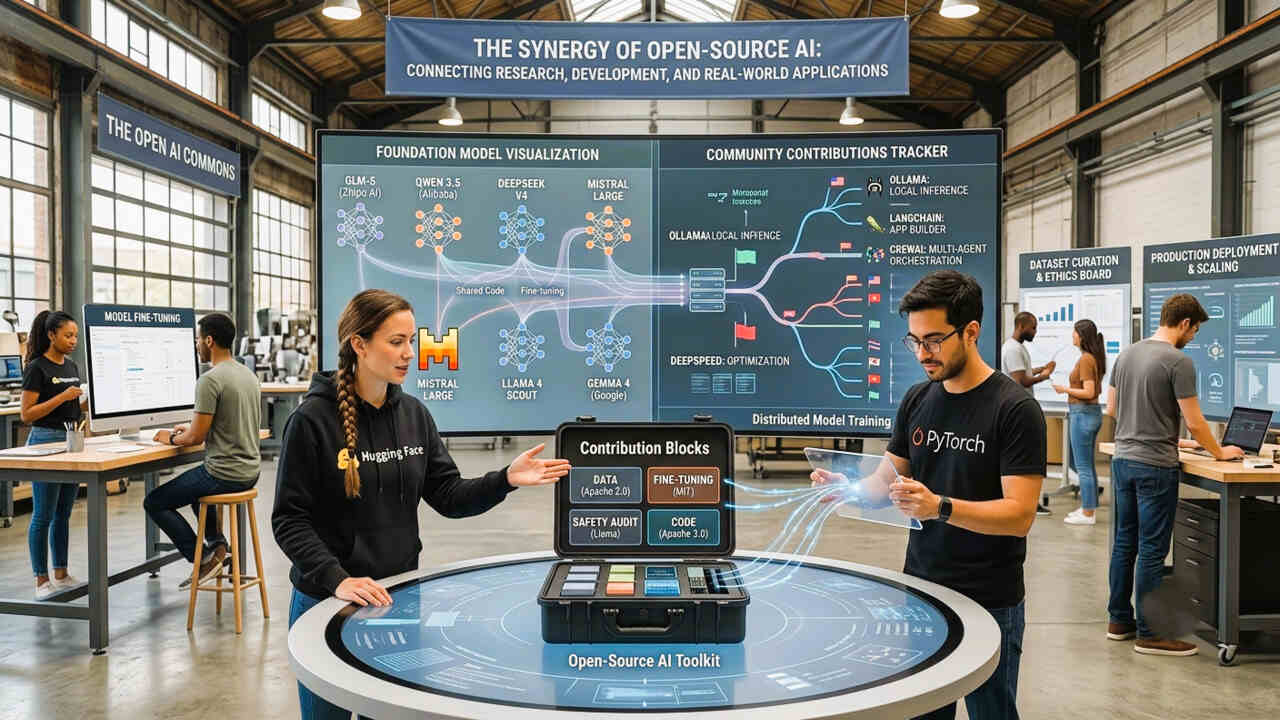
One of the key features that helped DeepSeek stand out in the AI world is its open-source policy. The company shared some of the AI models it is developing under open-source licenses. This gave developers the opportunity to examine the models. It also offers the ability to customize them and use them in their own projects.
Thanks to open source:
AI development processes are accelerating.
Researchers can analyze models more easily.
Small startups can access AI technologies without high licensing costs.
Developer communities can add new features.
Collaboration in the AI ecosystem is increasing.
How Is a Low-Cost AI Model Affecting the Technology Sector?
One of the biggest problems in the AI world is the hardware investment required to train models. Thanks to efficient algorithms and optimized training processes, DeepSeek can offer good-level performance at lower costs. This strategy increases its competitiveness. At the same time, it offers the opportunity to bring AI technologies to a wider audience. This makes the approach valuable not only in terms of technical success but also in terms of being economically and globally sustainable. The most powerful models will certainly continue to stand out, but given low cost and efficiency, this approach is likely to provide a significant advantage in the coming years.

Is a New Era Beginning for China's AI Investments?
The rise of DeepSeek is considered one of China's long-term technology investments in the field of AI. On the other hand, US rivals such as ChatGPT, Gemini, and Claude largely serve users through closed-source ecosystems. Users can access these models through APIs or subscription services, but cannot access the systems themselves.
In addition, thanks to open source, universities, research firms, and small technology companies can run DeepSeek models on their own servers. This makes a significant difference in terms of flexibility.
The differences among the most widely used models are as follows:
Feature | DeepSeek | ChatGPT | Gemini | Claude |
|---|---|---|---|---|
Developer | DeepSeek AI (China) | OpenAI | Anthropic | |
Home Country | China | USA | USA | USA |
AI Type | Large Language Model (LLM) | Large Language Model (LLM) | Large Language Model (LLM) | Large Language Model (LLM) |
Open-Source Support | Yes (some models are open source) | No | No | No |
Main Advantage | Low cost and open-source approach | Wide range of uses and strong ecosystem | Integration with Google services | Long-text analysis and safe responses |
Code Writing Ability | Very good | Very good | Very good | Very good |
Reasoning | Advanced | Advanced | Advanced | Very advanced |
Visual Analysis | Supported in some versions | Supported | Supported | Supported |
File Analysis | Available in limited versions | Supported | Supported | Supported |
API Support | Yes | Yes | Yes | Yes |
Enterprise Use | Growing | Widespread | Widespread | Widespread |
Greatest Strength | Open source and low training cost | Versatile use and broad tool support | Alignment with the Google ecosystem | Success in analyzing large documents |
Who It Is Suitable For | Researchers, developers, and open-source projects | Individual users, companies, and content creators | Google Workspace users | Professionals, academics, and enterprise teams |
How Could the Future of DeepSeek Take Shape?
If DeepSeek maintains its open-source strategy and keeps its cost advantage, it could secure a solid place in the global AI field. The rise of DeepSeek shows that competition will not only take place among large-budget companies. If these major advantages against strong rivals are reflected in user behavior, they could shift the balance.
WriterAB Yapay Zeka Yasası 2026’da Neleri Değiştirecek?


KOSGEB Koordinatörlüğünde Youth Start-Up Challenge Başladı


