Bolt Unveiled as the World's Fastest Humanoid Robot: A New Speed Record
Automatically translated
 Writer
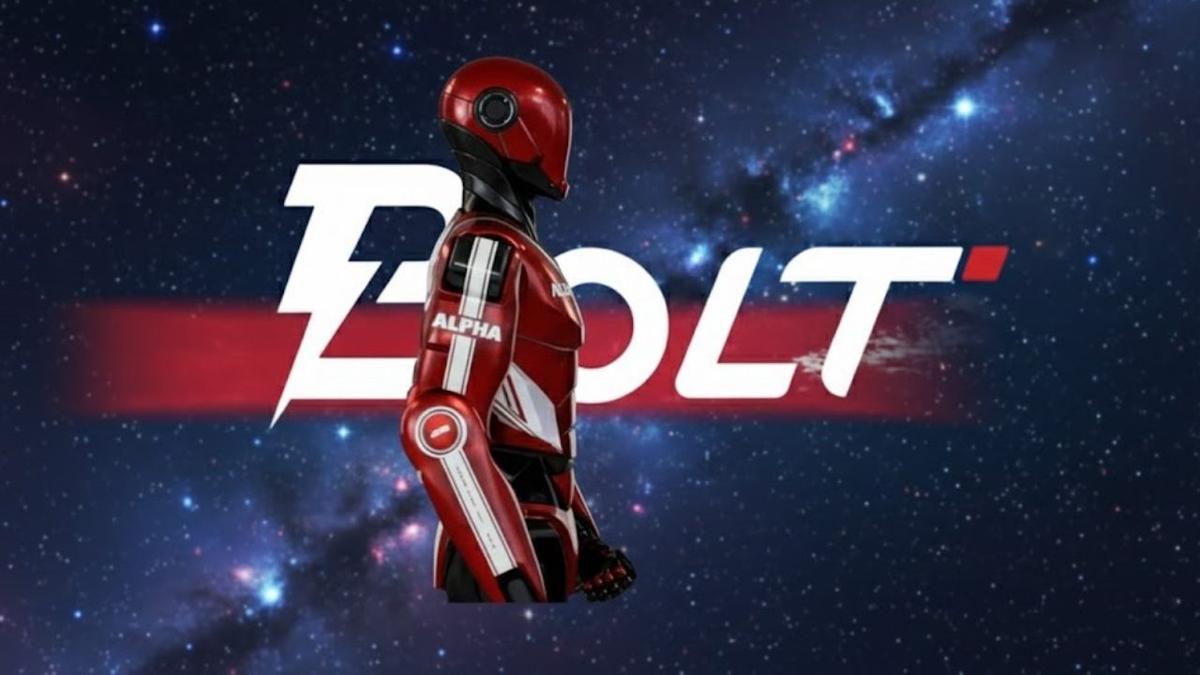
The Bolt robot reached a speed of 10 meters per second, or about 22 mph, and earned the title of the world's fastest humanoid robot. Robot technologies have drawn wide attention to this development, which shows in particular that the limits of humanoid robots' movement ability are being redefined. Thanks to its advanced motor structure, AI-supported balance systems and autonomous movement capability, Bolt is seen as more than an engineering achievement, a strong signal about the future of robotics. Overturning the perception that humanoid robots move clumsily and slowly, Bolt offers concrete evidence of how dynamic the industrial and household assistants of the future could be.
Who Developed Bolt?

The humanoid robot Bolt was developed by MirrorMe Technology, a China-based company headquartered in Shanghai and officially founded in May 2024. The company has drawn attention with its robots Baobao, Apollo and Black Panther II in its portfolio. Inspired by the legendary sprinter Usain Bolt, the company drew strong interest for the speed its robot reached in real-world tests.
Why Is Bolt So Important?
Although robot technologies have made significant progress over the last decade, reaching high speeds while balancing on two feet has always been one of the greatest challenges. This is where Bolt appears as an engineering marvel designed to overcome that barrier. While achieving the success of being the fastest running robot, it not only moves in a straight line but also displays its movements with a human-like aesthetic.
This speed level opens the way for robots to work more smoothly alongside people in the same physical environments. Developments focused on speed like this are expected to turn into practical applications quickly, especially in logistics, industry, defense and search-and-rescue. For example, the ability of a humanoid robot to reach one point from another quickly could increase production speed in factories or save vital seconds in search-and-rescue operations.

The key point that engineers focused on while reaching this speed was the delicate balance between energy efficiency and power. While traditional robots often struggle under the weight of hydraulic systems, Bolt's lightweight alloys and optimized motor structure set it apart from its rivals. This technological leap shows that robots can now leave laboratory settings and adapt to the chaotic, fast-moving real world.
This record also intensifies competition in the global robotics market. Projects such as Boston Dynamics' Atlas or Tesla's Optimus will have to accelerate and make their own models more dynamic after MirrorMe's achievement. This healthy competition could speed up robotic evolution and let us see robots running alongside us on the streets or making package deliveries within a few years. For now, Bolt has become a symbol that reinforces China's claim to global leadership in robotics.
How Does the Humanoid Robot Bolt Reach This Speed?

Behind the humanoid robot Bolt's ability to perform at this level lies a multi-layered technology. The robot's joint structure consists of elastic components designed similarly to the human muscle and tendon system. This structure minimizes energy loss while increasing step frequency. At the same time, thanks to sensors that perform real-time environmental analysis, Bolt can instantly detect changes in the ground and optimize its running form accordingly. AI-supported control algorithms also make it possible for the robot both to accelerate and to slow down safely at high speed.
What Are the Features of the Bolt Robot?

The features and engineering details of the Bolt robot, developed by the MirrorMe team, are as follows:
Physical and Structural Features
- Height and Weight: Standing 175 cm tall and weighing 75 kg, Bolt has a physical structure close to human anatomy.
- Material Technology: Carbon fiber reinforced polymers are used in the body structure. This choice minimizes the robot's weight while maximizing its durability.
- Shock-Absorbing Design: The special materials used have the capacity to absorb impacts and vibrations generated during high-speed running very effectively.
Mechanics and Movement Ability
- Advanced Joints: Precise sensors in the ankle and knee joints detect even the smallest irregularities on the ground within milliseconds.
- Balance Management: Thanks to data from the sensors, the robot maintains its balance flawlessly, even on uneven ground.
- Motor Performance: High torque-density motors give the robot dynamic movement abilities such as sudden acceleration and abrupt stopping.
Software and AI Capability
- Deep Learning: Bolt has an intelligent brain structure equipped with deep learning algorithms.
- Instant Data Processing: While running, it analyzes obstacles in its surroundings and calculates the safest route within milliseconds, offering high data processing speed.
- Real-World Adaptation: This performance has not been limited to laboratory conditions; it has also been successfully tested on uneven real-world terrain.
With all these features, Bolt combines its lightweight and durable body, high-torque motors and deep learning capability to demonstrate an engineering achievement in both physical and digital terms.
How Long Does Bolt's Battery Last?
Although MirrorMe has not yet published an official battery life chart, Bolt's high-torque electric actuators and high-energy-density battery architecture are expected to offer an operating time of 3 to 5 hours, which is the industry standard. Although energy consumption rises during high-speed performance, the advanced power management system aims for maximum efficiency in autonomous tasks.
How Does Autonomous Movement Set Bolt Apart?

One of the most striking aspects of Bolt is its autonomous movement ability, which it demonstrates without needing any external intervention. Being fast alone is not enough for a robot; it also needs to manage that speed safely. At this point, Bolt can map its surroundings in three dimensions using LiDAR sensors and high-resolution cameras, allowing it to perform well not only in laboratory settings but also in scenarios close to the real world. Running through a crowded street or rough terrain, its ability to notice obstacles in its path and maneuver without colliding with them shows how successfully autonomous driving technologies can be applied to humanoid robots.
The Social Impact of Humanoid Robots
The introduction of technological marvels like Bolt generates both excitement and curiosity in society. The fact that robots can move this fast shows they are not just prototypes but work partners that could play an active role in daily life. However, this speed and power also require safety standards to be redefined. MirrorMe engineers state that they have invested heavily in advanced collision avoidance algorithms and instant response systems to ensure Bolt does not harm the people around it.

With both its hardware durability and software intelligence, Bolt sets a new standard in the technology world and represents a peak in the development of humanoid robots. This achievement, reached in the balance of speed, balance and autonomy, also signals that robots will become not just our helpers but an inseparable part of our lives. MirrorMe Technology's move opens the door to robots with superhuman athletic abilities!
WriterPlaymix.ai: Fikrinizi Saniyeler İçinde Oyuna Dönüştürün!


Verimliliğinizi 7'ye Katlayacak 7 Yapay Zeka Uygulaması!