



Grok 4.2: Four Agent Mode, the Four Agents and All Features
Automatically translated
 Writer
For a long time, artificial intelligence was thought of as an accelerated version of a single mind. A system that calculates faster and processes more data, but still follows a linear line of thought. With Grok 4.2, this paradigm is breaking. The goal is no longer only to generate. It is to debate, test, and pass output through a plural filter of reasoning. At this point, “Four Agent Mode” appears as an ontological shift that moves AI from monologue to dialogue.
What Is Grok 4.2 and How Does the 4-Agent System Work?
Unlike classic AI models that rely on a single output generator, Grok 4.2 is built on the simultaneous interaction of four distinct cognitive agents. The structure, called Four Agent Mode, does not push questions through a linear analysis process. It handles them within a multi-layered thinking architecture.
In this system, each agent approaches the same problem from a different epistemological position. As a result, the information produced depends not only on the correctness of one answer but also on the elimination of alternative answers. In this sense, Grok 4.2 works like a digital simulation of the modern scientific method. Forming hypotheses, testing them, criticizing them, and rebuilding them.
The most notable aspect of Four Agent Mode is that AI no longer only produces results. It becomes a system that internally checks the reliability of those results. This is an important step in strengthening the idea of a self-critical model in AI epistemology.
Fast Mode and Four Agent Mode: Which Should You Use in Which Scenario?
The sharp distinction between Fast Mode and Four Agent Mode in Grok 4.2 reflects, on a digital foundation built on modern AI architectures, one of the oldest dilemmas in human history: the persistent tension between speed and accuracy. This distinction gives you a strategic choice, leaving the balance between immediate pragmatism and deep pursuit of truth to your preference.
Fast Mode
It offers maximum speed at minimum computational cost. It is very effective for daily use, short content production, and quick information access. It performs well when you need an immediate answer and provides a smooth experience thanks to low latency. However, because this speed-oriented structure limits the model's multi-layered reasoning, the answers often look sufficient at first glance but lack depth.
In Fast Mode, answers are generally shaped through a single line of reasoning. Processes such as evaluating alternative possibilities, discussing opposing views, or passing information through a critical filter are largely left out. This can lead to superficial or incomplete conclusions, especially in academic analysis, multidimensional problem solving, or topics that require contextual sensitivity. Therefore, Fast Mode is a strong tool for producing quick and adequate answers, but its performance can be limited when deep and precise knowledge is required.
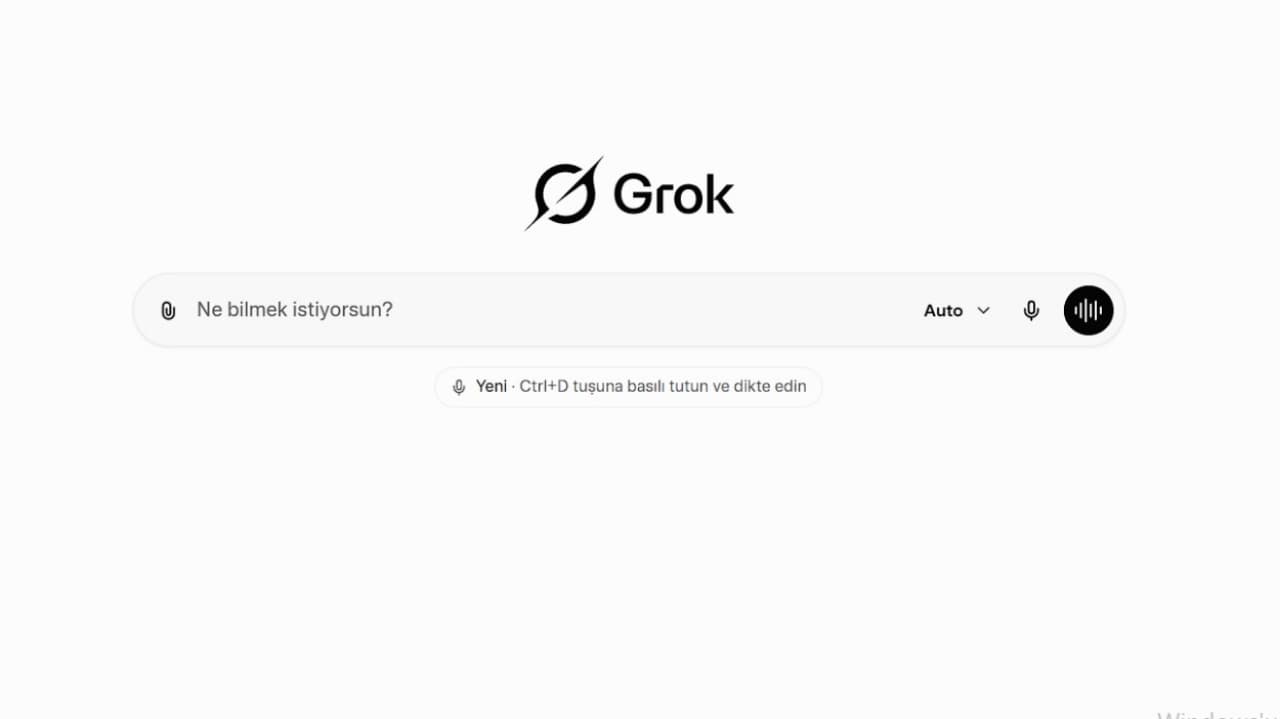
Four Agent Mode
Because it involves a multi-layered evaluation process, it produces slower but more reliable results. It is an ideal choice for academic analysis, critical texts, strategic decision support systems, and complex problem solving. In this mode, the answer is no longer the result of a single moment of generation. Instead, it goes through a dynamic process in which different cognitive perspectives test, criticize, and restructure one another.
Each agent approaches the problem within a different epistemological framework, aiming not only to reach the right answer but also to eliminate incorrect possibilities. This makes the reliability of the produced knowledge stronger not only in terms of outcomes but also in terms of process. One of the most important advantages of Four Agent Mode is that it tests the accuracy of an answer not only with data but also through critical comparison and internal debate mechanisms.
In this context, especially for multivariable and open-to-interpretation topics, it offers in-depth analysis instead of surface-level confirmations. The controlled clash of different viewpoints leads to more balanced and refined results. Although processing takes longer, the accuracy and conceptual coherence of the output are clearly higher. For this reason, Four Agent Mode becomes an indispensable tool for users who seek precision, depth, and reliability over speed.
What matters here is that you define your need correctly. If your goal is only to know, Fast Mode is enough; but if your goal is to understand and be certain, Four Agent Mode is essential. This distinction moves AI use from superficial instrumentality to a deliberate methodology.
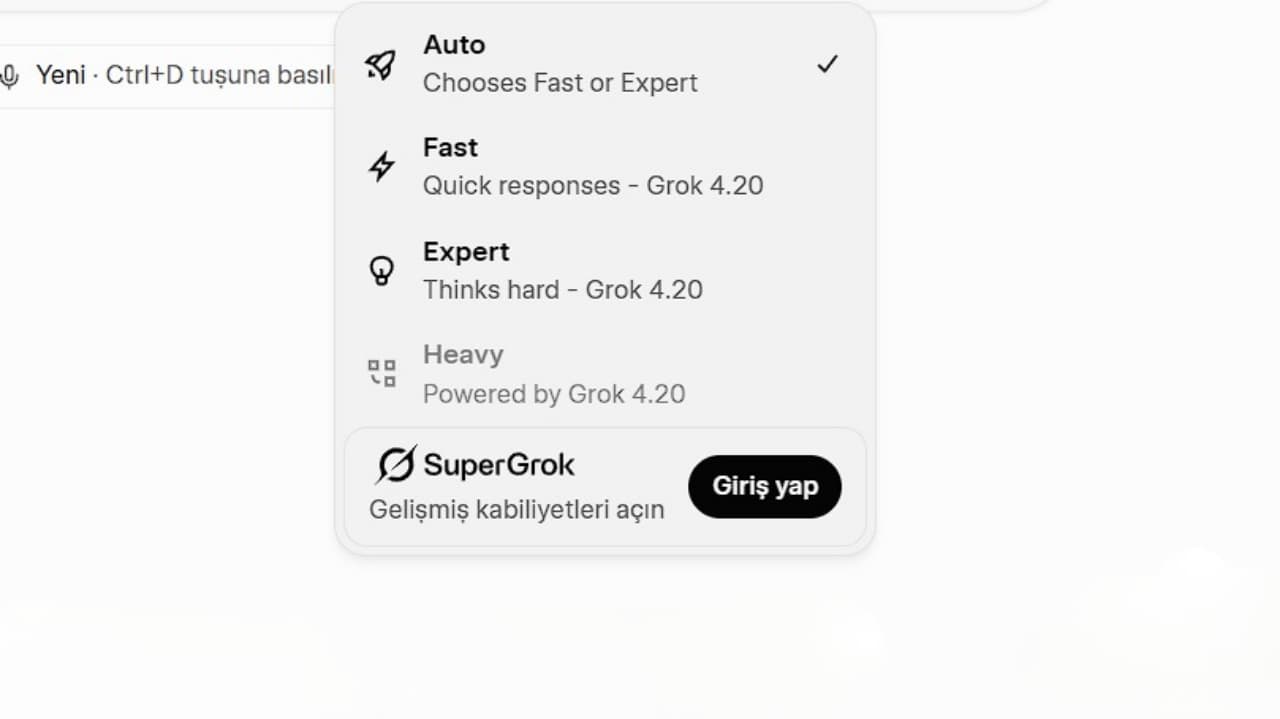
The Architecture of Grok 4.2: Who Are Captain, Harper, Benjamin and Lucas?
Unlike randomly assigned tasks, each of Grok 4.2's four agents has a functional role representing a specific thinking practice.
1. Captain (Strategist and Coordinator)
Captain is the team leader. It understands what you mean. It combines the data from Harper with Benjamin's logic and gives the final shape according to Lucas's critiques. Captain is the "Editor" who creates order within the chaos.
2. Harper (Explorer and Information Hunter)
Harper is the agent that digs into the depths of the internet and especially the X platform. Its task is not only to find information but also to test whether the information is current. In the world of 2026, which changes within seconds, Harper is the system's "sensory organ."
3. Benjamin (Analytical and Mathematical Mind)
Benjamin is pure logic, free from emotions and interpretations. It writes code, solves equations, and checks whether data is statistically meaningful. If there is a mathematical inconsistency in an answer, Benjamin steps in and halts the process.
4. Lucas (Critic and Skeptic)
Lucas is Grok 4.2's secret weapon. Its task is to expect the other three agents to make mistakes. It asks, "Is this information correct?", "Is this source reliable?", "Is there a bias in the answer?" Lucas is the self-auditing "conscience" of AI.
When these four agents work together, what emerges is not just an answer but a trace of a thinking process. This transforms AI from a result-oriented tool into a process-oriented thinking partner.

How the "Agent Debate" Mechanism Works to Stop AI Hallucinations
The problem known in AI literature as hallucination is defined as a model producing information that does not actually exist with high confidence. To solve this problem, Grok 4.2 activates an agent debate mechanism.
Instead of assuming the accuracy of a single output, this mechanism opens every output to debate. Information produced by one agent is criticized, verified, or compared with alternatives by the other agents. This process resembles a digital peer-reviewed journal system. Information is passed through a critical filter before being published.
In this way, the system does not only try to reach the right answer; it also actively eliminates errors. A decline in the hallucination rate is not only a technical achievement but also an ethical gain that increases the reliability of AI.
Strategic Prompt Writing to Get More Precise Answers from Grok 4.2
The multi-agent structure of Grok 4.2 depends directly on the quality of the input you provide. For this reason, prompt writing now means much more than asking a simple question. It becomes the practice of building a framework for thinking.
The following strategies stand out for an effective prompt:
Setting context: Specify which discipline, perspective, or purpose the question should be addressed from
Defining the output format: Clarify what you expect, such as analysis, comparison, critique, or summary
Multi-layering: Add depth with sub-questions rather than relying on a single question
Directing agents: Especially in Four Agent Mode, specify which roles the agents should focus on

This approach turns your relationship with AI from passive consumption into active partnership. You are no longer just someone asking questions; you become an actor shaping the thinking process.
To fully unlock the power of Grok 4.2, you should treat it not as an assistant but as a team manager:
1. Assign Tasks to Agents: Give commands such as "In this analysis, I want Lucas to focus especially on financial risks and Harper to find the latest competitor data."
2. Request a Debate Format: By saying "Report to me the mutual debate between Benjamin and Lucas on this topic," you can see both the pros and cons of a subject at the same time.
3. Iterative Deepening: First outline a general framework with Fast Mode, then use the command "Now switch to Four Agent Mode and audit this structure down to the finest detail."
With Grok 4.2, AI stops being just a tool and becomes a space for debate. This space offers a ground where knowledge is born from the clash of plural minds rather than from a single source. Perhaps the real transformation lies here. Truth is no longer just something found; it is evolving into a form of truth built together.
WriterZararlı Yapay Zeka Modelleri: Riskler ve Korunma Yolları


Ücretsiz Görüntülü Sohbet ve Konuşma Uygulamaları (2026)


