How to Use Design With Artificial Intelligence?
Automatically translated
Design is not only visualism with artificial intelligence; it is redefined with speed, efficiency and user orientation. In this article we will examine how it is used as a guide of using artificial intelligence in design, pros and cons.
What is Artificial Intelligence in Design?
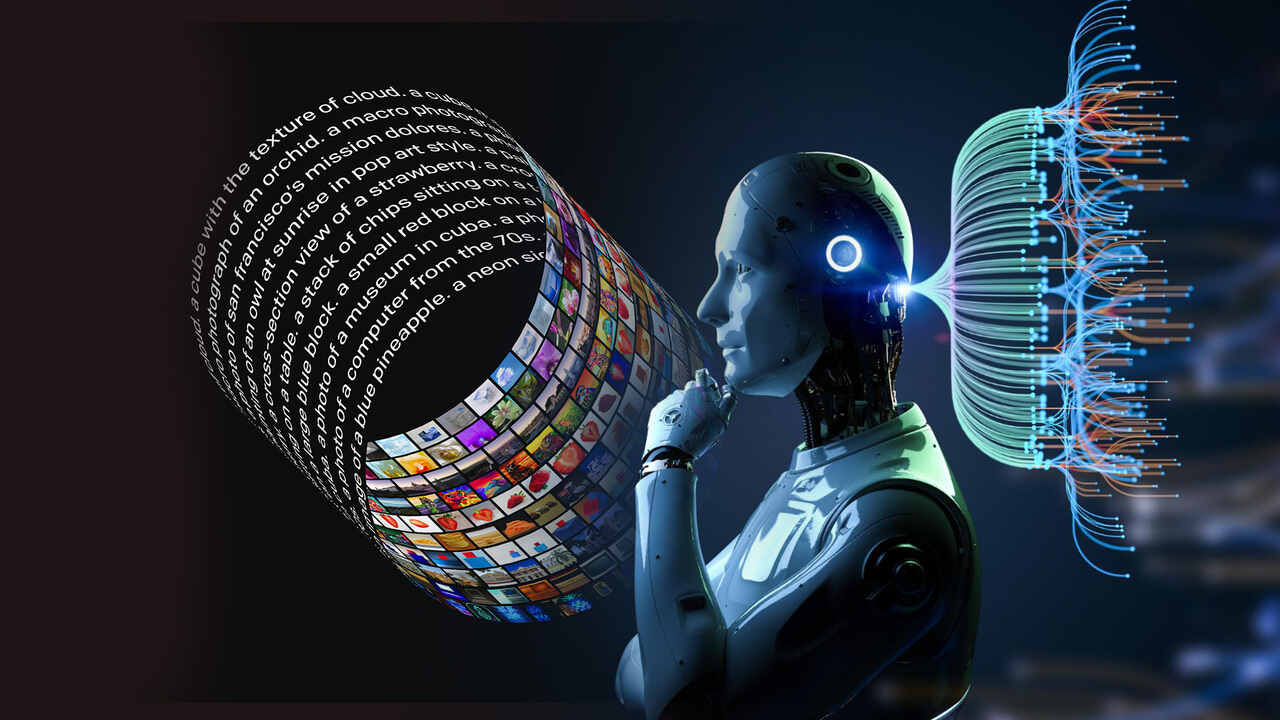
Artificial intelligence in design is the use of algorithms and machine learning models in visual, auditory or textual design processes. Artificial intelligence, especially thanks to the generative AI (produced artificial intelligence), the concept development and prototyping works that last from old to hours are downloading to minutes. This makes designers focus more creatively. Artificial intelligence tools that develop day-to-day as they provide convenience can lead to troubles in some cases. Therefore, it is necessary to use well-learning and accuracy control.
How to Use Design Artificial Intelligence Process?
Artificial intelligence can be used in many stages, from research to prototype. For example, users can extract meaningful insights from large data sets in their research, offer color palettes and typography recommendations or can produce visual variations automatically. AI in UX design has become an effective tool in determining friction points by analyzing user flows.
What Kinds of Artificial Intelligence Road to Designs?
Artificial intelligence began to be used in a wide range from graphic design to product design. For example, in minutes using generative AI can produce logo designs, social media images and even web page prototypes. Artificial intelligence is used in fashion world, pattern creation and trend analysis by making the design process easier. In architecture, building design concepts can be quickly modeled and visualized. This situation is more experiment and pusheration in creative industries (repeating the process in the software).
What Are Artificial Intelligence Tools Used in Design?
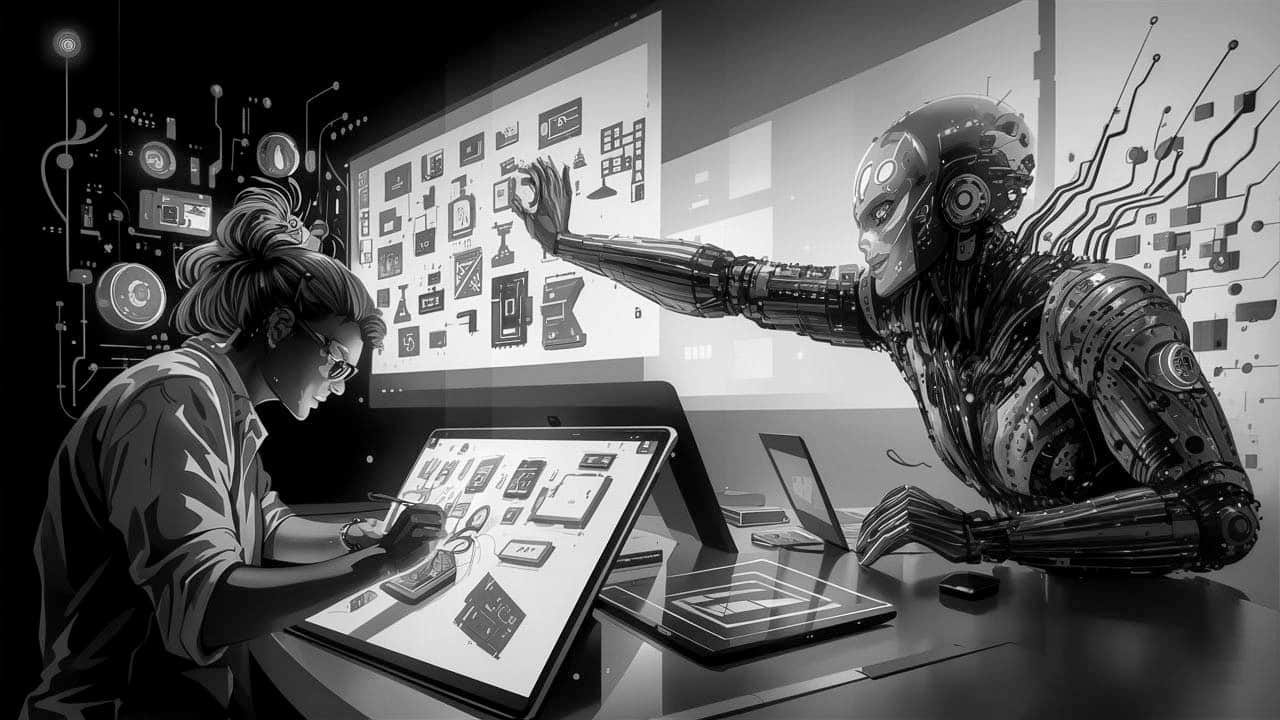
Today from designers often used artificial intelligence tools is quite diverse and appeals to different areas. Midjourney for visual designTags The productive AI platforms such as DALL-E and Adobe Firefly stand out. These tools produce visuals from text-based commands and inspire designer. Tools like Khroma for color selection create artificial intelligence-supported personalized pallets. Uizard in UI/UX design, Figma AI and Framer AI accelerates draft creation and prototyping. Complex effects and regulations can be automated with Runway in video design. The text-based parts of the design are prepared quickly using ChatGPT, Jasper and Copy.ai for content and text production.
What Applications Do?
Canva AI: For quick social media images and presentations.
Figma AI: UI/UX to speed up design process.
Runway: Video editing and visual effects.
Khroma: To create color palette.
ChatGPT & Jasper: Text-based content production and creative idea development. These applications save time and cost by speeding workflow.
What is Generative AI and How to Use in Design?
Generative AI It is a kind of artificial intelligence that can produce new content by learning from existing data sets. generative AI in design is used in processes such as logo design, typography recommendations, 3D modeling and visual composition creation. Specifically Midjourney or Adobe Firefly vehicles have the capacity to produce original visuals with a few text inputs. In this way, designers can create much faster concept and test different variations.
Advantages of Generative AI
Speed: Offers design recommendations in seconds.
Creativity: It produces new forms, color combinations and concepts that will not come to human mind.
Personalization: It gives more convenient results by constantly learning according to user’s referral.
Deadvantages of Generative AI
Copyright Problems: There are ambiguities about whether the contents produced are original.
Homogenization Risk: Similar results may occur when using same data sets.
Human Touch Deficiency: More artificial or non-personal visuals may occur.
Who Can Use Artificial Intelligence in Design?
Artificial intelligence and design can only be used for professional designers, entrepreneurs, small business owners, marketers and content producers. People without technical design knowledge can create simple visuals and prototypes thanks to user-friendly interfaces. This allows everyone to partially meet their own visual needs.
Who did the Work in Artificial Intelligence Design?
The rise of artificial intelligence has created serious print on freelancers and content producers, especially stock visual providers, simple visual design. Simple banner or social media post designs that last hours before, can now be produced in seconds by artificial intelligence. This is not yet valid for areas requiring higher level of thought, such as creative strategy, brand identity development and original idea producing. O areas are still dependent on human creativity. Artificial intelligence is not only a threat to the groups of professions in the design field, but also other groups of professions are able to perform their work faster.
Microsoft researchers, 40 professions affected by artificial intelligence determined:
1. Translators and Translators | 21. Editors |
2. 2. History
22. University Business Teaching Members
3. Passenger Missions Home
23. Public Relations Specialists
4. Service Sales Representatives Home
24. Product Promotional Tasks Home
5. Authors and Literature
25. Advertising Sales Representatives Home
6. Customer Service Representatives Home
26. Account Opening Specialists
7. CNC Tool Programmers
27. Statistics Assistants
8. Phone Operators
28. Wedding and Rental Tasks
9. Ticket Sales and Travel Officers
29. Data Science Home
10. Radio and Television Spikers (DJs)
30. Financial Advisors
11. 11. Vehicle Institution Tasks Home
31. Archive
12. Agricultural and Home Management Trainers
32. University Economics Students
12. July Tele-marketing
33. Web Developers
14 July Hotel Advisory Officers
34. Management Analysts Home
15. Political scientists
35. Tags
16. News Analysts, Interviews, Journalists
36. Mankenler / Models
17. September Mathematicians
37. Market Research Analysts
18. Technical Authors
38. Emergency Communication Operators
19. September Writing Control Specialists
39. Plant Operators
20. Welcome and Heavy Duty
40. Library Science Teaching Members (High Education)
Artificial Intelligence and Creativity Balance
Artificial intelligence is a tool that supports designers’ creativity, but it can’t design alone. The human touch is still necessary but it is also necessary to acknowledge that it is an increasingly developing artificial intelligence. Nerde is important to know how to use effective. The solutions provided by AI have a support function that complements the vision of the designer. Therefore, designers should give AI’s recommendations a critical eye assessment and final decision themselves.
Advantages and Risks
Advantages | Risks |
Time saving and productivity increase | Risk of producing uniform and non-exclusive designs |
Larger creativity options and inspiration | Copyright and license problems Home |
Fast prototyping and user testing | Data privacy and security concerns |
Personalized design recommendations Home | Elimination of some professions while designers reduce workload |
Automating repeating jobs | Possible to blinden creative thought of more automation |
Data-oriented decision-making in design process | Excessive risk of dependence on artificial intelligence and loss of human touch |
At this point, designers need to balance data collection and copyright policies of vehicles they use with carefully review and creativity.
Design and Artificial Intelligence
Artificial intelligence in the future will also increase the level of personalization, not only the speed of the design. For example, AI-supported design tools can create dynamic interfaces by analyzing users’ behavior in real-time. This will make user experience more intuitive and effective.
Design artificial intelligence integration does not completely change the work of all designers; unlike increasing their productivity and a new playground for creativity offers. However, the right and ethical use of these technologies is important to protect the essence of the design touches human.
İletişim ve Teknoloji Staj İlanları | 30 Mart-5 Nisan 2026

Ücretsiz Proje Yönetimi Sertifikaları: 2026 Kariyer Rehberi