First Robotic Arm : Unimate and Effects
Automatically translated
 Creator
1. Home
The evolution of robotic technology leads to significant changes in many areas from industrial production to medical applications. One of the starting points of this revolution is the Unimate robotic arm developed in 1950s. Designed by George Devol, Unimate laid the foundations of modern robotic systems and opened the front of automation. Today, the first robotic arm: Unimate and effects, we will handle the effects of Unimate on history, technical characteristics, industrial applications and robotic technology in detail.
2. 2. History of Unimate
2.1. George Devol and Automation
George Devol was born in 1912 and has an important career in engineering. In 1954, he developed the first programmable robot to automate production processes. Devol called this robot "Unimate". Unimate has emerged as an acronym of words "Universal Automation".
2.2. First Application
Unimate started to be used by General Motors in 1961. Firstly, it worked in the assembly and welding of automotive parts. This was one of the first large-scale applications in the industry of robotic technology and changed its production processes in a rooted way.
3. Technical Specifications of Unimate
3.1. Structure and Design
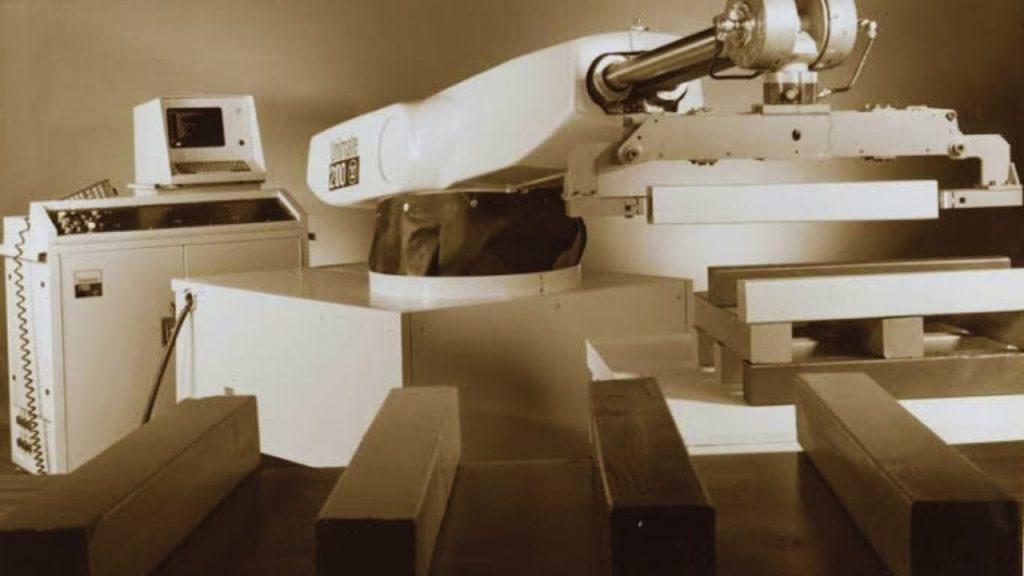
Unimate was a robot arm working with hydraulic systems. It weighs about 2.5 meters high and 1.5 tons. The robot had various mobility and had a structure with 6 degree of liberation, which gave him the ability to make complex movements.
3.2. Programmable
Unimate was designed as a programmable robot. Users were able to program the necessary commands to perform certain tasks of the robot. This feature improved the flexibility of the robot and facilitates adapting to different applications.
3.3. Sensor and Control Systems
Unimate was equipped with various sensors to detect the environment. These sensors played an important role in enabling the robot to move correctly. Control systems were using software to manage the movements of the robot.
4. Industrial Applications
4.1. Assembly Line
Unimate speeded up the assembly of cars using General Motors in the assembly line. Taking the location of the human workforce, making the production process more efficient. This application showed the potential of robots in industrial production.
4.2. Welding Operations
Unimate was used in welding operations. Robot minimizes errors that human operators can do by combining metal parts precisely. This increased production quality and reduced the costs of businesses.
4.3. Effects in Other Sectors
The success of Unimate led the adoption of robot technology in other industries. Especially in automotive industries, the use of robotic systems has gained speed. Unimate has prepared ground to spread automation in many sectors by showing the potential of robotic technology.
5. Effects of Unimate
5.1. Industrial Revolution
Unimate is considered as part of industrial revolution. The adoption of robot technology has changed its production processes in a rooted way. Robots, which replaced human labor force, increased efficiency and reduced costs.
5.2. Workforce Dynamics Home
The use of robots in the industry changed labor dynamics. When business loss is lost in some business arms, new business areas have also appeared. In particular, new professions were formed in areas such as programming, maintenance and control of robots.
5.3. Technological Innovation
Unimate inspired the development of robot technology. The success of this robot has helped engineers and researchers develop more complex and effective robot systems. The advances in robotic technology have created the basis of autonomous systems in today.
6. After Unimate Robotic Developments
6.1. New Generation Robots
The success of Unimate led the development of new generation robots. Lighter, faster and smarter robots are designed. These robots are integrated with technologies such as AI and machine learning and have become able to perform more complex tasks.
6.2. Multi Purpose Robots
Unimate’s programmable structure inspired the development of multi-purpose robots. Nowadays robots are designed to perform different tasks and used in various industries.
You can withdraw your interest: Robotic Engineering in 2025: Will it be the opportunity for humans?
6.3. Human-Robot Cooperation
With the influence of Unimate, the concept of human-robot collaboration has gained importance. Modern robots are designed to work together with people and a complementary role is undertaken.
7. Conclusion
Unimate is an important milestone in the history of robotic technology. This robotic arm created by George Devol has revolutionized in industrial production and opened the forefront of automation. The effects of Unimate have not only been limited to the automotive industry, prepared ground to adopt robotic technology in all industries. Today’s robot systems are built on the foundations of Unimate and continue to develop continuously. The future of robotic technology will be shaped with inspiration and innovation that Unimate provides.
Creator10 Yeni Yapay Zeka Trendi: Sanatta AI’nın Yükselişi
Yapay Zeka ile Yeni Nesil Tasarım Webinarı