
LiteLLM Vulnerability Added to CISA Catalog
Automatically translated
 Admin
On September 2, 2026, seven vulnerabilities were added to CISA's Known Exploited Vulnerabilities catalog, and three of them directly target AI infrastructure. Together with LiteLLM, Starlette and Kestra, this is the first KEV batch where AI components make up nearly half of the entries. This article covers the technical details of the flaws, the traces attackers left on the gateways they took over, and the steps to take before the September 16 deadline.
Which Vulnerabilities Were Added to the CISA List?
According to CISA's September 2, 2026 announcement, seven vulnerabilities were added to the catalog. The reason for adding them is summed up in one sentence: there is evidence of active exploitation.
According to an analysis published on Yahoo Finance, this is the first time AI components have reached this weight in a single KEV batch. The entries on the list map to different layers of an AI stack. LiteLLM is a model gateway, and Starlette is the ASGI framework underneath vLLM and MCP servers. Kestra is a workflow orchestrator, and JFrog Artifactory sits at the center of model and dependency repositories.
CVE | Component | CVSS | Deadline |
|---|---|---|---|
CVE-2026-59822 | BerriAI LiteLLM | 8.8 | September 16 |
CVE-2026-48710 | Kludex Starlette | 6.5 | September 16 |
CVE-2026-49869 | Kestra OSS | Not specified | September 5 |
CVE-2026-82329 | JFrog Artifactory | 9.8 | September 5 |
CVE-2026-9586 | Sangoma Switchvox | Not specified | September 5 |
CVE-2026-83548 | SonicWall SMA 1000 | 10.0 | September 5 |
CVE-2026-83549 | SonicWall SMA 1000 | Not specified | September 5 |
The deadlines are set by the BOD 26-04 directive. The previous uniform 21-day period has been removed and replaced with 3, 14 or 60-day windows, based on how exposed the asset is to the internet, how automated the exploitation is, and its technical impact. The period given for LiteLLM and Starlette expires on September 16, 2026.

What Is the LiteLLM Vulnerability and How Does It Work?
CVE-2026-59822 stems from an authentication flaw in BerriAI LiteLLM's Model Context Protocol streaming endpoints. According to a report published by The Hacker News, unauthenticated attackers can open an authenticated session using a fabricated Bearer token.
The root cause lies in the OAuth2 fallback path. When key validation fails, the code produces an empty authorization object instead of raising an error. Subsequent authorization checks treat this empty object as valid. As a result, without a valid LiteLLM key, MCP tools connected to the gateway can be reached.
The flaw affects all versions before 1.84.0 and is fixed in 1.84.0. In enterprise deployments, the gateway typically sits in front of multiple model providers and connected tools, so access gained through a single endpoint can spread laterally. In agentic AI architectures, the gateway already occupies a privileged position.
Why Is the Starlette Risk a Broader Surface?
CVE-2026-48710 has the lowest CVSS score in the list, at 6.5. Its exposure surface, however, is larger than the others.
Starlette is not a product users face directly. It is the ASGI framework running underneath vLLM, LiteLLM and many MCP servers. As a result, teams do not see it on their procurement lists. It arrives as a transitive dependency and never shows up in asset inventories.
The flaw itself is simple: an injection through the Host header lets an attacker bypass the path-based authentication layer. Horizon3.ai's June 2026 analysis showed that this vulnerability can be chained with another LiteLLM flaw (CVE-2026-42271, CVSS 8.7). At the end of the chain, authentication is bypassed and remote code execution is achieved.
This is exactly where the score and the actual exposure measure different things. A catalog entry is a single line, and it does not carry that distinction.

What Are Attackers Doing on the Gateways?
Microsoft's August 26 report documented real attacks against LiteLLM, RAGFlow and Kestra deployments. According to a report published by eSecurity Planet, these attacks combine credential harvesting, persistence, reverse shells and cryptomining.
The sequence attackers followed on LiteLLM gateways is described as follows:
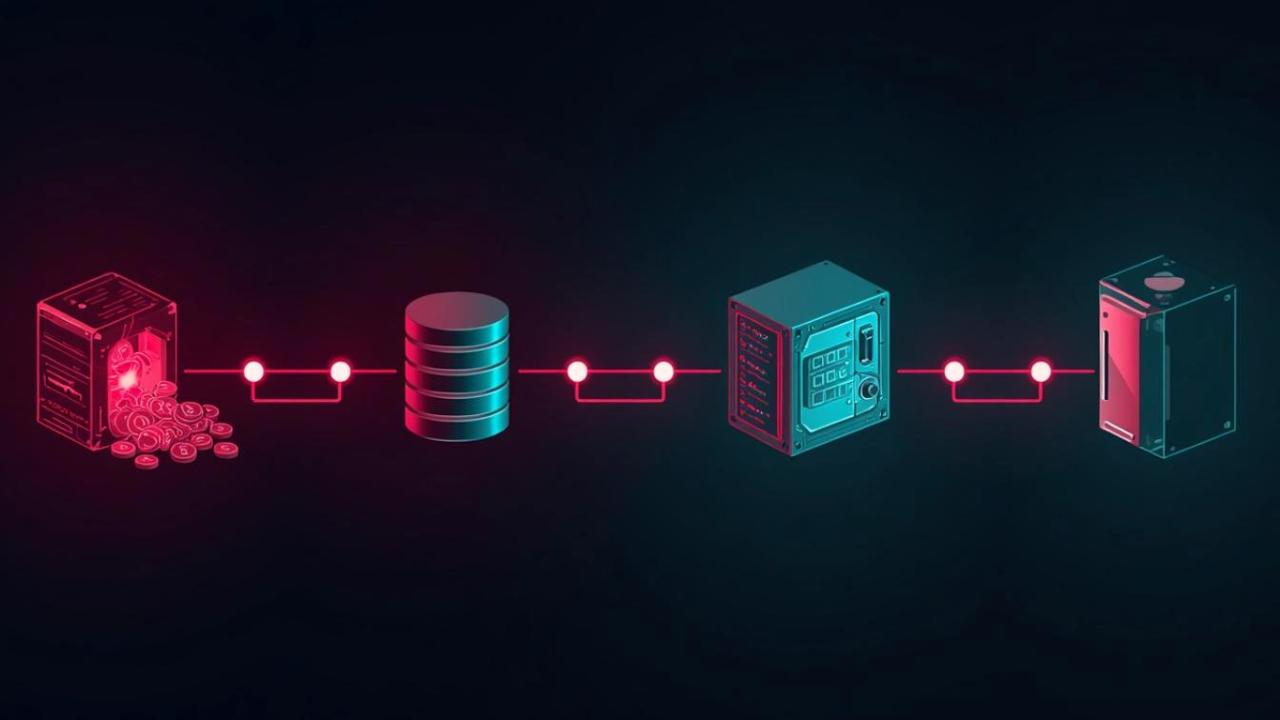
Miner deployment: An XMRig miner is dropped as an ELF binary on systems entered through the CVE-2026-42271 and CVE-2026-48710 chain. Before installation, the host fingerprint is collected and competing mining processes are terminated.
Key harvesting: Using previously collected database credentials, attackers access the PostgreSQL layer behind LiteLLM. The target tables are LiteLLM_ProxyModelTable and LiteLLM_VerificationToken. From these, they extract model configurations, upstream provider keys, provider endpoints and the virtual keys generated by the proxy.
Persistence: The ~/.ssh/authorized_keys file is modified to keep access alive. Command-and-control channels and detection evasion mechanisms are added to the chain.
According to Wiz's findings, actors using this chain include the Qilin (Agenda) ransomware group. The same company also observed exploitation attempts against CVE-2026-59822 in its own honeypot network; the attempts probed model listing endpoints. Compromising gateway keys exposes the billing and data of multiple provider accounts at a single organization at once. A similar pattern was seen in the agent-driven ransomware attack case.
Why Were the Patches Noticed 56 Days Later?
What the three AI components have in common is that their patches were published long before they were cataloged. In P.K. Sharma's KEV analysis, the gap between the record publication and the catalog entry was measured: 99 days for Starlette, 68 days for Kestra and 56 days for LiteLLM.
Nothing in the code changed on September 2. The only thing that changed is that CISA now declares these flaws as actively exploited. The same analysis also notes that the catalog titles of two of the entries mis-describe the component; the title was inherited from a CWE that contradicts the record's own description.
For teams, the real problem is not detection but inventory. These components are not purchased; they come in through a dependency tree. Asset lists based on procurement records do not show them at all. Not being in the catalog does not mean being safe; it only means not yet being declared.

What Should Teams Do Before September 16?
The catalog binds federal agencies and does not directly bind the private sector. However, a declaration of active exploitation carries a signal that applies to everyone.
Version upgrade: Move to LiteLLM 1.84.0 or later. Upstream fixes for Starlette and Kestra are also available.
Transitive dependency scanning: Determine which services run on top of Starlette by reading the dependency tree, not procurement lists. vLLM and MCP servers are the priority places to check.
Reducing internet exposure: Gateways, MCP endpoints, workflow platforms and management interfaces should be taken offline or placed behind an authenticated layer.
Key rotation: In deployments that may have been compromised, provider keys and the virtual keys generated by the proxy should be rotated. A leaked key remains valid even after patching.
Hunting for traces: Check for unexpected changes to ~/.ssh/authorized_keys, unexplained processor usage and unusual queries against the LiteLLM database tables.
The same week, there was also movement on the SonicWall side. On September 4, Singapore's Cyber Security Agency urged organizations using SMA 1000 to update immediately. AI security recommendations on least privilege and regular audits also apply in this case.

Frequently Asked Questions
What exactly does the LiteLLM vulnerability allow?
CVE-2026-59822 allows an authenticated MCP session to be opened without a valid key. When a fabricated Bearer token is sent, the OAuth2 fallback kicks in and places an empty authorization object in place of the failed validation. Because this object passes subsequent checks, the attacker can reach tools connected to the gateway.
Which LiteLLM version is safe?
Version 1.84.0 and later are safe. The flaw affects all versions before 1.84.0. If an upgrade is not possible, keeping the gateway off the internet and limiting MCP endpoints with an access list provides temporary mitigation.
I don't use Starlette, can I still be affected?
The likelihood is high. Starlette is not a product installed directly; it is a framework running under vLLM, LiteLLM and MCP servers. Because it is present indirectly in the dependency tree, it does not appear in asset inventories. You need to check the installed version with pip list or your lock file.
Does the CISA list bind companies in Turkey?
Legally, it does not. The catalog creates patching obligations for civilian federal executive agencies in the United States. The meaning of being listed is universal, however: there is evidence that these flaws are exploited in the wild. For that reason, it is considered a useful reference for setting priorities.
How do I know if my gateway has been compromised?
Several recurring traces appear in the attacks Microsoft documented. Unexpected keys in the ~/.ssh/authorized_keys file, sustained high processor usage and unusual queries against the LiteLLM_ProxyModelTable and LiteLLM_VerificationToken tables are among the most prominent. Reverse shell connections and outbound traffic to endpoints you do not recognize should also be checked.
The deadline for LiteLLM and Starlette expires on September 16, 2026. Given that the patches have been available for months, what will close on that date is not the flaw itself, but the question of how many organizations never put it into their inventory.
AdminÖğrenciler İçin Ücretsiz Yapay Zeka Araçları ve Paketleri


Yapay Zeka Öğrenmeye Nereden Başlanır?