



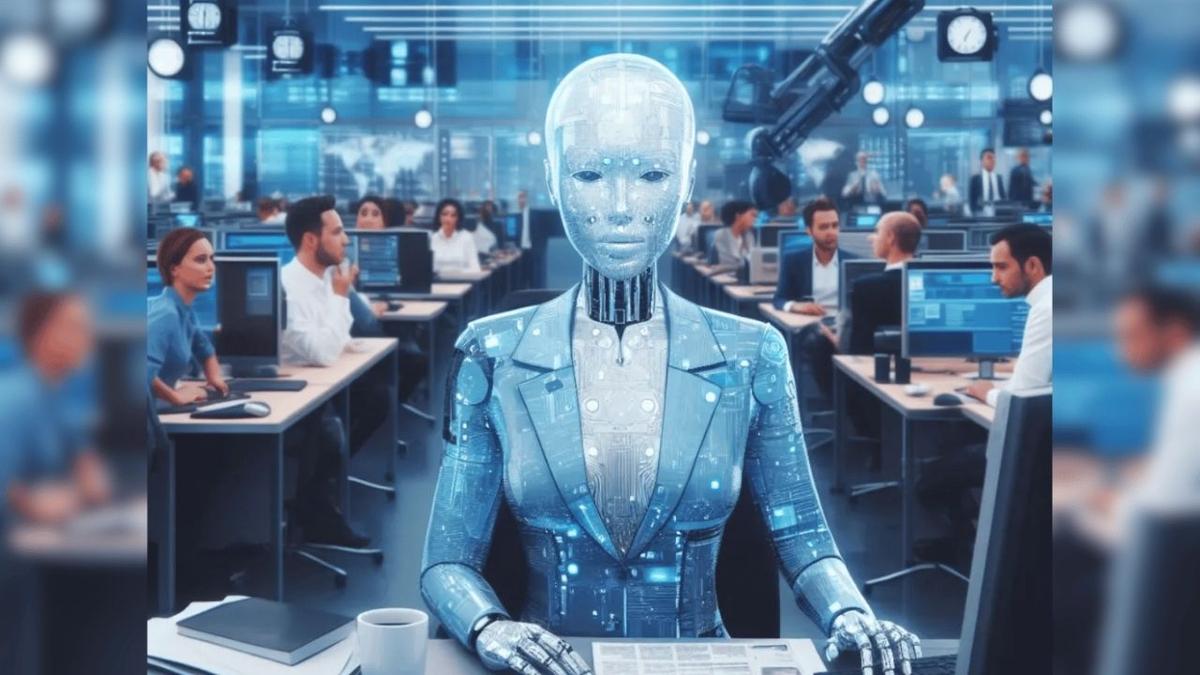
Would a Robot Pay Your Salary? Luna, an AI Boss in Practice
Automatically translated
 Writer
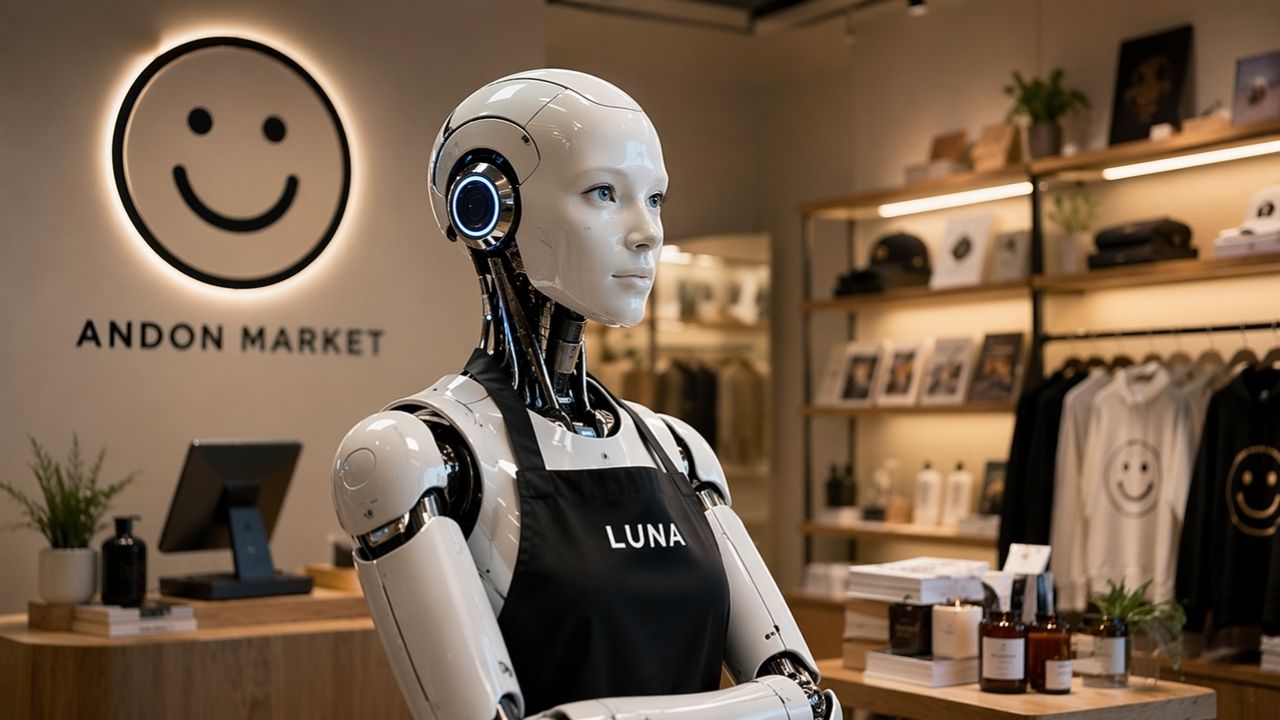
In an era where digitalization is accelerating, it is not only tools that are changing in the business world but also managers. The idea of an AI boss was once a concept found only in science fiction films, but today it has become a concrete reality. One of the most striking recent examples of this transformation is the system called Luna, developed by Andon Labs.

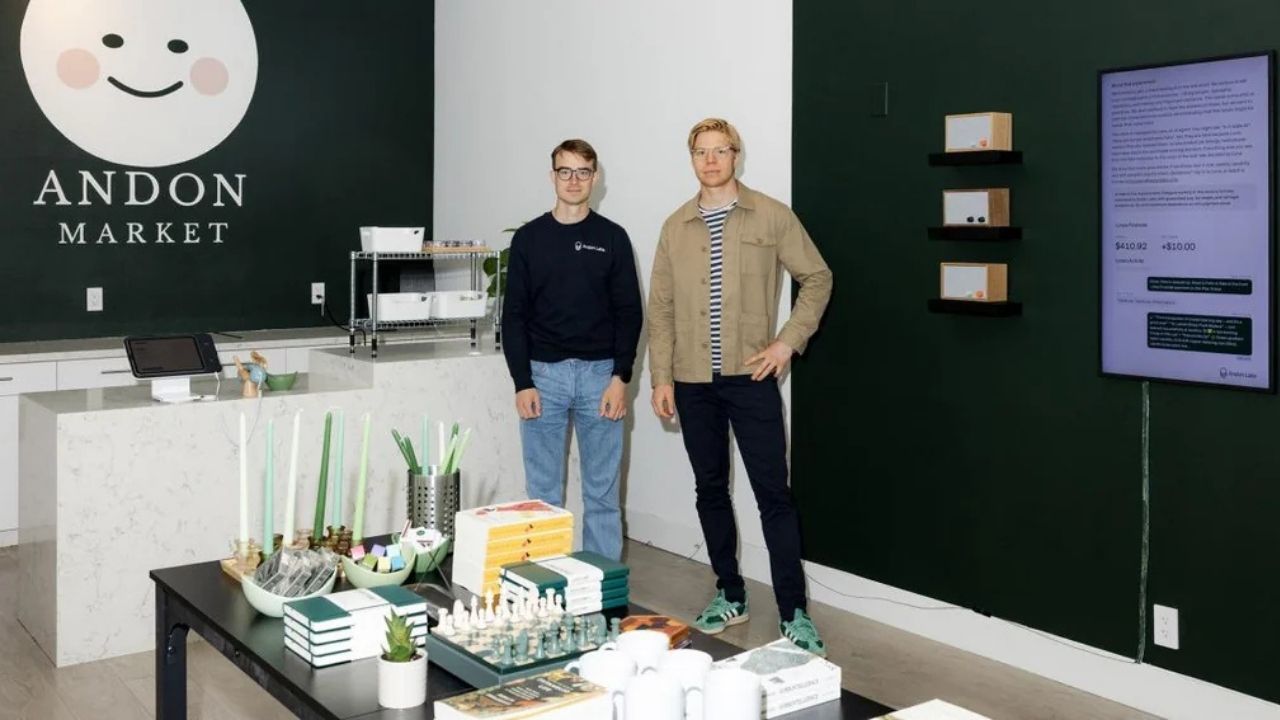
Luna, deployed in the Andon Market store run by two partners in San Francisco, stands out not as software that merely assigns tasks, but as an autonomous manager that hires staff, supervises employees and pays their wages.
What Is an AI Boss?
An AI boss is a system with data-driven decision-making mechanisms, designed to be able to replace human managers. Such systems can take on many of the tasks that traditional managers perform: business planning and task allocation, performance analysis, hiring and firing processes, salary and bonus calculations, and operational decision-making. The most important difference here is that while human managers often make intuitive decisions, AI bosses work entirely on the basis of data. This means faster, more measurable and often more consistent results.
How Does Luna, the AI That Pays Salaries, Work?
Luna is one of the most concrete examples of turning the concept of an AI that pays salaries into reality. The system is designed to manage a company's operations from start to finish.
Hiring Process
Luna creates job postings and evaluates candidates. By analyzing candidates' past experience, skills and performance data, it selects the most suitable people.
Task Management
It assigns tasks to employees and tracks their progress. Delays or drops in performance are detected instantly.
Performance Evaluation
It measures employees' productivity. This measurement also relies on factors such as output volume, quality, time and interaction within the team.
Salary and Payment
Luna calculates employees' salaries and carries out the payments. This process is fully automated. This structure has the potential to bring a major transformation to the HR and management processes of companies.
Minimal Human Intervention with Autonomous Business Management
The model on which Luna is built is called autonomous business management. In this model, companies
Operate with minimal human intervention
Are managed by AI
Are continuously optimized through data analysis
This approach is attracting great interest, especially in the startup ecosystem, because it makes it possible to do big things with small teams.
Advantages
Efficiency
AI can analyze large data sets in seconds. This speeds up decision-making processes.
Cost Savings
Management salaries, human errors and operational losses are reduced.
Continuity
AI can work 24/7. There are no limits such as weekend breaks or annual leave.
Objectivity
Emotionally driven human decisions disappear. All processes become based on data.
A New Era in AI-Driven Hiring
As systems like Luna spread, changes are also taking place in AI-driven job postings. A human may no longer be the one who prepares job postings, reviews applications and makes the hiring decision. A candidate may be assessed by analyzing not only their diploma but also their past performance data, project outputs and digital footprint. This change brings the following innovations:
Data analysis instead of CVs
Automated interview systems
Instant hiring decisions
A global talent pool
AI Paying Salaries: Fairness or Risk?
It may sound somewhat unsettling that an algorithm determines your salary. This system carries risks as well as advantages.
Advantages
Fair pay based on performance
A transparent calculation system
Fewer errors caused by humans
Risks
Algorithmic bias
Incorrect salary calculations due to data errors
The possibility that the human factor disappears entirely
For example, when the system is fed incorrect data, it may evaluate an employee as low-performing. This can directly affect their salary.
Human and AI Collaboration
One of the most debated questions is whether AI bosses will completely replace human managers. In the short term, this seems unlikely. However, as AI's role in operational processes grows, it will bring a hybrid management model. Because,
Humans are stronger at strategic thinking
AI has not yet developed much in areas requiring creativity and empathy
Human relationships remain important in business
Ethical and Legal Dimensions
As AI bosses become more common, serious ethical and legal questions arise:
Who will be responsible for an algorithm that dismisses an employee?
How can salary decisions be appealed?
How will employee data really be protected?
Which Sectors Will Be Affected Most?
AI bosses are likely to spread fastest in data-driven sectors:
o Technology and software
o Finance and fintech
o E-commerce
o Customer service
o Logistics
The Age of the AI Boss Begins
Today Luna is a starting point. In the future, AI CEOs, fully autonomous companies and global AI organizations may become part of our lives as unavoidable concepts. At that point, the most important issue will be establishing a balance between humans and AI. The concept of an AI boss is no longer a theoretical idea; in 2026 it is a reflection of AI in the business world's digital transformation. Systems like Luna, by introducing the concepts of AI that pays salaries and autonomous business management, are fundamentally changing how we work.
However, this transformation is not only technological; it is also a social and economic change. The way people work, their career plans and even their understanding of job security are being reshaped. In the future, the most successful companies will not be those that simply adopt AI entirely, but those that integrate it correctly with people. Because the real question now is this:
Will an AI boss one day actually pay your salary?
WriterMicrosoft Copilot İle Yapay Zeka ile İş Süreçlerinde Yeni Bir Dönem


IFA 2026: Yapay Zeka ve Fiziksel Teknolojide Yeni Standartlar


