
OpenAI’s Rubic Cube Solution: New Victory of Artificial Intelligence
Automatically translated
 Creator
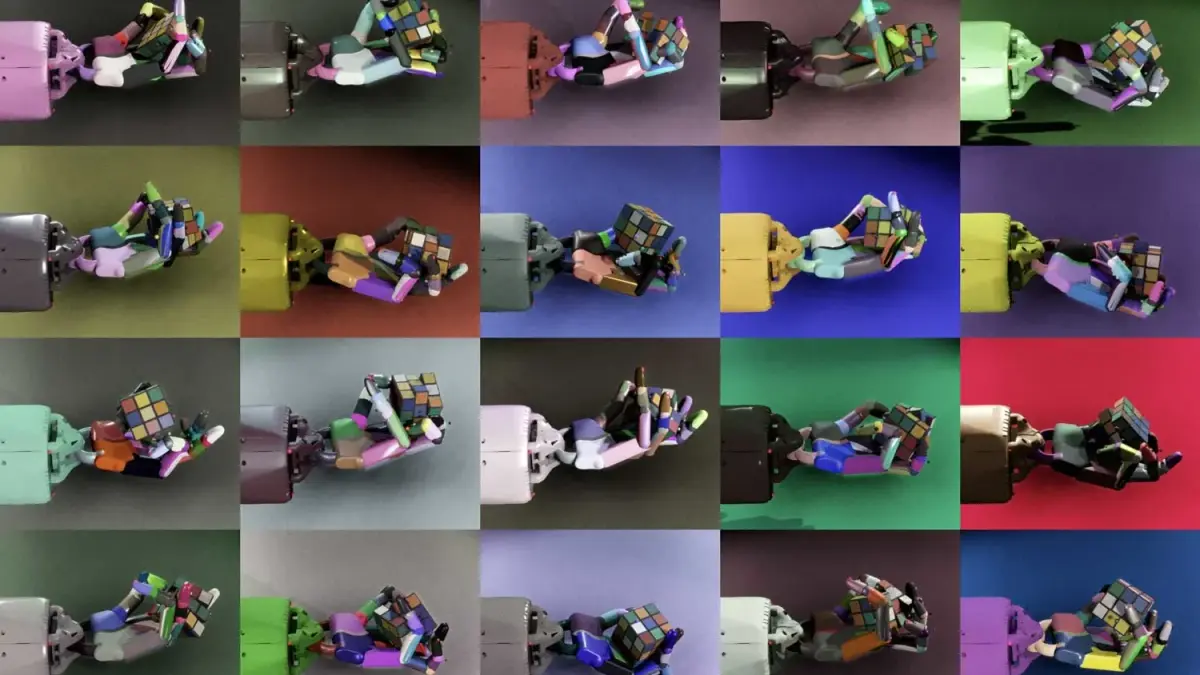
OpenAI redefined the limits of artificial intelligence by enabling robotic hands to solve Rubik Cube. This kind of complex tasks, simulation-based educational techniques and software innovations that are difficult to do with the human hand, can also occur with robotic hands. This success constitutes us an important example of how forward AI and robotic technologies can be moved to us. As you can predict to solve a complex object such as Rubik Cube, we can force human being exceptional abilities if rubic cubes can immediately solve, it is quite remarkable that robotic hands can quickly solve as a result of fine motor skills and precise control mechanisms.
Training and Challenges
Automatic Area Randomization With the method of training, this robotic hand was able to learn how to solve Rubik Cube by overcome various challenges. In the educational process, the robot developed a wide range of problem solving Rubic Cubes in different sizes and features. Different conditions encountered throughout the training optimize the performance of the robot in the real world. Automatic Area Randomization can ensure robots are not only in certain scenarios, but also successful when they encounter unexpected difficulties. This training process created a more flexible and durable robotic system by increasing the skills and adaptability of the robot.
The Automatic Area Randomization technique developed by OpenAI is a revolutionary step in robotic education. This technique can simulate all situations where the robot hand can encounter in the real world by creating various difficulty levels in simulation environments. This makes it possible for robots to adapt to changing and developing environments, not in constant environments. In the training process, let's specify that Rubik Cube is increased the ability to adapt the robot by randomly changing parameters such as size, surface material and mass. This makes the robot succeed in different physical conditions. This method is to provide a training process that adapts itself without the need for human intervention, unlike the manually determined repeat and randomization ranges.
OpenAI Science and Technology of Dissolving Rubik Cube with Robotic Eli
The Rubik cube solution of OpenAI was performed by an algorithm called "DeepCubeA". This algorithm can solve the cube as soon as possible using deep learning techniques and search algorithms. DeepCubeA evaluates different solution ways and complete the cube optimized by selecting the most suitable one.
The process of solving the Rubik Cube of the robotic hand of OpenAI is full of a number of physical difficulties. These challenges include sizes of cube, surface texture and weight differences. The robot uses its cameras and sensors on hand to deal with cubes in various sizes and weights, which enables the robot to move precisely even on different surface textures. Depending on the fact that the surface of the cube is slippery or rough, the robot hand grip strength and movement sensitivity is set according to that moment and visualization of the information stored in the memory of the robot, which stage of the robot allows you to predict what type of movement will do in advance.
Robotic hand stated that it was trained to solve Rubik cubes with different size and surface properties. Factors such as light conditions, temperature changes and vibration can affect the performance of the robot. For example, it can be noted that two fingers are ineffective with rubber, disturbing with plush toys, covering on the robot can be considered to be the eline latic glove of the robot or timidating the cube with pencil. The technique we mentioned above is that robots are not only in certain scenarios, but also successful when they encounter unexpected situations. Robotic systems take significant steps to take more complex tasks in everyday life and show us how artificial intelligence can make human life easier. This project displays the future potential of AI and robotic technologies.
You can withdraw your interest: Future Robots: Challenge Nature’s Master
Analysis and Performance Assessment
The robotic hand we transfer with automatic Area Randomization proves its performance by successfully passing through various tests. These tests show us that the robot can succeed even against unexpected challenges by evaluating the control network and the vision network. It is also possible to visualize the information stored in the memory of the network, predict what type of movement in which stage of the robot will do. This plays a critical role to optimize the performance of the robot and make it more successful in future tasks. Performance assessment helps us understand how effective the robot is in real world conditions, OpenAI researchers note that this success will not only be limited to Rubik cube, but for other complex problems of similar techniques.
Creatorİnsan Beyni ile Kontrol Edilen İlk Robot Geliştirildi: İnsansı Robot (Humanoid Robot)


Koç Holding'in Yeni Dijital İş Ortağı: KoçGPT