



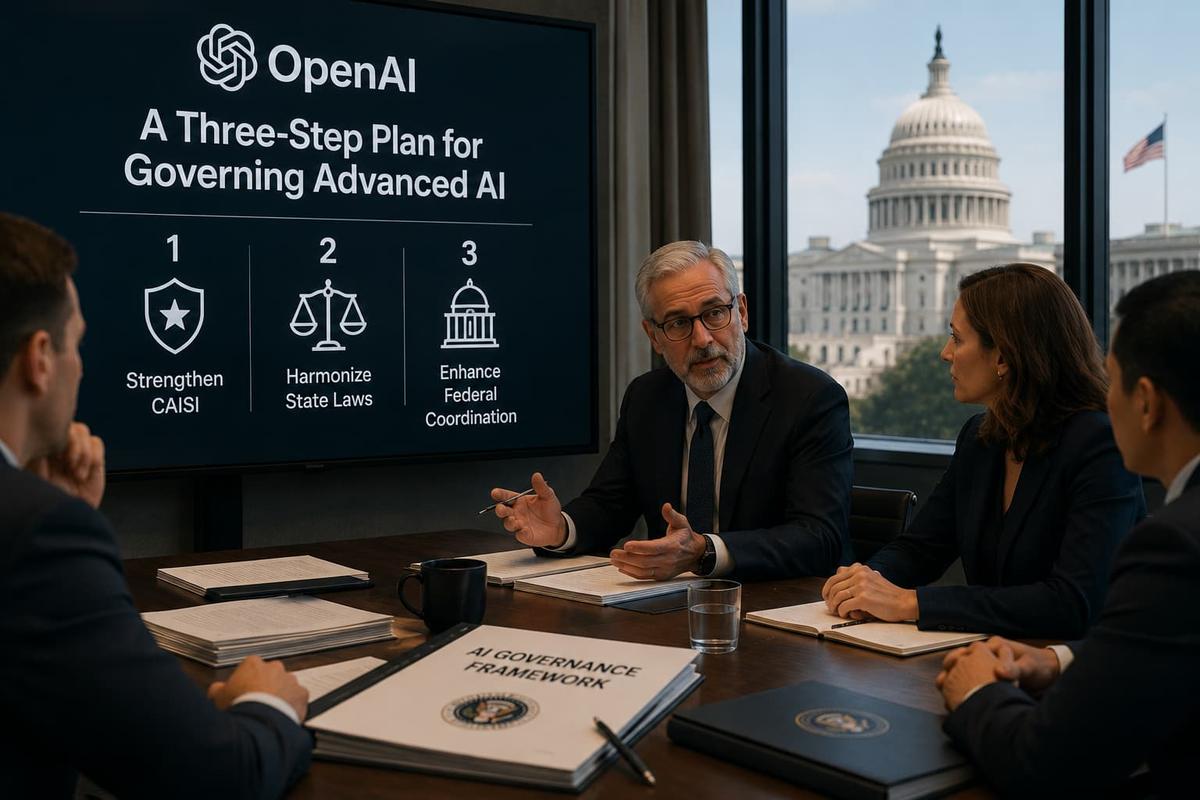
OpenAI Proposes a Three-Part Plan for AI Governance
Automatically translated
 Admin
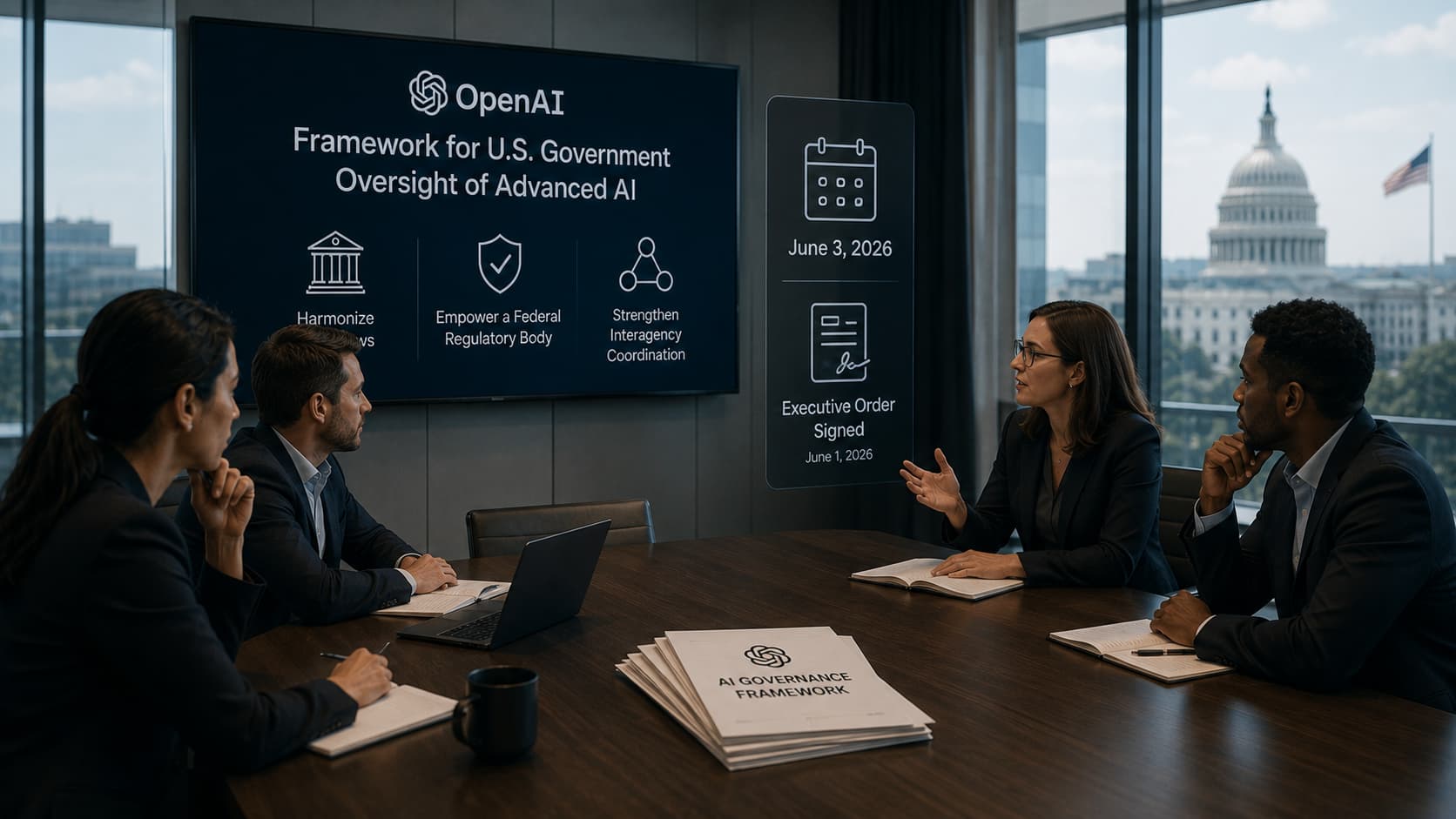
On June 3, 2026, OpenAI published a framework of rules for how the US government should oversee powerful AI systems. The announcement came the same week as an executive order signed two days earlier by President Trump, which calls for frontier AI models to be tested voluntarily. OpenAI's plan is built on aligning state laws, strengthening a federal regulatory body, and increasing coordination between governments.
What Is the Three-Pillar Strategy?
OpenAI's plan sets out three strategic steps: building a national framework based on alignment with state safety laws; strengthening CAISI (Center for AI Standards and Innovation) as the primary federal institution for frontier AI security; and activating a broader resilience plan across government to address the national and public security challenges posed by frontier AI.
Although this plan was proposed by OpenAI, it reflects analyses on AI governance that research centers such as the Massachusetts Institute of Technology and the Stanford AI Index have published in recent years. Security experts have long pointed out that the absence of a central federal body has led to inconsistent standards across technology companies.

Aligning State Legislation
States have started developing aligned approaches to frontier AI governance. These include California's SB 53, New York's RAISE Act, and Illinois' SB 315.
These three state laws have evolved quickly over the past eighteen months to align their building blocks with one another. An amendment to the RAISE Act was introduced in January 2026 and passed into law in March. As a result, New York's regulations have become largely aligned with California's approach.
However, full alignment has not yet been achieved. RAISE borrowed many core definitions from SB 53, including those for catastrophic risk, critical safety incident, and foundation model. While New York's law aligns with TFAIA in its general framework, there are differences, such as provisions requiring incidents to be disclosed within 72 hours, whereas TFAIA has a 15-day notification period.
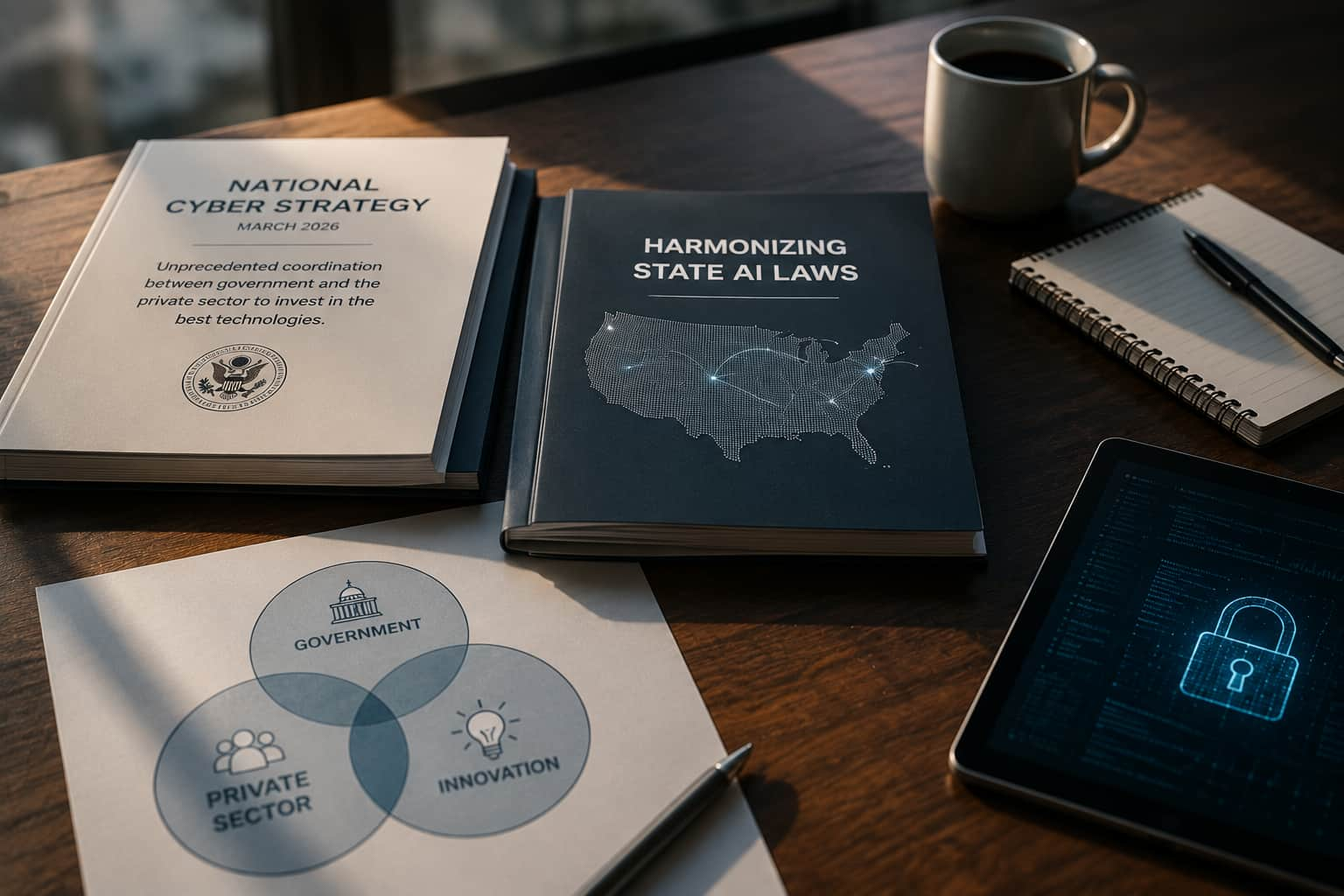
This alignment of state laws is taking place in an environment where a federal framework has not yet fully taken shape. The Trump administration's March 2026 National Cyber Strategy also called for "unprecedented coordination" between government and the private sector so that the best technologies can be invested in.
Strengthening CAISI
At the center of OpenAI's plan is CAISI (Center for AI Standards and Innovation). The body was set up by the Trump administration in August 2025 to focus on AI security, with a particular emphasis on cybersecurity, biosecurity, and chemical weapons risks.
In early May 2026, CAISI completed more than 40 model evaluations and announced new testing agreements with Google DeepMind, Microsoft, and xAI. These evaluations cover cybersecurity, biosecurity, and chemical weapons risks, and some are carried out in classified environments.
However, CAISI's resources remain limited. The America First Policy Institute, known for its closeness to Trump, has stated that CAISI is "chronically underfunded" and operates with around 30 staff. The institute also noted that the center has received a budget of roughly 30 million dollars since 2024, which is lower than comparable AI centers in Canada and Singapore.

The White House's Recent Move
President Trump's executive order, which came right after OpenAI's plan, includes steps in a similar direction. On June 2, 2026, the White House published an executive order titled "Promoting Advanced Artificial Intelligence Innovation and Security" and stated that the regulation aims to address the national security risks posed by advanced AI systems while maintaining US leadership in AI.
The order asks AI companies to voluntarily submit their most powerful models to government testing 30 days before they are made public. It also creates a voluntary cybersecurity coordination structure under the coordination of the Treasury Department, with contributions from other federal agencies, and expands the scope of the US Tech Force program.
However, this framework remains contested. Advocates for AI safety argue that it lacks mandatory pre-deployment testing, binding safety standards, and independent oversight mechanisms. Supporters of innovation, on the other hand, welcome its collaborative and industry-friendly approach. Both sides probably have a point: the order is an important step, but on its own it does not offer a complete solution.
Tension Between State and Federal Governance
OpenAI's plan emerged amid an ongoing dispute between the states and the federal government. In December 2025, President Trump signed an executive order aimed at delaying state AI regulations that were considered inconsistent with federal policy.
In response, some states continue to advance their own regulations. New York Governor Hochul said that with the RAISE Act taking effect, the state "has established a strong standard for frontier AI safety for the nation". California is similarly continuing to develop its own framework.
This situation creates serious compliance problems for technology companies. AI developers face layered and constantly changing obligations at the federal, state, and international levels. Until formal protocols are fully institutionalized, significant regulatory uncertainty appears likely to persist both domestically and internationally.
What the Community Thinks
Supporters
AI safety researchers and policy analysts see OpenAI's plan and President Trump's executive order as important efforts to establish safety standards while preserving US leadership in AI. The Global Policy Vice President of the Business Software Alliance also states that CAISI provides the expertise needed, together with private sector partners, to assess the safety and national security risks of frontier AI models. In their view, CAISI's role as a central institution is the right approach for advancing measurement science and bringing stakeholders together around responsible AI practices.
Critics
On the other hand, some policy advocates are concerned that state laws are being sidelined. Critics in the AI safety field argue that the President's executive order contains no mandatory pre-deployment testing, binding safety standards, or independent oversight mechanisms. They also believe that regulatory fragmentation among states could create gaps in user protection.
Frequently Asked Questions
What exactly does CAISI do?
CAISI works through voluntary agreements with private sector AI developers and evaluators, focusing on measurable risk areas such as cybersecurity, biosecurity, and chemical weapons. Under the executive order, the agency can get early access to frontier AI models 30 days before they are made public.
Which states have frontier AI laws?
California SB 53, New York's RAISE Act, and Illinois SB 315 are the main state regulations adopted in the field of frontier AI safety. These laws were passed in the 2025-2026 period and take effect in 2026-2027.
How does Trump's order affect the industry?
The order does not introduce mandatory licensing or pre-approval for AI models. Instead, it gives federal agencies short-term tasks to identify frontier AI models and create a voluntary testing framework in cooperation with the private sector. This increases testing and transparency obligations, particularly for companies developing the most advanced systems.
Could federal and state laws conflict?
Yes. In December 2025, President Trump signed an executive order aimed at delaying state AI regulations deemed inconsistent with federal policy. Ultimately, courts will decide whether federal regulations can override state laws.
What does all this cost AI companies?
AI developers face layered and constantly changing compliance obligations from federal, state, and international bodies. Until formal protocols are fully institutionalized, they will continue to operate under significant regulatory uncertainty both at home and abroad.
OpenAI's plan and the President's executive order offer a framework for where AI governance is heading. Perhaps more importantly, they show how much of this field is still waiting to be decided. As states and the federal government take new steps, the industry will have to keep updating its compliance strategies to fit this multi-layered structure.
AdminOpenAI'nin Yeni Politika Gündemi: Demokrasi ve Emniyet


Gemini Kullanım Limiti Doldu mu? Ne Zaman Sıfırlanır


