




OpenAI's New Measurement Suite: How Is AI Affecting Learning?
Automatically translated
 Writer
The education world is going through one of the sharpest turns of digital transformation. The debate that started when tools like ChatGPT entered classrooms, "Does AI do students' homework or does it teach them?", is now giving way to scientific data. OpenAI announced the comprehensive "Learning Outcomes Measurement Suite" system, which measures the impact of AI on learning, and opened a new chapter in education. Our focus now moves beyond the grade of a single exam to how AI shapes a student's cognitive development over time.
OpenAI Learning Lab and the SCALE Initiative: A Scientific Collaboration
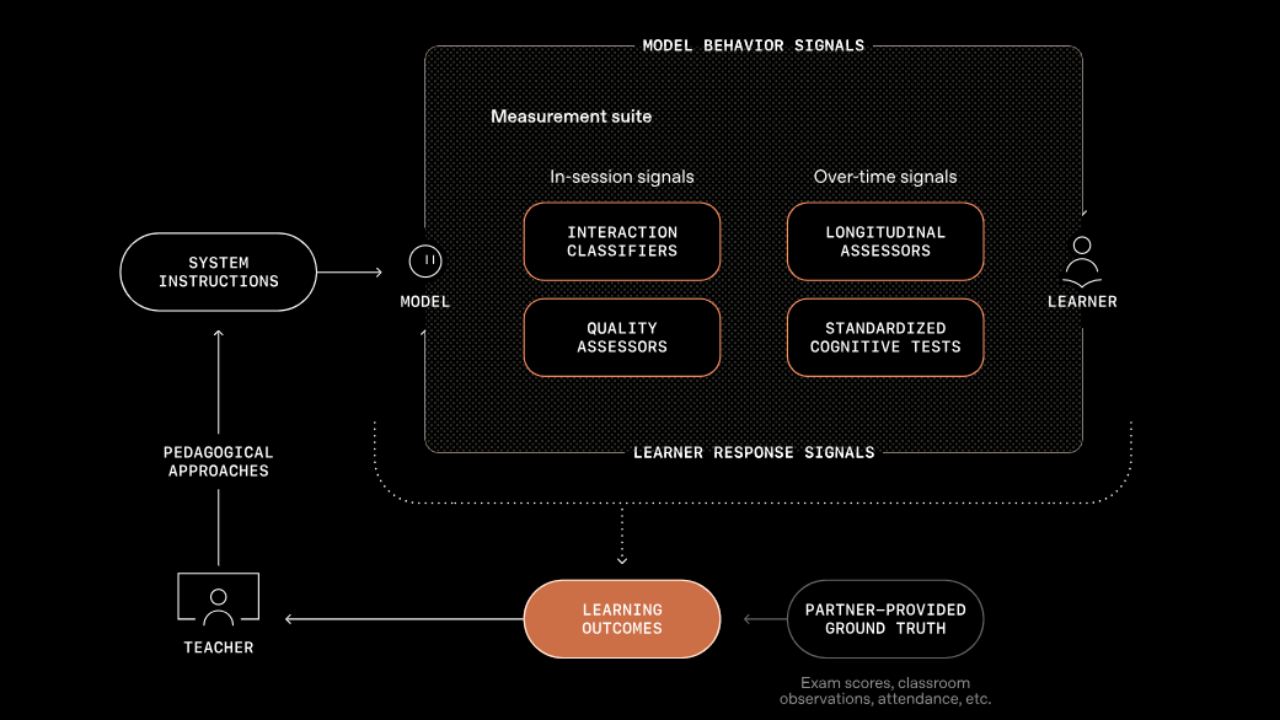
Yapay zekanın eğitimdeki success cannot be measured with software-based data analysis alone. Driven by this vision, OpenAI entered into a major partnership with the SCALE Initiative at the University of Tartu in Estonia and the Stanford Accelerator for Learning. At the heart of this collaboration is the OpenAI Learning Lab, designed as a research ecosystem that analyzes the learning outcomes of AI.
This initiative aims to move AI from being just an answer machine to becoming a pedagogical guide. As Prof. Susanna Loeb of Stanford University noted, this work lays the groundwork for understanding how AI triggers students' higher-order thinking skills and curiosity.
Beyond Exam Grades: Cognitive and Metacognitive Measurement Parameters
Traditional education systems usually measure success with narrow performance indicators such as final exam grades. But when it comes to measuring the learning outcomes of AI, these data points are only the visible tip of the iceberg. The newly developed OpenAI measurement suite focuses not only on what a student knows, but also on how they learn.
The system analyzes deep parameters such as the persistence a student shows when facing a difficulty, their ability to plan their own learning process, meaning metacognition, and the quality of their interaction with the model. This makes it clear whether AI use leads to short-term memorization or a lasting change in thinking.
2026 Competency Observation Table
The table below summarizes the core competencies tracked by OpenAI's new measurement system and the effects observed as of 2026:
Measured Competency | Definition | AI Effect (2026 Observation) |
|---|---|---|
Autonomous Motivation | The degree to which a student shapes their own learning | Increase under model guidance |
Cognitive Persistence | Ability not to give up when facing difficulties | 15% higher performance with "Study Mode" |
Metacognition | Planning and reflecting on the learning process | Development through systematic feedback |
Recall | Remembering content from earlier interactions | Personalized review cycles |
ChatGPT "Study Mode": The Secret Behind a 15% Gain in Academic Performance
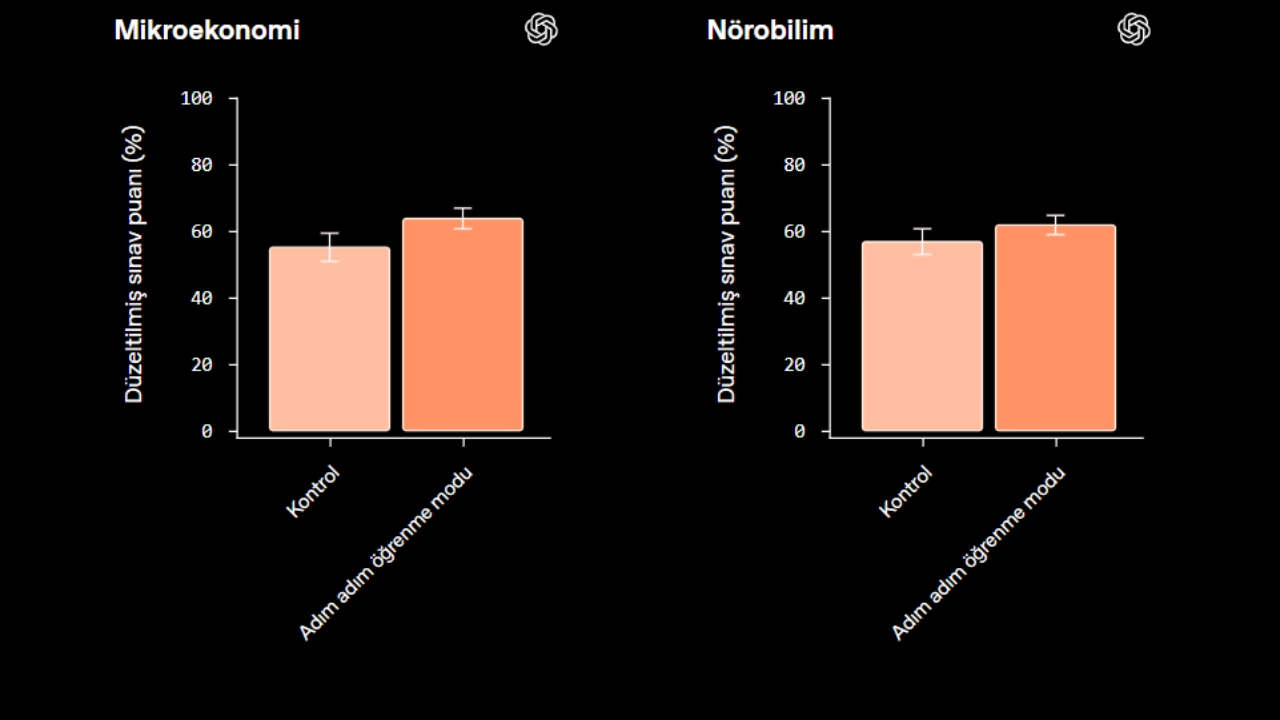
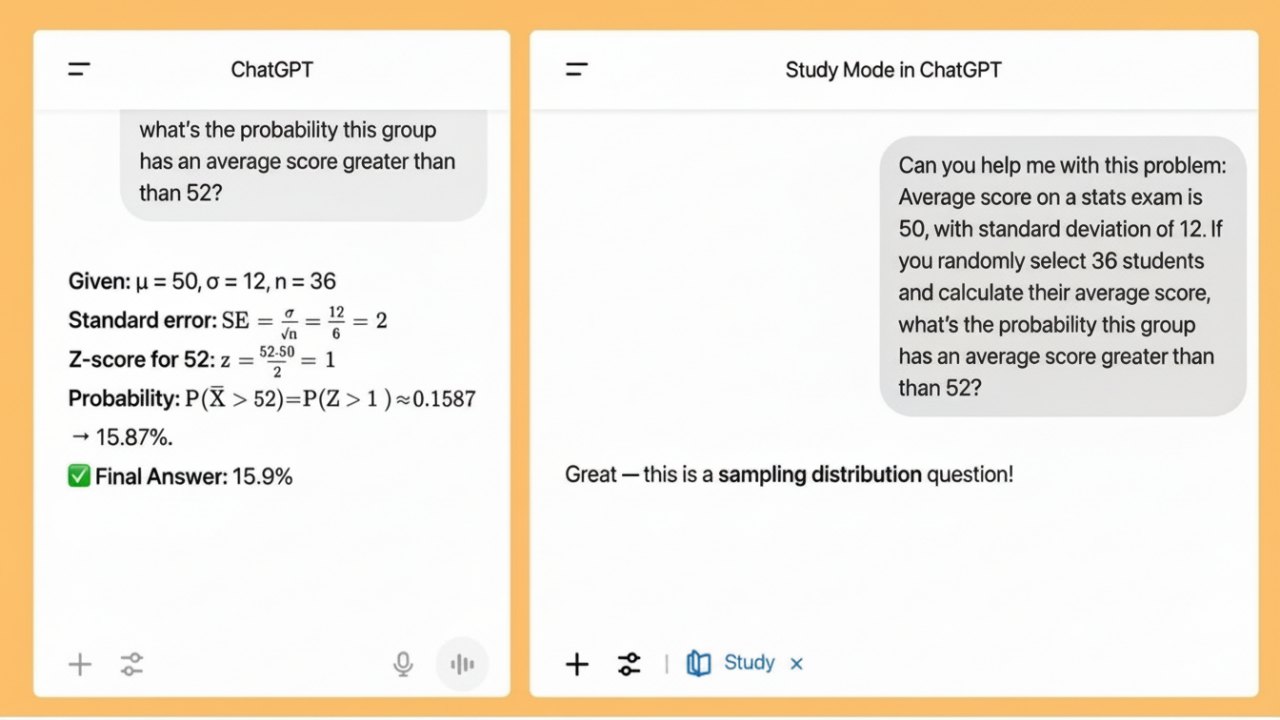
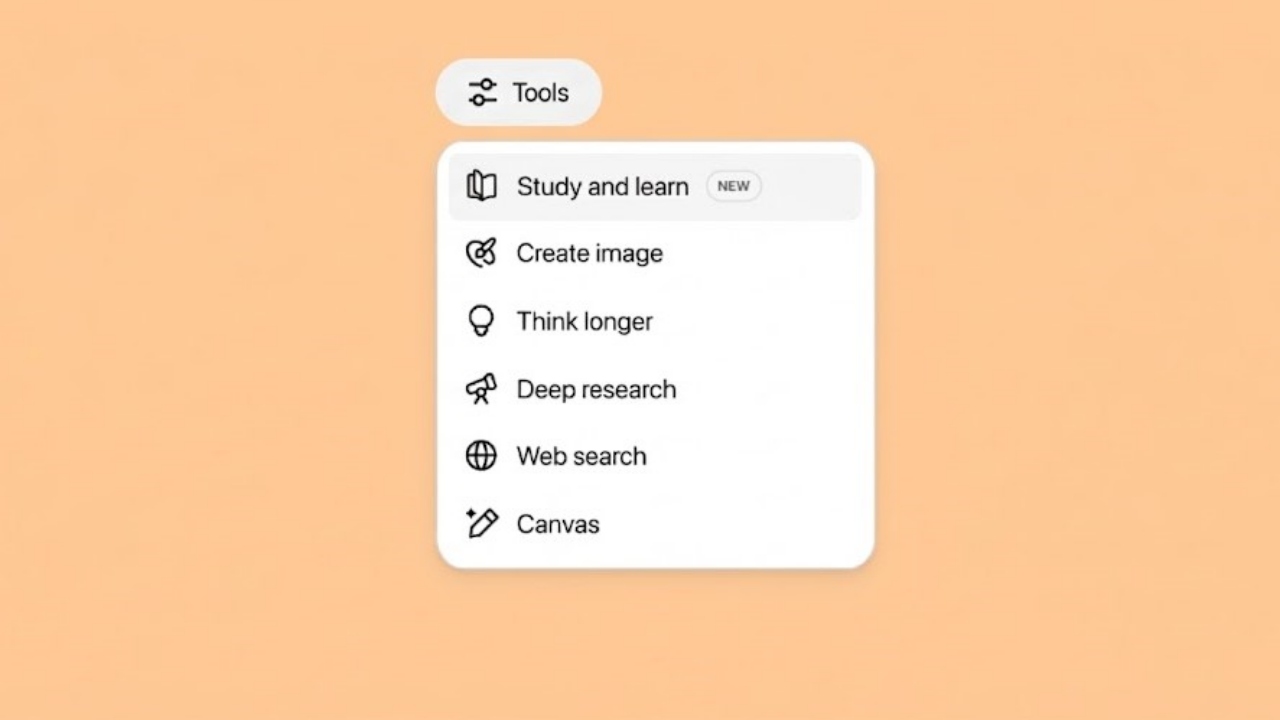
Randomized controlled experiments conducted by OpenAI produced striking results, especially in demanding fields such as microeconomics and neuroscience. ChatGPT Study Mode, which can be described as a step-by-step learning mode, guides the student like a teacher instead of giving them the answer directly.
In the studies, students who used this mode achieved exam scores 15% higher than a control group that used traditional online resources such as Google or YouTube. The secret to this success is that the system keeps the student in an active learning loop and manages cognitive load well.
Longitudinal Measurement System: How AI Shapes Students Over Time
A student's performance over a single week can be misleading. For this reason, the new measurement system uses a longitudinal methodology, meaning one that spans time. The system tracks three main signals:
Model Behavior: How closely the AI sticks to pedagogical principles.
Student Response: The active engagement a student shows in learning moments.
Cognitive Outcomes: The evolution of competencies such as critical thinking and creativity over time.
This approach shows that AI can be more than an assistant: it can be a long-term mentor that improves a student's study habits.
2026 Education Vision: Integrating AI into Schools Scientifically
Countries such as Estonia, which see education as a dynamic system, have already begun testing this new measurement suite with 20,000 students and integrating it into their national curricula. The 2026 vision covers not random use of AI, but a measurable and ethical integration supported by scientific data.
OpenAI's new move gives educators a powerful data set, because it is now possible to measure which AI interactions help a student grow and which push them toward complacency. The future of education looks set to become a structure in which every student progresses at their own pace and on their own cognitive map, with AI and human intelligence working in seamless collaboration!
WriterTeknoloji ve Kariyer Staj İlanları | 13 Nisan - 19 Nisan 2026

Microsoft Ücretsiz Sertifika: 2026 Kariyer ve Eğitim Rehberi


