Sophia: Leader of Humanoid Robots Age
Automatically translated
 Creator
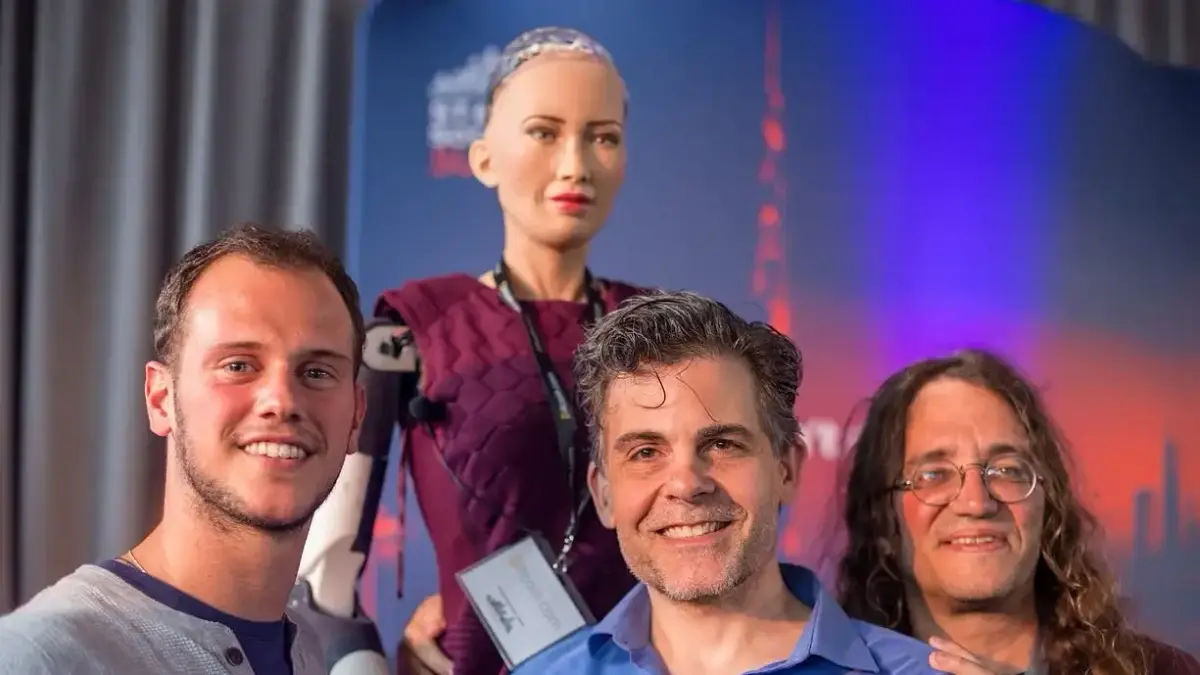
Sophia, the most advanced human robot of Hanson Robotics, continues to revolutionize artificial intelligence and robotics. Hagia Sophia, which was introduced in 2016, has won the world around in a short time and showed up to many platforms, from joining TV shows, taking part in magazine covers. Sophia has the ability to create a unique bond with people thanks to human facial expressions and advanced artificial intelligence.
Innovations in Human-Robot Interaction
Sophia was developed to understand human-robot interactions and explore potential services and entertainment practices of these interactions. Advanced facial recognition technology was equipped with emotional expression detection and ability to recognize various hand movements. Hagia Sophia is able to mimic human facial expressions during conversations and thus provide more effective and meaningful interactions.
Face expressions of the robot were created with Frubber, the patented elastic rubber material of Hanson Robotics. This material mimics the feeling and flexibility of human skin, which can make Sophia exhibit more realistic and impressive facial expressions. Research has shown that Sophia’s facial expressions and emotional reactions create positive effects on users.
Robot uses advanced Artificial Intelligence software to understand the emotional reactions of users and respond to them. These software can allow users of the robot to recognize feelings such as happiness, sadness, anger and respond to these emotions. Thus, Sophia can function not only as a robot, but also as a friend and consultant.
Artificial Intelligence and Learning Ability
The robot combines various technologies such as artificial intelligence, symbolic AI, nerve networks, specialist systems, machine detection and natural language processing. This combined structure can ensure that Sophia can provide unique reactions to any situation. We stated that the robot has the ability to recognize human faces and emotional expressions during conversations and can connect deeper to people using this information. At the same time, the artificial intelligence of the robot simulates a complex cognitive architecture with its own emotions and targets.
The ability to learn the robot is in short of Synthetic Organism Unifying Language, a special protocol developed by Hanson Robotics, supported by SOUL. This protocol is to ensure that the artificial intelligence of Sophia works together with the help of human. The robot sometimes works in a semi- autonomous mode, sometimes guided by human intervention, while working with a completely autonomous AI mode.
Robot also has the ability to learn by analyzing users’ reactions during conversation. This may allow Sophia to further personalize future interactions and better respond to users’ expectations.
You Can See Your Interest : OpenAI's Rubic Cube Solution: New Victory of Artificial Intelligence
The Future of Social Robots
Sophia is not just a robot, but also a platform for artificial intelligence research and human-robot interactions. Sophi’s developers aim to be an inspirational source in its advanced technology and engineering areas. Let’s mention that the robot was the first non-human “inovation champion” of the UNDP and is the first robot issued by Saudi Arabia
The capabilities of the robot are continuously developed for use in various fields such as medicine, education and service sectors. For example, Robot can be used in medical consulting services or guide students in training. Hanson Robotics plans to provide more comprehensive and effective solutions in the future by developing the human abilities and artificial intelligence of Sophia.
The technology used in the development of the robot shows us how social robots can play a role in understanding human psychology and behaviors. The research of human-robot interactions allows people to develop robots that respond better to their emotional and social needs. The robot provides important information to us about the design and functionality of future social robots as a pioneer of the work in this field.
Sophia’s Global Impact and Additives
Sophia has become a global icon in many events worldwide. He made speeches in the United Nations, met the world leaders and participated in many international conferences. Sophia showed a height in various platforms to increase awareness in technology and AI issues and to show potential of these technologies.
Robot also took active role in cultural events. In film festivals, fashion shows and art exhibitions, we have shown how artificial intelligence can integrate with art and culture. The presence of Sophi in such activities reveals that it is not only a technology product, but also a cultural phenomenon.
The global impact of the robot shows itself with its educational roles. Inspired students in seminars organized in schools and universities and leads to future engineers and scientists. The robot plays an important role in educational institutions to increase the interest in technology and encourage young people to career in ITMM (science, technology, engineering, math).
CreatorYapılandırılmış Işık ve Yapay Zeka İletişimin Geleceğini Nasıl Şekillendiriyor?

Mistral AI'ın yeni dil modeli "Large 2" piyasada!