



Turkey's Artificial Intelligence Initiative Publishes AI Risk Report
Automatically translated
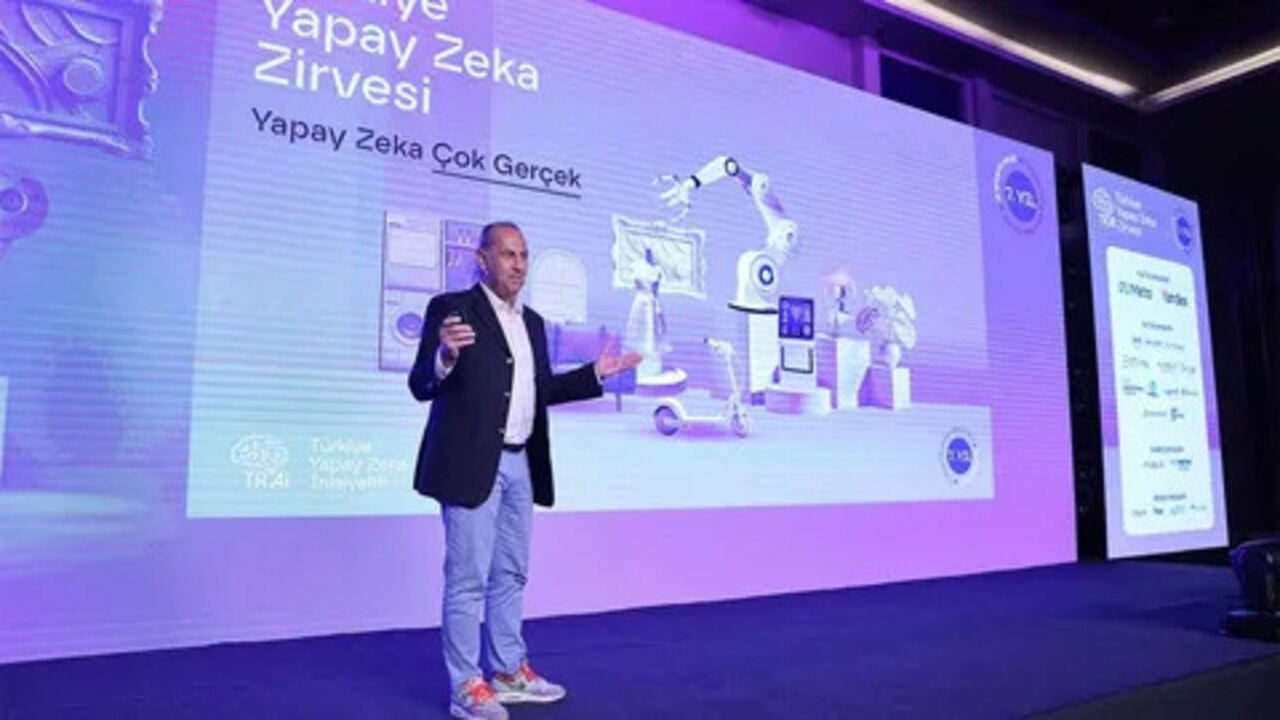
The Turkey Artificial Intelligence Initiative (TRAI) has published its "Artificial Intelligence Risk Report," which focuses on the ethical, security and oversight dimensions of AI.
Shared publicly in August 2025, the report is a comprehensive document that systematically examines the potential threats of AI in Turkey.
What Is the Turkey Artificial Intelligence Initiative (TRAI)?
Turkey Artificial Intelligence Initiative (TRAI) is an independent initiative that aims to strengthen Turkey's AI ecosystem, increase cooperation across sectors, and support the country's strategic vision in this field. Founded in 2017, TRAI seeks to bring the private sector and academia together on a shared footing.
TRAI's work includes creating AI ecosystem maps, preparing policy documents on ethical principles, and raising AI awareness in Turkey. In this sense, TRAI is not only a technology initiative but also a stakeholder in social transformation.
What Is the AI Risk Report?
The "AI Risk Report", published by TRAI on its official website in August 2025, is an assessment that comprehensively analyzes the ethical, social, environmental and security-related risks AI can create.
The report does not just list risk areas; for each risk, it provides a definition, possible harms, likelihoods of occurrence, and proposed solutions.
TRAI maps risks mainly through data security, algorithmic impartiality, transparency, oversight and ethical AI policies.
Risk reports like this have become common worldwide. For example, documents such as the International AI Safety Report 2025, published the same year, analyze global AI risks.
For Turkey, this report is an important example in terms of its focus areas.
Report Content: The Axes of Ethical AI, Security and Oversight
The report identifies the biggest danger that comes with the rapid development of AI as uncontrolled use and data breaches. The uncontrolled spread of AI models could threaten both individual privacy and national security.

The report also points out that algorithmic biases and unethical practices can deepen social inequalities. For this reason, TRAI stresses that every AI application should be based on an ethical framework. Auditability, transparency and accountability form the core backbone of this report.
TRAI sees AI as a critical opportunity for Turkey's digital transformation. However, it emphasizes that misuse of this technology can cause serious ethical, social and economic problems. The aim, with an approach of "not fear, but conscious policy making," is to build a solid roadmap for the public sector, private sector and academia.
The report aims to preserve social balance against the pace of technological development.
It states that in scenarios where ethical boundaries of AI are not drawn, individual privacy, economic stability and security structures may face serious risks.
According to TRAI, AI technologies involve 10 fundamental risk areas that could directly affect the future of humanity.
The 10 Fundamental Risks Identified by TRAI
1. Autonomous Weapons and Military Use
Definition: Autonomous weapon systems that identify and fire on targets without human intervention.
Harms: Civilian casualties, violations of the laws of war, strategic instability, access by terrorist organizations.
Likelihood: High likelihood of spread in the medium term; many countries have active R&D underway.
Solution: International agreements, "human oversight" standards, ethical rules, cybersecurity measures.
2. Unemployment and Economic Imbalance
Definition: Job losses as automation takes over repetitive work.
Harms: Social inequality, distorted income distribution, budget pressure, social unrest.
Likelihood: Short-term increase in production and service sectors; structural unemployment in the long term.
Solution: Education reform, reskilling programs, social security reforms, fair taxation.
3. Data Privacy and Personal Privacy Violations
Definition: Excessive collection and misuse of personal data.
Harms: Loss of privacy, data leaks, psychological effects, erosion of trust.
Solution: GDPR-like legal frameworks, strong cybersecurity, data minimization, user control, international cooperation.
4. Bias and Injustice in AI
Definition: Prejudices in training data being reflected in algorithms.
Harms: Social discrimination, unequal opportunities, erosion of public trust.
Solution: Data diversification, model auditing, explainable AI (XAI), ethics committees, algorithmic fairness laws.
5. Lack of Transparency in Decision-Making
Definition: The decision mechanisms of "black box" models cannot be understood.
Harms: Ethical problems, lack of accountability, loss of public trust.
Solution: Explainable AI methods (LIME, SHAP), simple models, legal regulations, multi-stakeholder oversight.
6. Synthetic Content Generation (Deepfakes) and Information Pollution
Definition: Production of fake video, audio and text that closely resemble reality.
Harms: Disinformation, political instability, loss of trust in media.
Solution: Content verification systems, AI ethics boards, public media literacy, criminal sanctions.
7. Uncontrollable or Self-Improving AI
Definition: Systems that could slip out of control or become closed to human intervention.
Harms: Devastating effects in autonomous decision loops, security risks.
Solution: Security protocols, emergency shutdown (kill switch) mechanisms, international oversight.
8. Weakening of Human Abilities and Independence
Definition: Erosion of human analytical thinking skills as a result of excessive dependence on AI.
Harms: Decline in creativity, weakening of critical decision-making ability.
Solution: A balanced approach in education, human-centered decision processes alongside technology.
9. Cybersecurity Threats
Definition: Hacking or manipulation of AI systems.
Harms: Risk of failure in critical infrastructure such as energy, transportation and healthcare.
Solution: Strong encryption, testing of AI-based security systems, cyber intelligence cooperation.
10. Energy Consumption and Environmental Impact
Definition: High energy consumption and carbon footprint of large models.
Harms: Environmental degradation, resource consumption, unsustainability.
Solution: Green AI approaches, energy-efficient hardware, transition to renewable sources.

What Should We Avoid? Practices to Steer Clear Of
Beyond potential risks, the TRAI report also highlights "bad practice examples" that could increase these risks. It emphasizes that uncontrolled spread of AI could threaten both social and economic balances.
The report specifically notes that the following flawed approaches should be avoided:
Unchecked integration: Integrating AI into public services or defense systems without control creates major security risks.
Lack of transparency: When it is unknown how algorithms make decisions, biases and errors go unnoticed.
Insufficient data control: When security, anonymity and consent principles are not followed, personal privacy is violated.
Unethical design: Systems that disregard user interests erode public trust and brand reputation over the long term.
Ignoring energy and environmental costs: When the carbon footprint of large models is ignored, sustainability is put at risk.
Security gaps: Systems open to cyberattacks pose serious threats, especially in critical infrastructure.

What Can We Do? Recommendations from TRAI and the Literature
TRAI does not just issue warnings; it also offers solutions. Ethics and governance recommendations serve as a roadmap for the safe development of AI, both in Turkey and internationally:
Ethical principles: Ethical frameworks based on fairness, transparency, human dignity and privacy values should be established.
Regulatory bodies: Independent authorities should regularly audit AI applications.
Transparency and accountability: Decision processes of models should be explainable; audit records should be kept.
Data standards and privacy protection: Data anonymization, open data policies and user information should become standard.
Energy efficiency: Energy-cost balance should be considered in model design, and environmental impacts should be reduced.
Cybersecurity integration: Systems should be resilient against attacks from the design stage onward.
Human-centered approach: User feedback should be taken into account, and human intervention should always be possible.
Alignment with international norms: Developing policy in parallel with the EU AI Act, OECD and UNESCO ethical standards is recommended.
Continuous monitoring: As AI projects spread, their effects should be reviewed regularly.
In addition, academic resources such as The AI Risk Repository offer much broader risk classifications and data-based analyses. Using such sources, it is possible to create risk maps at the scale of Turkey.
Social Impacts of AI Risks
Another point the report highlights is the social transformation power of AI, which is not limited to technical systems. If this transformation is not managed properly, it could deepen social inequalities:
Employment: Automation may eliminate some occupations while also creating new fields of work. Employment policies play a critical role in this transition.
Education: AI-supported learning tools can reduce inequality of opportunity, but they can also create gaps in regions with limited access.
Privacy: Data-driven surveillance systems can threaten individual freedoms.
Social discrimination: Biased algorithms may further exclude disadvantaged groups.
Cultural effects: Excessive dependence on technology can weaken critical thinking and cultural diversity.
TRAI therefore emphasizes that AI should be treated not merely as a technical tool, but as a force that shapes social transformation.
Why the Report Matters: A Strategic Warning for Turkey
The report sets out a new policy vision so that Turkey can manage AI within ethical boundaries. It highlights that AI is not only a technological field but also an economic, social and moral issue. According to TRAI, ethical and transparent AI policies will increase Turkey's global competitiveness. The report also brings the social dimension of AI policy in Turkey, not just the technical one, to the agenda. Establishing a culture of ethical AI development will ensure the sustainability of technological progress.
Considering that AI is now used in every field from public administration to education, from media to healthcare, this report stands out as a warning that underlines human-centered digital transformation. For Turkey's technology policies, this document emerges as a guide that shapes the security of the future.
International Perspective: Similarities with the EU AI Act
The report also parallels AI regulations pursued globally.
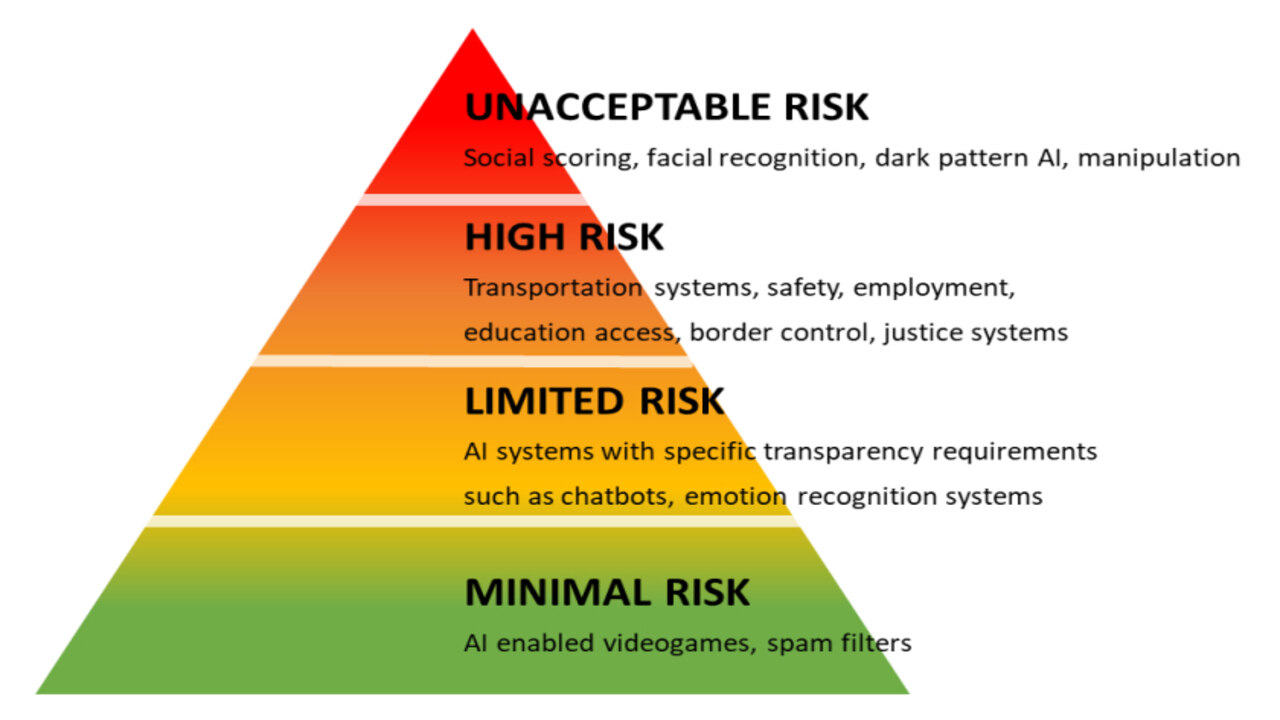
The EU AI Act, the OECD AI Principles and the UNESCO Ethics Recommendation emphasize principles of human rights, accountability and auditability. In particular, the Artificial Intelligence Act (AI Act) that the European Union put into force in 2024 adopted a risk-based oversight model and made ethical principles mandatory. TRAI states that it is critical for Turkey to act in line with these norms, both for trust and for sustainability, and that this approach should also be adopted in Turkey. The report stresses that aligning with international standards will increase Turkey's technological competitiveness and credibility.
Beyond Turkey, there are important approaches to AI ethics and regulation around the world:
EU AI Act | Introduces pre-approval, transparency and traceability criteria for high-risk systems. |
OECD AI Principles | Supports the development of AI around frameworks of respect for human rights, transparency and accountability. |
AI Risk Repository | This academic resource, offering 777 different risk categories, provides a broad risk map. |
UNESCO Ethics of AI Recommendation | Advocates an ethical and rights-based approach grounded in universal values. |

A Joint Step Toward Ethical and Safe AI
The "AI Risk Report" is not just an assessment text; it is an ethical call for Turkey's future. Through the report, TRAI aims to strengthen cooperation among the public sector, private sector and academia, and to encourage innovation while minimizing risks.
The work of the Turkey Artificial Intelligence Initiative places responsible AI at the center of Turkey's digital transformation. It conveys the clear message that technological progress will not be sustainable unless safe, ethical and auditable systems are built. Also, AI education emerges as an indispensable skill for the future.
Zararlı Yapay Zeka Modelleri: Riskler ve Korunma Yolları


Ücretsiz Görüntülü Sohbet ve Konuşma Uygulamaları (2026)


