



What Is Apple Intelligence? 2026 Guide
Automatically translated
 Writer
The history of technology is the written form of humanity's desire to exceed its own limits, but there are breaking moments when this history does not simply advance, it changes direction. Apple Intelligence is positioned at exactly such a threshold. The question is no longer whether machines can think faster, but how to build a digital consciousness that can grasp a person's language, intent and even their silences. In this context, the artificial intelligence ecosystem developed by Apple is not only a technical leap but also an ontological redefinition.
From the perspective of Apple AI in Türkiye, this transformation also shows that language is not merely a tool but a carrier of identity. Expanding Turkish language support is a cultural inclusion move that goes beyond a technical update. In this way, generative AI integration evolves into a process of localized meaning-making.

How Does Apple Intelligence Make Daily Life Easier in 2026?
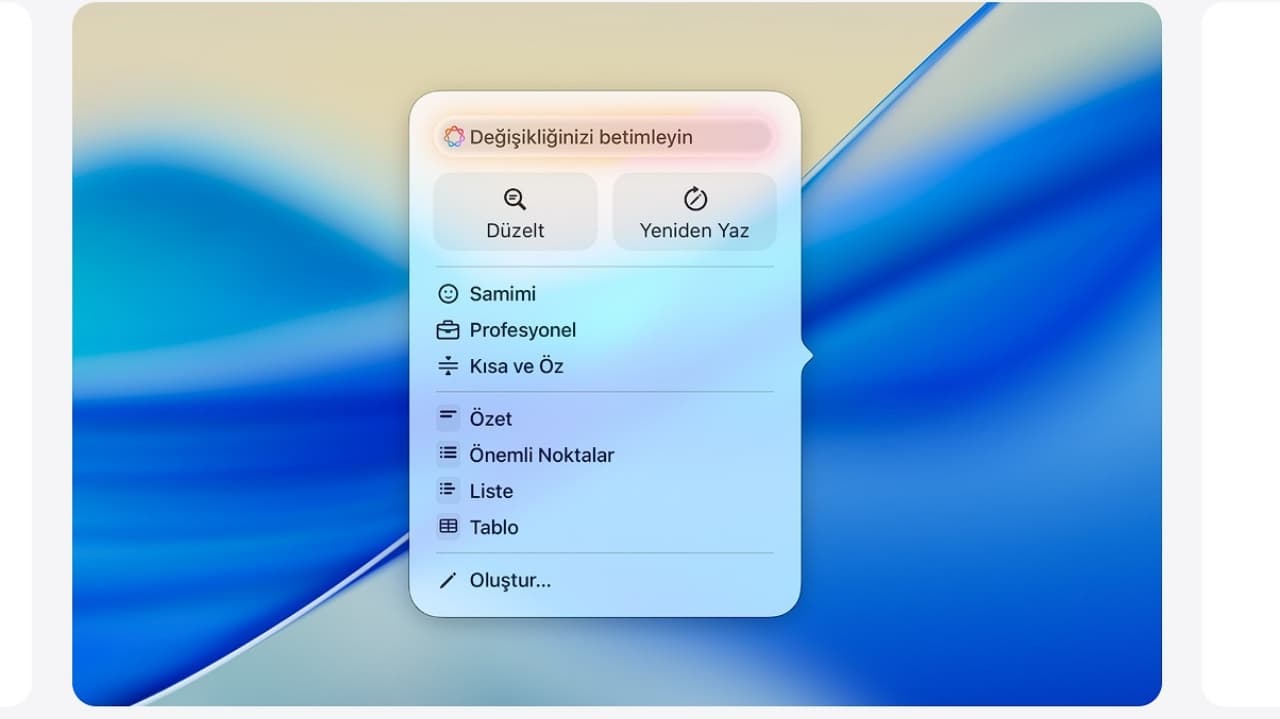
Apple Intelligence appears as an intuitive ecosystem that integrates into the flow of everyday routines without exercising control over the user. This reflects a concrete expression of the aesthetic of invisible intelligence. The system goes beyond being a mechanism that merely directs the user; it offers a structure that accompanies cognitive processes thinking together with them. In text processing, it does not stop at morphological or syntactic corrections; it also analyzes the semantic depth, pragmatic intent and contextual layers of a message. When summarizing content, it does not filter word sequences but the conceptual focal points where meaning is concentrated, producing a functional synthesis.
Especially with the AI architecture of the iPhone 17 Pro, devices stop being passive tools and become intuitive subjects. These devices now try to understand not only what we do but why we do it. While analyzing user habits, they develop a probabilistic intuition rather than a deterministic model. This turns technology from a rigid system into a fluid experience.
Generative AI integration here is not limited to producing content. It is also an assistant that speeds up thinking, lightens mental load and directs the individual's cognitive energy toward more creative areas. In a sense, it is a digital echo of the human mind.
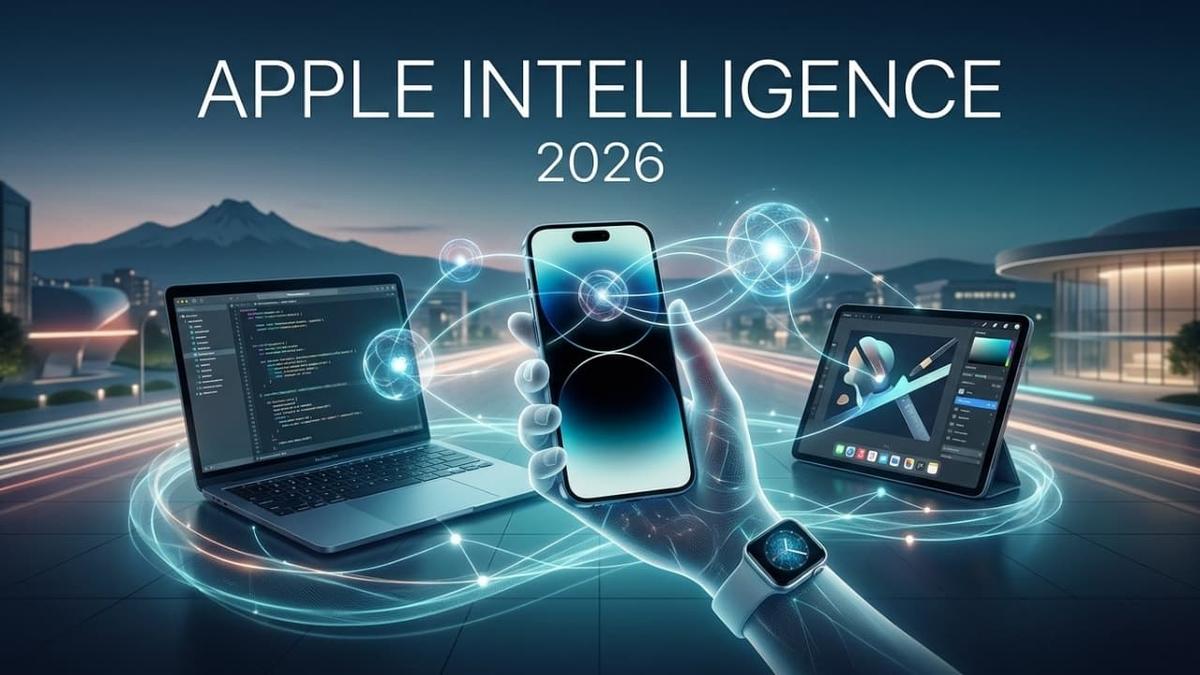
As of 2026, Apple Intelligence has moved beyond being just a smart assistant to become an invisible operating layer that manages the flow of daily life across the iPhone, Mac and iPad ecosystem. With the updates from WWDC 2025 and early 2026, the technology has reached its peak with cross-device contextual awareness and advanced privacy protocols.
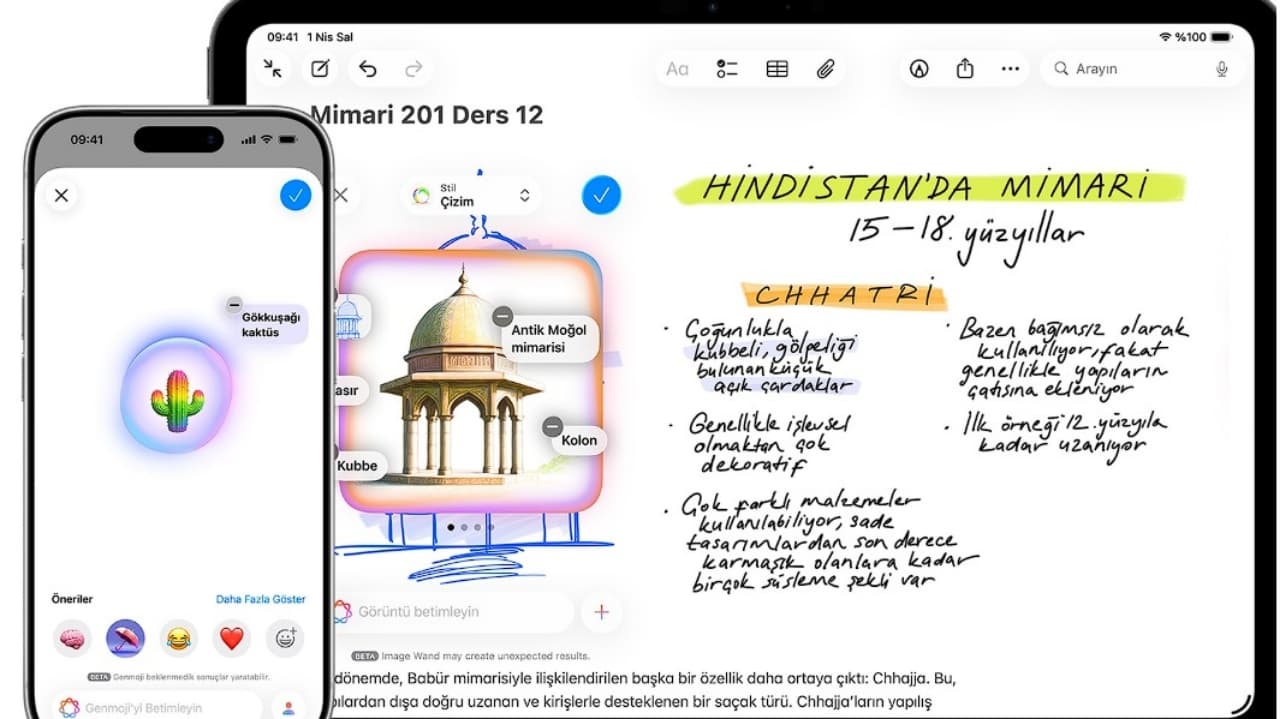
1. Siri's "Screen Awareness" and Deep App Integration
In 2026, Siri is no longer just a voice that receives commands; it is an assistant that knows what you are looking at.
· Technical Detail: Thanks to Apple's new App Intents framework, as of 2026 Siri can act inside hundreds of third-party apps.
· Daily Life: When a friend sends you an address on Instagram, all you need to say is, "Siri, add this address to the contact card and set a reminder for me to go there tomorrow morning." Siri reads the screen, parses the text and bridges Calendar, Contacts and Maps.
2. Live Translation and AirPods Sync
The language barrier has found a fully digital solution in 2026. The Live Translation feature has moved from FaceTime and phone calls to face-to-face conversations through AirPods.
· Technical Foundation: Thanks to the Neural Engine in the A19/A20 chips, translation runs entirely on the device (on-device). This reduces latency to nearly zero.
· Use Case: When ordering at a café abroad, your AirPods Pro translate the other person's speech into Turkish in real time and whisper it into your ear. Likewise, your replies are translated into the other language and played through the phone's speaker.
3. Visual Intelligence and Camera Control
The Camera Control button, introduced with the iPhone 16, reached its full potential in 2026.
· New Update: When you point the camera at a restaurant menu on the street, Apple Intelligence not only translates it but also highlights dishes that fit your dietary restrictions (for example, gluten-free) and lets you make a reservation with a single tap.
· Technical: Apple's own large language models (LLMs) work in a hybrid setup with Google Search and ChatGPT to turn visual data into information within milliseconds.
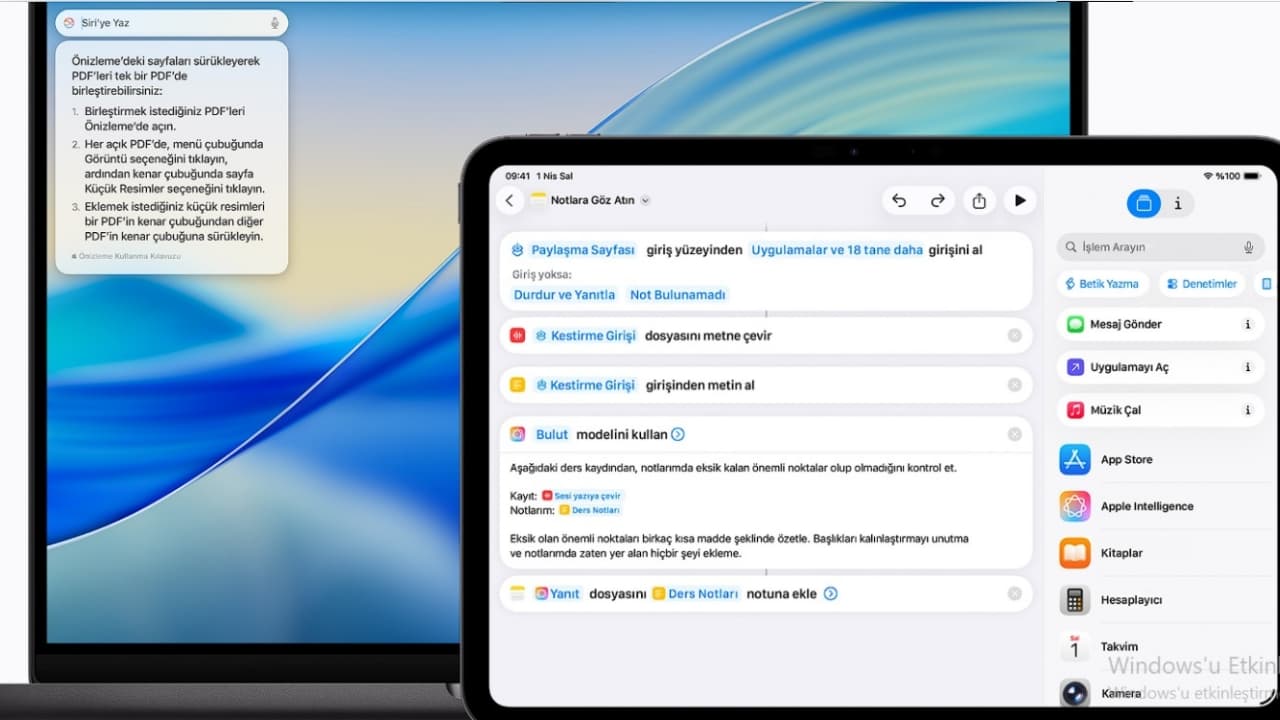
4. Smart Writing and Summarization Tools (Writing Tools 2.0)
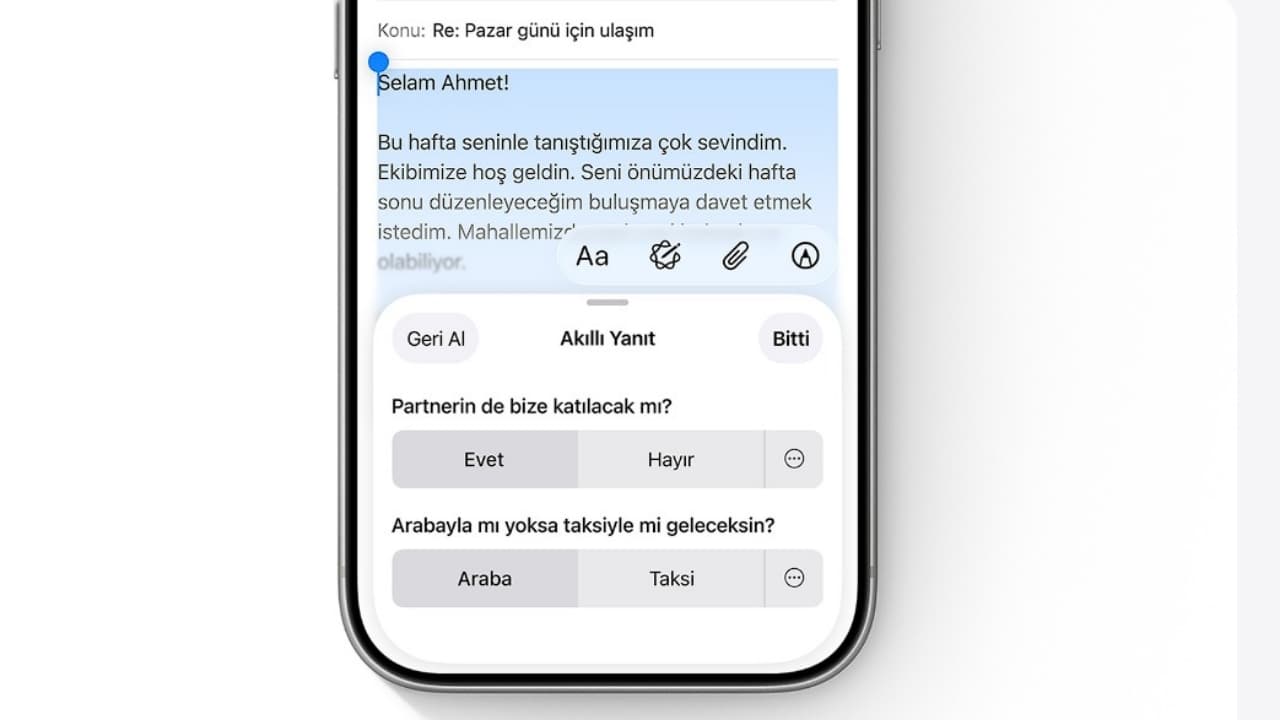
Writing tools no longer just fix spelling; they adjust tone according to context.
· Priority Notifications: With the 2026 update, your notifications are no longer just a list. AI scans hundreds of incoming messages and moves critical summaries such as "There is an important message from your child's school" or "Your flight may have been delayed" to the top.
· Smart Writing: In the Mail app, Apple Intelligence detects technical questions asked to you and, by checking your calendar and earlier files, prepares draft replies.
5. Privacy: Private Cloud Compute
Apple's biggest technical achievement in 2026 was "combining cloud intelligence with device privacy."
· Technical Operation: When very heavy tasks (for example, assisting with complex video editing) exceed the device's capacity, the data is sent to Private Cloud Compute.
· Security: Your data is never stored on these servers, and not even Apple can access it. The data is deleted from the server as soon as it is processed. As of 2026, this security protocol can be verified in real time by independent auditors.
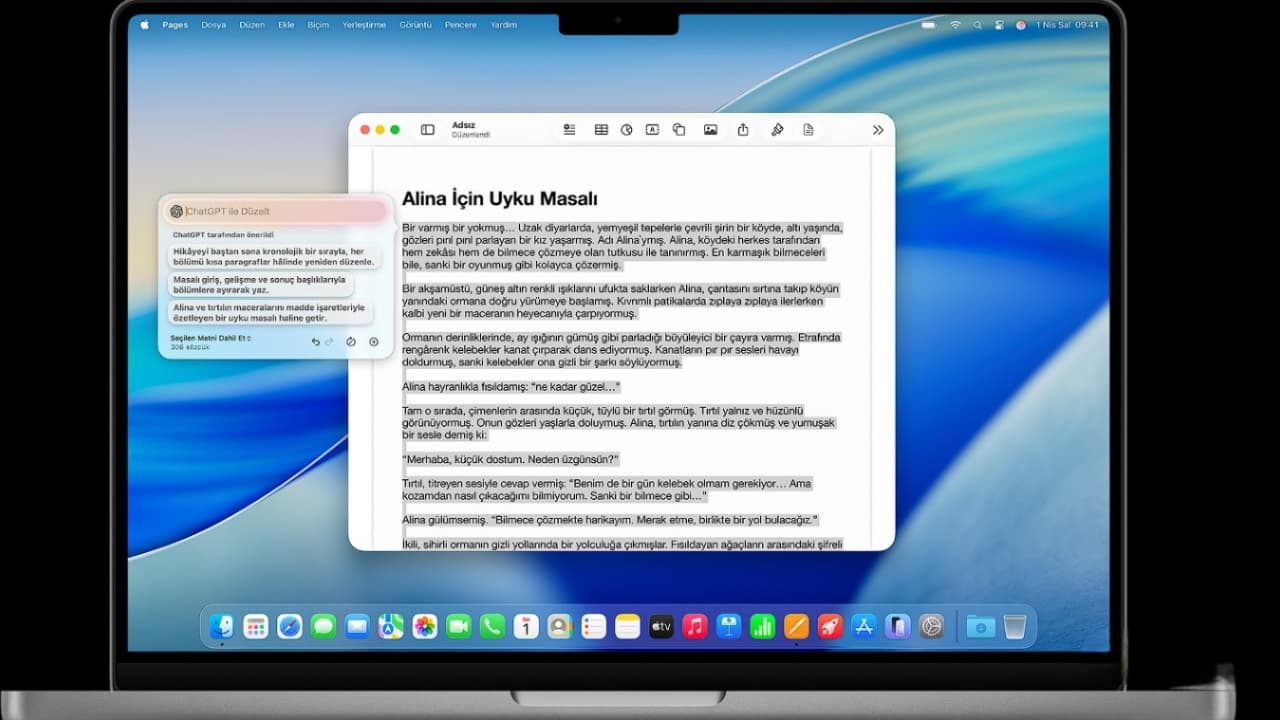
How Does Apple Protect Data Privacy (PCC) in AI Processes?
One of the greatest paradoxes of the modern age is the tension between the power of information and the fragility of privacy. To resolve this tension, Apple has developed the Private Cloud Compute (PCC) architecture. This system provides the computing power AI needs while keeping user data from becoming a commodity, treating it instead as something essential that must be protected.
Apple data privacy and PCC details
The most notable aspect of PCC is that processing takes place on the device to the greatest possible extent. The cloud comes into play only when necessary, and data is not stored permanently in this process. This approach reverses the classic cloud computing paradigm. Data is no longer the fuel of the system but a trust that must be protected. In this context, Apple Intelligence is positioned as an ethical system, because here security is more than a feature; it is an existential principle.
What Do Siri's Autonomous Agent Capabilities (Agentic AI) Cover?
Siri existed for many years as a command executor. As of 2026, however, this role undergoes a fundamental transformation. Siri is no longer just a tool that carries out given instructions; it is an intent interpreter, a planner and an executor in its own right. This is the concrete counterpart of a new paradigm called agentic AI.
Within its autonomous capabilities, Siri can:
· Analyze multi-step tasks and plan them step by step
· Offer suggestions by taking the user's context (time, place, habits) into account
· Automate tasks by building an invisible bridge between different apps
· Hold a dialogue; that is, it does not just respond, it produces meaning
This transformation moves the human-machine relationship from a hierarchical structure to a dialogic ground. The user is no longer the one who gives commands; they become a subject who thinks together with the system.
Which Devices Can Use Apple Intelligence and When?
Every technological leap comes with a specific hardware threshold. In this sense, Apple Intelligence is a system built on Apple silicon architecture. This experience is therefore not simply a software update, but a holistic alignment of hardware and software.
Devices that support Apple Intelligence
As of 2026:
· iPhone 17 Pro and later models
· iPad and Mac devices with Apple silicon processors
· Current operating systems
form the core of this system. For Apple AI users in Türkiye, this process becomes more accessible as language support expands. In this way, the technology shifts from a global force to a local experience.
Device | Requirement / Generation | Key Feature |
iPhone | iPhone 17 Pro and later | On-device Agentic AI |
iPad | Models with M-Series processors | Professional Creative Tools |
Mac | All models from M1 onward | Advanced Writing and Coding Assistance |
Apple Intelligence 2026: Latest Developments and Future Outlook
As of 2026, Apple Intelligence has moved beyond being just a technology vision and has become a dynamic field that is being reshaped at the intersection of competition and expectation. Recent developments in particular clearly show that Apple's AI strategy is not yet a completed structure but a continuously evolving process.
One of the most notable innovations is Siri's ability to handle multiple commands within a single query. This development goes beyond the classic command-response relationship and aims to increase the contextual reasoning capacity of AI. In this way, instead of giving fragmented commands, the user can convey their intent as a whole.
At the same time, Apple's move toward collaboration with Google's Gemini models to strengthen its AI infrastructure is considered an important turning point in the technology world. This shows Apple loosening its closed ecosystem approach and moving toward a hybrid model of intelligence. However, this approach has also brought new debates on data security and third-party integrations.
On the other hand, efforts to turn Siri into a "systemwide agent" are among the most ambitious promises of Apple Intelligence. The next generation of Siri is expected to gain the ability to move across apps, draw context from personal data and complete tasks autonomously.
However, this transformation is not proceeding entirely smoothly. The postponement of some advanced Siri features suggests that Apple is following a delayed but deepening strategy in AI. These delays can be read as a result of technical challenges as well as Apple's strict approach to quality and security.
Taken together, these developments suggest that Apple Intelligence is not yet a finished system but a digital text that is continuously written, updated and given new meaning. Perhaps that is why Apple's AI journey is a process rather than an outcome. This process moves toward a future in which technology goes beyond imitating humans and focuses on truly understanding them.
Toward Technology That Understands
Apple Intelligence , by carrying artificial intelligence beyond the limits of speed and efficiency, redefines it along the axes of meaning, context and privacy. This system is built on a technological ethic centered on people. Technology has gone far beyond being a functional tool and has become a structure that touches the depths of human experience, shapes it and even builds it from the ground up.
In this context, Apple Intelligence acts less as a mechanism that processes data and more as an interpreter that decodes meaning. It claims to sense not only what users say but also what they do not say. Thus, the relationship between humans and machines moves from a one-way chain of commands to a multi-layered interaction. In this interaction, technology stops being a passive tool and gains the role of an active companion.
Apple Intelligence opens the door to a more conscious vision of technology, beyond offering smarter devices. This vision focuses on the most critical question of the future: not how far technology has advanced, but how well it can align with people.
WriterSkiv: Yapay Zeka Destekli Video Yönetim Rehberi


Lovable Payments: Yapay Zeka ile Kendi İşini Kur


