What is DeepSeek V3.1 Outdoor Welded Artificial Intelligence Model?
Automatically translated
China-based artificial intelligence initiative DeepSeekThe new model at 21 August 2025 announced DeepSeek V3.1. This open source artificial intelligence model, which attracts attention with its hybrid architecture, 128K context capacity and low cost API access, is not only in the technology field, but also in the global economy and innovation environment.
DeepSeek V3.1 What?
DeepSeek V3. 1 It is the newest language model developed by DeepSeek from rising artificial intelligence initiatives in China and released as an open source artificial intelligence model. The phrase “open source” here means that the code, parameters and usage guidelines of the model are open to everyone. This situation democraticizes the processes of artificial intelligence development; meaning not only giant technology companies, universities, independent researchers and small initiatives are also able to use this technology.
DeepSeek V3.1 is a huge artificial intelligence model with 671 billion parameters. Parameter is the name given to variables set in the learning process of artificial intelligence. As the number of parameters of a model increases the capacity to learn more complex relationships. However, DeepSeek uses only 37 billion active instead of running all these parameters simultaneously. This method is known as Mixture of Experts (MoE) in the literature of artificial intelligence.
In MoE architecture, different specialist networks are activated in certain tasks. This model works both faster and more efficiently. For example, when a user asks for programming question, only the coding specialist is activated; language and summer specialist works when literature question comes. This structure is possible to perform similar or superior performance with lower energy consumption than DeepSeek V3.1’s competitors.
DeepSeek V3.1 Features
DeepSeek V3.1 is not only open source because it is a model that attracts attention in the world of artificial intelligence, but also has innovative technical features. Many details from model architecture to context window are designed to respond to different needs.
One of the most spoken features of DeepSeek V3.1, hybrid mode system. Model has two different working modes:
Think mode (fall mode): The model passes through the “inner thinking” process before solving a complex question. This means the logical steps to simulate the mind before producing the answer of AI. Think mode is slower, but produces deeper and consistent responses.
Non-think mode (intended response mode): Model produces quick response directly. This mode is preferred in more superficial questions or daily chats. This feature provides users with great flexibility. For example, a software developer can choose the “think” mode for a complex debugging problem, a company that has set up customer support chatbot can quickly respond by choosing “non-think” mode.
Another feature of the model is the MoE – Mixture of Experts (Experts Mix) method. In this system, there are numerous sub-models specialized in different matters. When the user gives a command, the model activates only the necessary ones from these sub-models. This approach has two important advantages:
No unnecessary processing power is spent, so the cost is reduced.
Thanks to the combination of specialized models, the accuracy rate of the answers rises.
DeepSeek V3.1, especially as a LLM (Great Language Model) NLP (Natural Language Processing) strong in the field. This means that the model has the capacity of understanding, producing and converting human language. Users can use DeepSeek in many different fields, such as text abstracting, translation, question-cevap, feeling analysis or code writing. Particularly multilingual support is an important advantage for different user groups on global scale.
DeepSeek V3.1 passed a much larger training process than previous versions. 32K context window training: run on 630 billion tokens ( balm thread). This means 10 times more training data from V3 version.
128K context window training: trained with 209 billion tokens. This is 3,3 times more than previous versions. “Bağlam window (context window) refers to the text length that the model can remember at the same time. 128K context support allows a book of about 400 pages simultaneously to analyse. This is a serious advantage in areas where very long texts such as law, academia, medicine and software are processed.
DeepSeek V3.1 works at much lower cost compared to its competitors thanks to its hybrid structure and MoE system. According to independent tests based in China, the model offers more than 40 times cheaper trading costs compared to some competitors. This situation creates a great advantage of accessibility especially for small-scale companies or individual developers.
DeepSeek V3.1 Update: Terminus Version u
DeepSeek has updated V3.1 model “DeepSeek V3.1-Therminus” in September 2025 and presented significant improvements to improve the performance and stability of the model. This update stands out as an optimized version of the existing V3.1 architecture rather than a completely new model.
In conjunction with the terminus version, the model has provided remarkable improvements in the quality of language processing and output production. Timely encountered language confusions and unconsistent expressions in previous versions are largely removed, the model has been produced more fluent and accurate texts.
Another important aspect of the update is the developments in their agent (ajan) capabilities. In particular, performance growth is observed in systems used in code production and information search processes. This indicates that DeepSeek V3.1 is not only a text production tool, but also a artificial intelligence system that can perform more advanced tasks.
Also with the terminus version, the overall stability of the model is increased, more consistent and reliable outputs are produced. These improvements significantly increase the preferences of DeepSeek in corporate usage and production environments.
In short, DeepSeek V3.1-Therminus update offers an important development in terms of performance, accuracy and use reliability without changing the technical basis of the model.
DeepSeek V3.1 Uses of Open Source Artificial Intelligence Model
Software Development: Code writing, debugging, algorithm description. |
Academic Studies: The article summarizes, literature scan, thesis preparation. |
Content Production: News writing, scenario creation, creative stories. |
Corporate Integrations: Customer support chatbots, automation of business processes. |
Research: Large data analysis, bioinformatic, social science research. |
In short, DeepSeek V3.1 is not only for tech enthusiasts, but also a powerful tool for industrial solutions and academic research.
DeepSeek V3.1 Pricing And Plans
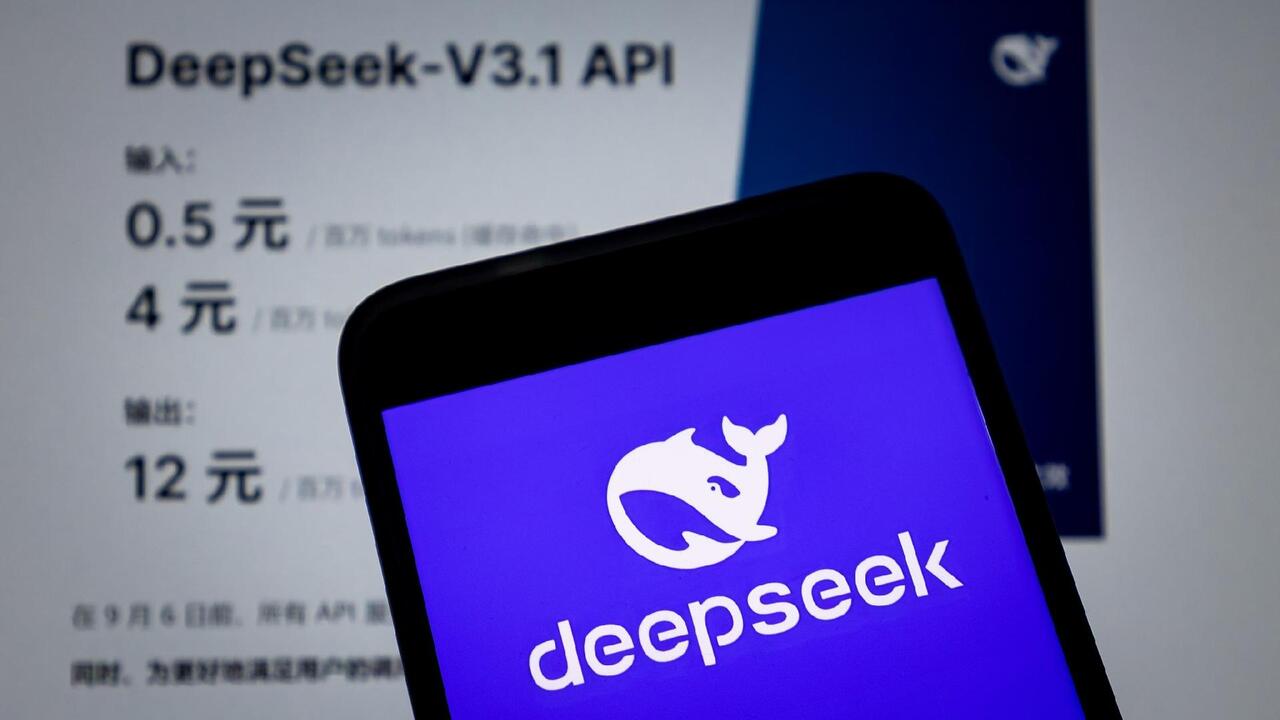
DeepSeek V3.1 offers a flexible and transparent pricing system designed according to different needs of users. The cost of the model is calculated on both the text sent by the user (input jet / input token) and responses generated by the model (out jet / output token).
Cache hit means a reuse of a previously processed query and reduces cost. Cache miss refers to new transactions every time and increases cost.
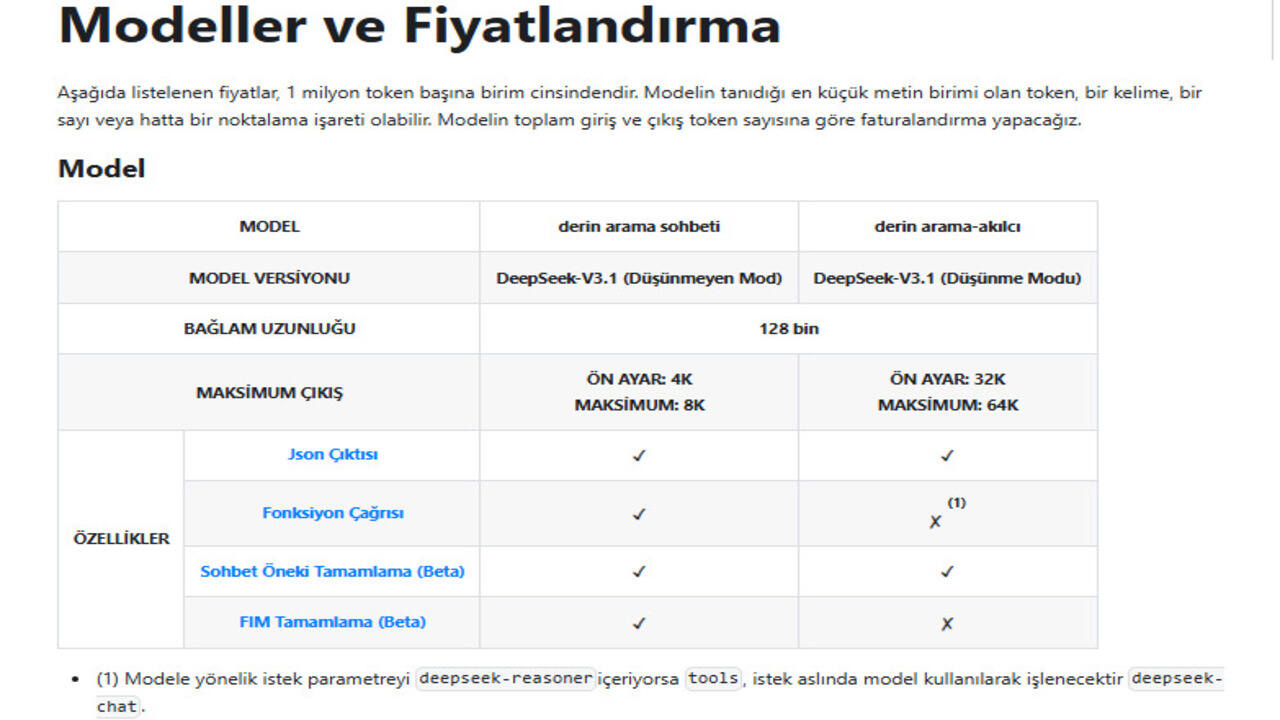
DeepSeek V3.1 Pricing
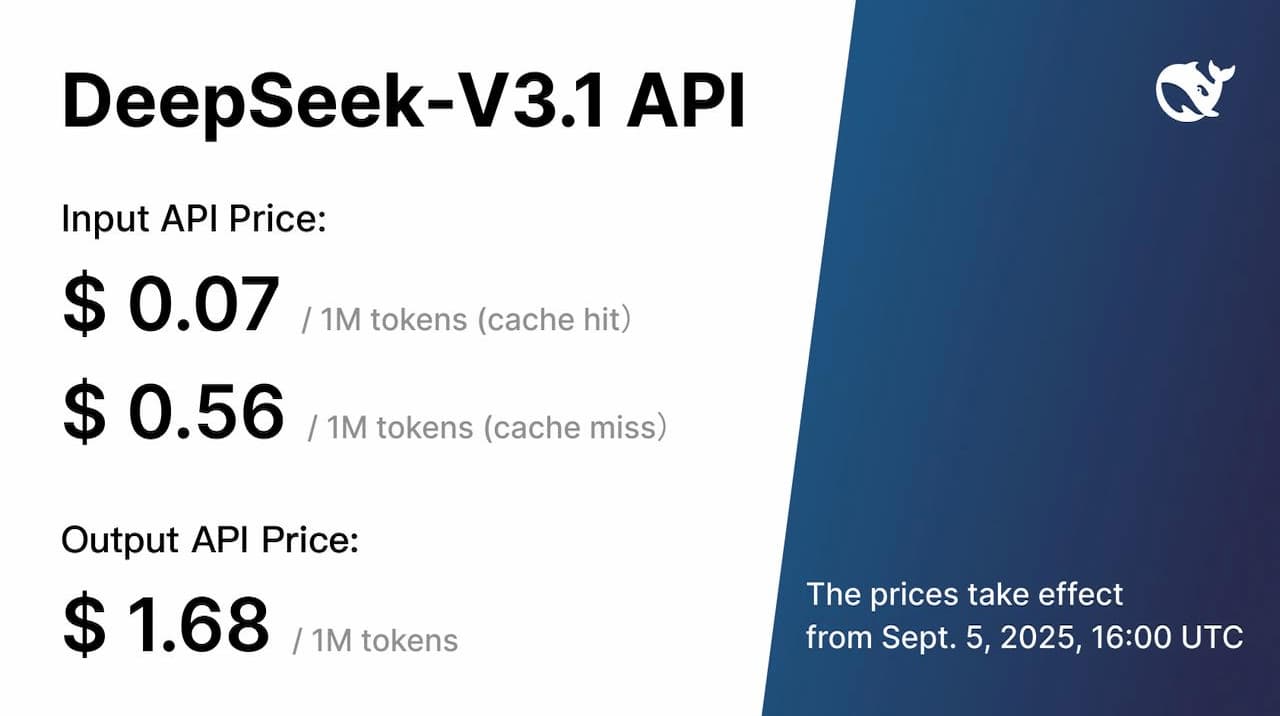
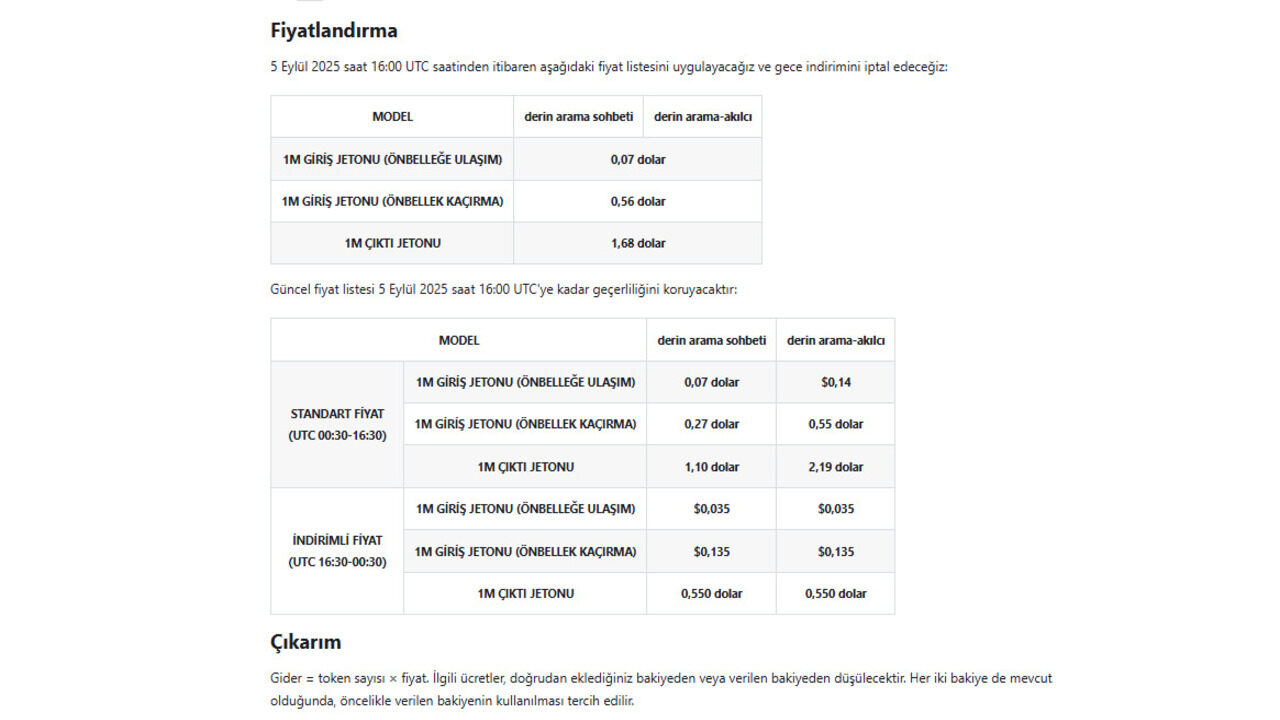
By Pricing:
DeepSeek Chat:
Input jet (cache hit) = 0,07 $ / 1M token
Input jet (cache miss) = 0.56 $ / 1M token
Output jet = 1.68 $/1M token
DeepSeek-Smart:
The price details are not disclosed yet; users are recommended to follow the updates.
Important Concepts and Cost Calculation
Input Token (Input Token): Text, question or command that the user sends to the model.
Output Token (Output Token): The response text produced by the model.
Transportation to the cache (Cache Hit): Reuse of a previously processed query → provide cost advantage.
Cache Miss (Cache Miss): Making new transaction → higher cost.
Cost Calculation Formula: Total Cost = (Number of Entry Token × Entry Token Price) + (Number of Tokens × Output Token Price)
Payment Options
DeepSeek allows users to easily manage their payments:
Fees are deducted from the added or promotional balance of the user; this is primarily used if there is a promotional balance.
Payment methods include credit card, bank transfer and PayPal.
Billing based payment option is available for corporate customers.
For detailed information and latest pricing plans, DeepSeek is recommended to follow the official website.
DeepSeek V3.1 And Rivals
DeepSeek V3.1 does not only have a strong model per itself, but also offers some advantages that stand out compared to existing large language models (LLM) and artificial intelligence systems. Among the most known competitors, OpenAI’s GPT-4 series, Anthropic’s Claude models and the LLaMA models of Meta.
Usage Purposes
DeepSeek V3.1: Academic research, long text analysis, creative writing, coding, corporate chatbots.
GPT-4/Claude: General purpose chat, text production, coding, research. However, DeepSeek is more advantageous in long contexts and low cost local use.
LLaMA: More research and experimental use-oriented, commercial API integration limited.
Performance Comparison
Aider Coding Benchmark: DeepSeek V3.1 rated 1% higher than Claude Opus 4. This provides superiority especially in coding and algorithm solving capabilities.
Long Text Processing: DeepSeek’s 128K token context window, GPT-4 and Claude’s 32-64K token capacity, allowing you to process much longer texts simultaneously. This is great advantage for long data sets, such as law, academ and software projects.
Natural Language Understanding and Producing: DeepSeek V3.1 in NLP tasks (text outlined, translation, feeling analysis) has similar accuracy rates with its competitors, but it works faster and energy efficiently.
Cost Comparison
One of the strongest advantages of DeepSeek V3.1 is cost. In use via the API, the cost of 20-40 times lower than OpenAI and Anthropic models appear.
Thanks to Think mode and MoE architecture, energy consumption is minimized because it does not run unnecessary parameter. This also provides an important savings advantage for businesses.
Flexibility and Customization
The open source is one of the biggest features that distinguish DeepSeek from its competitors. With Hugging Face and GitHub, it is possible to access the model codes, which offers customization and local use.
The competitor models are generally enclosed and are accessible only through the API. This may be limiting for some developers and researchers.
Positive and Negative Directions
Positive Directions | Negative Directions |
Open Welded – Model is open to everyone under MIT license. This allows developers to review and customize transparently. | Safety Risks – Open-source models can be used for dezenformation or cyber attacks by malicious people. |
Cost Advantage – 20-40 times cheaper than competitors, completely free if they are in the local.
Hardware Requirements – There is strong GPUs and big memory needs to run locally.
Hybrid Architecture – It can adapt to different scenarios with Think and non-think modes.
Language Support Problems – Not as strong as OpenAI models, especially in Turkish and regional languages.
High Performance – Claude and GPT-based competitors in Benchmark tests.
Regulation Specificity – Since the control of open source artificial intelligence is difficult, government’s regulation discussions can increase.
Wide Bond Capacity – With 128K token support, the equivalent text to 400 pages can be processed simultaneously.
Slowness of Think Mode – Although it produces more accurate responses, think mode can lead to delay in real-time applications.
Flexible Use Area – Software development, academia, journalism, customer service.
OpenAI: ChatGPT Erotik İçerik Sunmaya Hazırlanıyor


Tasarım Yapay Zeka ile Nasıl Kullanılır?