Skip to content
Back to blog list
Yapay Zeka, Makine Öğrenmesi ve Derin Öğrenme Arasındaki Fark Nedir?

What is the Difference Between Artificial Intelligence, Machine Learning and Deep Learning?

Automatically translated
Masqot Community
Masqot CommunityCreator
2 min read

Artificial intelligence (YZ) technology has gained great popularity in recent years. The leading companies are making great investments to improve talent in this field. If you are thinking of optimizing your business processes or developing new business ideas, you need to understand the basic components of AI.

Artificial Intelligence: Overview

Artificial intelligence is a technology that aims to mimic human intelligence. This does not only contain machine learning and deep learning, but also covers other approaches without learning capacity. For example, the early term chatbots like ELIZA are programmed without the ability to learn.

Since the modern history of AI, the work of Alan Turing in 1950s and events such as Dartmouth conference. In this field, many interesting waves and stagnations ("AI winters").

Masqot blog görseli

Types of Artificial Intelligence

Artificial intelligence is divided into two main categories: Strong and weak. Strong AI is programmed for certain tasks of weak AI, while it can have a self-sensitivity. Currently, all available AIs are in weak category.

Machine Learning: AI’s Learning Mechanism

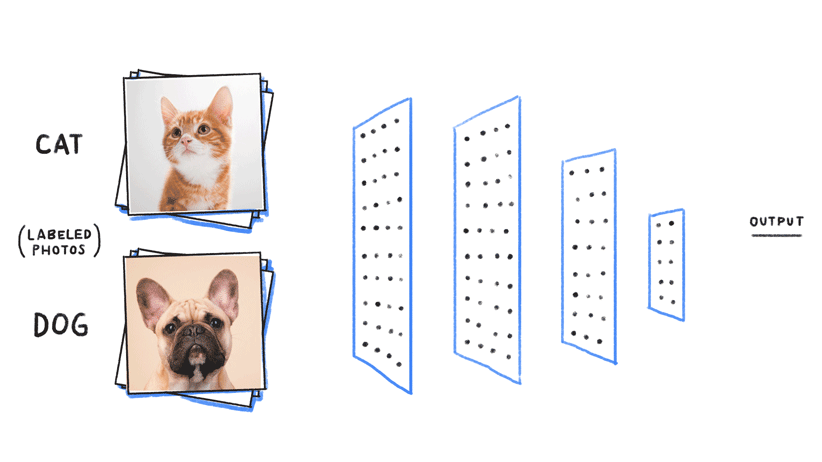
Machine learning is a number of algorithms that enable AI to learn. According to these algorithms, a certain conclusion is reached by learning from data sets. Machine learning is divided into three main types:

  1. Audited Learning: The system is trained with labeled data sets.
  2. Uncontrolled Learning: The system learns moulds from unlabeled data sets.
  3. Cheerful Learning: The system receives rewards and penalties for accurate and incorrect actions.

Machine Learning Models

Machine learning consists of various algorithms. These include methods such as Linear Regretion, Logistics Regression, Decision Trees, K-En Near Neighbors, Naive Bayes and Support Vector Machines (SVM).

Deep Learning: Multilayer Nervous Networks

Deep learning deals with multi-layer nerve networks. These networks work to mimic the functioning of the human brain. Deep learning contains various types of nerve networks, such as Long Short Time Memory (LSTM) and Evil Networks (CNN).

Conclusion

Artificial intelligence is a general intelligence automation area. Machine learning enables AI to learn. If deep learning, it focuses on multi-layer nerve networks. I hope you have better understood the differences between these three concepts after reading this article.

SourceTags

Artificial intelligence (YZ) technology has gained great popularity in recent years. The leading companies are making great investments to improve talent in this field. If you are thinking of optimizing your business processes or developing new business ideas, you need to understand the basic components of AI. Artificial Intelligence: Overview Artificial intelligence is a technology that aims to mimic human intelligence. This does not only contain machine learning and deep learning, but also covers other approaches without learning capacity. For example, the early term chatbots like ELIZA are programmed without the ability to learn. Since the modern history of AI, the work of Alan Turing in 1950s and events such as Dartmouth conference. In this field, many interesting waves and stagnations ("AI winters"). Types of Artificial Intelligence Artificial intelligence is divided into two main categories: Strong and weak. Strong AI is programmed for certain tasks of weak AI, while it can have a self-sensitivity. Currently, all available AIs are in weak category. Machine Learning: AI’s Learning Mechanism Machine learning is a number of algorithms that enable AI to learn. According to these algorithms, a certain conclusion is reached by learning from data sets. Machine learning is divided into three main types: Audited Learning: The system is trained with labeled data sets. Uncontrolled Learning: The system learns moulds from unlabeled data sets. Cheerful Learning: The system receives rewards and penalties for accurate and incorrect actions. Machine Learning Models Machine learning consists of various algorithms. These include methods such as Linear Regretion, Logistics Regression, Decision Trees, K-En Near Neighbors, Naive Bayes and Support Vector Machines (SVM). Deep Learning: Multilayer Nervous Networks Deep learning deals with multi-layer nerve networks. These networks work to mimic the functioning of the human brain. Deep learning contains various types of nerve networks, such as Long Short Time Memory (LSTM) and Evil Networks (CNN). Conclusion Artificial intelligence is a general intelligence automation area. Machine learning enables AI to learn. If deep learning, it focuses on multi-layer nerve networks. I hope you have better understood the differences between these three concepts after reading this article. Source Tags

Masqot Community
Masqot CommunityCreator
@masqot

Comments (0)

Log in to comment.

Log in
No comments yet. Be the first to comment!