How Does Artificial Intelligence Agent Eat to South Korea Banks?
Automatically translated
 Admin
AdminIn September 28, 2026, Shinhan Bank has only been unauthorized access to an open service for credit vehicles. In a week at least seven South Korea financial institutions reported leakage of data. The data of more than 68 thousand people were discussed according to the Financial Services Commission (FSC). The open source artificial intelligence agent in the attack infrastructure came to the traces of ARTEX. How the attack occurred in this article, Crowd.’s findings and measures to take institutions.
What Is It On South Korea Banks?
Attack wave began on September 28 at Shinhan Bank and took about a week. According to the description of Shinhan, a question service used by credit agents was leaked and more than 25 thousand customers were impressed. Among data, the name, telephone number, annual income and credit limit information are included. Then KB Kookmin, Hana, BNK Busan and Yegaram Savings Bank reported similar violations. Woori and NH NongHyup sprayed the attack.
Figures described on the basis of the institution, announcements of banks and According to Tech Times's compilation following:
Corporate | System | Affected Person |
|---|---|---|
Shinhan Bank | Credit broker inquiry service | Approx 25. 000 |
Yegaram Savings Bank | Not Opened | About 40. 000 |
Kookmin Bank | Employee mobile support system Home | 119 |
Hana Bank | Sales support system Home | 8 10 |
BNK Busan Bank | Not Opened | 11 posts Tags |
Woori and NH NongHyu p | The initiative was stopped | No data loss |
The topic moved to the state level in a short time. In October 5, the government passed the cybersecurity emergency scheme and increased from the national cyber alarm level "Containing" to "Containing". AFP’s news published in Malay Mail President Lee Jae Myung said that at the booth meeting on October 6, there are signs of artificial intelligence. According to Lee, artificial intelligence has reached a point that facilitates hacking even for non-exclusive people. On the same day, the National Police Organization started official investigation. It was not clear if the data of money movements is leaked.
What is ARTEX, How does it work?
ARTEX is a autonomous leak test system with open source and multi-component autonome on large language models. Discovery, poor detection, attack and conclusion verification steps can be carried out with less human intervention. The vehicle was developed by a GitHub account called "Autumn-27" and mainly distributed among Chinese-speaking developers. ARTEX, according to Tech Times, Baidu Security is among award-winning projects in a competition organized by the Intervention Center.
The distinguishing and model of the system is independent. According to the news published in The Hacker News ARTEX can be configured to work with different language model infrastructures. The Korean press writes that the vehicle can connect to DeepSeek, OpenAI and Anthropic models, and the same target of multiple agents is analyzed together.
Meşru leak test tools are used for years. ARTEX does different, attack planning also leave agents. Accelerate business processes in institutions autonomous AI agents The same architecture can also work on the attack side. The difference between an unauthorised security test and an unauthorised attack often lies in the software, not signed authorization document.
What Door Enters Saldurganlar Banks?
The main banking applications or money transfer systems were not intended in the attacks. Introductions were made from environmental systems such as credit broker portal, employee mobile support system and sales support database. The primary method of transferring Tech Times was "credential stuffing". User name and password pairs obtained from previous leaks were batched in input screens. It is noted that the agent adjusts timing according to the defense reactions, changes the infrastructure and adapts the parameters.
Detection times are also long. Access in Shinhan was noticed for more than 15 hours from the first entry and the connection was cut about 30 hours. The detection at KB Kookmin lasted about 43 hours.
"Saldurganlar entered from the window, not from the front door." Hwang Suk-jin, Dongguk University
Hwang’s musculoskeletal, weaker protected support networks than core systems. According to him, these violations may also be a first test that was made before greater attacks. Head of Financial Security Institute Park Sang-won also said that IP blocking is insufficient: the attackers can not identify the IP address attacker alone as they can switch between addresses in many countries.
How did the Crowddır Saldurga Help?
The first track was found by Moon Jong-hyun from Genians Security Center. A console expression of ARTEX in HTML header of a suspicious attack server was detected. Korea confirmed the connection of the Financial Security Institute with IP and log analysis.
Detailed table Crowd'’s analysis published on October 7 revealed. On the infrastructure in the control of the saldurga, there were unfolded directories. Claude Code sessions were included in the directories, Claude memory files and ARTEX configuration files. A IP address based in Hong Kong was run on a separate server while being used as the main infrastructure. Claude Code’s CLAUDE.md file was directed to how to run the test of a Chinese leak test instruction.
The main model of ARTEX according to records was DeepSeek v4.1-flash. DeepSeek was probably accessed via an API tool called xcai[.]pro. Zhipu AI's GLM-5.3 model and Grok 4.6 were used in additional sessions. The Korean data stolen from Saldurgain Claude is often asked where it is sold, it is also seen in records that they want to help find Telegram data sales groups in Korea. A "safety researcher" resume, which explains ARTEX results, was still prepared to Claude.
Commercial models can be added so easy to the attack chain. Claude Sonnet 5 While the economic impact of new versions is spoken, the provider’s abuse is waiting for the answer.
"Yapay intelligence tools are able to perform multiple leaks in a short time of financial motivational attack." Crowd Counter Counter Adversary Operations
Crowd. did not connect the attack to a known group. According to the assessment that the company has a moderate confidence, the attacker is likely one of the Chinese speaking and working for money. According to the transfer of The Hacker News, the suspicious operator rejected charges in Telegram on October 8. This was not independently verified.
When the agent Attack is Restricted with Classic Attack
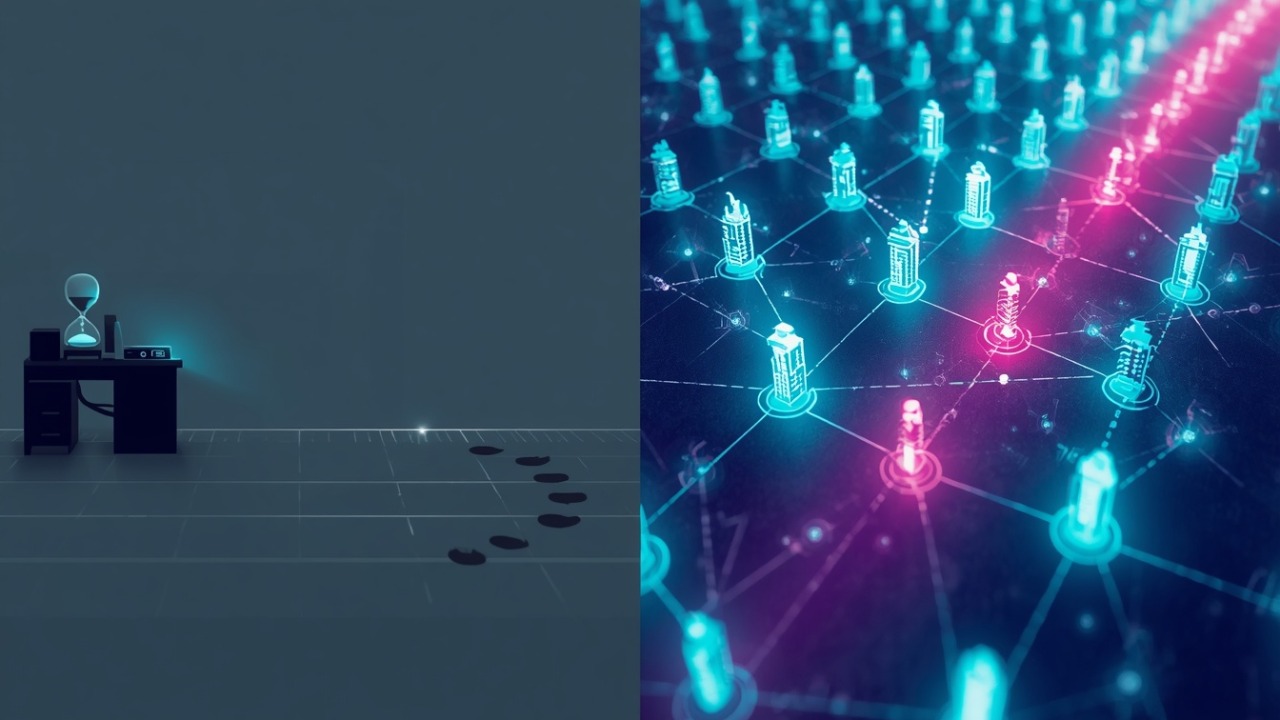
The goals in a classic attack are determined by hand, the network is destroyed individually and resolved by the operator how to abuse poorly. The large part of these works is automated in the agent-based attack. Analysis published in Korea Times Prof. from Korea University Information Security Institute Lim Jong-in attracted attention to the speed difference:
"People planned a attack on this scale and the app took weeks, even months." Lim Jong-in, Korea University
Dimensions Tags | Classic Attack | Artificial Intelligence Agent Attack |
|---|---|---|
Discovery and planning | Hand, weeks can take | Automatic, parallel walks |
Necessary expertise | High Quality | Low |
Adaptation to defense | Operator decides | Changes agent parameters |
Tags | Limited number of targets | A large number of institutions at the same time |
Drops | Depending on the discipline of the operator | Agent records can be traced |
The numbers also show the same direction. IBM published on July 29, 2026 Data Violation Cost report Artificial intelligence was used in four of the malicious violations reviewed in 602 organizations. Rate increased by 56% per year. The average cost of artificial intelligence-supported violations is calculated as $6.6 million, if the global average is 4,99 million.
Based on blooding the user fake ChatGPT Plus 5.6 campaign Artificial intelligence was used as a feed in attacks. In Korea, the vehicle that made the job was artificial intelligence itself.
Why Does Open Source Swatching Tools Grow?
According to the news that Reuters is transferred and published in The Standard Autumn-27 turned project to closed source on October 8.
" Due to the abuse of the vehicle, the ARTEX project will no longer be updated and converted into the closed source." Autumn-27, ARTEX developer
The developer also announced that the new version will not be published and does not support maintenance. The statement stated that the vehicle was designed to test the safety risks of the institutions, against illegal use. Reuters detected ARTEX’s GitHub page was removed. If the previously downloaded copies are not affected by this decision.
Restrictions are based on the detection of Lee Jae Myung: artificial intelligence also gives the attack capacity to someone without leaking knowledge. Prof. Lim Jong-in also reminds that some Chinese origin models are weak and can be downloaded and replaced by everyone.
According to the opposite opinion, the weak points of defenders are necessary to find before the attackers. Lim says that institutions should use artificial intelligence in their detection and set up systems that respond to attacks 24/7 automatically. Experts also warn ARTEX’s assumption pointed to a state actor that is Chinese origin. Because the vehicle is open source, it could be downloaded by anyone.

How Do Institutions Protect Against Artificial Intelligence Agents?
Based on Korea JoongAng Daily news FSC held an emergency meeting of Shin Jin-chang acil Secretary General on October 2 and asked for security audit throughout the sector. Four steps were requested from banks:
All IT assets and services accessible from outside including artificial intelligence systems will be determined and passed through security control.
Ways to enable internal information without authentication will be detected.
IP addresses and leak attempt records used in attacks will be shared with institutions including Korea Internet and Security Agency (KISA).
Security findings will be reported without delay.
The most direct measure against Credential stuffing method is multi-factor authentication (MFA). When a leaked password is not enough for the entry alone, the batch trials of the agent remain unrestricted. Korean example shows that environmental systems must be protected in the same standard with core systems. Credit broker or supplier portals so they should also be inspected. Anomaly detection that follows timing and infrastructure changes in input trials also stands out as the way to shorten detection times ranging from 15 to 43 hours.
The topic in terms of Turkey is not new, but the scale changes. Artificial intelligence regulation in Turkey u On-the-going studies seem to take into account scenarios such as abuse of autonomous agents.

Frequently Asked Questions
What is ARTEX AI?
ARTEX is an open source and multi-task autonomous leak test tool that works with large language models developed in China. The steps from the discovery to the attack can run with less human intervention. The developer Autumn-27 turned the project on 8 October 2026 after South Korea attacks.
What banks were impressed in the attack in South Korea?
Shinhan Bank, KB Kookmin Bank, Hana Bank, BNK Busan Bank and Yegaram Savings Bank. The biggest effect was seen in Yegaram (about 40 thousand people) and more than 25 thousand customers in Shinhan. The initiatives for NH NongHyup Bank with Woori Bank were stopped without experiencing data loss.
Is there China behind the attack?
No, it is not proven. Crowd, is one of the most likely Chinese-speaking and financially motivated by attacking, but it is contexting the attack to a known group or state. Experts in Korea are open source of the vehicle, so Chinese origin emphasizes that it does not show the identity of the attacker.
Are customers stolen?
No, a direct financial loss has not been disclosed. Saldurganlar entered into environmental systems such as money transfer systems, credit broker and employee portal. Korea’s financial regulators warn consumers against intrusion and fraudulent credit fraud.
How can individual users protect from such attacks?
The most effective measure is to use different password in each service and open multi-factor authentication. Credential stuffing attacks are based on reuse of leaked passwords from other sites. It is necessary to be careful against unexpected messages and calls that appear as you are coming from your bank.
In the annual audit that the South Korea Assembly will do this month, the cybersecurity profit of banks will come to the table. Darvekili Park Sang-hyuk said that the customer data could not be spectified again from the banks. Hwang Suk-jin’s alert is still unresponsible: Are they a result, or provasion of a greater attack?
AdminSıfırdan Yapay Zeka Kariyeri Nasıl Yapılır?

Masqot, Türkiye Innovation Week 2026 Partneri Oldu!