Public Sector Cybersecurity Raises Alarm in the Age of AI
Automatically translated
 Admin
726 cybersecurity incidents. Taiwan's government agencies reported this many incidents last year, and 68.6 percent of them were unauthorized access attempts. At first glance, the table looks like a problem for a single country. But in a period when AI-powered attacks are accelerating, the threat facing public institutions is turning into a global pattern. This article covers Taiwan's data, cases of autonomous attacks, defense methods and the situation in Türkiye.

What Does Taiwan's Table of 726 Incidents Tell Us?
According to a report published in the Taipei Times, Taiwan's government agencies reported 726 cybersecurity incidents last year. This figure shows a slight decline compared with 755 incidents in 2024. The source of the data is the country's Cyber Security Agency.
Incidents are classified from level 1 to level 4 according to the severity of their impact. Of the reported incidents, 87.33 percent were recorded at level 1, the lightest category, 9.78 percent at level 2 and 2.89 percent at level 3. No incidents occurred at level 4, the most serious category.
The table says more when it comes to incident types. Unauthorized access attempts lead the list at 68.6 percent. They are followed by equipment failures at 15.43 percent, service disruptions at 4.96 percent and website attacks at 2.48 percent. The fact that two-thirds of incidents were unauthorized access shows that intruders' ability to break into systems has become a more dominant risk than technical failures.
The severity distribution also carries its own message. Most incidents remaining in the lightest category, and no cases at level 4, indicate that agencies did not suffer any destructive breach of their critical systems. The decline in total incidents from 755 to 726 within a year does not mean the threat has changed direction. In a landscape where the attack type has shifted toward infiltration, quality matters more than quantity.
Four Major Threats Targeting Public Institutions
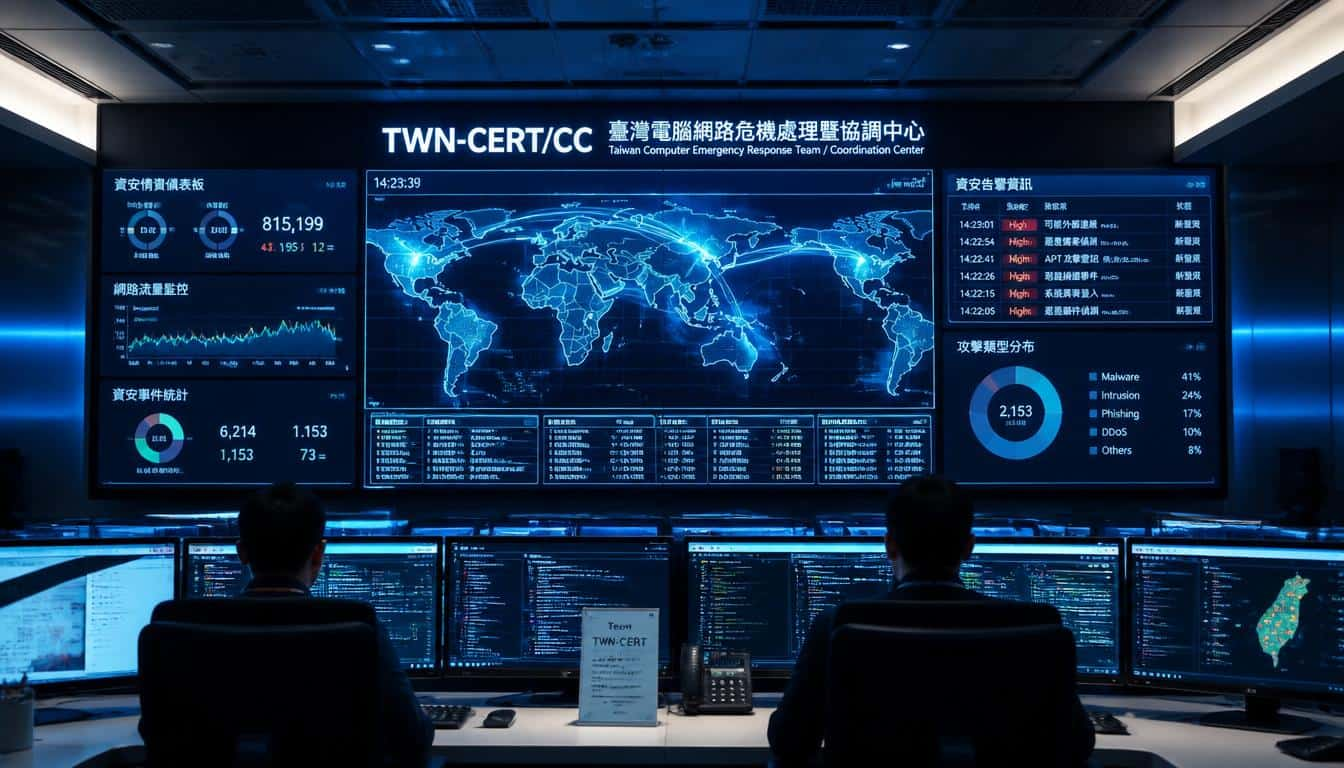
Taiwan's Cyber Security Agency also identified four core threats facing public institutions. This list offers a concrete map of where security gaps in the public sector come from.
Fake messaging applications: If users download malicious, imitated messaging apps onto newly acquired institutional computers, backdoor programs can be installed.
Bring-your-own-driver technique: Attackers gain unauthorized access to the main system and use a driver-loading method that disables security protections, avoiding detection.
Infiltration through maintenance contractors: When contractors handling system maintenance install remote access software on the web server, attackers can reach the institution's website through password guessing.
Weaknesses in network edge devices: Vulnerabilities or misconfiguration risks in network edge devices can pave the way for malicious connection activity.
The agency's recommendations are shaped by these threats: mandatory approval for all software and hardware installations, regular vulnerability scans and patching, web application firewalls and up-to-date endpoint protection. The technical background of these vectors also directly intersects with the data and access control principles in the AI security debate.
How Did AI-Powered Attacks Speed Up So Much?
Taiwan's table shows that public institutions are already under heavy threat. AI is pushing this situation to a new speed. According to the CrowdStrike 2026 Global Threat Report, published via Business Wire, AI-powered attacks rose 89 percent year over year.
The same report states that the average breakout time, meaning the time it takes attackers to move laterally in a network after first access, fell to 29 minutes in 2025. The fastest observed breakout took just 27 seconds. The report also documents attackers injecting malicious prompts into generative AI tools across more than 90 organizations.
IBM points to a similar acceleration. According to the IBM X-Force 2026 Threat Intelligence Index, as reported by Infosecurity Magazine, attacks on public-facing applications rose 44 percent. Vulnerability exploitation was the most common initial access method, accounting for 40 percent of observed incidents. Active ransomware and extortion groups grew 49 percent year over year. The same report noted that information-stealing malware was linked to the theft of more than 300,000 ChatGPT credentials.
The common thread is clear: attackers are not inventing new tactics, they are speeding up existing ones with AI. When reconnaissance, credential theft and exploitation processes become automated, the time between a vulnerability being disclosed and it being actively exploited gets shorter.
The IBM report shows that this acceleration has also spread to the supply chain. As software build environments, cloud-based applications and processes that automate software distribution become targets, major supply chain breaches have roughly quadrupled since 2020. In the same report, manufacturing was the most targeted sector for the fifth consecutive year at 27.7 percent, and North America became the most attacked region again after six years, accounting for 29 percent of observed cases. The blurring line between state-backed actors and financially motivated criminals makes it easier for techniques to circulate on underground forums and be reused by small groups.

Autonomous Attack Risk and the Anthropic Case
The most striking signal came at the end of 2025. In a report published by Anthropic, the company announced that it had detected and stopped the first large-scale cyber espionage campaign orchestrated by AI. The company attributed the operation, with high confidence, to a group it assessed as backed by the Chinese state and designated GTG-1002.
The operation was detected in mid-September 2025. The attackers got past the model's safety filters by convincing Anthropic's Claude Code tool that they were a company conducting defensive security testing. According to the company's assessment, the AI carried out 80 to 90 percent of the tactical operations without human intervention, at request rates that would be physically impossible for humans.
The campaign targeted roughly 30 organizations. Targets included major technology companies, financial institutions, chemical manufacturers and government agencies. A few intrusion attempts succeeded.
The post-detection process also shows the kind of threat intelligence response public institutions need. Anthropic mapped the scope of the operation over the ten days following its discovery, suspended the accounts identified, notified the affected organizations and coordinated with authorities. Security researchers see the case as the first publicly known example of an AI autonomously carrying out multi-stage attacks against well-defended targets. The possibility that the capacity for autonomous attacks spreads to less capable actors tips the balance in favor of attackers until defenders scale these capabilities.
"The human was only in the loop at a few critical moments." (Jacob Klein, Anthropic Threat Intelligence)
Klein's statement needs to be read correctly. The point is not that the attack was weak; quite the opposite. Even when the human operator only stepped in for decisions to continue and at a few turning points, the rest of the system ran autonomously. This lowers the barrier to entry for sophisticated attacks, which creates a new risk threshold for public institutions. How filter-free models get weaponized sits on the same ground as the debate over malicious AI models.

The Difference Between Classic and AI-Age Defense
Autonomous attacks also force defenders to rethink their approach. The difference between traditional attacks and AI-powered attacks becomes clear in several dimensions, above all speed and scale.
Dimension | Traditional Attack | AI-Powered Attack |
|---|---|---|
Breakout time | Hours or days | As little as 29 minutes |
Automation | Mostly manual | 80-90 percent autonomous |
Scale | Limited targets | 30+ targets simultaneously |
Reconnaissance | Slow, manual | Real-time, automated |
Phishing | Generic templates | Personalized, deepfake-supported |
The defensive steps that stand out overlap with the recommendations from Taiwan's agency. An approval process for all installations, regular vulnerability scans, web application firewalls and up-to-date endpoint protection are considered the core layers. Using allowlists for external connections, closing unnecessary ports and regularly updating edge device software are also on the list.
On the data side, backup, redundancy and recovery capacity, along with regular business continuity exercises, are recommended. In Taiwan, the Ministry of Digital Affairs encourages encrypted, distributed backups across multiple cloud environments for critical public infrastructure systems. The aim is to reduce single-point-of-failure risk and increase resilience.
Because the attack surface grows through suppliers, the agency's recommendations extend beyond institutional boundaries. Supplier security management, covering access control, data protection, vulnerability management and incident reporting, is advised alongside regular audits and compliance checks. Blocking malicious attachments and links through email filtering and sandbox systems, limiting cloud sharing permissions and scanning uploaded files are also added to the list. As social engineering attempts that imitate voices and images become more common, discussions on deepfakes and AI law form the legal side of this defense plan.
Where Does Public Cybersecurity Stand in Türkiye?
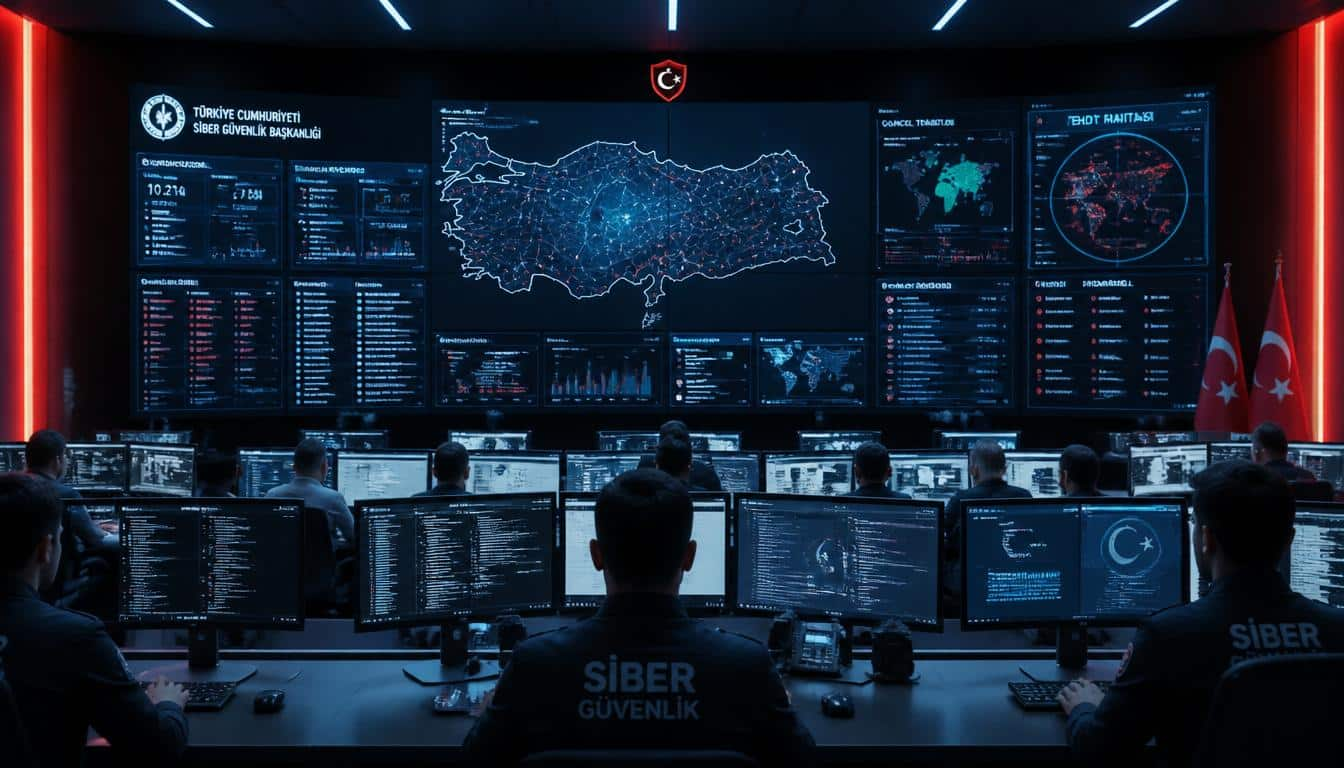
In Türkiye, the picture is intense both in terms of threats and preparedness. According to statements reported by Anadolu Agency, Transport and Infrastructure Minister Abdulkadir Uraloğlu said that more than 182 thousand cyberattacks were reported and blocked in the first ten months of 2025. In the same period, 74,594 malicious connections were blocked at the infrastructure level.
The role of domestic AI in public security is also growing. The AI technology developed by USOM detected and blocked 74,205 domain names set up for phishing to defraud citizens. Uraloğlu also noted that Türkiye was placed in the "Role Model Country" category with a perfect score of 100 in the International Telecommunication Union's 2024 Global Cybersecurity Index. The Cybersecurity Law entered into force on March 19, 2025.
The organizational structure is expanding. Under USOM's coordination, 14 sectoral and more than 2,000 institutional cyber incident response teams work with thousands of expert personnel. Domestic projects such as "Avcı", "Azad" and "Kasırga" strengthen response capacity at the national level. AI-powered analysis systems are also used to scan critical websites for vulnerabilities.
The threat side has not diminished. According to an Anadolu Agency report based on Kaspersky data, 26.1 percent of users in Türkiye were affected by online threats in the first quarter of 2025. With this rate, Türkiye had the highest risk level among countries in the Middle East, Türkiye and Africa region. The same report noted that APT groups targeting government institutions seek strategic information rather than financial gain. The fact that a significant share of attacks stem from human error shows that, alongside technical investment, staff awareness is a core component of public security.
What Is the Community Saying?
Supporters
Some security researchers argue that AI can also deliver the same speed on the defensive side. Automated threat detection, real-time vulnerability analysis and rapid incident response could offset the speed advantage attackers hold. As in the Anthropic case, it was AI-based monitoring systems that detected the attack. According to this view, public institutions should start experimenting early rather than postponing the use of AI in defense. Early experience in areas such as security operations, threat hunting and incident response speeds up institutions' learning curves.
Critics
Others believe the speed race is structurally in the attacker's favor. When the time between a vulnerability's disclosure and its exploitation drops to minutes, public institutions with slow patch cycles are put at a disadvantage. Since data shows most attacks stem from human error, they argue technical investment alone is not enough. A shortage of qualified personnel and unclear governance responsibilities are among their main concerns. In public institutions with long budget and procurement processes, keeping defensive tools current is also cited as a separate challenge.
Frequently Asked Questions
What is an AI-powered cyberattack?
An AI-powered cyberattack is a type of attack in which steps such as reconnaissance, credential theft, exploitation and data exfiltration are automated with AI models. In the case reported by Anthropic, AI autonomously carried out 80 to 90 percent of the operation. This method both accelerates and scales attacks.
What percentage of Taiwan's 726 incidents were unauthorized access?
68.6 percent of the incidents were unauthorized access attempts. They were followed by equipment failures at 15.43 percent, service disruptions at 4.96 percent and website attacks at 2.48 percent. This distribution shows that infiltration-focused threats are more dominant than technical failures.
How much have AI-powered attacks accelerated?
According to the CrowdStrike 2026 report, these attacks rose 89 percent year over year and the average breakout time fell to 29 minutes. The fastest observed breakout took 27 seconds. IBM X-Force reported a 44 percent increase in attacks on public-facing applications.
What is Türkiye doing about these threats in public institutions?
Sectoral and institutional response teams work under USOM's coordination, and malicious connections are blocked at the infrastructure level. Domestic AI technology detects phishing domains, and the Cybersecurity Law entered into force in March 2025. Türkiye holds a 100-point role model rating in the ITU index.
How can public institutions be protected in the age of AI?
Mandatory approval for all installations, regular vulnerability scanning, web application firewalls and up-to-date endpoint protection are among the core steps. Allowlists for external connections, email filtering, encrypted distributed backups and regular business continuity exercises are added to these. Supplier security management also stands out on the list.
Taiwan's table of 726 incidents goes beyond the annual report of a single country and offers a preview of where public security is heading in the age of AI. As attackers automate and speed up, whether defenders can match the same tempo will become clear in the coming months. Whether public institutions can bring patch cycles down to the scale of minutes is the key question that will determine the direction of this race.
AdminGemini Kullanım Limiti Doldu mu? Ne Zaman Sıfırlanır


ChatGPT Finans Yönetimi Özelliği Kullanıma Açıldı