



Why Does AI Give Wrong Information?
Automatically translated
 Writer
In research on large language models (LLMs), responses produced in workflows or in everyday information seeking can appear highly competent, fluent, and convincing. However, when the text is examined in detail, a cited academic study, a court decision, or a historical event may turn out to be entirely fictional.
This raises a critical question in the minds of users: Does AI make mistakes, and can AI be trusted?

Generative AI tools are neither fact-checking mechanisms nor classic search engines. Understanding the working principles behind these systems makes it easier to answer the question of what AI hallucination is and to pass generated output through the right filters.
What Is AI Hallucination?
In the technology literature, AI hallucination refers to a situation in which an AI model presents information that does not actually exist, is logically unfounded, or is factually wrong, in a highly confident, coherent, and fluent way, as if it were real.
Unlike delusions in human psychology, this process is not a conscious illusion or deliberate deception. The model, while constructing the word sequence that appears most logical mathematically, becomes completely detached from factual reality.
According to IBM's analysis of AI hallucinations, these models cannot distinguish true from false the way the human mind does. Systems only calculate which patterns fit their training data, and when they encounter an information gap, they fill it through "confabulation" (making things up). For example, in 2023 in the United States, a lawyer's court petition prepared using ChatGPT was found to contain nonexistent case law, file numbers, and fake judicial decisions presented as real. Because the model flawlessly imitated the structure of real legal texts, the fabricated text was not easily distinguishable at first glance.
The Difference Between AI and Ordinary Errors
Not every wrong answer from AI is classified as hallucination. If a model gives outdated population data, makes a grammatical error in translation, or miscalculates in a technical computation, this falls under "ordinary error." Ordinary errors can usually be traced to missing data or a processing rule in the training set and can be corrected.
Hallucination, on the other hand, is when the model generates entirely fictional content despite having no real data as its basis, and presents it with an absolute tone of certainty. This makes hallucinations much harder to detect than ordinary errors.
Why Does AI Give Wrong Information?
To understand why AI produces outputs contrary to fact, you first need to know about the fundamentals and development of AI technology. Once it is understood that models are basically data processing and probability calculation architectures, the logic behind error rates becomes clear:
1. Statistical Prediction and Probability Logic
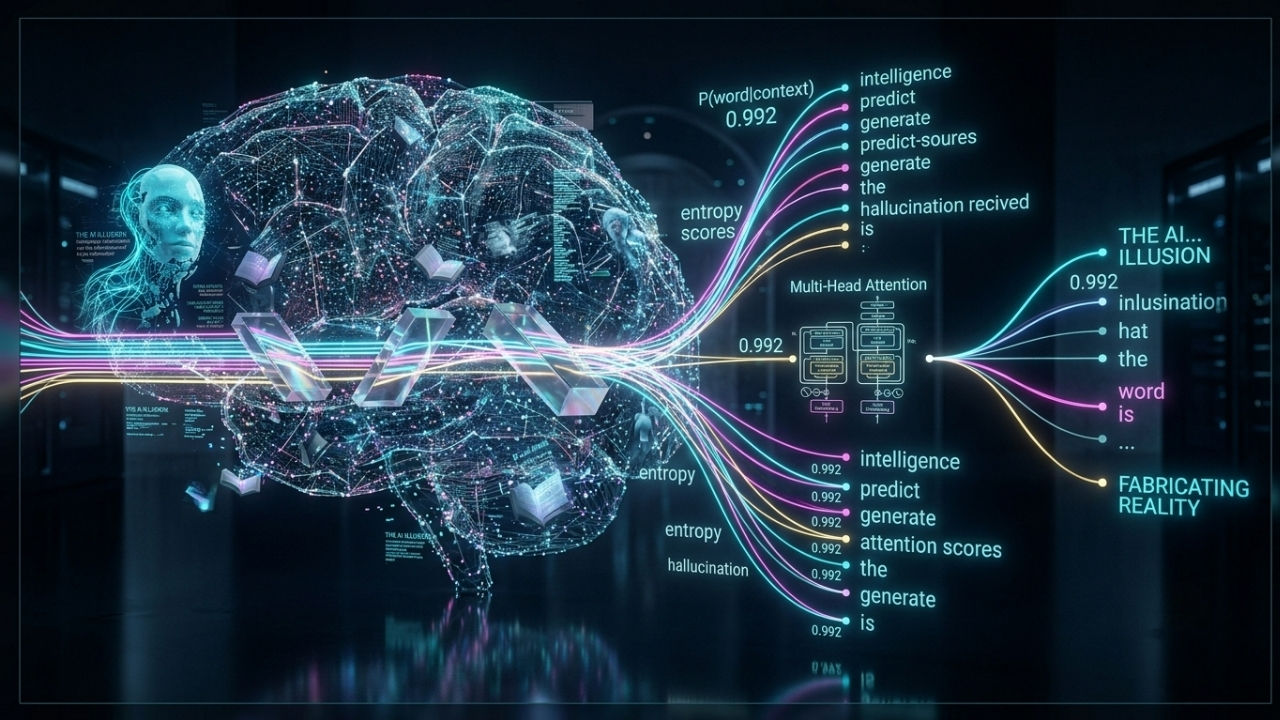
Large language models work on the principle of predicting the next word (token). The model focuses on answering the question, "Statistically, which word is most likely to come after this expression?" For the model, the priority is not the factual accuracy of the sentence but its credibility in terms of language structure and semantic patterns. Hallucination occurs when reasoning and statistical probability conflict.
2. Flawed, Insufficient, or Overfitted Training Data
Models are trained by scanning open sources, articles, and digital texts on the internet. Incorrect information, biases, or contradictory statements in the training pool are adopted by the model as general rules. In addition, when a model overfits its training data, it mistakes meaningless correlations for rules, loses its ability to generalize, and forms faulty connections.
3. Excessive Alignment with User Inputs
Generative models are optimized to respond continuously to the user's command (prompt). Often, instead of admitting that they do not know, they produce answers by accepting the premise of the user's question as true. For example, when a baseless or fictional question is asked, the model, instead of refusing, writes a fictional scenario that fits the assumption of the question.
4. Security Vulnerabilities and Malicious Manipulation (Prompt Injection)
AI generating wrong or misleading information is not always caused by a lack of training on the model's part. External manipulation can also trigger hallucination. Through adversarial attack techniques such as "prompt injection," the security layers of a model can be manipulated, causing the system to produce entirely fictional, redirected, or harmful outputs. To understand the vulnerabilities of AI systems against such interventions and their defense mechanisms, it is necessary to cover comprehensively what AI security is and whether it can be hacked. In models whose safety filters are loosened or manipulated, information consistency is quickly lost.
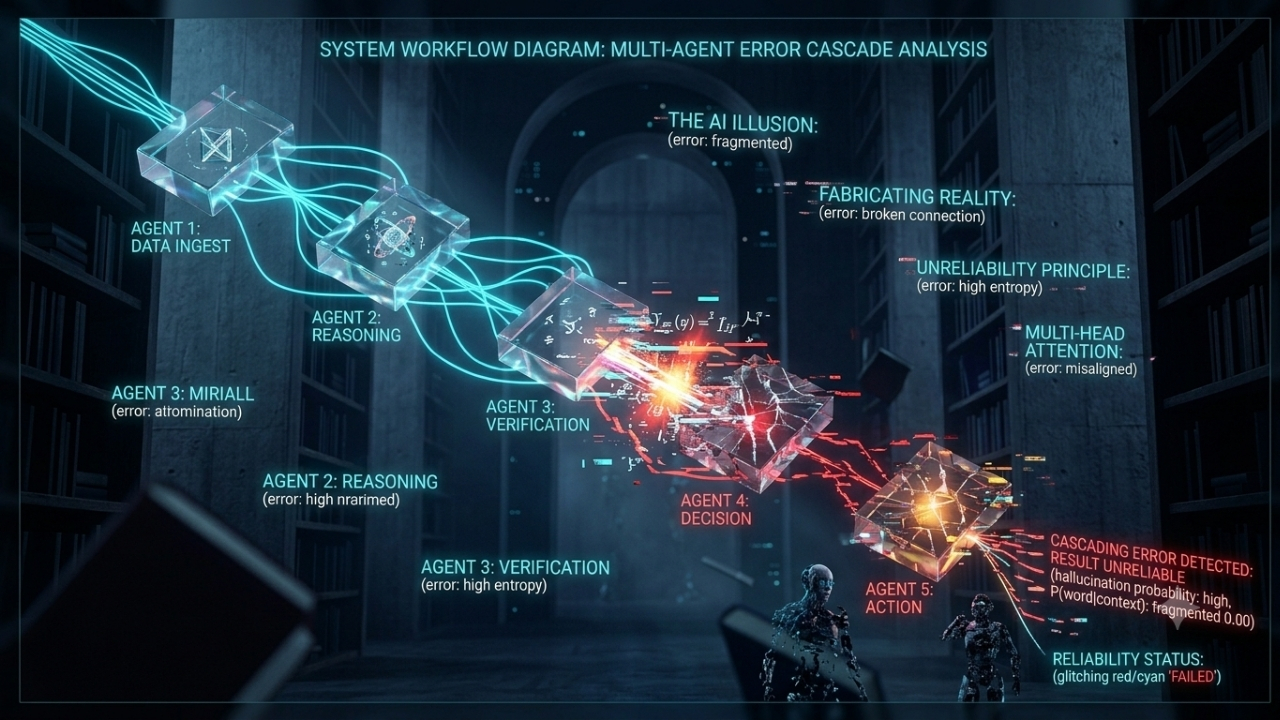
5. Growth of Errors in Multi-Agent Systems (Cascading Hallucinations)
Autonomous AI agents, which are becoming widespread today, work together in chained workflows. When a single hallucination produced by the first agent is accepted as a verified fact by subsequent agents and incorporated into decision processes, operational and legal risks grow exponentially.
Does ChatGPT Make Mistakes, and Is It Reliable in Daily Life?
ChatGPT and all similar generative AI systems can regularly make mistakes.
They are highly efficient in areas such as text editing, idea development, creating code templates, language translation, and summarizing basic concepts. However, to improve the output quality of the system and keep randomness under control, it is important to know how technical settings such as temperature or top_p work. Advanced prompt structures used to improve the consistency of model responses and monitor repetitive patterns can be accessed through ChatGPT secret codes and parameters.
Nevertheless, AI outputs should not be treated as a final source in the following areas that require direct decision-making:
Medicine and Health: There is a high risk of producing incorrect or speculative information on dosage, symptoms, and diagnosis.
Law: It may produce provisions of legislation that are not in force or fake case law.
Academic Work: Nonexistent bibliographies, invented authors, and fake DOI numbers are the most common types of hallucination.
Finance: It may give misleading guidance based on unverified market and company data.

Methods to Reduce Hallucination Risk
Although it is not possible to completely eliminate AI's error rate within the current architecture, it can be minimized with proper usage techniques. Approaches such as role definition, step-by-step reasoning, and context limitation, used to minimize hallucination risk, are directly related to basic prompt engineering techniques.
Strategy | Purpose | Example Prompt Approach |
|---|---|---|
Defining Role and Framework | Narrows the scope of speculation. | "Answer only within the verified official legislative framework." |
Instruction to State the Unknown | Prevents the reflex to make things up. | "If you are not certain of the answer, do not speculate; state so." |
Source Review and Context Provision | Clarifies the boundaries of the database. | "Answer the relevant questions by staying faithful to the text below." |
Step-by-Step Reasoning | Increases logical consistency. | "Before reaching a conclusion, list the steps you followed one by one." |
Can the Hallucination Problem Be Solved?
Intensive research and development is being carried out both in academia and at technology companies to increase the reliability of AI models and reduce hallucination risk to a minimum. Today, the most widespread and functional architectural solution in this area is RAG (Retrieval-Augmented Generation). In the RAG method, instead of relying solely on probabilistic matches in its closed parametric memory, the language model consults reliable external information sources such as company databases, current web indexes, or verified official documents at query time. After retrieving the relevant raw data from these sources, it structures the answer by applying its own advanced language synthesis capability. Thus, the model's "gap-filling" reflex is largely brought under control and information is grounded on a verifiable basis.
In addition to the RAG architecture, new generation training techniques that make the reasoning steps of models transparent, reinforcement learning from human feedback (RLHF - Reinforcement Learning from Human Feedback), and automatic accuracy filters involving AI reviewers are gradually raising accuracy rates. Furthermore, self-correction mechanisms, in which models test their own internal logic before producing an answer, are also being integrated into systems.
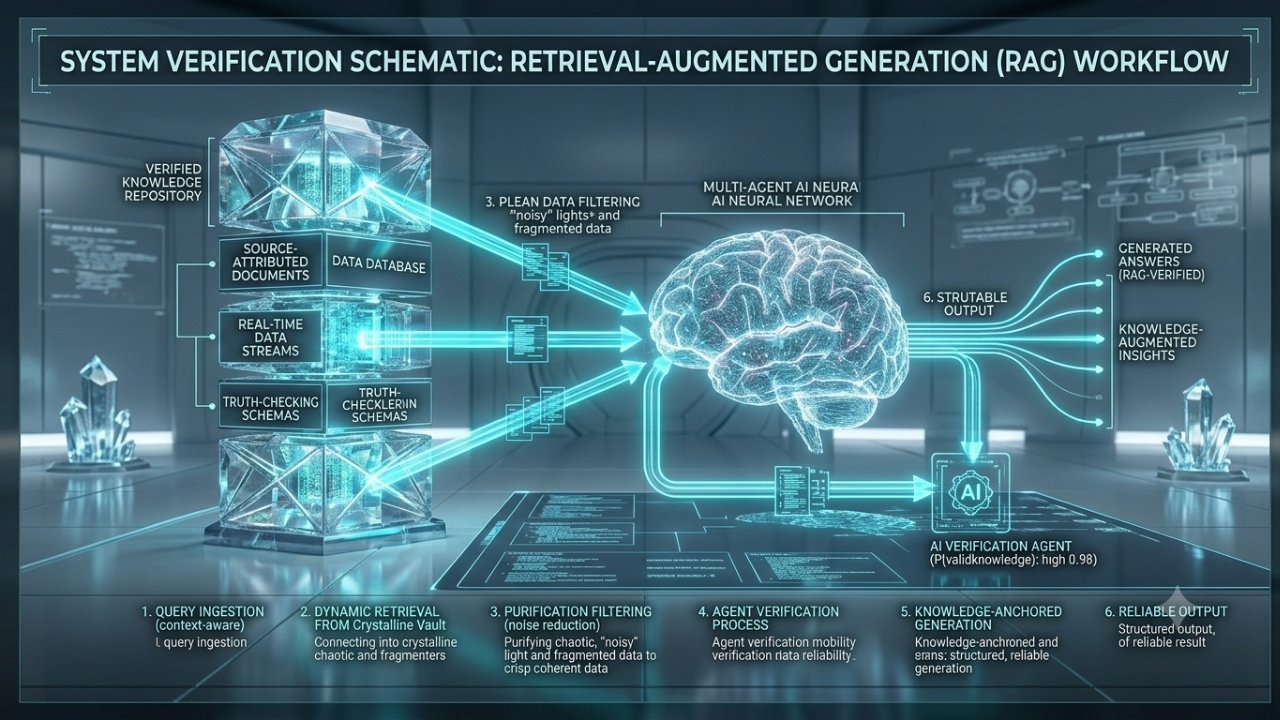
Despite all these technological advances, current large language models are fundamentally based not on semantic "understanding" or "comprehension" but on statistical token (word/syllable) prediction over massive datasets. In these mathematically operating probability engines, zero error or absolute accuracy guarantees are theoretically impossible. The newly developed methods do not reduce the hallucination rate to zero; they only bring it down to a threshold that can be detected, limited, and managed.
Generative AI systems should be positioned not as absolute authorities of information or verification mechanisms, but as supportive assistants that accelerate complex work and must always be passed through a human filter (human-in-the-loop) and critical thinking.
WriterGemini Ücretli mi? Ücretsiz Plan ve 2026 Türkiye Fiyatları


KVKK ve Yapay Zeka: Şirketler Ne Yapmalı?


