




Showing AI the Way: What Is Prompt Engineering?
Automatically translated
 Writer
Language is the oldest technology in human history. It is the invisible bridge that turns thought into sound, sound into meaning, and meaning into action. Today not only people but also machines cross this bridge. Every sentence we write to an AI model is, in a way, a kind of translation: an effort to turn a vague intention in our minds into a clear instruction a machine can understand. The systematic form of this effort is what we call "prompt engineering."
What Is a Prompt? The Threshold Where Language Meets AI
Although the word "prompt" comes from English, in plain terms it means a request or instruction. Every text we write to an AI model, whether a question, a request or a scenario description, is a prompt in the technical sense. But this definition only scratches the surface. Prompt is in fact a statement of intent: an attempt to place a vague request forming in our minds into a concrete framework a machine can process. Just as a poet weighs the weight of every word when fitting an emotion into a line, a skilled prompt writer considers the effect each sentence will have on the machine.
At this point it is worth stressing that a prompt does not dictate what the AI will do, but shapes how it reasons. The model produces meaning within the limits of the context it is given. The more carefully that context is set up, the more accurate the response will be.

What Is Prompt Engineering? Writing Instructions as a Craft
Prompt engineering is the discipline of deliberately designing instructions to get the desired result from an AI model in the most efficient and accurate way. It earns the word engineering because it is not random. It rests on defined principles, repeatable methods and observable results. Just as a software engineer structures every line of code around a purpose, a prompt engineer builds sentences around how the model processes information.
In academic circles this field is also described as interaction design with large language models, and it is the practical application of natural language processing research. In everyday use, however, prompt engineering is a skill open not only to researchers but also to content creators, freelancers and anyone new to AI.
The Three Pillars of Prompt Engineering
Context: Defines the framework in which the model should interpret the task.
Clarity: Ambiguity leads the model to make assumptions and errors.
Format: When the expected shape of the output is described in advance, the result is more usable.
Prompt engineering has stopped being a topic only technical specialists care about. From content creators to freelancers, and from students to marketing professionals, it has become a practical skill for anyone who uses AI.
For a content creator, a well-prepared prompt can make many processes more controlled, from generating ideas to producing headlines. A freelancer can describe a client's expectations in detail within a prompt and get more consistent outputs. The key point is this: getting a good result from AI is not only about choosing a good tool. What you tell the tool also determines the quality of the result.
How Do You Write a Good Prompt?
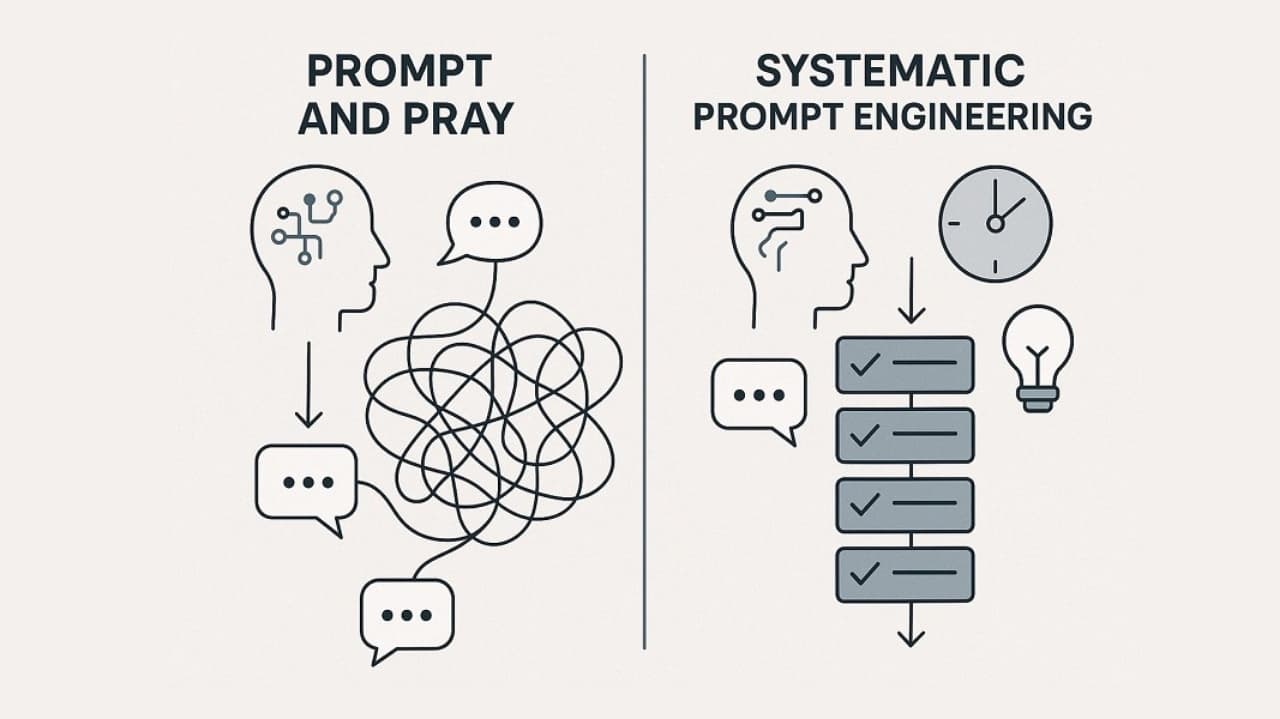
Writing a good prompt is less about finding the right words and more about finding the right structure. The four principles below offer a solid framework for beginners and experienced users alike.
1. Set the Context Up Front
Stating who the model is, what role it takes on and which target audience it is addressing directly affects the tone and depth of the answer. The difference between "Write like an SEO specialist" and "Write something for me" is clearly felt in the quality of the text produced.
2. Avoid Ambiguity
"Write a short piece" versus "Write a 300-word piece with three subheadings" removes the model's need to make assumptions. Clarity does not limit creativity. On the contrary, it channels it in the right direction.
3. Specify the Format and Give an Example
Stating the expected output format in advance, whether a list, a table or a dialogue, and providing a short example where possible, helps the model produce a result much closer to the template in your mind.
4. Ask It to Think Step by Step
For complex tasks, asking the model to work through the process step by step both reduces errors and makes the logic of the result more transparent.
Applying It with Prompt Examples
The best way to put theory into practice is to work through concrete examples.
User Profile | Weak Prompt | Strong Prompt |
|---|---|---|
Content Creator | "Write me a blog post." | "Prepare a 500-word blog post with three subheadings, in a warm tone, for people just starting out in the coffee world." |
Freelancer | "Write an email to the client." | "Write a professional but warm email draft that apologizes for not being able to deliver the project on time and includes a proposed solution." |
New AI User | "Give me a recipe." | "I have eggs, spinach and cheese in my fridge. Suggest a breakfast recipe that can be prepared in 15 minutes and specify the ingredient quantities." |
Sample Prompt Template
Role: [define the identity]
Task: [write what you want done]
Context: [provide the necessary background information]
Format: [specify the shape of the output]
Constraints: [length, tone, things to exclude]
Practice with Turkish-Language Prompt Examples
Prompt examples you can use to put theory into practice and get the most out of AI:
Example 1: Social Media Copy for Content Creators
Prompt:
"Act as a social media content creator. Write an Instagram image caption for our new organic cold brew product aimed at coffee lovers. Use a warm, energetic tone, open with an attention-grabbing question, and end with a call to action (CTA) inviting followers to comment."
Example 2: Client Communication Email for Freelancers
Prompt:
"Think like a graphic design freelancer. Create a short email draft that graciously accepts the client's revision request while professionally explaining that the project timeline will be extended by 2 days."
Example 3: Explaining a Complex Topic to Beginners
Prompt:
"Explain blockchain technology to me with the simplicity a 10-year-old could understand, using an analogy from everyday life."

Is Prompt Engineering Becoming a Profession?
It is a fact that over the last two years the number of job postings with the title prompt engineer has grown. Whether this title represents a lasting profession or a transitional category specific to this period is still debated. For freelancers and content creators, this uncertainty carries both an opportunity and a risk that call for careful consideration.
Opportunities
-Prompting skill adds value across fields such as text, code and design
-Demand for "AI-assisted content production" services is growing on freelance platforms
-It can be applied quickly with a little training and requires no technical infrastructure
Risks
-As models improve, they become better at understanding even "rough" prompts, which may make the skill commonplace
-As a job title, "prompt engineering" is not a career guarantee on its own
-Its real value emerges when it is combined with domain knowledge (SEO, law, medicine, etc.)
In short, prompt engineering is taking shape less as a profession of its own and more as a competence that seeps into every profession. For a freelancer, the real competitive advantage lies in knowing both their own field and the language of conversing with machines.

The Future of Prompt Engineering: Advanced Tips and Methods
Understanding prompt engineering at a basic level is the first step toward speaking the same language as AI. But there are several more effective methods you can use to hit your target exactly and handle complex tasks with ease. These practical strategies, frequently used by professionals, will multiply the quality of the answers you get:
Guiding with Examples : Instead of only describing what you want, show the model one or two small examples resembling the result you have in mind. The AI will immediately pick up the style and structure of your example and respond in exactly the manner you expect.
Prompting Step-by-Step Thinking : If you ask a question that is complex or requires reasoning, tell the model "Solve this by thinking step by step." When it reasons in stages rather than giving the answer all at once, the chance of errors or nonsense drops noticeably.
Having It Critique Itself : Have the AI check the text it wrote. For example, by saying "Read the text you just wrote through the eyes of a ruthless editor, find the 3 weakest or missing points, and rewrite the text fixing those gaps," you can get a much better output.
Tell It What You Don't Want: Clearly state not only what you want but also what should be left out of the text. Setting limits such as "Don't use fancy words, don't go into technical terms, don't exceed 3 paragraphs" prevents unnecessary padding.
Writing Instructions Is Disciplining Thought
Perhaps the most honest answer to the question "what is prompt engineering?" is this: the art of first explaining our own thinking to ourselves. To give a machine clear instructions, we must first clarify our own intent. In this sense, writing prompts is not just a technical skill but also an intellectual discipline, just as crafting a good sentence requires thinking well first. In the age of AI, the power of language has not diminished. On the contrary, it matters more than ever, because now our words must persuade not only people but machines too.
WriterBüyük Dil Modeli (LLM) Nedir, Nasıl Eğitilir?


EvilTokens Yapay Zeka Oltalama Servisi Nasıl Çökertildi?


