
GreyVibe: AI-Assisted Cyberattack Wave Targeting Ukraine
Automatically translated
 Admin
WithSecure researchers reported in May 2026 a new threat group called GreyVibe, which has been targeting Ukraine since August 2025. What sets the group apart is its use of commercial AI tools such as ChatGPT, Google Gemini and Ideogram AI at nearly every stage of the attack. This article looks at how AI-assisted cyberattack methods work, GreyVibe's five parallel attack chains, and concrete measures organizations can take.
In this article: How the GreyVibe group uses AI from phishing text to malware development, the technical details of five separate attack chains, its connection to the autonomous AI attack disclosed by Anthropic in November 2025, and how individuals and companies can protect themselves.

What Is the GreyVibe Attack and Who Did It Target?
GreyVibe is described as a threat cluster linked to previously undocumented, Russian-speaking operators. According to WithSecure's report dated May 28, 2026, the group has targeted military, public, civilian and private sector organizations since August 2025. The attackers' command and control infrastructure is set to the Moscow time zone. The language in the tools, the code comments and the time zone configuration point to Russian origin.
The choice of targets is notable. Ukrainian armed forces, public institutions, critical infrastructure and the Ukrainian diaspora are at the center of the attacks. Traps linked to PrincessClub are reported to have reached even active-duty Ukrainian soldiers. There is strong alignment between the operators' intentions and Russian intelligence interests. WithSecure also notes that there is not enough evidence to directly tie the group to the Russian state.
GreyVibe's level of sophistication is debated. Researchers describe the group as low to medium sophistication. Operational security mistakes exposed the group's tools and methods to researchers in considerable detail. A design flaw in the LegionRelay and DroneLink infrastructure gave defenders direct visibility into back-end activity. Heavy use of AI did not hide these amateur mistakes.
At Which Stages of the Attack Was AI Used?
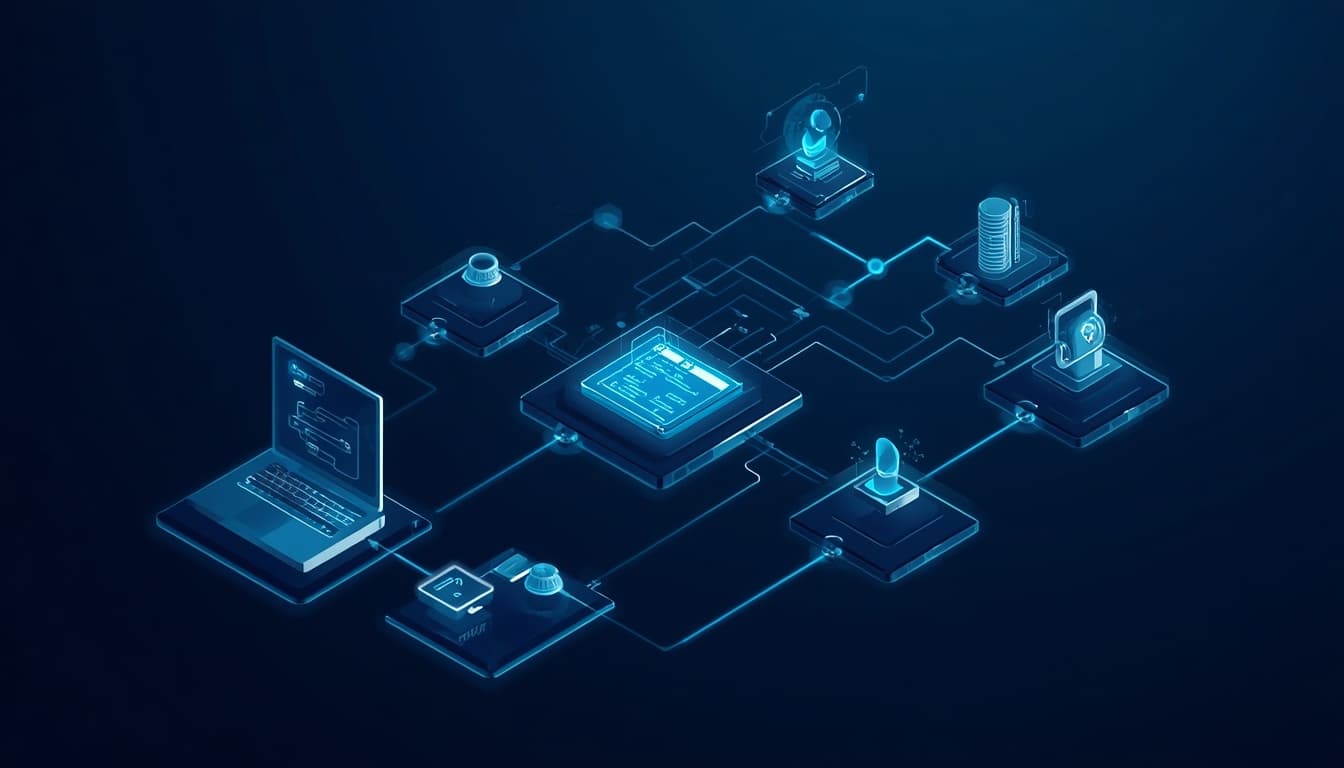
The most critical aspect of GreyVibe is that it made generative AI a structural part of its operations. Metadata and development artifacts from the PhantomMail, PhantomClick, PrincessClub, DroneLink and Nebo campaigns show that AI tools were used across a very wide range of tasks. This use is systematic, not incidental.
AI was involved at these stages: writing phishing content, producing fake website text, creating visuals, writing and rewriting malware, and preparing back-end infrastructure scripts. Ideogram AI was used for image generation, while ChatGPT and Google Gemini were used for code development. AI-generated code patterns were detected in obfuscators such as DAYLIGHT and TEASOUP.
The WithSecure report states that the group's use of AI is structural. For a defender, the implication is clear: the attacker can regenerate lures and malware in hours rather than weeks. A group that can change its components faster than researchers can cluster them becomes a much harder target to track over time. This summarizes the real danger of the AI-assisted cyberattack model.
"What is notable about GreyVibe is not that the attack chains are entirely new. It is that AI helps threat actors industrialize these chains." (Shane Barney, Keeper Security CISO, SC Media)
How Do GreyVibe's Five Attack Chains Work?

WithSecure documented five separate attack chains, each with its own lures and payloads. Although these chains look different, they converge on a shared malware infrastructure. According to the details reported by Bleeping Computer, all the chains aim to plant tools such as PhantomRelay, LegionRelay and FallSpy on target systems.
PhantomMail: Targeted spear-phishing emails are used. The emails link to malicious ZIP or RAR archives hosted on Google Drive and 4sync. The archives contain JavaScript-based loaders that, while opening a fake PDF, run PhantomRelay, a PowerShell-based remote access trojan, in the background. The lures impersonate Ukrainian public, emergency, telecom and energy institutions.
PhantomClick: Fake CAPTCHA pages imitating Zoom and LAPAS sites are used. In this ClickFix-style method, the user runs a command they believe is a fake Cloudflare verification step with their own hands, which starts the same PhantomRelay infection chain.
PrincessClub: Fake Ukrainian adult club and dating sites are used. FallSpy spyware is delivered to Android devices, and PhantomRelay or LegionRelay to Windows systems. The operators used fake female Telegram personas and later added a WebRTC-based live call feature capable of capturing the victim's voice and video. Combined with AI-generated synthetic voice and video, these methods raise the risks discussed in our earlier article on AI and voice cloning.
DroneLink: Fake Ukrainian military aid associations themed around FPV drones and UAVs are set up. In March and April 2026, these sites shared the same C2 infrastructure as PrincessClub, the WireGuard and ZAPiXDESK tools, and LegionRelay scripts hidden with DAYLIGHT. In the WithSecure Labs analysis, fake association domains such as frontforce[.]org are given as examples.
Nebo: A smaller set of artifacts impersonating a Russian military communication system called "СПО НЕБО" (SPO NEBO). A FallSpy sample imitating a Russian military login screen and
a fake login page hosted on PrincessClub infrastructure was detected.
What these chains have in common is that they persuade the victim to act with their own hands at some point. A fake CAPTCHA, a fake donation campaign or a fake dating profile are all designed to build trust. The fluent text and realistic visuals produced by AI make this trust-building step far more convincing than before.
What Do PhantomRelay, LegionRelay and FallSpy Do?

Although the attack chains use different lures, three main malware families stand out in the payload layer. Once inside a system, these tools offer broad data collection and remote control capabilities.
PhantomRelay is a PowerShell-based remote access trojan (RAT). It can fingerprint systems, load scripts remotely, and run PowerShell and Windows commands. LegionRelay is more comprehensive: it can steal files, capture screenshots, steal browser credentials, exfiltrate data via Telegram and WhatsApp, and set up RDP access.
FallSpy is spyware aimed entirely at Android devices. It was deployed in the PrincessClub and Nebo campaigns. The data it collects includes contact lists, call logs, GPS location, SIM information, media files and device identifiers. Where mobile targets are concerned, it was designed to collect high-value intelligence.
What Are the Differences Between GreyVibe and GTG-1002?

GreyVibe is not an isolated case but part of a broader trend. In November 2025, Anthropic disclosed the first cyber espionage campaign orchestrated by AI. Attributed with high confidence to a Chinese state-sponsored group (named GTG-1002), this operation saw attackers use Claude Code to target roughly 30 intrusion attempts worldwide.
The difference in scale between this case and GreyVibe is significant. In the GTG-1002 campaign, AI carried out roughly 80 to 90 percent of the attack on its own, and human intervention was needed only at a few critical decision points. At the peak of the attack, the AI generated more than one request per second, operating at a speed no human team could match. According to Anthropic's report, the AI sometimes made mistakes by hallucinating credentials, which remains one of the obstacles to fully autonomous attacks.
The difference between the two cases lies in how deeply AI is involved in the attack. GreyVibe used AI as a productivity tool, while GTG-1002 largely handed the attack over to AI. The table below compares the two approaches.
Feature | GreyVibe | GTG-1002 |
|---|---|---|
Attribution | Russia-linked | Chinese state-sponsored |
AI role | Productivity assistant | Autonomous orchestrator |
AI share of work | Partial (content, code) | 80-90 percent |
Models used | ChatGPT, Gemini, Ideogram | Claude Code |
Target | Ukrainian institutions | 30 global targets |
Detected by | WithSecure | Anthropic |
According to Anthropic's analysis mapping 832 malicious accounts it banned between March 2025 and March 2026, threat actors are increasingly using AI in the late and complex stages of attacks. These two cases point to a period in which AI lowers the cost of attacks and makes it possible for groups with fewer resources to run large-scale operations.
Cost is the most critical dimension of this picture. Previously, running a phishing campaign, a network of fake sites and custom malware required weeks of expertise. Commercial AI tools bring this work down to a subscription of a few tens of dollars per month. In the GreyVibe case, instead of open-source or jailbroken custom models, the group used widely available tools like ChatGPT and Gemini directly. When the access barrier drops this much, it means more threat actors. Similar risks are examined in our earlier article on malicious AI models and countermeasures.
How Can Organizations and Individuals Protect Themselves?

The assumption that attackers can regenerate lures and malware within hours should form the basis of defense strategy. Focusing on closing behavioral gaps is more effective than chasing one-off indicators. The GreyVibe case shows that defense must also speed up.
At the individual level, a few measures stand out. Not opening ZIP or RAR archives from links you do not recognize is the first rule. Avoiding copying and running commands requested by fake CAPTCHA pages is also critical. Enabling multi-factor authentication on every account and not trusting links shared by people you do not know on Telegram or dating platforms completes the list. In ClickFix-style attacks, the victim running a command with their own hands is the most critical trap point.
At the organizational level, applying the principle of least privilege, logging employee activity, limiting access to sensitive data with multi-factor authentication, and setting up early warning mechanisms are recommended. Regular awareness training for employees completes the picture. GreyVibe's methods, such as fake CAPTCHAs and fake donation campaigns, target human behavior more than technical defenses. It should not be forgotten that AI is a tool on both the attack and defense sides. Those who want to go deeper on this subject can read our separate article on AI security and whether AI can be hacked.
What Is the Community Saying?
Those Who Are Concerned
Part of the security research community sees GreyVibe as a warning sign. The WithSecure team, speaking to SecurityWeek, says the group's use of AI offers a glimpse of how future criminal organizations and state-linked groups may operate. It is noted that attackers use AI to increase speed, scale and sophistication, and that their use will evolve as AI improves. The fact that mobile spyware such as FallSpy targets active-duty soldiers shows that the risk has moved beyond technical territory into personal safety.
Those Who Are Cautious
The WithSecure report offers a balancing point. It notes that GreyVibe's attack chains are not entirely new and that AI has only accelerated existing methods. The group's operational security mistakes prove that AI does not hide amateurism. In Anthropic's report, the fact that the AI hallucinated credentials shows that fully autonomous attacks have not yet matured. According to this view, defenders can gain an advantage by using the same AI tools.
Frequently Asked Questions
Who is GreyVibe and whom does it target?
GreyVibe is a threat group reported by WithSecure in May 2026, linked to Russian-speaking operators. Since August 2025, it has targeted the Ukrainian armed forces, public institutions, civilian structures and private companies. Its command infrastructure is set to the Moscow time zone, and its targets overlap with Russian intelligence interests.
Which AI tools did GreyVibe use?
The group used ChatGPT and Google Gemini for code development and rewriting, and Ideogram AI for image generation. AI was also involved in writing phishing text, producing fake website content and preparing back-end infrastructure scripts.
How is an AI-assisted cyberattack different from traditional attacks?
The key difference is speed and scale. AI allows attackers to regenerate lures and malware in hours rather than weeks. In the GTG-1002 campaign disclosed by Anthropic, AI carried out 80-90 percent of the attack, generating more than one request per second, a pace impossible for human teams.
What is a ClickFix attack and how does it work?
ClickFix is a trap method that uses fake CAPTCHA or verification pages. The user believes they are completing a Cloudflare or Zoom verification and runs the command provided with their own hands. That command starts the installation of malware in the background. GreyVibe used this method in its PhantomClick chain.
What should be done to protect against GreyVibe attacks?
Not opening archive files from unknown sources, not running commands requested by fake verification pages, and enabling multi-factor authentication on every account are the basic steps. For organizations, the principle of least privilege, activity logging and early warning systems are recommended.
Is GreyVibe directly tied to the Russian state?
WithSecure states that there is not enough evidence to directly tie the group to the Russian state. Researchers assess with moderate confidence that the group has links to the cybercrime ecosystem. The group sits in a grey area between cybercrime and state-linked activity.
The relationship between the DroneLink chain that WithSecure tracks and GreyVibe is still under investigation. As AI's role in attacks deepens, how quickly the defensive side can adapt with the same tools will become clear in the coming months.
AdminAI İşsizliği Endişesi CEO Gündeminin Zirvesinde!


FlowX Summit Agentic AI Çağında Yeni İş Gücünü Konuşuyor