




AI Unemployment Worries Reach the Top of the CEO Agenda!
Automatically translated
 Writer
Ram Charan, the legendary advisor who guides the boards and top CEOs of billion-dollar companies worldwide, has shared an analysis that has landed like a bomb at the very center of the global business world and the technology ecosystem. For those who have long watched the breakdown of traditional workforce models, these statements are not surprising. Still, the timeline and depth Charan describes are enough to push entrepreneurs and company leaders of every size to start making emergency plans. In a period when artificial intelligence is fundamentally changing how work gets done, the situation we face is not a simple wave of automation. It is one of the fastest shifts of capital and talent in history.
As generative AI becomes integrated into operational processes, reducing costs and increasing efficiency on a global scale has become the main goal. But the other side of the coin shows deep cracks forming in the labor market. As the gap between the speed of technology and human adaptation widens, the traditional balances of the business world are also being shaken. The most critical point of this transformation is the asymmetry between how quickly new roles are emerging and how quickly existing roles are disappearing.
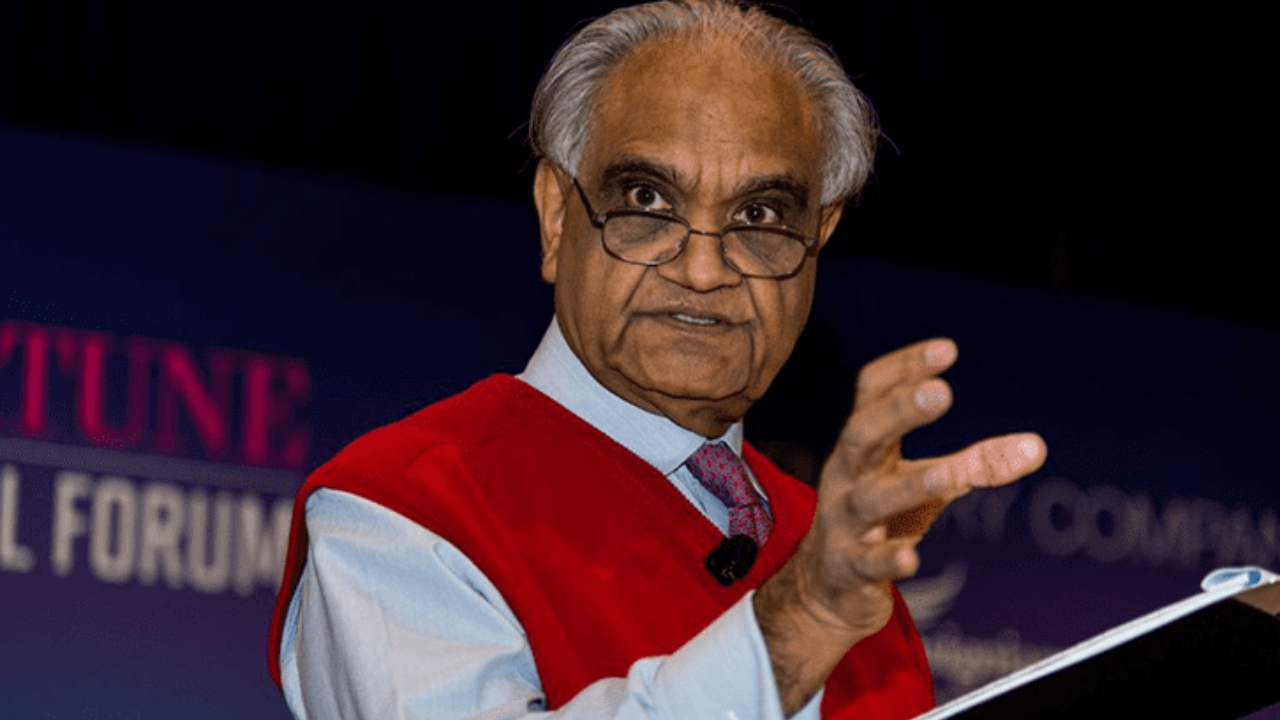
Why Is Ram Charan Sounding the Alarm on “AI Unemployment”?
In an interview with LiveMint, one of India's leading economic publications, global leadership guru Ram Charan issued clear and stark warnings about the disruptive effect of AI on employment. Charan stated plainly that the speed at which AI is eliminating existing jobs is far outpacing its capacity to create new fields of work. The well-known advisor emphasized that the top item on the agenda in CEOs' and boards' offices is now cutting costs and shrinking organizational structures, and he said a sharp contraction in employment is unavoidable in the near future. This points to a structural break that is entirely different from the cyclical unemployment patterns the market is used to.
Technology history has shown that every major revolution ultimately creates more jobs. The core mistake, however, is the assumption that this process happens instantly. Ram Charan argues that the real danger created by AI integration lies in the time gap during this transition. A software system can take over operational work that hundreds of people used to do within minutes, while it takes years for the people who lost that work to become data strategists, prompt engineers, or AI ethics specialists. This gap in time is the main breaking point that will strain socio-economic systems.
The Real Fear for CEOs Is Not Salaries but a Business Model Crisis
Discussions in boardrooms are no longer just about trimming payroll. Cash shortages in global markets, the direction of interest rates, and the incredibly fast pace of competition are pushing leaders toward radical decisions. CEOs do not see AI merely as an optimization tool. They fear that rivals will use this technology to push them out of the game. The motivation here is therefore not simple greed for profit but a direct survival reflex. Pressure for efficiency is leading companies to redesign their organizational charts from the top down.
Maximum Output with Fewer Employees
The growth paradigm of the old world was directly proportional to a company's volume and headcount. As a company grew, its human resources department grew, and it moved into huge office complexes. In the new reality Ram Charan points to, success is measured by achieving "maximum output with minimal human effort." Established giants with tens of thousands of employees have discovered that, thanks to AI-based infrastructure, they can manage the same workload with half the staff, or even a third. This brings vertical reductions in organizational charts and completely removes loyalty to traditional employment models. In this new wave, the alarm bells are ringing for roles involving data collection, structuring, basic analysis, and routine reporting.
Roles at the Highest Risk
The basic reporting layers of financial analysts, data entry specialists, first-level customer relations support teams, and junior lawyers who compile standard legal documents are directly in the crosshairs. AI systems can scan millions of pages of documents within seconds and produce flawless summaries, so hiring people for these tasks is becoming economically irrational. Paradoxically, the areas with the highest AI unemployment risk have become some white-collar positions that take the longest to train for.
Junior Positions
The situation is especially critical for young talent entering the sector. Junior profiles who were once hired to lighten the load of senior employees and learn the job from the inside now have almost all of their tasks handled by AI agents. This is leading companies to cut junior hiring sharply. Yet there is a major danger being overlooked: if you do not hire and develop juniors today, where will you find the senior experts who will sit in leadership seats and create strategy five or ten years from now? The business world is currently ignoring this future talent gap and making moves to get through the day.
Is the Job Disappearing or the Need Shrinking?
Reading this only as professions being erased from the map entirely misses the picture. The problem is less that a profession disappears and more that the number of people needed to do that work drops dramatically. For example, a 50-person graphic design or content production agency can now do the same work with 5 creative directors thanks to advanced AI tools. The remaining 45 people are technically capable of doing their jobs, but there is no market demand left for them. The AI employment crisis is fed precisely by this supply-and-demand imbalance.
New Jobs Will Emerge, But...
During the Industrial Revolution, machines entering factories replaced physical strength. People moved from muscle power to mental work such as planning, management, and services. The computer and internet revolution sped up data processing and created a massive digital economy. But the AI revolution differs radically from the earlier ones: this time, what is being replaced is human cognitive ability, meaning intelligence itself. Moreover, the process of adaptation and learning is not linear but exponential. Technology is learning so fast that education systems cannot keep up by changing curricula and training people for new kinds of work. In a world where AI systems can write their own code, fix their own errors, and train new AI models, the human role in the technological ecosystem is rapidly shifting from "producer" to "supervisor." This shift is far more rapid than the pace at which people can acquire new skills.
Why Does AI Bring Savings First?
The first and most concrete result of integrating AI tools into any business is cost savings. Starting a SaaS subscription is much cheaper and less troublesome than founding a new department or hiring an outside agency. Companies naturally ride the wave of efficiency and savings in the early phase. Creating new business models, new markets, and entirely AI-based industries, however, requires creative work and takes time. What entrepreneurs should do in this period is not focus solely on cutting costs but figure out how they can create value in the new playing fields this technology opens.
The AI Employment Crisis Is Hitting White-Collar Workers in Particular
The replacement of blue-collar workers and jobs that require physical manual skill by AI is still proceeding slowly and at high cost due to the expense of robotics technology.
Operations, Customer Support, and Content Teams
In contrast, white-collar workers who produce data at a screen, write text, answer emails, and manage operational processes are directly at risk. The AI employment crisis is breaking down the protected walls of the office world. Almost all customer support processes are being handed over to voice assistants that flawlessly imitate human voice and emotion, while content production processes have also become fully automated.
Transformation in Software and Data Teams
Software developers and data analysts, who were held in high regard for years and whom every company eagerly recruited, now feel the heat of this transformation on their necks. Today, advanced LLMs and coding assistants can write and optimize code blocks that would take a senior developer hours in just seconds. This does not mean the software profession is ending. However, it increases the need for developers who design system architecture and manage AI well, rather than those who simply "write code." Thousands of people who only know basic coding face the risk of being pushed out of the job market in this process.
How Did the AI Workforce Transformation Begin in Companies?
Agentic AI, which has entered our lives beyond advanced AI models, is no longer just a set of tools that respond to prompts given to them.
How Does Agentic AI Change Company Organization?
We now have autonomous digital coworkers that determine their own strategy toward a given goal, communicate with other software, manage budgets, and notice and correct their own mistakes. This accelerates the AI workforce transformation in companies. Instead of static departments, companies are turning into flexible, agile cell structures made up of autonomous agents and a few strategic people who orchestrate them.
How a Single Person Becomes a Mini Team
In a traditional company, bringing an idea to life required a product manager, designer, developer, marketing specialist, and copywriter to work together. Today, a visionary entrepreneur who knows how to use the right tools can carry out work that a whole team once did, backed by AI agents. This new generation of the "solopreneur" model is changing market dynamics and proving once again how cumbersome and costly large hierarchical structures are.

A New Advantage for Startup Founders
For early-stage ventures and startup founders, this period offers unique opportunities. With very small budgets, it is now possible to develop products extremely fast and bring them to the global market. Technical infrastructure that once could not be built without raising millions of dollars can today be set up by an entrepreneur in their own room with a few integrations. Speed and flexibility have become startups' biggest weapon against the huge budgets of large companies.
The Risk of a Wrong AI Strategy
However, this is only the bright side of the coin. Many entrepreneurs make a major mistake by seeing AI merely as a cost-reduction tool. If you build your business model solely on "offering cheaper services using AI," you cannot prevent another startup from appearing the next day with an AI model that does the same job even more cheaply. The real success lies in combining the speed AI provides with a unique customer experience, community strength, and a brand value that cannot be copied. Those who use technology superficially will be eliminated, while those who build it deeply into their business models will endure.
Is the Fear of “AI Unemployment” Being Exaggerated?
Some analysts in the sector argue that the wave of AI unemployment is not as terrible as the media suggests and that the market will find its own balance. Yes, perhaps in the long run everything will be optimized and humanity will shift toward more creative fields. But what leaders overlook is the painful transition period that will pass before reaching that long run. This is exactly what Ram Charan emphasizes: while we focus on rosy long-term pictures, the employment shock that millions of people will experience in the short term could create serious turbulence in social and economic systems. Therefore, this fear is not being exaggerated; if anything, it is not being taken seriously enough.
In the future, we may have to redefine the very concept of "work." Sitting in an office for 45 hours a week to perform routine tasks was a format imposed on us by the industrial revolution. AI is completely shattering that format. In the world of the future, people may stop working full-time for a single company and instead become independent actors who combine their expertise with AI leverage to contribute autonomously to several projects at once. What we see as unemployment is, in fact, the liquidation of outdated, old-style business models.
Reading Between the Lines of Ram Charan's Message
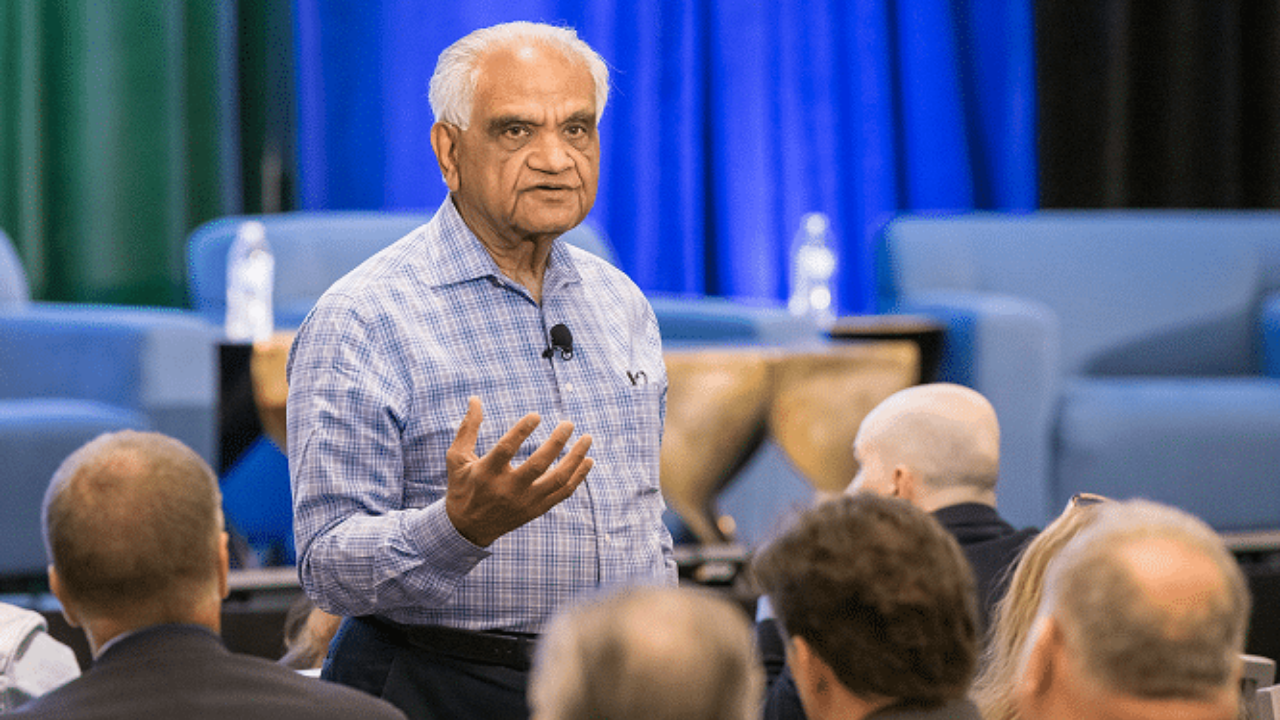
The biggest lesson from the analysis on leadership transformation that the well-known advisor shared on his LinkedIn account is not to mourn the inevitability of change but to read the speed of that change correctly. Charan points out that global capital and leaders have now entered an irreversible path. For companies, AI integration is not a luxury innovation project but a financial necessity. If you want to protect your cash flow, increase your efficiency, and stay competitive in the global market, you have to rebuild your organization around AI.
Companies that will survive this storm of large-scale workforce transformation, and even turn this crisis into massive growth, share one common trait: they do not use AI merely to fire current workers and cut costs. They direct the human capital that AI frees up toward developing new products that will carry the company into the future, perfecting the customer experience, and exploring new markets. In short, entrepreneurs who use technology not only as a shield but also as a disruptive sword will be the real winners of this new era.
WriterAI Tembellik Tartışması Teknoloji Dünyasını Karıştırdı


AI Destekli Siber Saldırı Dalgasında Yeni Tehdit GreyVibe


