




AI Laziness Debate Shakes the Tech World
Automatically translated
Technology companies ask employees to use AI, while the same companies' layoffs explained through the language of "AI efficiency" are triggering a new crisis of trust. At the center of the debate is no longer technology, but management style.

Why Did the AI Laziness Debate Suddenly Grow?
The AI laziness debate is not a new culture war that emerged a few weeks ago. It is a visible version of discomfort that has been building for a long time. Especially with the rapid entry of generative AI into office life, an interesting contradiction has emerged in technology companies: employees are asked to use AI, performance targets are rewritten accordingly, and then companies start saying that more work can be done with fewer people. This is where the problem starts for employees. Because the link between using AI tools and job security is becoming more and more visible.
In recent months, one of the events that ignited the debate was entrepreneur and investor Paul Graham's harsh remarks about content written with AI. While Graham said he had stopped reading emails that were written by AI and only signed by a human, he was actually pointing to a much broader cultural shift. The message was not only about content quality. Discomfort about people losing visibility of labor in the production process started to be discussed more. Especially among knowledge workers, the line between "using AI" and "fully handing over the work to AI" is becoming increasingly blurred.
Looking at the data, the picture seems even more interesting. While companies are increasing their AI investments to record levels, employee satisfaction research is not rising at the same pace. The main reason is not the technology itself, but the narrative that accompanies it. On one hand, the message "AI will empower you" is given, while on the other, the message "thanks to AI, fewer people are needed" circulates at the same time. This dual messaging is eroding trust.
A New Pressure in Silicon Valley: "Use AI or Fall Behind"
In technology companies, AI has begun to move out of the category of optional skills. In many teams, AI usage rates are turning into performance criteria. Especially in software, marketing, operations and customer support teams, employees are expected, explicitly or implicitly, to include generative AI tools in their daily workflows. At first glance this seems logical, because companies naturally look for efficiency. But when the direction of pressure changes, the employee experience changes as well.
For many employees today, the problem is not learning AI. The problem is that AI usage becomes an efficiency metric. Because once metrics come into play, employees start asking this question: "If I produce faster with AI, will the reward be better working conditions, or the same work done by fewer people?" This is exactly where the debate hardens.
A new culture is taking shape especially in the startup ecosystem. Smaller teams, more aggressive growth targets and AI-supported operations. This structure looks attractive to investors because costs fall. But a different psychology is at work on the employee side. People now see AI tools not only as productivity tools, but as the beginning of a redefinition of their own roles.
Why Did Jensen Huang Push Back Against CEOs?
One of the names that made the debate more visible was Nvidia CEO Jensen Huang. What stood out about Huang was that, although he leads one of the companies at the center of the AI hype cycle, he took a hard stance against CEOs who directly attribute layoffs to AI.
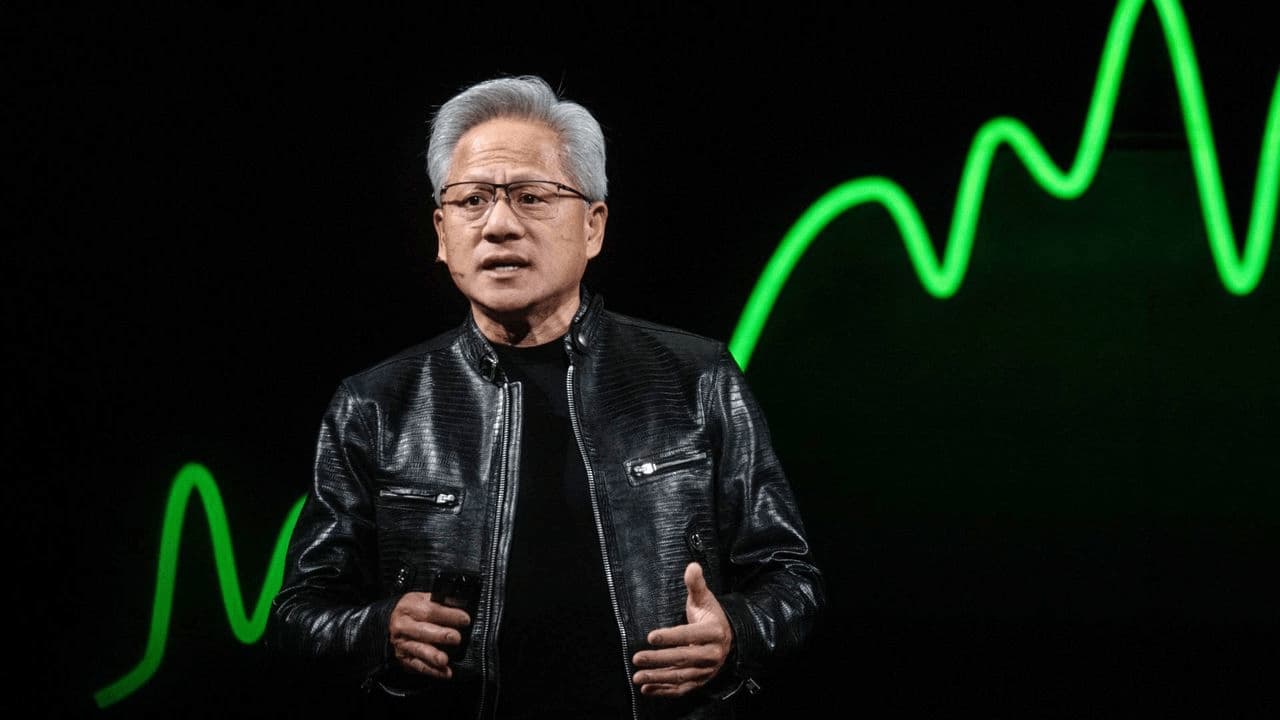
In a statement at an event, he said:
"AI has only just arrived. How can people already be losing their jobs?"
This sentence seems simple at first glance, but it actually sums up the narrative crisis in the technology sector. Because Huang is not objecting to the technology here, but to the rhetoric around it. If AI is not yet fully mature and most companies are still in the integration phase, attributing all layoffs to AI efficiency does not seem convincing to employees.
Nvidia's position is also strategically important. While the company earns billions from GPU sales, it may see that the narrative "AI is making people unemployed" could become toxic for the sector in the long run. Because fear slows the pace of adaptation. And when adaptation slows, the return on AI investments falls.
This is why Jensen Huang's statement was important. For the first time, a leader at the center of the AI economy loudly drew attention to the crack on the narrative side.
What Are Companies That Make AI Use Mandatory Doing?
The AI-first approach has become one of the most popular management trends in the technology world over the past two years. Companies are no longer just buying AI tools; they are reshaping their organizational structures around AI. While this transformation brings efficiency in some places, it meets serious employee backlash in some companies.
For example, in some organizations, new hiring is halted while existing employees are expected to produce more output with AI. This creates an invisible pressure on employees, because performance evaluation is no longer shaped only by work results, but also increasingly by the tools used.
The Duolingo example was notable for this reason. When the company's AI-first approach created intense public debate, managers began to send more balanced messages. Because users and employees asked the same question: "Is AI there to support workers, or to replace them?"
The AI-first culture looks very efficient on paper. But if the culture side is poorly designed, employees read it not as innovation but as cost optimization.
Are Layoffs Really Caused by AI?
When the wave of layoffs in technology companies over the last two years is examined, the picture looks more complicated than what is described in company presentations. Many executives talk to investors about leaner teams, higher efficiency and AI-supported operations. However, a significant part of the layoffs actually stems from reversing aggressive growth strategies from the pandemic era, high interest rate environments and investor pressure. Even so, the perception in public is different: people are losing their jobs because of AI.
Company communication plays a large role in creating this perception. Because some executives deliver both the message "productivity is increasing thanks to AI" and the message "we are optimizing our teams" within the same presentation. From the employee's perspective, when these two sentences are combined, the resulting conclusion looks quite clear. Especially for white-collar workers, AI is no longer just a new tool, but also a variable that can affect the future of their positions.

This is where the problematic side of the narrative of job loss due to AI emerges. While technology is still in the full adoption phase in most sectors, attributing all organizational decisions to AI does not seem convincing. That is why many employees are questioning not AI itself, but the way companies describe AI.
Are Employees Distrusting the Narrative Rather Than AI?
Employee trust has been a sensitive issue in technology companies for a long time. Remote work transitions, restructurings and constantly changing performance systems had already created a fragile environment. With AI entering this equation, the problem became more visible, because people are now discussing not only their workloads but also the future of their roles.
The important point here is this: most employees are not against AI use. In fact, many studies show that teams are rapidly integrating AI tools into their daily workflows. The reaction is directed not at the technology, but at the sense of obligation. When employees are expected to produce faster while teams are shrinking at the same time, trust is naturally damaged.
The concept of "psychological safety", which has been discussed in the technology world for a long time, gains importance precisely here. People should not feel risk before adopting new tools. If employees believe that using AI will shrink their own roles, adaptation slows down.
So the essence of this debate is not laziness. The essence of it is trust.
Why Does Paul Graham's Remark About "AI-Written Emails" Matter?
Paul Graham, one of the founders of Y Combinator, made remarks about emails produced with AI that resonated on social media more than expected, because he said out loud what many people feel.
Graham's statement was as follows:
"I don't think I've ever knowingly read an email to the end that was signed by a human but written by AI."
This statement is not only about email quality. It points to a larger cultural change. Because as generative AI tools spread, what people value is no longer just the output; the visibility of effort has started to matter. A curious paradox is emerging here. Companies want more AI use, while users look for more human touch. In content production, customer communication and community management, this tension is growing. Similar signals are also visible in Turkey. Especially in technology communities, people no longer just ask "was it produced with AI?" They ask "how much human contribution is there?"
Does AI Bring Efficiency but Can It Build Trust?
It is now widely accepted that AI tools bring efficiency. Productivity gains are clearly visible in code generation, research, content preparation, data analysis and operational processes. But efficiency and trust do not work in the same equation.
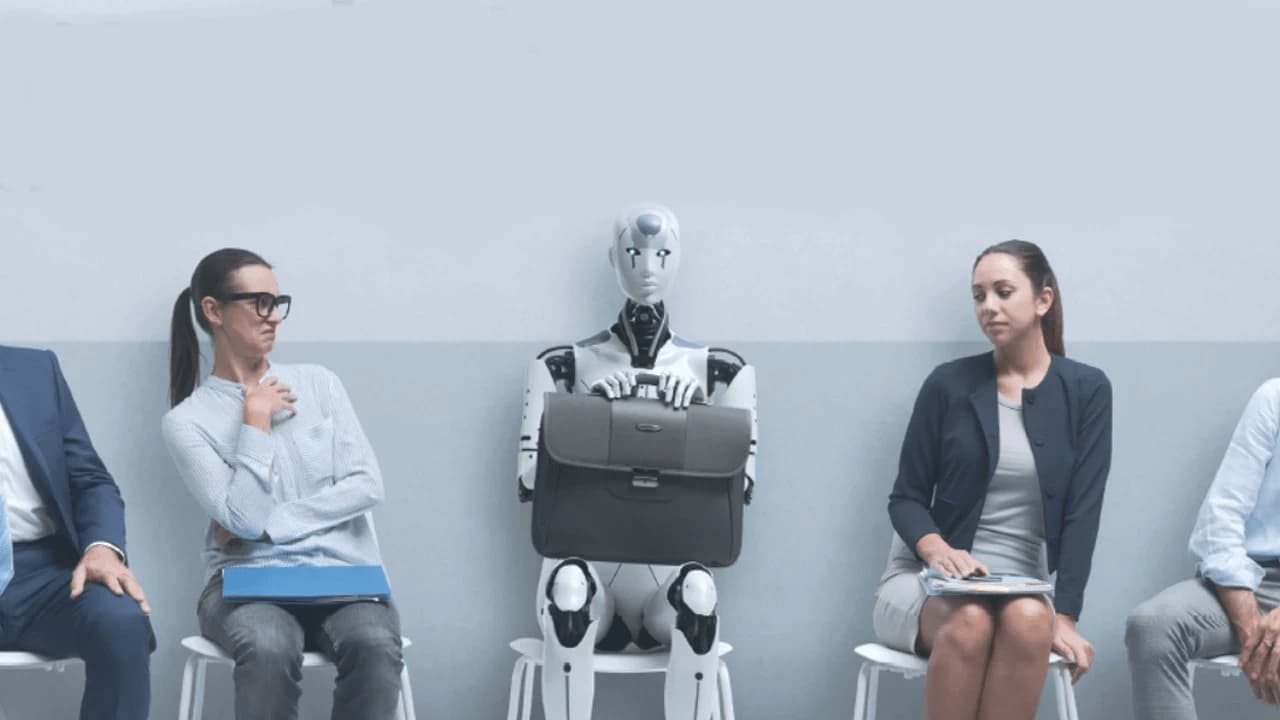
If an AI investment is seen by a company only as a cost-cutting tool, short-term gains may be achieved. In the long run, employee commitment can suffer. Because people work not only for salary, but also for predictability.
The major mistake here is assuming that the concepts of AI adoption and AI ROI are the same thing. Everyone in an organization may be using ChatGPT, but this does not mean the organization is managing its transformation well. In a successful transformation, employee experience is also measured.
In the coming period, the winning companies will not just be the ones that use AI. Organizations where people feel confident working with AI will stand out.
What Should Companies in Turkey Learn From This Debate?
AI transformation in Turkey is still at an early stage. Large corporations are running pilot projects, the startup side is moving more aggressively, and SMEs are still trying to understand use cases. That is why trust crises in global companies serve as an early warning for the local market.
The biggest risk for companies in Turkey is seeing AI only as a cost-reduction project. Because employees notice this very quickly. Especially in software, marketing and operations teams, if training processes, role definitions and expectations are not clearly set during AI integration, resistance emerges.
Here, the opportunity is also large. Because many local companies are still at the beginning of their transformation. Teams that move forward with the right culture may avoid repeating the mistakes seen in global examples.
Frequently Asked Questions (FAQ)
What is the AI laziness debate?
The AI laziness debate refers to the discussion about employees becoming overly dependent on artificial intelligence while companies support this with the language of efficiency. Recently, the topic has shifted more toward a crisis of trust.
Why are companies making AI use mandatory?
Because companies aim for higher productivity, lower operating costs and faster workflows. However, the sense of obligation can create resistance on the employee side.
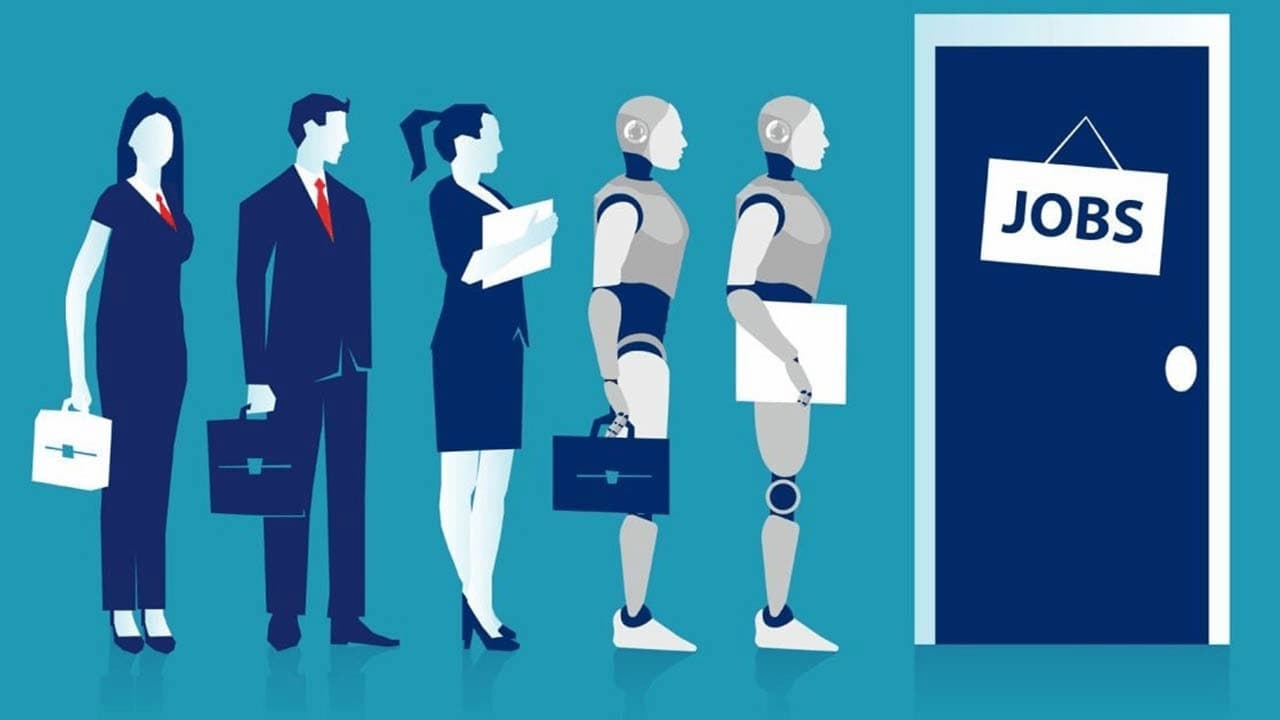
Is AI really causing layoffs?
Role changes are happening in some areas, but attributing all current layoffs to AI does not seem accurate. Economic conditions and investment pressures are also important factors.
Why did Jensen Huang criticize CEOs?
Nvidia CEO Jensen Huang said that it does not make sense to attribute layoffs directly to AI when AI is still at a very early stage.
How does AI affect employee trust?
Trust is damaged when employees are unsure whether AI is a productivity tool or a tool for reducing the workforce.
What is the biggest risk in AI transformation in Turkey?
The biggest risk is considering technology separately from cultural transformation. If employee experience is neglected while tools are adopted quickly, resistance can emerge.
For the first time in a long time, the problem in the technology world is not model quality. The problem is how companies tell the story of AI. People are not afraid of new tools. People want to know what those tools mean for them.
ChatGPT Finans Yönetimi Özelliği Kullanıma Açıldı


AI İşsizliği Endişesi CEO Gündeminin Zirvesinde!


