



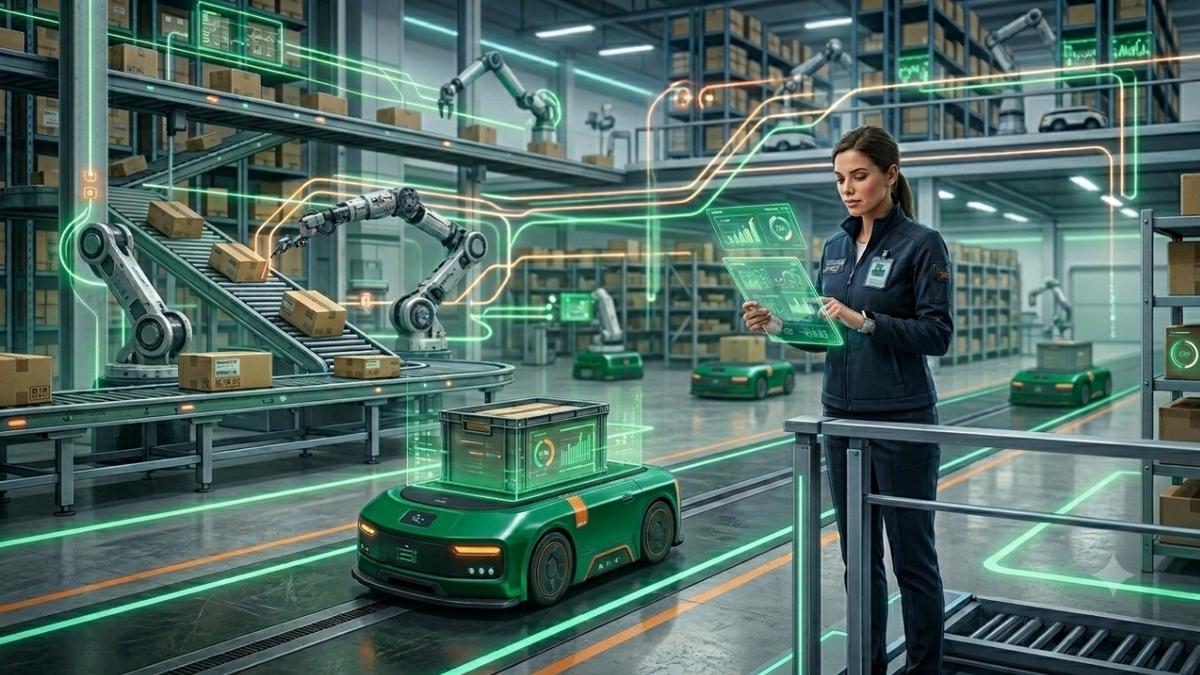
Amazon Announces €10 Billion Investment and 25,000 New Jobs in Europe
Automatically translated
 Writer
Succeeding in entrepreneurship means closely following the footsteps of global giants. Every area where the big players change direction ends up rewriting the rules of the entire market in the near future. Amazon, a leader in e-commerce and technology, shared exactly this kind of strategic decision at its Delivering the Future event in London. At the Delivering the Future event held in London, the company announced that it is allocating a massive budget of more than €10 billion (approximately $11.6 billion) to completely modernize its logistics network in Europe. The 25,000 new positions that come with this multi-billion move do more than create a wave of Amazon job opportunities on a global scale; they also mark the start of a new era in commerce.
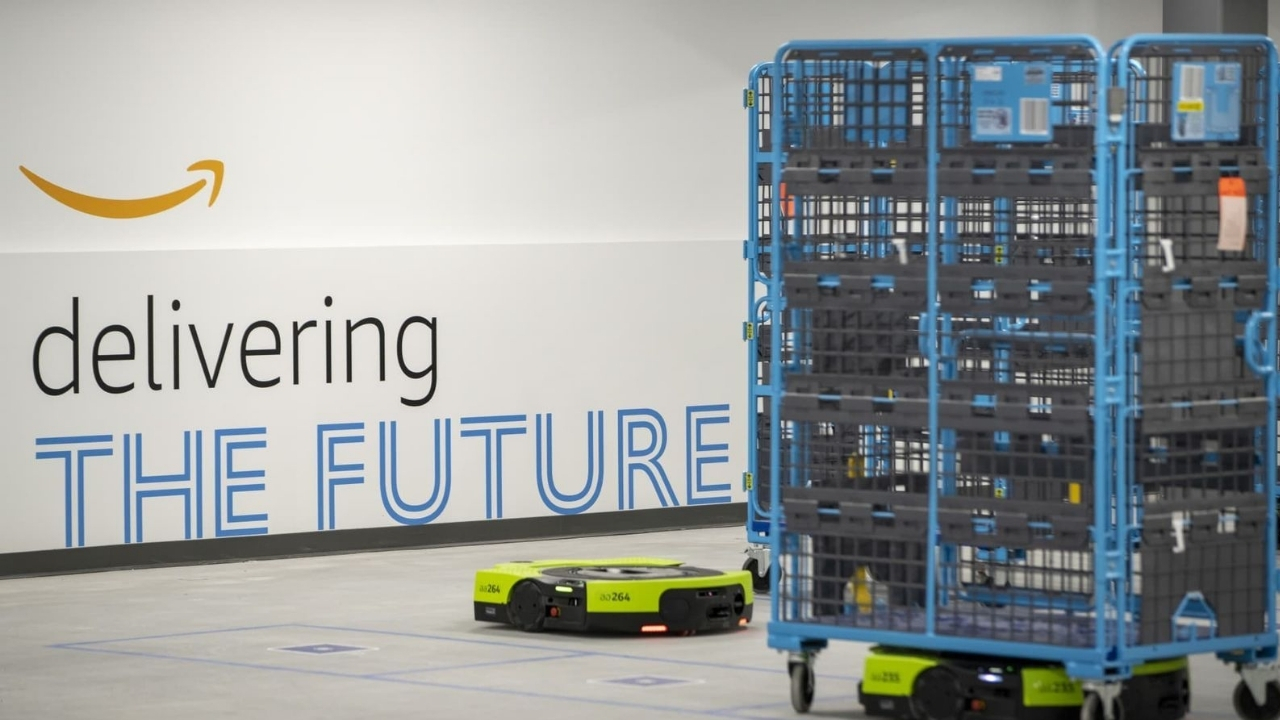
This is where it matters for a forward-looking entrepreneur to understand what happens behind the scenes. The new roles Amazon is opening represent a transformation that goes far beyond a traditional employment model. In a period when digital transformation and artificial intelligence are fundamentally changing business models, the giants of commerce are no longer investing only in physical power; they are investing in hybrid systems where human and robotic intelligence work together. This opens fresh windows of opportunity for every startup that follows technology trends, wants to grow its own business, or is trying to claim a new niche in the digital market. Understanding how AI, robotics integration, and automation will shape the future of commerce is becoming the first requirement for building a winning game plan for the coming period.
Automation and New Employment Areas
Unlike the popular fear that "automation will completely eliminate human labor," Amazon's strategy is built on a hybrid model where people and technology work side by side. While the company hands repetitive, monotonous, and physically demanding tasks in its logistics centers over to robots, it is creating 25,000 new AI-related roles to manage, supervise, and optimize these new technologies. This is the clearest proof that technology is not so much destroying employment as elevating work to a more skilled level. In the future of operations, it is no longer just muscle power that matters; system analysis, data monitoring, and robotic coordination skills are coming to the fore.
The critical point here is skills transformation. Amazon has allocated a budget of $1 billion through 2030 for its global Career Choice training program. With this budget, warehouse employees will be professionally trained in areas such as cybersecurity, software development, robotic equipment management, and renewable energy. Preparing its own employees for these high-growth sectors of the future is also a strategic move against the "skills gap" crisis in the business world.
For visionary entrepreneurs, this development means two major opportunities. First, a workforce highly adapted to technology, familiar with automation systems, and qualified will emerge in the market in the near future. For an entrepreneur who founds or grows a startup, this transformation means access to a ready and trained talent pool. Second, this scale of corporate training and transformation shows how large a supplier and service market it will create in adjacent industries, from cybersecurity to robotics maintenance. Reading correctly the areas in which large players invest their human resources makes it possible to anticipate the future standards of enterprise services today.
A New Era in Warehouses: Talking Robots and the Next-Generation Proteus
The detail that drew the most attention in the tech world as part of Amazon's European investment is the new generation of Proteus, the company's first fully autonomous mobile robot. Able to carry loads of up to 400 kilograms, Proteus has so far been used in the United States at 25 facilities, only in loading areas and enclosed sections with little human traffic. The new version, however, will be able to operate directly on warehouse floors, right beside employees, thanks to advanced safety and mapping sensors. Scheduled to be deployed at European sites in the first half of 2027, this technology aims to completely remove the physical boundaries in logistics processes.
Other key innovations under Amazon's robotics and AI strategy, which will guide the operational efficiency and supply chain vision of entrepreneurs, and their commercial implications are listed below: Amazon robotics and AI strategy
Proteus That Takes Natural Language Commands (NLP Technology):
The new-generation Proteus is equipped with advanced artificial intelligence and natural language processing (NLP) capabilities. This robot can directly understand everyday, natural spoken commands from employees, without requiring any technical coding or complex software interface. The robot independently determines its route, work priorities, and operation timing based on these verbal commands. For entrepreneurs, the implications of this technology are significant: in the future, staff working in warehouses and production facilities will no longer need to go through complex technical training. Making human-machine interaction this simple speeds up the setup of operational processes while minimizing the margin of error.
From Barcelona to Europe: "STARK":
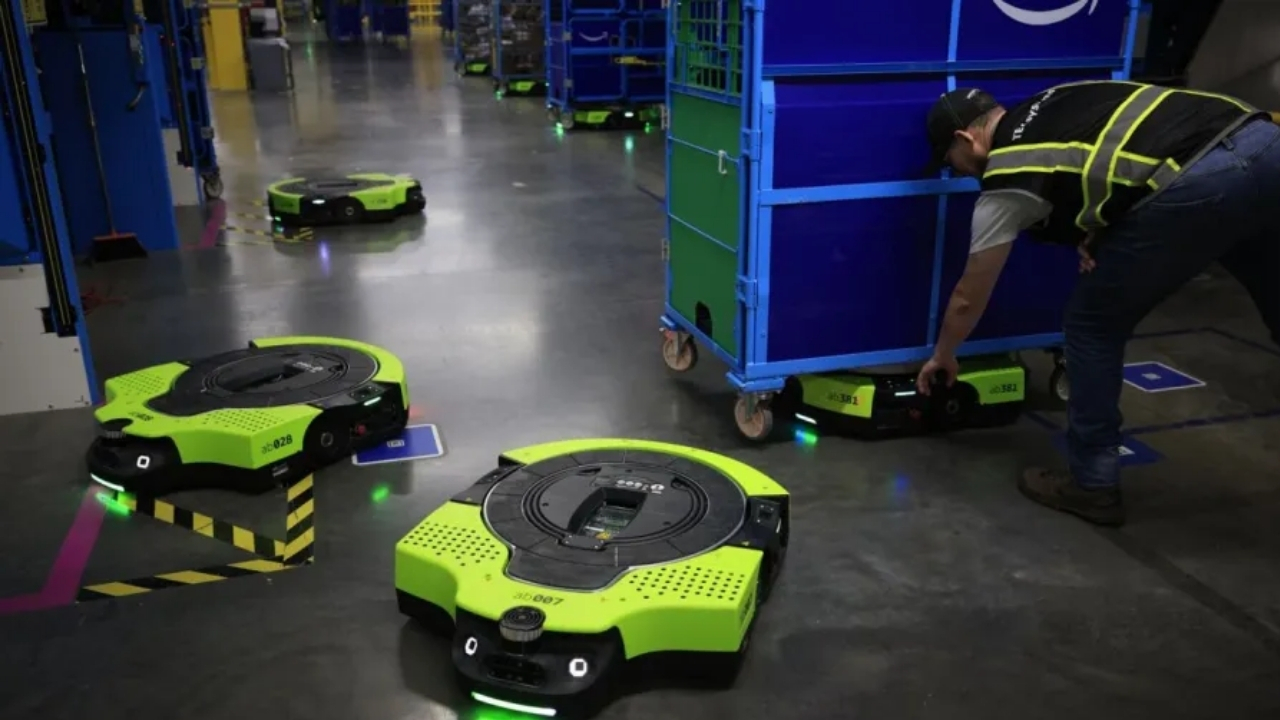
STARK, a robotic pod and basket transport system, first proved itself by being tested at a logistics facility in Barcelona. The system, which takes on labor-intensive processes such as moving heavy baskets, organizing them, and transferring them to the right stations, is planned to be installed at 15 different strategic centers across Europe by 2027. Systems like STARK offer a valuable technological reference point, especially for B2B entrepreneurs who want to optimize space management in large-scale storage processes and increase efficiency per square meter.
The Robot That Feels: "Vulcan":
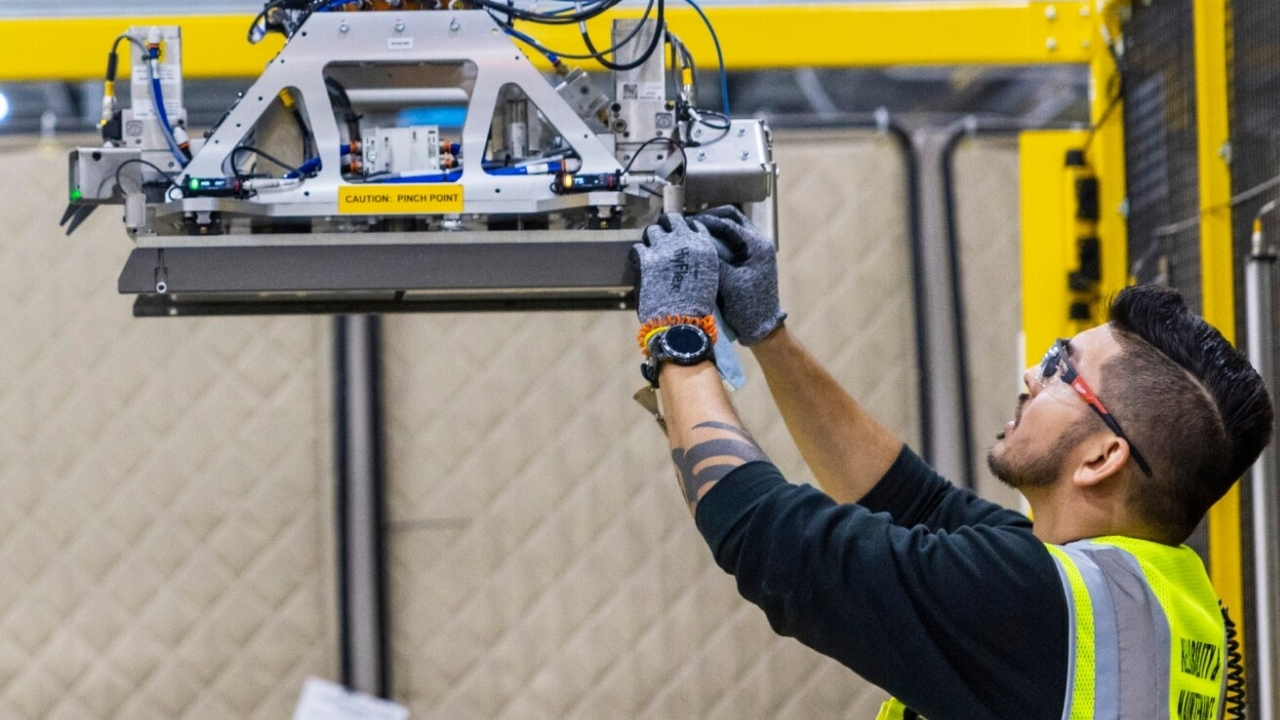
The Vulcan, an advanced picking system that can sense the pressure it applies while handling items and the texture of products, is spreading quickly across facilities throughout Europe. Unlike traditional robots, this system can distinguish between flexible and fragile items, making it revolutionary for e-commerce infrastructures that want to manage product variety without damage and with zero errors. Every digital venture that wants to raise packaging and damage-free delivery standards for customer satisfaction should take a close look at the precise automation approach that Vulcan brings.
The Ultra-Fast Delivery Network Is Expanding: The "Sub Same-Day" Era
Speed in logistics is the biggest competitive advantage for e-commerce-focused ventures. Amazon is directly reflecting this autonomous and robotic transformation inside its warehouses into its delivery processes. The Sub Same-Day (Same-Day Delivery) network, which aims to deliver orders placed by 17:00 to the door by 22:00 the same day, is being expanded to more than 25 new locations across Europe, primarily in the United Kingdom and Germany. In addition, the company's ultra-fast delivery service Amazon Now, which offers essential-needs delivery within 30 minutes, is spreading to key commercial hubs in the UK such as Manchester and Birmingham. This is a strategic expansion that completely removes the time barrier between physical retail and digital shopping.

This move, which reshapes consumer expectations around "ultra speed," has the power to fundamentally change inventory management and customer satisfaction standards for entrepreneurs who sell on Amazon or develop independent logistics solutions. A product ordered in the evening reaching the customer within a few hours lowers return rates while directly raising brand loyalty. However, to compete with this speed or to integrate into this ecosystem, companies need to turn to dynamic solutions such as real-time inventory tracking, smart supply chains, and micro-fulfillment centers. In this new period, when consumers no longer want to wait days for a shipment, local and global ventures that put speed at the core of their operations will gain a lasting advantage in the market.
The Future Has Already Arrived, So What Should Entrepreneurs Do?
Amazon's move should not be viewed merely as the growth story of a large e-commerce company. What we have is a brand-new logistics standard, shaped by multi-billion-dollar investments, in which robots and people work side by side. For every entrepreneur who sees Amazon as a business partner, supplier, or competitor, this is a very clear signal of where the market is heading. In a scenario where major players are steering their course toward automation, continuing with traditional methods means falling out of the competition in the long run.

If you run an e-commerce business or produce logistics solutions, speed, AI integration, and automation are no longer luxuries; they are becoming the basic rules of survival in the global market. But on the other side of the coin, a great opportunity is also opening up for technology startups. As Amazon raises these operational standards and consumer expectations, other medium and large players in the market will need smart software, AI-based inventory management systems, and autonomous optimization tools to stay in the game.
A technological transformation of this scale feeds not only Amazon's warehouses but also a brand-new, multi-billion-dollar B2B startup ecosystem around it. As the rules of commerce are rewritten in digital laboratories and autonomous warehouses, visionary entrepreneurs who ride this technological wave to build the right solutions or quickly adapt to these systems will be the winners of the coming period.
WriterAnthropic Claude Fable 5 ve Mythos 5 Erişimini Kapattı


Google Gemini ile Dolandırıcılık Yapan Ağa Dava Açtı


