



Why Anthropic's Mythos Decision Sparked Backlash in Europe
Automatically translated
 Writer
The days when power balances in the AI ecosystem were measured only by benchmark scores are over. The industry has now entered a much harsher phase, one that directly involves geopolitics and national security. The complete withdrawal of Anthropic's newest, cybersecurity-focused frontier model, Claude Mythos, from the European Union market, or what Brussels calls "leaving the EU out," has turned the regulatory cold war between Silicon Valley and Brussels into a crisis more concrete than ever. Equipped with advanced cyber defense and offensive capabilities, this new generation AI cybersecurity model represents not just a technical leap in the technology world, but a period in which the boundaries of digital sovereignty are being redrawn.
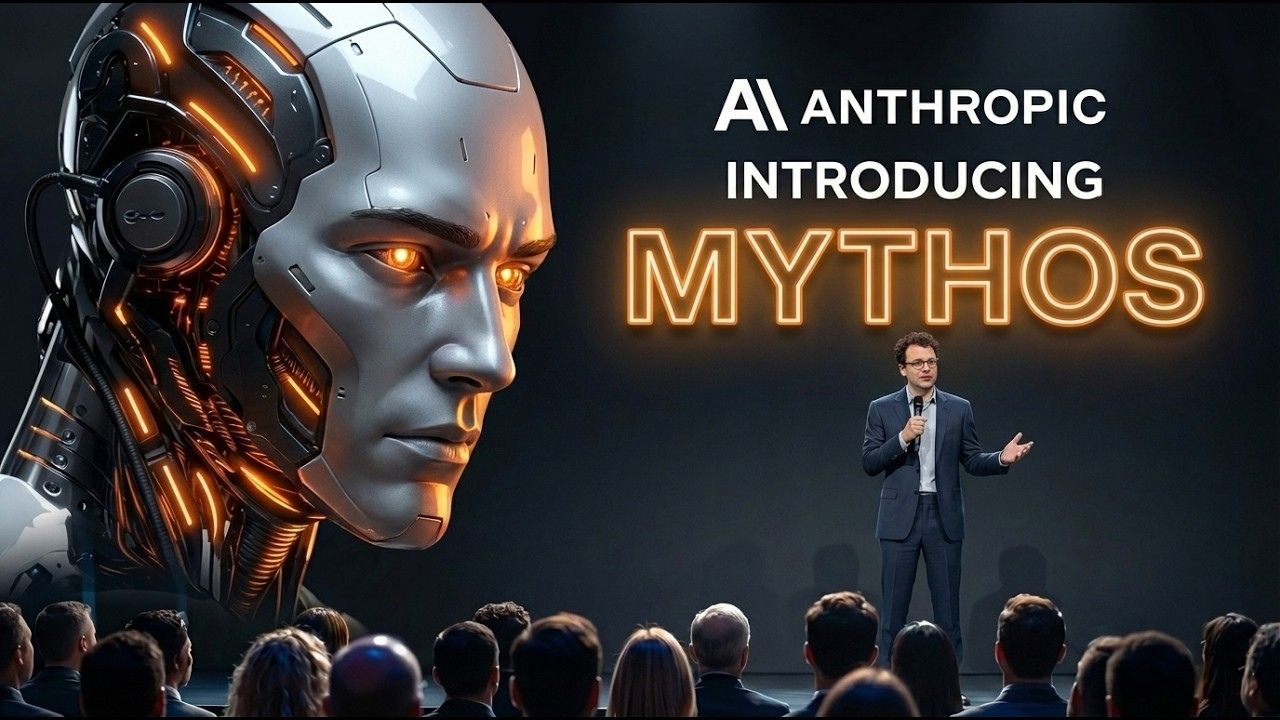
A New Front in the Digital Battlefield: Anthropic Claude Mythos
The ability of standard language models to write code, analyze text, or generate content has become routine. However, Anthropic Claude Mythos moves the AI ecosystem beyond the familiar LLM categories and directly into the layer of autonomous cyber operations. This new frontier, which the industry calls frontier AI, involves a model that does not only examine static code blocks, but can detect and patch anomalies in live network systems within seconds or, in the opposite scenario, autonomously subject the vulnerabilities of target systems to penetration testing. The reason Claude Mythos is considered so powerful lies in its capacity for complex multi-step reasoning. The model has an architecture that can reduce reverse engineering work that would take a cybersecurity expert days to just minutes.
This makes Claude Mythos more than a commercial software product; it becomes a dual-use strategic cyber instrument. Until now, AI in cybersecurity has consisted mainly of helper tools that lighten analysts' workloads, but this latest move by Anthropic places AI at the command center of both cyber defense and offense. Unlike classic large language models, Mythos was trained on billions of lines of exploit libraries, zero-day databases, and live threat intelligence streams in the cybersecurity domain. So what we are facing is not just an assistant that works through question and answer, but an intelligent cyber actor capable of thoroughly analyzing digital infrastructure.

The Set Pulled Back to Brussels: Why Did Anthropic Make the Claude Mythos EU Decision?
The decision by Anthropic AI to exclude the EU market from Claude Mythos may look like a simple compliance or legal issue at first glance, but behind it lies a much deeper Washington–Silicon Valley alignment. The vision of the American national security bureaucracy, particularly in protecting critical infrastructure and preventing the spread of cyber weapons, was the primary factor behind Anthropic's radical decision. Closed-door diplomacy conducted in Washington raised concerns that cyber capabilities at the scale of Claude Mythos could fall into the hands of third countries or state-backed cybercriminals, given the EU's existing transparency and source code audit requirements. Anthropic found the solution in completely closing access to the model within the borders of the European Union.
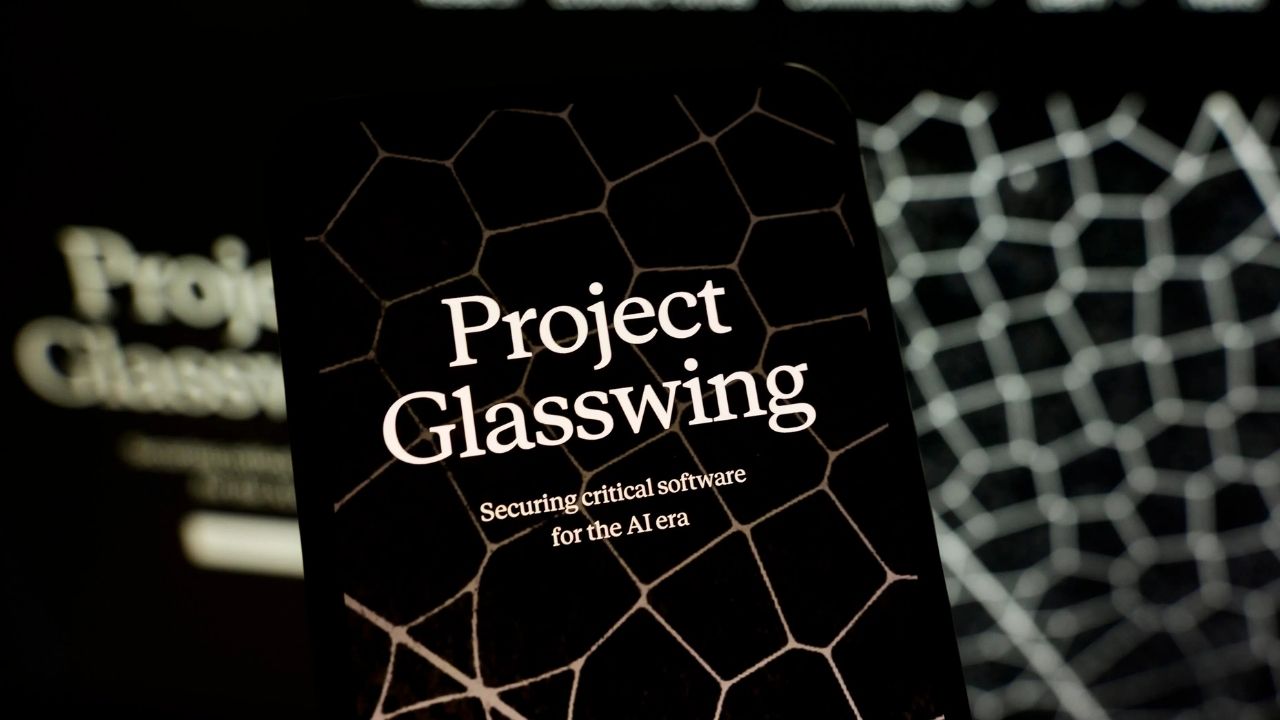
The operational side of this strategy is formed by the new controlled access policy the company calls Project Glasswing. Project Glasswing ties the model's server-level security and output control to such strict rules that meeting the "full explainability and auditability" requirements for high-risk AI systems under the EU AI Act becomes technically impossible. Rather than opening the model's weights or training methodology to Brussels to comply with European data sovereignty rules, Anthropic chose to protect its own ecosystem by completely closing its borders. The company sees keeping its cyber capabilities in a limited, unregulated geography, instead of letting them spread uncontrolled, as a strategic growth and security policy.
Global Central Banks on Alert: Is Claude Mythos a Financial Threat?
This development, which takes the crisis to the level of global financial authorities, entered a new phase when Anthropic agreed, following a direct call from Bank of England Governor Andrew Bailey, to provide a formal briefing to the Financial Stability Board (FSB), which oversees the global financial system. Tests conducted by the UK AI Security Institute (AISI) on the Mythos version offered to banks and technology giants revealed a visible leap in the model's autonomous cyber capabilities. Claude Mythos completed the "cooling tower" cyber hacking test, which no AI had passed before, in 3 out of 10 attempts, demonstrating that the autonomous cyber task durations of frontier models have doubled within months.
Faced with this technical leap, the International Monetary Fund (IMF) and global regulators are seriously concerned that the model could find and exploit zero-day vulnerabilities in financial institutions running legacy software within seconds, leading to a macro-financial shock and systemic instability. Anthropic, which closed the model to the public to prevent it from being used as a digital weapon by hackers, has chosen to offer Mythos only to around 40 elite global players such as Apple, Microsoft, and JPMorgan, and to build a very strict, controlled ecosystem that allows these actors to share cyber threat intelligence among themselves.

Cyber Defense or Offensive Weapon? The Security Balance Is Shifting
At the technical center of the debates surrounding Claude Mythos is the fact that the model fundamentally shakes the cyber attack and defense balance. In the traditional cybersecurity world, finding a flaw in a system, analyzing it, and then writing an exploit requires significant human capital and time. Mythos, however, can discover software vulnerabilities, known as zero-days and not yet known to anyone, within seconds of source code analysis. The model's ability to autonomously produce patches that close these vulnerabilities provides enormous cyber defense power, but its ability to produce attack code that exploits the same vulnerability at the same speed takes the issue to a dangerous level.
This raises the question: "Is an AI cybersecurity model a defense tool, or a digital weapon with mass destruction potential?" The dual-use power in the model's hands is the kind that would whet the appetite of state-backed cyber actors. If an AI model can design an advanced cyber attack architecture from scratch and generate intrusion scenarios against target networks, it is no longer just software, but among the most critical frontline weapons of cyber geopolitics. One of the main motivations behind Anthropic withholding the model from the EU market is exactly this: they do not want to entrust control of this cyber power, which changes the balance of attack and defense, to Brussels' multi-voiced and cumbersome bureaucratic mechanisms.
The repercussions of the Claude Mythos EU crisis on the European continent carry economic and infrastructural threats that go far beyond a theoretical technology debate. Today, large European banks centered in Frankfurt, Paris, and Amsterdam, energy distribution networks, and critical logistics infrastructure must develop defense mechanisms against next-generation cyber attacks. However, being deprived of the most advanced AI cybersecurity tools puts these institutions in a cyber-vulnerable position against their global rivals. European infrastructure, cut off from the autonomous threat intelligence the model provides, faces the risk of technological paralysis in any large-scale cyber operation that could occur at any moment.
Region / Actor | Claude Mythos Access | Cyber Defense Capacity | Dependency Risk |
US (Pentagon, Wall Street, Big Tech) | Full Access (Project Glasswing) | Maximum (Autonomous Zero-Day Patching) | Low (Domestic Infrastructure) |
European Union (Critical Infrastructure & Banks) | Blocked / None | Limited (Traditional LLMs & Manual Processes) | High (Dependence on US Cloud Systems) |
The real great danger of this table is digital colonialism and loss of sovereignty. Because Europe cannot produce its own frontier AI models and is also excluded from the current leading global models, it is beginning to develop absolute dependence on American cloud infrastructure and the initiative of technology companies. For a Europe that must manage even its own cybersecurity through a "permission" or "restricted API key" coming from across the Atlantic, claiming technology sovereignty in global politics is becoming literally impossible.
The Great Paradox of the European Parliament Under the AI Act Pressure
The EU AI Act, which is the greatest source of pride for the European Union in the digital world and aims to restrain artificial intelligence with strict rules, has turned into a shackle tangling Brussels' feet with this crisis. Current debates in The Parliament Magazine and community reactions leaking from the European Parliament corridors show that decision-makers in Brussels are in deep shock and anger. Lawmakers expected Anthropic to step back and comply with the rules, but they were faced with the company slamming the door shut and leaving. This situation has fueled the paradox: "Do excessive regulation and rigid bureaucratic rules truly protect innovation and society, or do they completely isolate Europe from the global technology ecosystem?"
The conservative and pro-technology wing within the European Parliament argues that the European Commission's mission to "regulate the world" has led to a strategic blindness in the context of cybersecurity. In a world where cyber threats recognize no borders or laws, locking the AI that performs cyber defense with harsh legal regulations is seen as no different from taking the weapon out of a soldier's hands on the front line. Brussels thought it could bring Silicon Valley to its knees with regulatory power, but Anthropic's Claude Mythos decision shattered that assumption.
OpenAI Turns the Gap into an Opportunity: Claude Mythos vs ChatGPT 5.5-Cyber
The huge gap Anthropic created in the European market has opened a geopolitical and commercial window of opportunity that its biggest rival, OpenAI, does not intend to miss. Led by Sam Altman, OpenAI prefers to conduct flexible diplomacy rather than burning bridges with Brussels, unlike Anthropic. By offering partial compliance commitments with the EU AI Act rules for its new cybersecurity-focused model, ChatGPT 5.5-Cyber, the company has rolled up its sleeves to cement its dominance in the European market. By filling the void left by Claude Mythos, OpenAI aims to tie the finance, defense, and public sectors in Europe completely to its own ecosystem. ChatGPT 5.5-Cyber stays in the EU market by giving the green light to the audit demands of European authorities, and the complete absence of Claude Mythos shows that competition in cybersecurity will be shaped not only by technical capabilities but also by regulatory diplomacy. This situation has brought a serious strategic divergence between the two AI giants in the cybersecurity market:
Anthropic Strategy: A completely closed, national security-focused, "ultra-conservative" approach that accepts market restrictions due to its cyber weapon potential.
OpenAI Strategy: An "aggressive expansion" policy that develops flexible layers adapting to regional regulations and does not want to lose market share or global data flows.
Can Europe Build Its Own Frontier Model?
The strongest card in Europe's hand for escaping external dependence and achieving AI independence is the France-based Mistral AI. With its open-source and community-oriented models, the company has so far earned praise and become the pride of European AI. However, when it comes to competing with a frontier cybersecurity model at the level of Claude Mythos, Mistral faces very serious and hard-to-overcome structural obstacles. The open-source philosophy does not always offer an advantage in the cybersecurity domain, since the risk that the model's capabilities could fall into the hands of malicious actors makes Mistral more hesitant about developing cyber attack models.
An even more critical problem is Europe's chronic infrastructure and funding issue. Training a frontier model with billions of parameters and cyber intelligence requires enormous computing power and advanced GPU farms such as Nvidia H100/B200. Europe lags far behind the US in data center investment and venture capital scale. Mistral AI or similar European startups may grow to a point with state incentives, but without Silicon Valley capital and the cloud power of American technology giants behind them, it seems unlikely in the short and medium term that they could alone produce an independent AI cybersecurity model at the level of Claude Mythos.
New Blocs and Turkey in AI Geopolitics
This EU crisis shaped around Claude Mythos is the clearest indication that in 2026 and beyond, artificial intelligence will stop globalizing and split into distinct technology blocs. We are now living in an era of multipolar AI geopolitics, separated by hard boundaries. On one side is the US, which keeps its cyber capabilities behind national security walls; on the other is China, which is building its own domestic ecosystem; and in the middle is a European Union caught in a regulatory vise and at risk of becoming technologically isolated. This bloc formation directly affects not only the great powers but all ecosystems tied to the global technology supply chain.
This harsh polarization also holds very critical lessons for Turkey's domestic AI and cybersecurity strategy. In particular, Turkey's defense industry and cybersecurity ecosystem have clearly seen that imported frontier models can be cut off overnight by an embargo or a regulatory crisis. For Turkey to achieve full independence in its cyber homeland strategy, it is not enough to secure cybersecurity with domestic software alone; it has become an unavoidable necessity to realize domestic cyber AI models that can perform direct cyber intelligence and autonomous defense and run in our own data centers. The bitter experience that the Claude Mythos crisis taught Brussels should serve Ankara as a strategic guide to accelerate domestic defense industry and AI integration.

Frequently Asked Questions
1. Why Was Anthropic's Claude Mythos Model Completely Banned in the EU?
The model was not officially banned by the EU; rather, the developer Anthropic chose to close access to the model in the European market instead of accepting the strict audit, source code transparency, and explainability requirements imposed by the EU AI Act regulations.
2. What Sets Claude Mythos Apart from Other Standard AI Models?
Beyond being a general-purpose language model, Claude Mythos is a "frontier AI cybersecurity" model specifically trained for advanced cybersecurity operations, autonomous source code analysis, zero-day vulnerability discovery, and cyber threat simulations.
3. How Will the European Union Address the Lack of Claude Mythos?
For now, the EU is turning to OpenAI's ChatGPT 5.5-Cyber model, which works more in line with regional regulations, and plans to increase public funds and incentives for European startups such as Mistral AI to develop their cybersecurity capabilities.
4. Is It Possible to Use Claude Mythos for Cyber Attacks?
Yes, the model has a high dual-use potential. Just as it can find and close system vulnerabilities within seconds, it is also capable of autonomously producing complex attack code and intrusion scenarios that exploit those vulnerabilities.
5. How Will This Crisis Affect the Global Future of AI?
This crisis has formally launched an era of "AI Geopolitics and Technology Blocs," in which AI stops being a global and open technology and is restricted by countries on national security grounds.
WriterReflex Robotics: Depodan Ev İşlerine Robotik Devrim


AI İş Kaybı Korkusu Mezuniyet Törenine Taşındı


