Reflex Robotics: A Robotics Revolution in Household Chores
Automatically translated
 Writer
The basic problem that has long drawn attention in the robotics world was this: robots can perform quite well on specific tasks, but they still struggled with the complexity of the real world. Especially when it comes to machines that will work in human environments, strong hardware alone was not enough. Understanding the environment, making decisions in real time, adapting to human movements, and working under changing conditions became a much bigger problem. Reflex Robotics stands out as one of the new-generation robotics startups beginning to attract attention precisely at this point.
Recently, interest in AI-powered physical robot systems has grown significantly in the technology world. This is because artificial intelligence is no longer used only in digital systems but is starting to be used in real-world tasks as well. Warehouse operations, logistics processes, production lines, and even everyday household chores are becoming new target areas for robotic automation. The reason Reflex Robotics is drawing attention is not only that it builds robots, but that it is trying to develop more flexible and more adaptable systems that can imitate human movements.
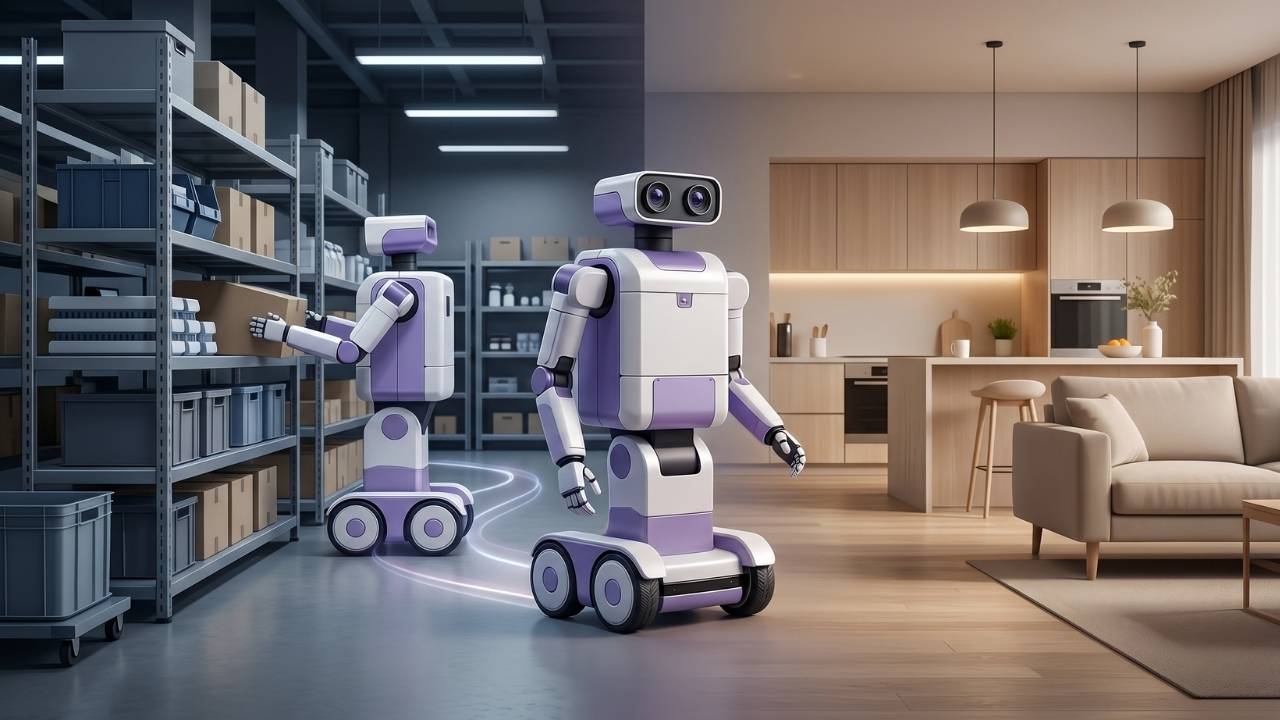
Considering developments in household chore robots and robotic home assistants in particular, the approach Reflex Robotics has developed could be an important turning point for the sector. This is because until now, many home robots have remained devices focused on a single task. Robot vacuums cleaned, smart devices received voice commands, but truly versatile robotic helpers working in human environments have remained limited. Reflex Robotics is seen as one of the companies trying to change this limit.
What Exactly Is Reflex Robotics Developing?
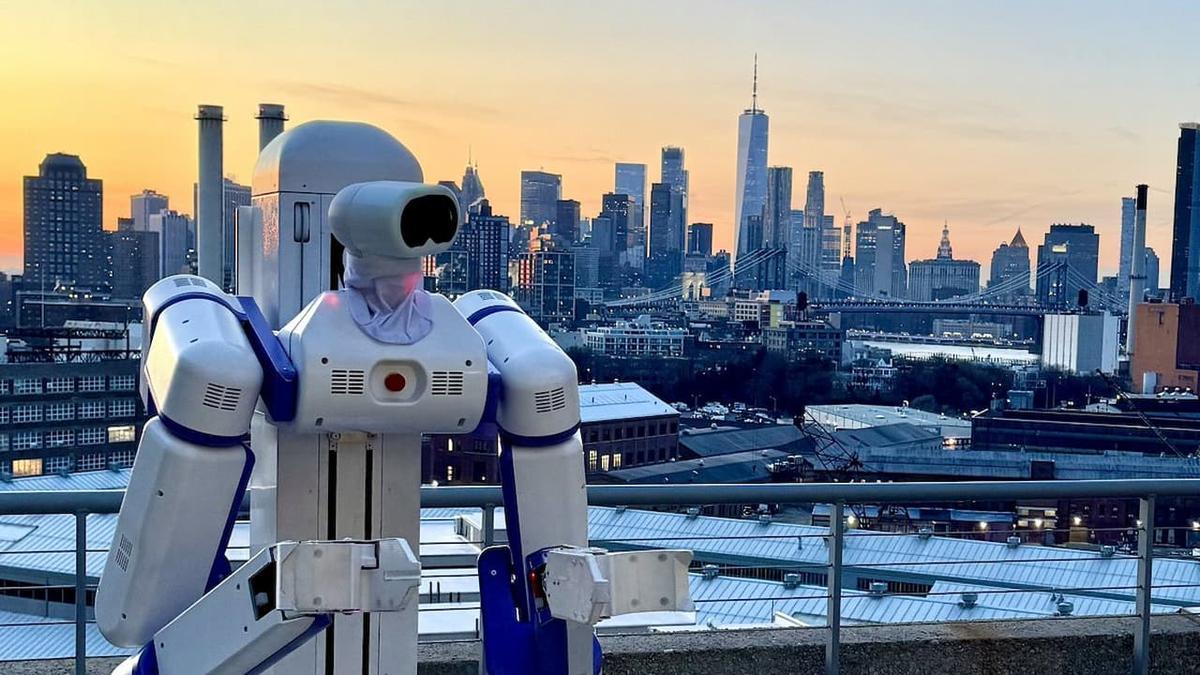
The systems Reflex Robotics develops are basically built on robot platforms with human-like movement capabilities.
The company aims to make physical task automation more accessible, especially through mobile robotic systems. The most critical difference here is that the robots do not merely repeat predefined movements. The system tries to adapt to environmental changes and can behave more flexibly under real-world conditions.
Classic industrial robots usually work in controlled environments. The production line does not change, the task is repetitive, and the robot keeps performing the same movements. Warehouse environments or indoor home use scenarios, however, are much more complex. People move, the positions of objects change, obstacles appear, and tasks constantly vary. Reflex Robotics’ approach seems to be built on creating robot systems that move more naturally in these changing environments.
When Reflex robot features are examined in particular, it becomes clear that significant emphasis is placed on mobility, balance systems, environmental perception, and physical manipulation. The robot does not only move; it also tries to analyze objects around it, work safely in the same environment as people, and switch between different tasks.
This matters a great deal in the robotics sector because the biggest obstacle in front of real-world robots continues to be the problem of physical adaptation.
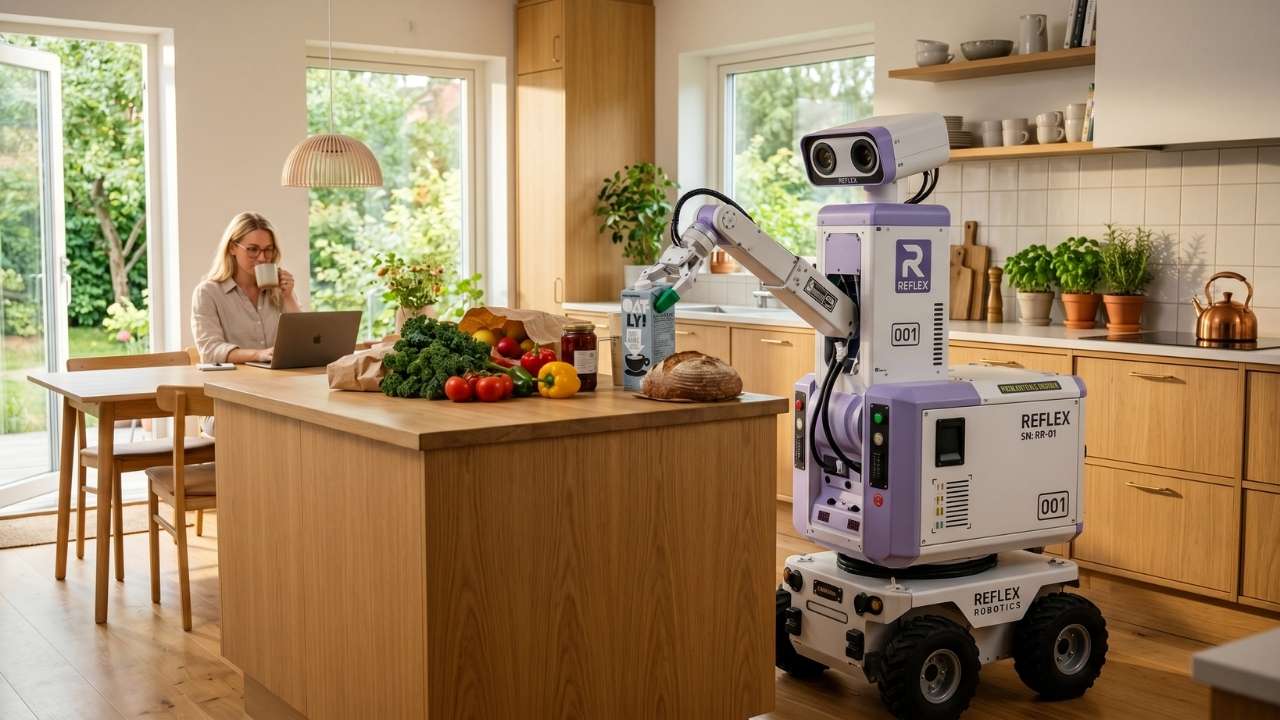
Why Are Household Chore Robots Back on the Agenda?
For many years, the idea of a “home robot” has been discussed in the technology world, but widespread real use has still not taken shape. The main reason is that everyday home environments are far more complex for robots than expected. Unlike a factory, a home has no standards. A chair's position changes, there may be toys on the floor, lighting conditions shift, or people move unexpectedly. This is why developing household chore robots is actually becoming harder than building industrial robots.
Recently, this picture has begun to change with the development of AI models. In particular, visual perception systems, object recognition models, and AI infrastructures that predict behavior have started to help robots understand their surroundings better. The rise of companies like Reflex Robotics is partly due to this. Because a robot no longer just repeats programmed movements. It is beginning to interpret its surroundings and move according to context.
This has started to turn the idea of robotic home assistants back into a serious technology category. Factors such as an aging population, growing care needs, and the automation of daily workloads are accelerating interest in this area. In the near future, robots are expected to be used not only for cleaning but also in areas such as:
carrying items
kitchen assistance
support for the elderly
daily organization
physical auxiliary tasks.
Why Is Reflex Robotics Catching the Attention of Investors?
The robotics sector has been promising big things for years, but many startups have struggled to scale in the real world. This is because building robots is not just a software problem; it also means hardware, production costs, energy management, and safety.
One of the reasons Reflex Robotics is attracting attention is its focus on more practical use cases. Instead of trying to build a “general-purpose humanoid robot” directly, the company appears to be developing more optimized systems that can perform strongly in specific physical tasks. Warehouse operations are becoming a critical area here. As physical labor demand in logistics rises rapidly, finding workers is also getting harder. As e-commerce grows, the burden of manual operations in warehouses also increases.
At this point, robotic systems become not just a cost advantage but also a solution for operational sustainability. The possibility that mobile systems developed by Reflex Robotics can be used in warehouses for carrying loads, moving products, or performing physical auxiliary tasks makes the company more interesting from an investment perspective. Investors no longer want to see only an “impressive demo.” They focus on systems that solve real-world problems.
Can Robotic Home Assistants Really Enter Everyday Life?
The answer to this question has now started to lean much more strongly toward “yes” than in the past. Over the last few years in particular, developments in AI models have significantly changed the limits of robotic systems. Visual understanding, natural language processing, and motion planning systems can now work together. This allows robots to understand human commands more naturally. For example, in the future a user might simply give commands such as:
“Tidy up the kitchen.”
or
“Help me carry the laundry.” The system could then complete the task by breaking it into small physical steps. This approach is very important in the robotics world, because classic robotic systems required every movement to be predefined. New-generation AI-powered robots, on the other hand, are beginning to work with intent-understanding logic.
This is exactly where the reason companies like Reflex Robotics are standing out emerges. The issue is no longer just producing mechanical robots; it is developing AI systems that work in the physical world. This pushes the concept of robotic home assistants back to the center of the technology agenda.
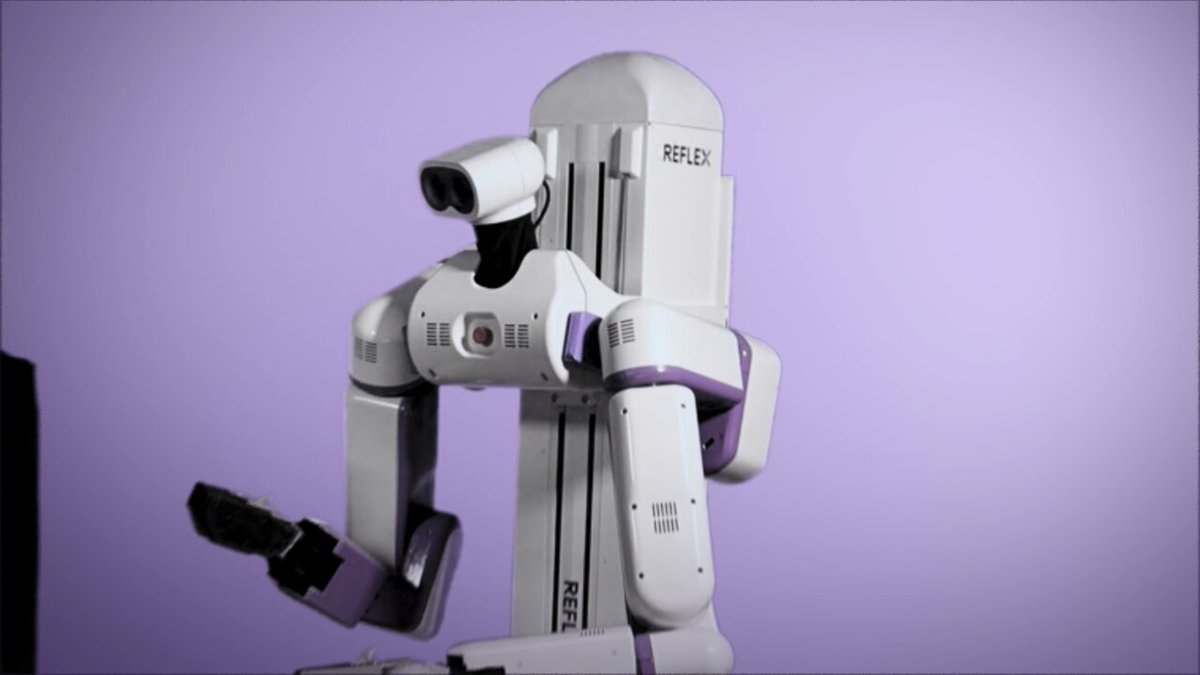
Why Do Reflex Robot Features Look Different?
In the robotics world, movement quality has become as critical as hardware. Systems working in human environments need to behave safely, stably, and predictably. One of the notable aspects of Reflex robot features is the attempt to create a more natural flow of movement. This is because many robots still move mechanically and stiffly, which makes working in the same environment as people harder.
x.com/davidgalanbolsa/status/2055360786944389568
Why Is the Robotics Revolution Accelerating Now?
The main reason for the recent acceleration in the robotics sector is actually major progress on the AI side. Physical robots have existed for years, but making them truly “intelligent” was very difficult. Today, large language models, visual AI systems, and behavior planning algorithms have started to merge with robotic systems. This is making it possible for robots to:
understand their environment
interpret human commands
learn new tasks
move according to context. The debates about a robotics revolution emerge precisely at this point. Because the issue is no longer just building robots; it is creating an AI layer that works in the physical world. In particular, the simultaneous rise of companies such as Tesla, Figure AI, Boston Dynamics, and Reflex Robotics shows that the robotics sector is entering a new era .
In the near future, physical AI systems could become a much more visible part of everyday life.
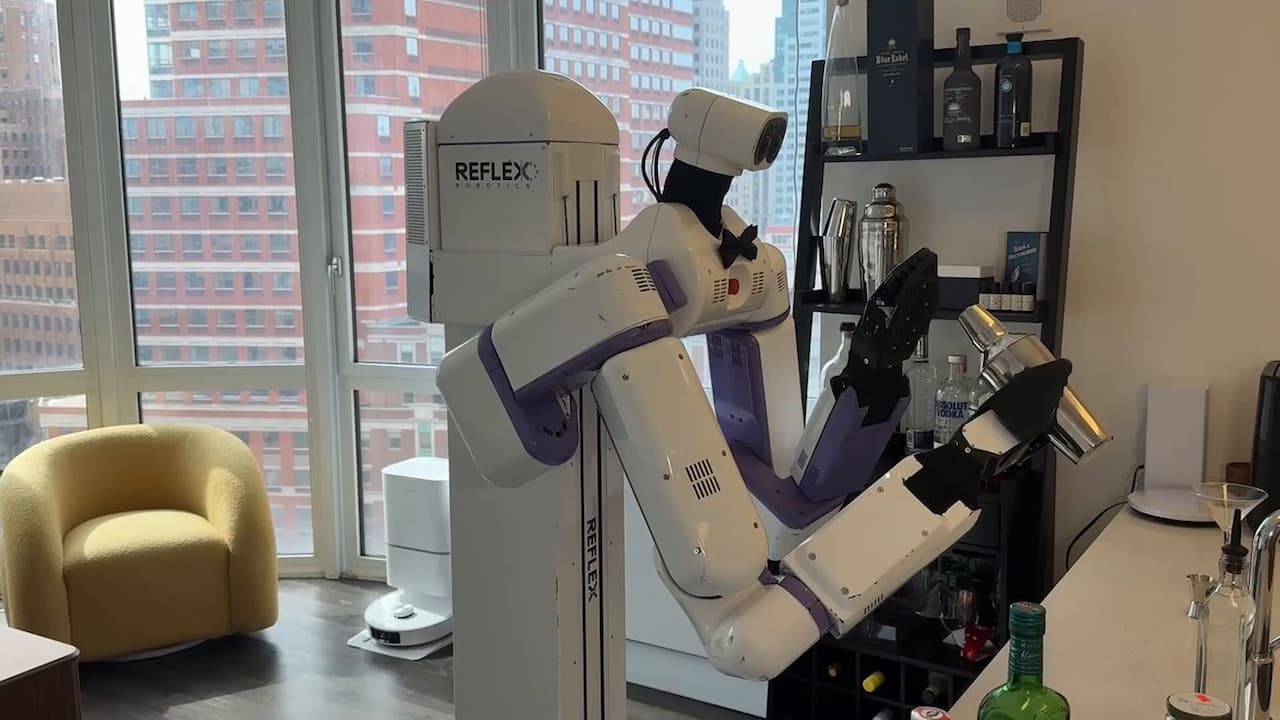
How Could the Future of Robotics Change?
For a long time, the technology world focused only on digital AI systems. Chatbots, visual generation tools, and automation systems attracted great attention. However, the next major transformation may happen on the physical AI side. This is because real economic transformation will have a much bigger impact when it happens not only in digital work but also in the physical workforce.
Warehouses, logistics centers, factories, healthcare, and home environments are becoming new target areas for robotic systems. Companies like Reflex Robotics appear poised to become one of the important players in this transition.
In particular, as AI-powered robots become cheaper, safer, and more accessible, robotic technologies could turn into a natural part of daily life. The next big race in the technology world will most likely focus on this question:
“Not ‘Which chatbot is the smartest?’
but ‘Which AI system works best in the real world?’”
Frequently Asked Questions
What does Reflex Robotics do?
Reflex Robotics develops AI-powered robot systems that can work in real-world environments. The company works in particular on robotic platforms for warehouse operations, physical task automation, and, in the future, indoor home use scenarios.
Why is Reflex Robotics attracting attention?
The main reason Reflex Robotics stands out is not just that it builds robots, but that it develops systems that can perceive their environment, move more flexibly in physical tasks, and operate with AI-powered decision mechanisms. This approach is seen as a new-generation automation mindset in the robotics sector.
Will household chore robots become widespread?
In recent years, developments in artificial intelligence and robotics have begun to make home robots more realistic. In particular, with advances in object detection, natural language processing, and motion planning systems, robotic home assistants could become more widely used in the future.
What are the features of Reflex robots?
Reflex robot features include mobile movement capability, environmental perception systems, physical task adaptation, and AI-powered control mechanisms. The systems focus on moving more safely and naturally in human environments.
In which areas can robotic home assistants be used?
In the future, robotic home assistants are expected to be used for carrying items, support for the elderly, daily organization, kitchen assistance, and physical auxiliary tasks beyond cleaning. The aging population and growing need for automation are accelerating the growth of this area.
How could Reflex Robotics affect the robotics sector?
Companies like Reflex Robotics are accelerating the development of physical AI systems. This approach could make robot use more common in many areas, from warehouse operations to everyday life.
WriterAI Siber Saldırı Tehdidi Şirketleri Alarmda Tutuyor


Anthropic’in Mythos Kararı Avrupa’da Neden Tepki Çekti?