AI Cyberattack Threat Is Putting Companies on Alert
Automatically translated
 Admin
In February 2024, a finance employee at Arup transferred 25 million dollars to foreign accounts belonging to the company. All of the executives on the screen were AI-generated clones; it was impossible to tell their voices, facial expressions and mannerisms apart from the real people. This is not an isolated case. AI-powered cyberattacks reached a new threshold in 2025, with more than 28 million cases worldwide. The AI cyberattack threat is no longer only a technical problem; it has become an area that requires redefining corporate identity verification, financial approval processes and human trust. This article covers the most current data for 2026, concrete cases and corporate defense methods.
AI Is Now Right in the Middle of Attacks
Cyberattacks used to be slow, labor-intensive operations carried out by people and prone to error. It could take weeks to write a phishing message, explore a target system and finish off a vulnerability. That picture has changed.
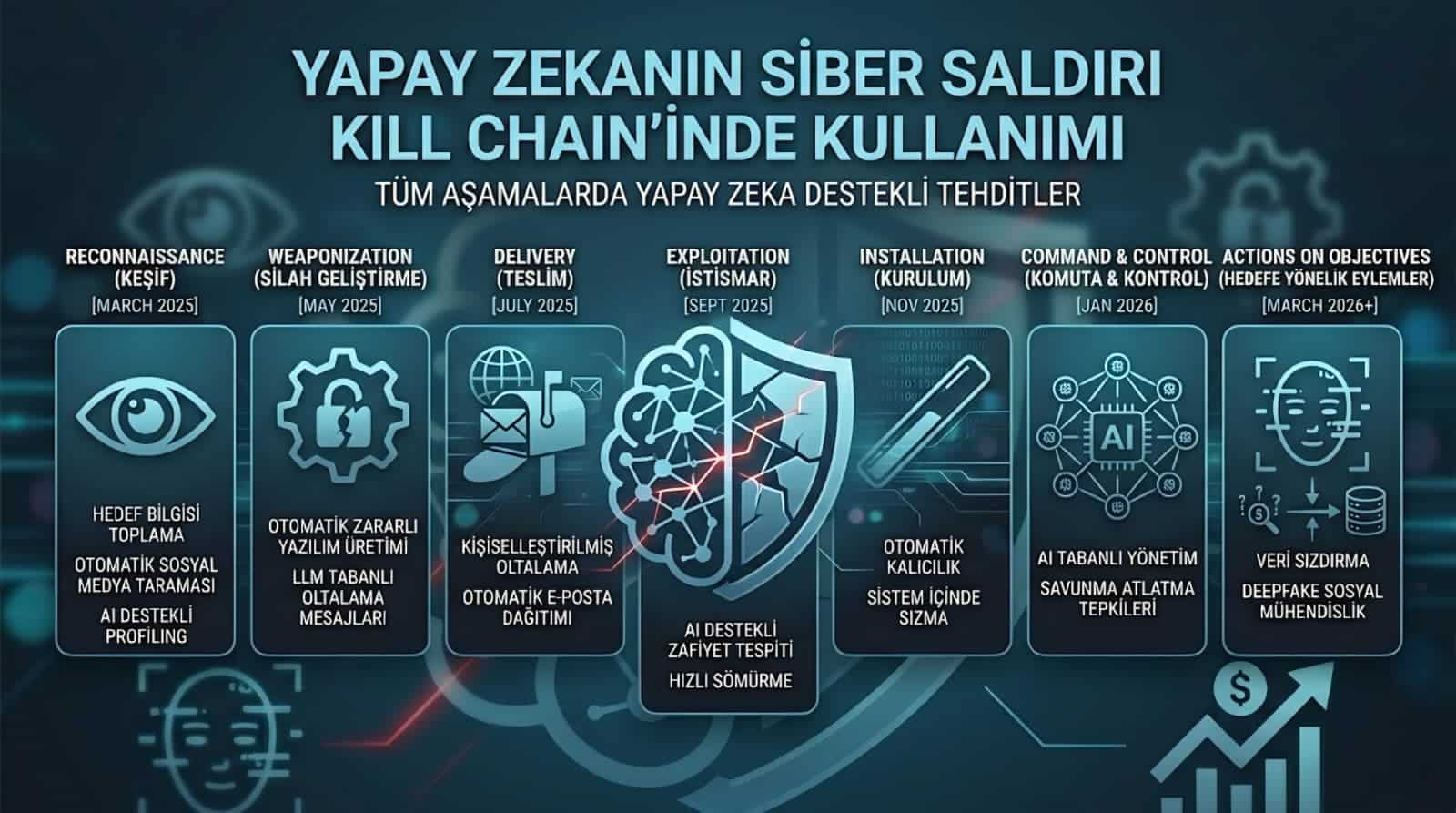
As Vladislav Tushkanov, Head of Research and Development Group at Kaspersky, reported in December 2025, threat actors are already using large language models (LLMs) to write code, set up infrastructure and automate operational processes. Every step, from reconnaissance in the kill chain to producing malicious components and from vulnerability scanning to deploying tools, is supported by AI.
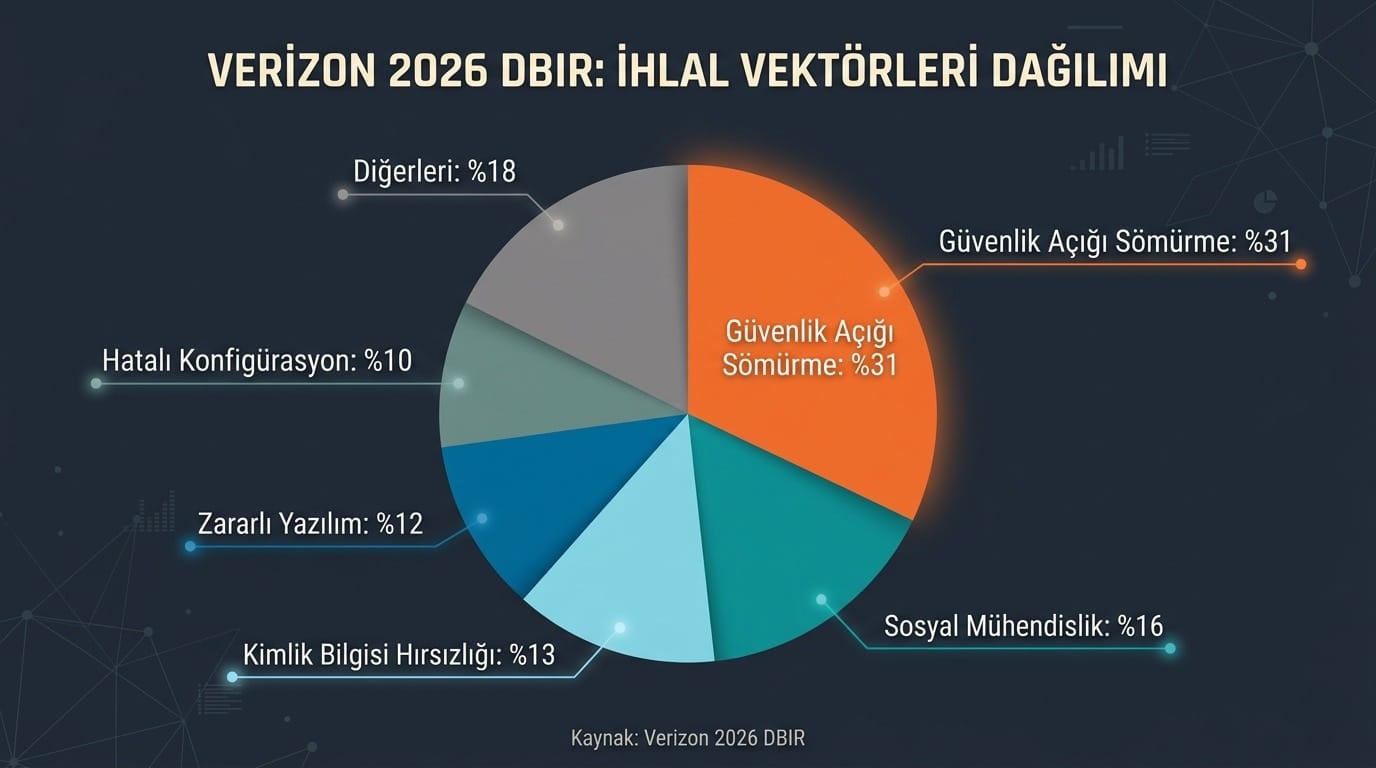
The 2026 DBIR report from Verizon includes a detailed finding this year: attackers are using AI to cut the time between a vulnerability being disclosed and its exploitation from months to hours. For organizations, this means the response window has narrowed sharply, regardless of how quickly patching is carried out.
Attacks do not start only with target selection. AI is also used after an attack is completed to hide traces of its use. This makes forensic investigation considerably harder.
How Deepfakes and Social Engineering Work
Alongside hardware or software vulnerabilities, the human element has always been a significant part of cyberattack vectors. With AI, this element has become far more convincing and scalable.
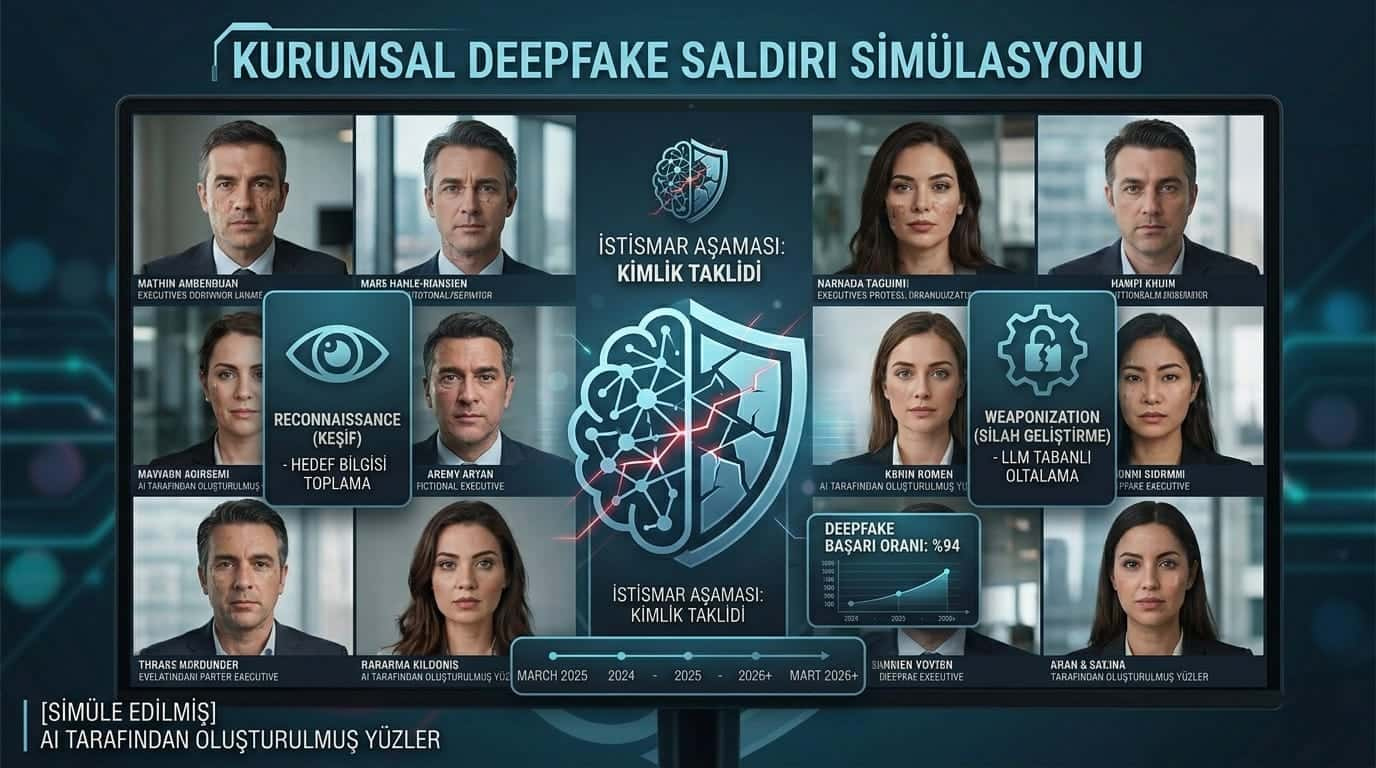
In the Arup case from February 2024, attackers cloned the voices and images of the company's CFO and other senior executives using publicly available material. Nobody on the screen in the video meeting the employee attended was real. A transfer order of 25.6 million dollars was approved without question.
This case is not an exception. In a separate attack on the company following the LastPass data breach, threat actors cloned the voice of CEO Karim Toubba via WhatsApp and attempted social engineering against an employee. The attempt was noticed because of its exaggerated urgency and unusual communication channel. Wiz CEO Assaf Rappaport, for his part, publicly disclosed at TechCrunch Disrupt 2024 that his company's employee group had been targeted with a deepfake attack.
In 2025, the FBI officially warned of phishing campaigns that used AI voice cloning to impersonate senior US officials. These voice messages aim to create a sense of urgency by exploiting trust.
On social engineering, research published by SoSafe in February 2026 shows that organizations still fall short against these tactics. Only 39 percent of companies rate their ability to detect AI-powered attacks as high or very high.
The 2026 AI Cyber Threat Picture in Numbers
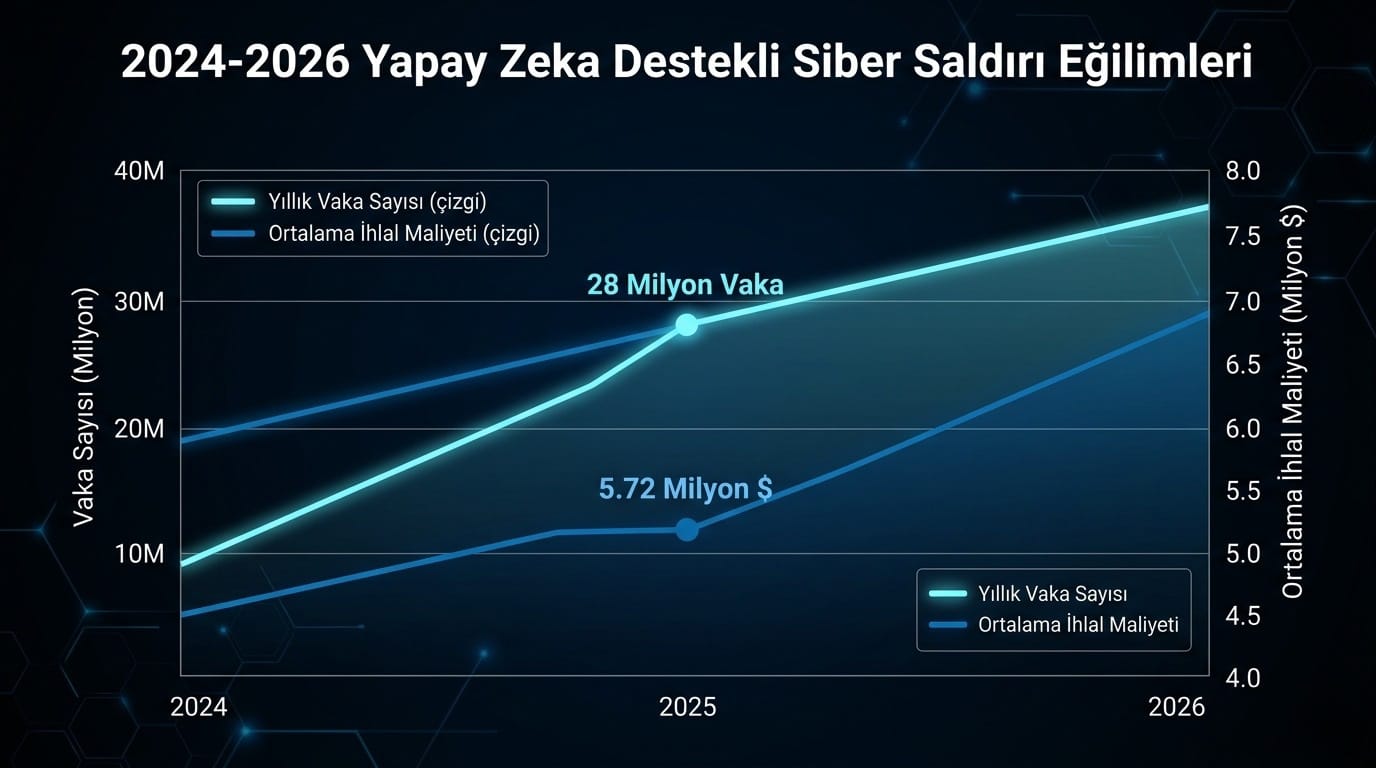
Beyond individual cases, the numbers clearly show how large the problem has become.
According to the 2026 DBIR report from Verizon published this year, 31,000 incidents and 22,000 confirmed breaches were analyzed across 145 countries. This is nearly double last year's figure.
Metric | Value | Source |
|---|---|---|
AI phishing click rate | 54% | DeepStrike / SoSafe 2025 |
Traditional phishing click rate | 12% | DeepStrike 2025 |
Average breach cost for AI-assisted attacks | 5.72 million dollars | IBM 2025 |
Deepfake growth rate (2022-2025) | 2,137% | McAfee / iProov 2025 |
Share of ransomware across all breaches | 48% | Verizon DBIR 2026 |
Share of organizations experiencing an AI attack | 87% | Cisco 2025 |
The phishing picture is particularly striking. According to the Microsoft Cyber Signals 2025 report, AI-generated phishing content increased by 46 percent over the previous year. Of current phishing emails, 82.6 percent are now created using AI; a year earlier this figure was around 54 percent.
The ransomware picture is different. According to the Verizon 2026 DBIR, ransomware appears in 48 percent of all breaches, but the average payment has fallen from 177,614 dollars in 2023 to 139,975 dollars in 2025. Victims are now paying less or rejecting demands entirely. However, attacks have not stopped; the targets have changed.
What New Risks Are Waiting for Companies?
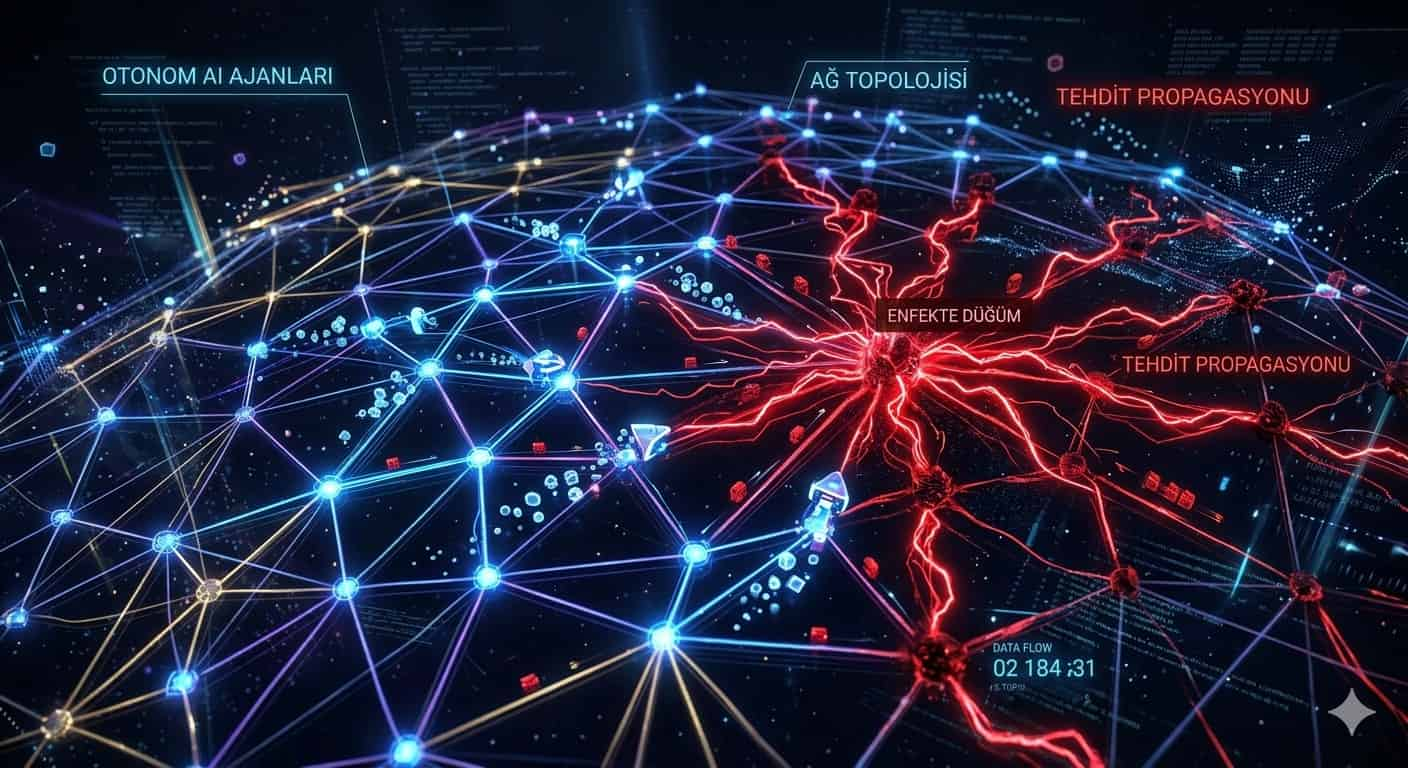
Deepfakes and phishing are now well-known threats. There are three newer areas that really need to be understood: agentic AI attacks, shadow AI and biometric targeting.
The Fortinet 2026 Cyber Threat Predictions Report, as reported by Sigortacı Gazetesi, says swarm-based agentic AI is set to change direction. In this model, attack agents spread across multiple targets, adapt to defensive reactions and coordinate tasks in a semi-autonomous way.
Shadow AI has become a different kind of concern in the sector. According to the 2026 AI Security Statistics Report from Practical DevSecOps, 68 percent of organizations experienced data leakage caused by the use of AI tools, yet only 23 percent have a formal policy that prevents it. The Verizon 2025 DBIR defined this problem as "shadow AI" and noted that 72 percent of employees access AI platforms through accounts outside corporate email.
Biometric targeting has also been added to the picture. At a time when fingerprint, facial recognition and retina data are beginning to replace passwords, Alev Akkoyunlu, Operations Director at Laykon Bilişim, the Turkish distributor of Bitdefender, announced that this area has become the number one target for attackers in 2026.
In the OWASP LLM Top 10 list, prompt injection reached first place as the top vulnerability in 2025. NIST reports show that AI-specific CVE counts have increased by more than 2,000 percent since 2022.
Where Does Defense Stand?

Just as AI has been powerful on the attack side, it is delivering concrete benefits to organizations on the defense side. However, the companies that benefit from this are still a minority.
According to IBM's 2026 data, companies that use AI and automation in their security operations reduce the cost of a breach to 3.62 million dollars. For companies that do not use AI, the figure rises to 5.52 million dollars. The difference is 1.9 million dollars. According to the Practical DevSecOps report, AI-supported security teams shorten mean time to detect (MTTD) threats by 50 percent while reducing manual scanning workload by 60 percent.
Indicator | AI-Supported Defense | Non-AI Defense |
|---|---|---|
Average breach cost | 3.62 million dollars | 5.52 million dollars |
Breach containment time | 108 days faster | Standard |
Time to detect (MTTD) | 50% shorter | Standard |
Manual scanning burden | 60% lower | Standard |
Still, gaps remain. According to the Verizon 2026 DBIR, organizations patch only 26 percent of the vulnerabilities in CISA's Known Exploited Vulnerabilities (KEV) catalog; a year earlier this figure was 38 percent. The standard patching time has risen from 32 days to 43 days.
What Does the Picture Look Like in Turkey?

Global data is serious, but a Turkey-specific assessment is also necessary to understand the picture.
As reported by Anadolu Agency, a cybersecurity company executive said that methods such as advanced identity impersonation, personalized phishing messages and automated malware development have increased their impact, and that AI-powered attacks were the "defining trend of 2025." He also stressed that corporate security should be defined not as a software purchase but as a service requiring 24/7 monitoring.
According to Bitdefender Türkiye's December 2025 forecasts, 2026 will be the year when deepfake impersonation becomes indistinguishable in live meetings on platforms such as Zoom and Teams. Fraudsters can simultaneously imitate the face and voice of company executives or family members to request money transfers. This picture marks a new era in which seeing is not enough for financial approval processes, and pre-agreed security passwords must be used.
Kaspersky's December 2025 predictions indicate that concealing traces of AI use on the attack side will make analysis more difficult. In fast-digitalizing economies like Turkey, this makes raising corporate awareness of the dangers of malicious AI models even more critical.
For those curious about the technical side of AI security, this area is covered in depth, including whether AI systems can be hacked and which protection layers exist.

What Is the Community Saying?
Supporters
Security researchers argue that ignoring the value AI adds to the defense side would be a major mistake. While SOC teams struggle to handle an average of 4,484 alerts a day, it has been observed that false positive rates drop significantly when they are supported by AI. Those who adopt automation are reported to catch more threats with fewer tools. Data from Verizon and IBM supports this approach.
Critics
The opposing view focuses on one point: because AI offers the same tools to attackers as it does to defenders, the imbalance does not disappear. It opens the way for actors with low technical skill to carry out powerful attacks. This "democratization" is argued to make the threat ecosystem increasingly complex. Agentic AI attacks are expected to reinforce this trend.
Frequently Asked Questions
What is an AI cyberattack? An AI cyberattack is the name given to attack types in which AI tools are used for one or more stages, such as reconnaissance, attack planning, creating malicious software or manipulating victims. What sets it apart from traditional attacks is its level of automation and adaptability; since AI can change tactics in response to defensive reactions, detection becomes significantly harder.
How does a deepfake attack work? Attackers create a clone from publicly available audio or video material of the target person. This clone can be used in a video conference, a WhatsApp voice message or a phone call. When the victim encounters the voice and image of someone they know, they hesitate little before following instructions. The Arup and LastPass cases are concrete examples of this mechanism.
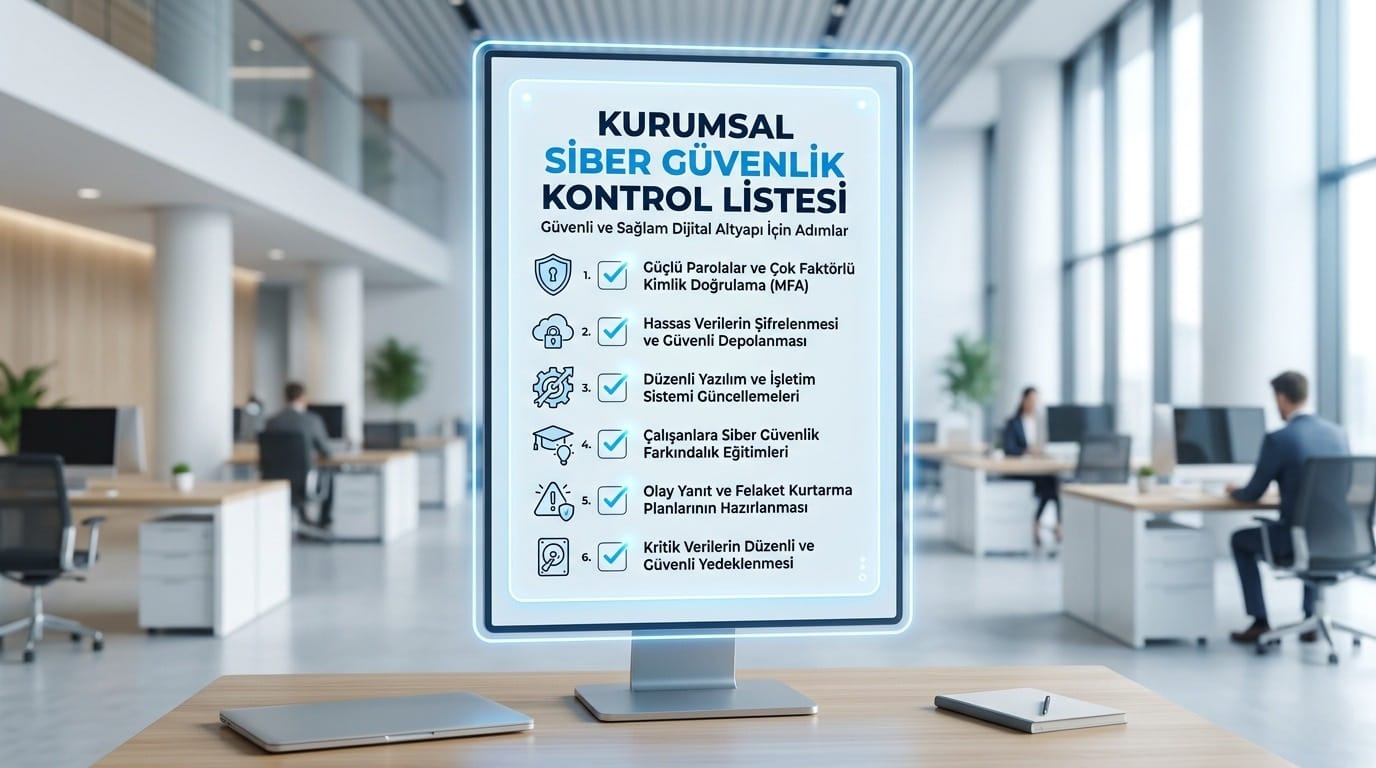
How can companies protect themselves from AI cyberattacks? As a first step, multi-factor authentication should not be considered sufficient for transactions based only on voice or image; pre-agreed verification passwords should be used. As a second step, SOC teams should be equipped with AI-supported detection tools, and handling alert volumes manually should be abandoned. As a third step, employees should receive regular training on deepfakes and AI phishing.
How much do AI cyberattacks cost? According to IBM's 2025 data, the average cost of an AI-assisted data breach reached 5.72 million dollars, a 13 percent increase over the previous year. Globally, losses from cybercrime exceeded 30 billion dollars in 2025, and the global cost is expected to approach 15 trillion dollars in 2026.
What is the relationship between ransomware and AI? According to the Practical DevSecOps 2026 report, 41 percent of current ransomware families include AI components for adaptive attack delivery. Critical steps such as attack timing, target prioritization and defense evasion are being optimized with AI. While the Verizon 2026 DBIR shows ransomware in 48 percent of all breaches, the average ransom payment is falling; victims are increasingly paying less or nothing at all.
What is shadow AI and why is it dangerous? Shadow AI refers to situations in which employees access AI tools outside formal corporate policy, using personal accounts or unmonitored platforms. The Verizon 2025 DBIR found that 72 percent of employees using AI on corporate devices did so through accounts outside corporate email. This can allow sensitive business data to flow to unmonitored AI platforms.
The official release of the 2026 DBIR is being discussed in the sector as the broadest documented record of the AI-powered attack trend. Verizon's team partnering with Anthropic to analyze threat actors' use of AI between March 2025 and February 2026 shows how seriously this picture is being tracked. The response window that was once measured in months is now measured in hours. Defenders need to adjust their pace accordingly.
 Admin
Antigravity vs Codex vs Claude Code: Hangisi Daha İyi?


Reflex Robotics: Depodan Ev İşlerine Robotik Devrim