




Chinese Court Rules LLMs Cannot Replace Human Workers
Automatically translated
 Creator
For the past two years, a very aggressive narrative has circulated in the AI industry. Especially with the development of large language models, or LLMs, the idea that companies will shrink their human teams and hand many white-collar positions over to automation has almost become an industry standard. Concepts such as "AI employee", "AI workforce" and "AI manager" have started to be used not only in investment presentations but directly in corporate strategies.
A recent case in China has now seriously opened the legal limits of this narrative to debate.
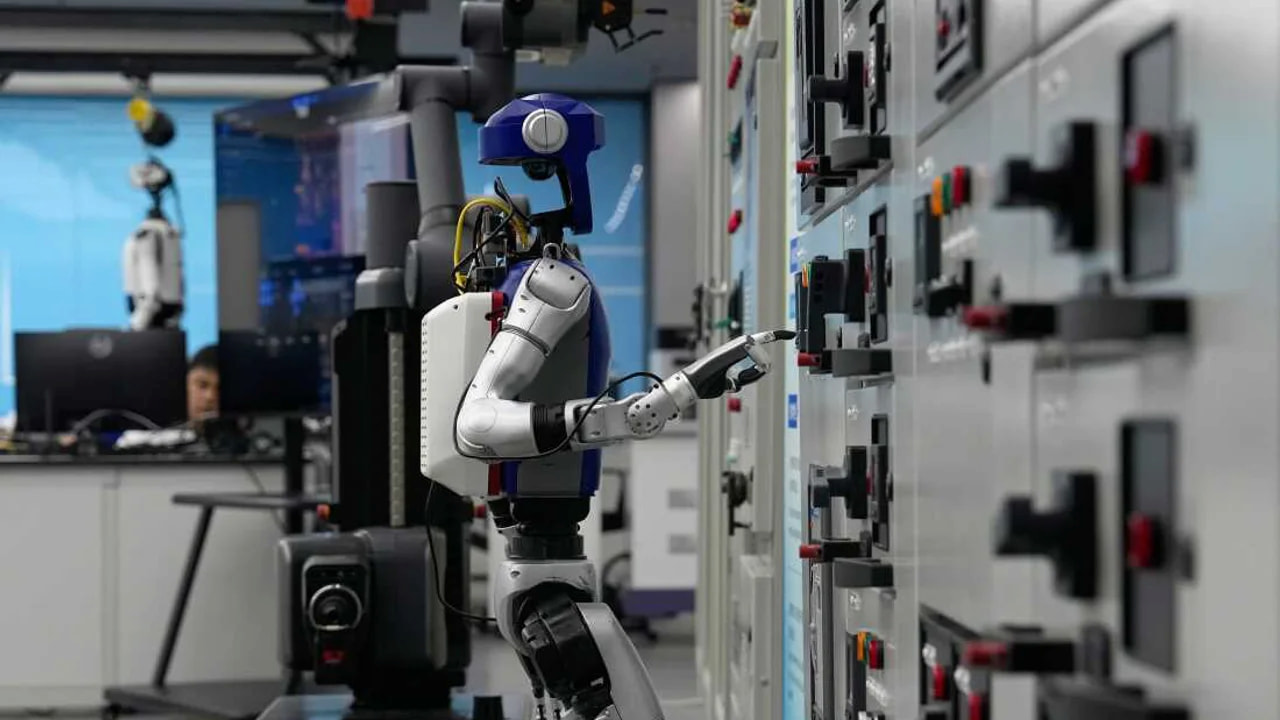
According to a report by Futurism, a company in China reportedly used extensive automation systems in its employee management processes, and an employee who was dismissed as a result filed a lawsuit. The court's approach has created wide resonance in the technology world. The ruling emphasized that large language models can be used as supporting systems but cannot fully replace a human manager.
At first glance, this decision may look like a purely local labor law debate. But the issue is much bigger. What is being discussed is no longer only how powerful artificial intelligence is. The question is whether companies can fully leave decisions that affect human lives to algorithms.
Considering the growing debates under the title "AI Dismissal Lawsuit" in recent times, this Chinese decision is expected to have effects on a global scale.
How Did LLM Systems Change the Corporate World?
In the period after 2023, the integration of generative AI tools into companies happened much faster than expected. LLM technologies, which were initially seen only in content production and chatbot systems, quickly began to settle at the center of corporate operations.
Today, in many companies, large language models do not only write text. They produce meeting summaries, analyze employee performance, prepare operational reports and play an active role in human resources processes. In particular, AI-based HR systems have become one of the categories attracting serious investment recently.
The basic problem here is this: systems that started as auxiliary tools have gradually moved to the center of decision-making.
For example, in some companies, employee performance scores are generated directly by automated systems. Efficiency measurements of support teams, call center performance or operational evaluations are largely left to algorithmic systems. At this point, the role of the human manager can turn into a mere approval mechanism.
This is exactly where the issue highlighted by the Chinese court emerges.
A company can use AI in operational processes. However, leaving the final decisions that affect an employee's career, income or job status entirely to algorithms creates serious legal risk.
In fact, this debate is not specific to China. Lawsuits filed by Uber drivers in the United States against algorithmic scoring systems, criticism directed at platform economy companies in Europe, and performance tracking systems over Amazon warehouse workers show that similar debates have been going on for a long time.
The difference is that the matter is no longer classic automation. Because large language models can communicate in a human-like way, companies have begun to position these systems as if they were real decision-making structures.

Why Did the Chinese Court Say "LLMs Cannot Replace Humans"?
What makes the court's approach important is that it conducted the discussion not through technical capacity but through responsibility.
Because no matter how advanced large language models may seem, they still operate as statistical prediction systems. The fact that they produce human-like text does not mean they perform genuine contextual reasoning.
This situation can lead to serious problems, especially in employee evaluation processes.
In processes evaluated by a human manager, there is not only data. Internal relationships, team dynamics, periodic workload peaks, communication problems and psychological factors also become part of the decision. Large language models still have serious limits in these areas.
The hallucination problem becomes critical here in particular. A model misinterpreting data or drawing conclusions from incomplete context can directly affect an employee's career. Errors that might be tolerable in content production can have much larger consequences in labor law.
The core message of the court is this: artificial intelligence can be a decision support system, but it cannot be considered an independent decision-maker.
This approach also draws the limits of the "AI manager" rhetoric that has been rising recently.
Why Are Automation and Worker Rights Debates Growing in 2026?
In the period after 2025, as companies turned to cost optimization, pressure for automation increased significantly. With the spread of generative AI tools in particular, there were downsizings in support teams, content operations and some software processes. Technology companies have long described this as a "efficiency transformation". However, a different debate is growing on the legal side of the business world: where should the limit of automation be? The question at the core of the debates held under the title "Automation and Worker Rights 2026" is this one.
Because companies now try to optimize not only physical processes but also human management with algorithmic systems. Performance measurements, employee behavior analyses and recruitment processes are becoming increasingly data-driven. The problem is that algorithms do not always work neutrally.
LLM systems can carry the biases of the datasets they were trained on. They can draw wrong correlations or interpret context incompletely. Especially in human resources processes, this can create serious discrimination problems. For this reason, many regulatory bodies, led by the European Union, have begun to classify AI systems related to employees as "high-risk".
In the coming period, companies will be expected not only to use AI but also to be able to explain how AI makes decisions.
How Will Algorithmic Management Laws Affect Companies?
In recent times, one of the fastest-growing concepts in the technology world has been "algorithmic management". In this model, employee behavior is analyzed through data sets. Task distribution is done by automated systems. Efficiency scores are measured continuously, and operational decisions are largely guided by software systems. This approach has long been used especially in platform economy companies. However, with the development of large language models, algorithmic management has become much more sophisticated. The main goal of new generation regulations is to prevent these systems from becoming completely unsupervised. Under the "Algorithmic Management Laws", the following topics stand out in particular:
Preserving human oversight, making algorithmic decisions explainable, allowing employees to appeal automated systems, and companies presenting their data usage processes transparently.
In particular, the European Union's AI Act approach creates a very clear framework on this issue. Human resources processes, employee performance evaluations and recruitment systems are classified in the high-risk AI category.
It seems inevitable that this approach will have indirect effects on Türkiye as well. Large companies working with Europe may have to manage their AI usage more carefully in their compliance processes.

How Could the AI Dismissal Lawsuit Affect the AI Startup World?
One of the biggest effects of the Chinese decision may be felt in the AI startup ecosystem. In the last two years, many startups that attracted investment focused directly on automating human management. In particular, the categories of AI recruiter, AI workforce management and AI HR automation have grown rapidly. However, increasing regulatory pressure may change the way these products work. Corporate customers now look not only at automation capacity but also at legal security. If it cannot be explained why an AI system made a particular decision, or if there is no human oversight, companies may be left under serious risk. For this reason, a noticeable change is also taking place in the language of the sector.
In the 2023–2024 period, the "full automation" narrative was very dominant. Now, companies are increasingly emphasizing the "AI copilot" approach. In other words, the system offers suggestions, but the final decision is made by a human. This approach is considered safer not only technically but also in terms of legal risk management.
In particular, on the enterprise AI side, explainability has now become one of the direct sales criteria.
Could Companies in Türkiye Face the Same Risks?
In Türkiye, although the topic is not yet very visible, a similar transformation has also accelerated here.
In particular, AI-based analysis tools are becoming widespread in call center operations, human resources filtering systems, customer support teams and sales operations. Large companies increasingly use automation systems to measure employee performance. However, many organizations still tend to treat AI output as "objective truth". Yet large language models are not completely neutral systems. They can carry biases from training data and sometimes make incorrect evaluations. In particular, the lack of cultural context can lead to bigger problems in Turkish-language operations.
Although no large-scale "AI Dismissal Lawsuit" cases have been seen directly in Türkiye yet, considering the regulatory trends in Europe, similar debates seem quite likely to grow here as well.
Especially for companies working with Europe, AI compliance processes may be one of the important topics of the next few years.
Can LLM Systems Really Replace Human Management?
One of the biggest misunderstandings on the technical side emerges here.
Large language models are extremely powerful tools. They provide exceptional efficiency in data analysis, summarization, content production and operational support processes. However, human management is not just data optimization.
A manager's job is not only to read performance reports; it is also to maintain balance within the team, manage crises, sustain motivation and manage human relationships. Today's LLM systems still have limited capacity in these areas. For this reason, a more hybrid model is emerging in the corporate world. Artificial intelligence reduces operational load, speeds up processes and provides analytical support. However, human oversight is preserved at critical decision points.
This is exactly where the importance of the Chinese court's decision lies. The debate does not proceed through opposition to technology. The real issue is whether decisions that affect human lives will be left to unsupervised algorithmic systems.
In the coming few years, "Algorithmic Management Laws", the debates on "Automation and Worker Rights 2026" and the limits of corporate use of large language models seem likely to remain among the biggest agenda items of the technology sector.
CreatorMicrosoft VibeVoice Nedir? Yeni Nesil Yapay Zeka Ses Teknolojisi

OpenAI Modeli 80 Yıllık Matematik Problemini Çözdü


