



AI Regulation, Ethics and Benchmarks: A 2026 Guide to AI Governance Certifications
Automatically translated
 Writer
The field of artificial intelligence has seen large and rapid developments in recent years. Models integrated into business processes no longer just increase efficiency; they are also moving to the center of corporate reputation and legal compliance. At this point, AI governance certifications stand out as a critical requirement for professionals who want to shape their careers and for organizations that want to manage risk.
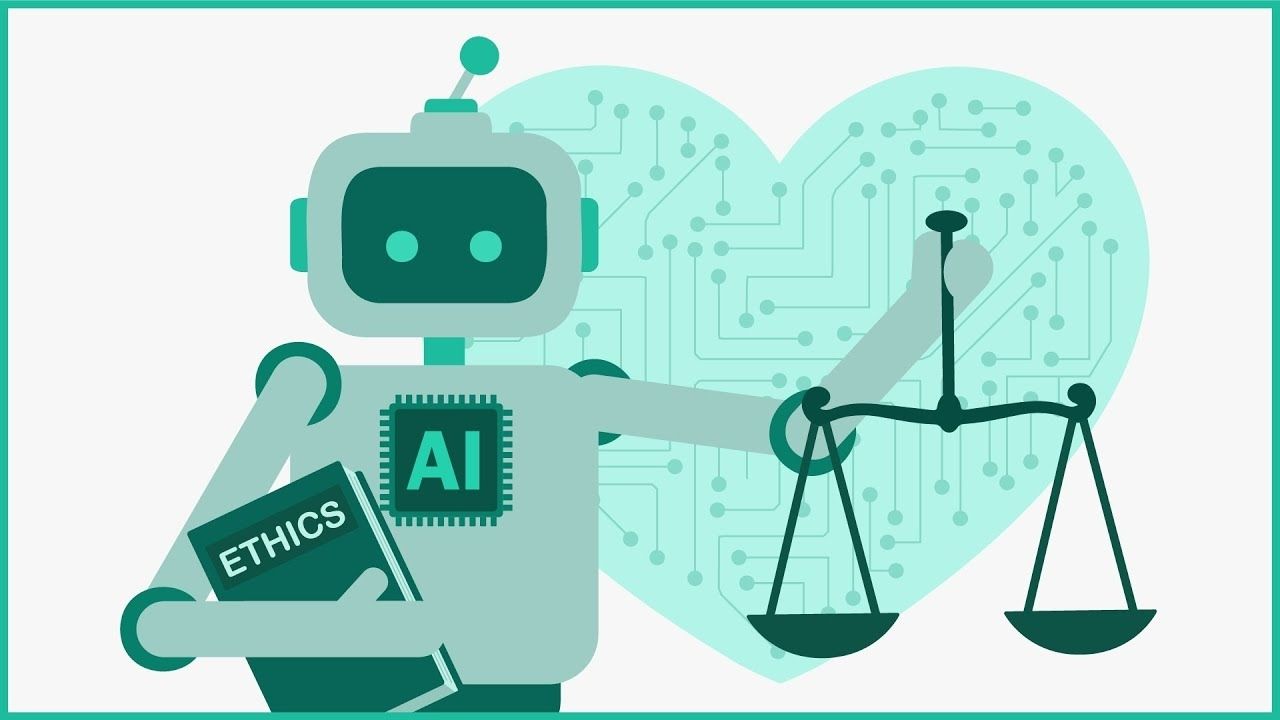
AI governance certifications can be seen as a reflection of a broad perspective that is not limited to technical knowledge and aims to understand the ethical, legal and social dimensions of artificial intelligence. As of 2026, training in this area has become a necessity not only for researchers but also for lawyers.
What Are AI Governance Certifications?
Put simply, AI governance certifications are professional competency programs that document the governance processes of AI systems. These certifications aim to make sense of how AI relates to its environment and to legal regulations. While traditional IT certifications mostly focus on system setup, AI governance training and certification programs concentrate on the following core elements:
Regulatory compliance: Applying legal frameworks such as the EU AI Act and KVKK.
Ethics and transparency: Designing algorithms with a structure that allows accountability.
Risk management: Detecting potential biases and establishing security protocols.
This approach is especially vital for the finance and healthcare sectors, which process large amounts of data. This is because AI systems that use a governance model do not only carry out commands; they also protect the organization by minimizing legal risks.

Why Is Certification Important in AI?
Models that are "auditable" have become increasingly important in artificial intelligence. Rather than the closed ecosystems of large technology companies, systems that are open to external audit and managed by certified professionals are increasingly preferred. The advantages of holding AI governance certifications can be listed as follows:
Corporate trust increases
Projects managed by certified experts create a more reliable image among investors and end users.
Legal risks decrease
Keeping up with the growing AI regulations around the world (for example, the effects of GDPR on AI) is possible only with staff specialized in this area.
Career opportunities diversify
Access opens not only to technical teams but also to legal, risk management and strategy departments.
Transparency and auditability are ensured
Professionals who have received AI governance training can explain how models make decisions and report the logic of the system in detail.
Notable AI Governance Certification Programs
There are many certifications on the market that address different needs. The programs that stand out for those working in research and corporate governance are the following:
IAPP - AIGP
The AIGP certification offered by IAPP, is widely regarded as the most respected global reference in AI governance. With this program, professionals:
Manage the AI lifecycle.
Build bridges between global regulations.
Apply risk assessment methodologies.
Hacettepe University SEM
For those who value local legislation and an academic perspective in Türkiye, the program from Hacettepe University is noteworthy. It offers an e-Devlet approved certificate, especially useful for public projects and local compliance processes.
NobleProg
The certification program is designed to include technical teams as well. It aims to help developers make their models compliant with ethical rules while they are still at the design stage.
Feature | IAPP (AIGP) | NobleProg Türkiye | Hacettepe SEM | Mindset Institute |
|---|---|---|---|---|
Main focus | Global regulation | Applied technical ethics | Local law and ethics | Bias and society |
Benchmark focus | Risk management focused | Technical measurement focused | Theoretical standards | Social impact measurement |
Ethics depth | Corporate compliance | Ethics by design | Academic ethics | Social and cultural ethics |
Certificate type | International (global) | Applied certificate | e-Devlet approved | Participation certificate |
Target audience | Executives / legal | Developers | Public / private sector | Analysts / sociologists |
Use Cases for Certified Professionals
Corporate governance
Company executives use governance knowledge when budgeting and strategically planning AI projects.
Law and compliance
Lawyers use these trainings to manage compensation and ownership risks that may arise from the use of artificial intelligence.
Software and data science
Data scientists use the methodologies within AI governance certification frameworks to audit whether the datasets they prepare contain bias.
The Future of AI Governance
Governance is seen as one of the most important factors that could shape the future of artificial intelligence. Until now, AI has been developed mostly with a focus on "speed and performance." However, the era of systems aimed at understanding context, complying with laws and protecting ethical boundaries has now begun. These developments are key to progress in high-risk areas such as smart city applications and autonomous vehicles.
The next major stage of artificial intelligence will be not only producing content but building reliable systems that can comply with legal and ethical rules in the real world. In line with this goal, AI governance certifications will continue to offer the following advantages:
They encourage responsible use of AI.
They provide developers with an ethical framework.
They speed up adaptation to global regulations.
For those aiming for an international career in particular, these certifications are emerging as the most sought-after area of expertise in the technology world of the future.
Benchmarking and Performance Measurement
Governing AI systems is not only about complying with laws; it also requires technically proving that these systems actually deliver the promised performance. This is where benchmarking comes in. Benchmark processes measure the accuracy, speed and reliability of an AI model using standard test sets.
The benchmarking approaches taught within AI governance certifications serve three core goals:
Performance verification: Shows with numerical data whether the model deviates when faced with real-world data.
Error analysis: Makes risk management easier by identifying in advance the scenarios in which the system fails.
Standardization: Enables different models (for example, GPT-4 vs. Claude 3) to be compared with the same metrics, offering a transparent basis for choice.
In critical areas such as autonomous vehicles or medical diagnostic software in particular, it is not possible to speak of a governance mechanism without benchmark results.
Ethical Framework and Responsibility in AI
The "ethical" dimension of AI systems, which we can describe as their conscience, is the most debated and most human part of governance. A professional who has received AI governance training focuses not only on "how" an algorithm works, but on "why" it makes a decision and whom that decision affects.
In modern AI governance, the ethical framework is built on the following four main pillars:
Algorithmic bias audits
Removing social or gender-based biases that come from datasets. For example, preventing a recruitment AI from favoring only a certain demographic.
Explainability
Making the logic behind an AI decision understandable to a human. Setting up transparent decision mechanisms instead of "black box" systems.
Not leaving critical decisions entirely to machines, and always keeping a human in the system as the final step for review and approval.
Privacy and data dignity
Protecting individuals' data not only technically but also ethically; anonymizing data and preventing its use without consent.

Regulation, Benchmarks and Ethics
Building a successful AI strategy in 2026 means bringing together legal governance, technical benchmark measurements and human ethical values. By combining these three pillars, AI governance certifications give professionals not just a document but a holistic vision. In the future, those who will endure will be not only the ones who build the smartest algorithms, but also the ones who manage those algorithms in the fairest and most measurable way with ethical AI tools.
WriterAgentic Vision: Görüntü Analizinin Ötesine Geçin


NVIDIA DLSS 4.5 Teknolojisini Resmen Tanıttı!


