



NVIDIA DLSS 4.5 Officially Unveiled
Automatically translated
 Writer
The evolution of visual technology is one of the most tangible expressions of humanity's drive to push technical limits. NVIDIA officially unveiled NVIDIA DLSS 4.5 as part of its announcements at CES 2026. More than a performance boost, this release represents a paradigm shift in which pixels are reinterpreted through artificial intelligence, and it stands out as a new milestone in building digital worlds.
What Is NVIDIA DLSS 4.5 and Why Does It Matter?
Graphics technologies have long faced two core problems: high resolution or high performance? In the gaming world, these two factors often seem to be at odds. However, NVIDIA DLSS 4.5, introduced by NVIDIA, is a next-generation AI solution that aims to eliminate this trade-off.

DLSS (Deep Learning Super Sampling) allows the graphics card to use AI to reconstruct an image rendered at a lower resolution so that it appears to be at a higher resolution. This way, the graphics card works under less load while the user enjoys a high-quality experience. DLSS 4.5 takes this system to a more advanced level in both quality and smoothness.
What Are the Features of DLSS 4.5?
With DLSS 4.5, AI-based image generation techniques go well beyond the classic logic of resolution upscaling. The most notable of the DLSS 4.5 features is the second-generation transformer-based Super Resolution mechanism. This system does not just scale pixels; it also reconstructs them by analyzing light data and texture depth in the scene with academic rigor.
This technology minimizes the load on the GPU while pushing visual fidelity to a level the human eye cannot distinguish. DLSS 4.5 combines the complexity of ray tracing with the predictive capability of AI, overcoming hardware limits with software ingenuity.
The innovations in DLSS 4.5 are not limited to super resolution. In particular, systems such as 6x Multi Frame Generation and Dynamic Frame Generation move frame generation away from static duplication and turn it into a contextual, dynamic computation model. Thanks to this approach, the system analyzes the intensity of the scene and generates frames in real time, which balances latency and optimizes image smoothness.
Additionally, thanks to DLSS Override integration, users and developers can manually enable the latest DLSS model in supported games. This makes DLSS 4.5 not just a performance technology but also a modular and flexible graphics infrastructure.
1. What Is 6x Multi Frame Generation?
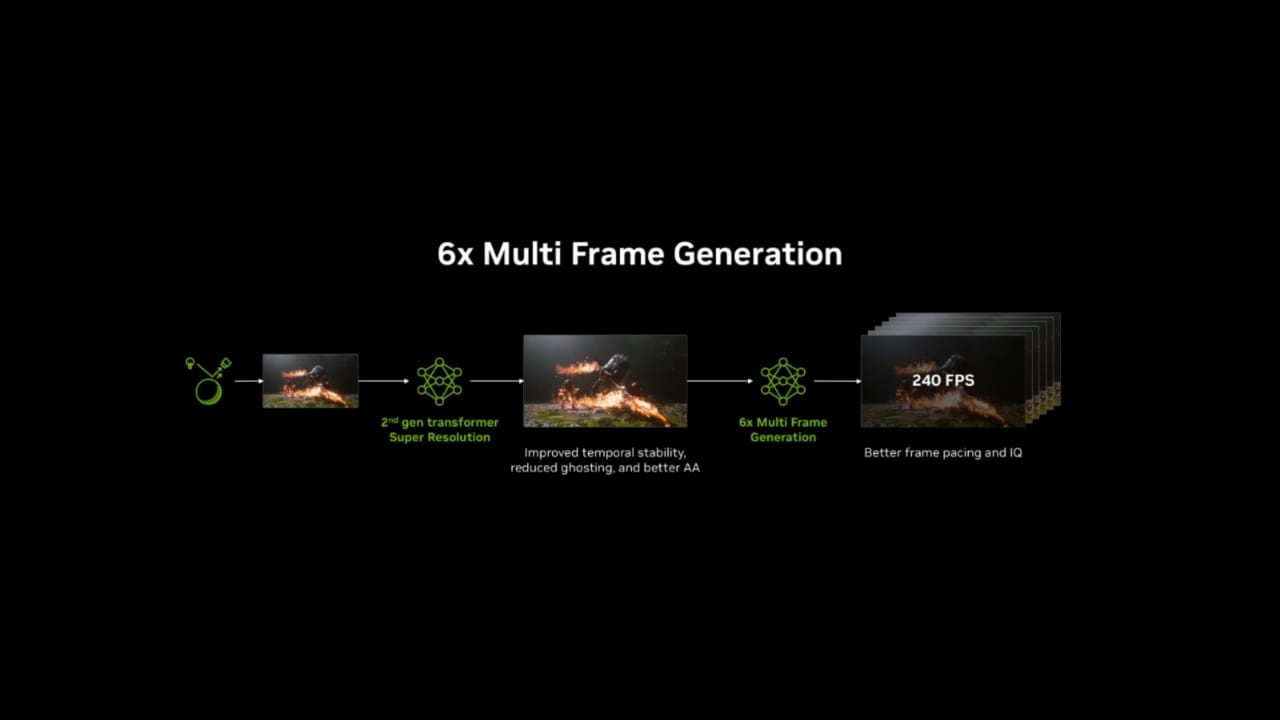
6x Multi Frame Generation is a technology that fundamentally changes the classic logic of frame generation. In traditional systems, the graphics card calculates every frame itself. With DLSS 4.5, however, AI analyzes the motion data between two existing real frames and generates intermediate frames.
- The game engine renders 1 real frame.
- The AI analyzes this frame and previous data.
- It inserts 5 new predicted frames in between.
- In total, a 6 times higher frame output is achieved.
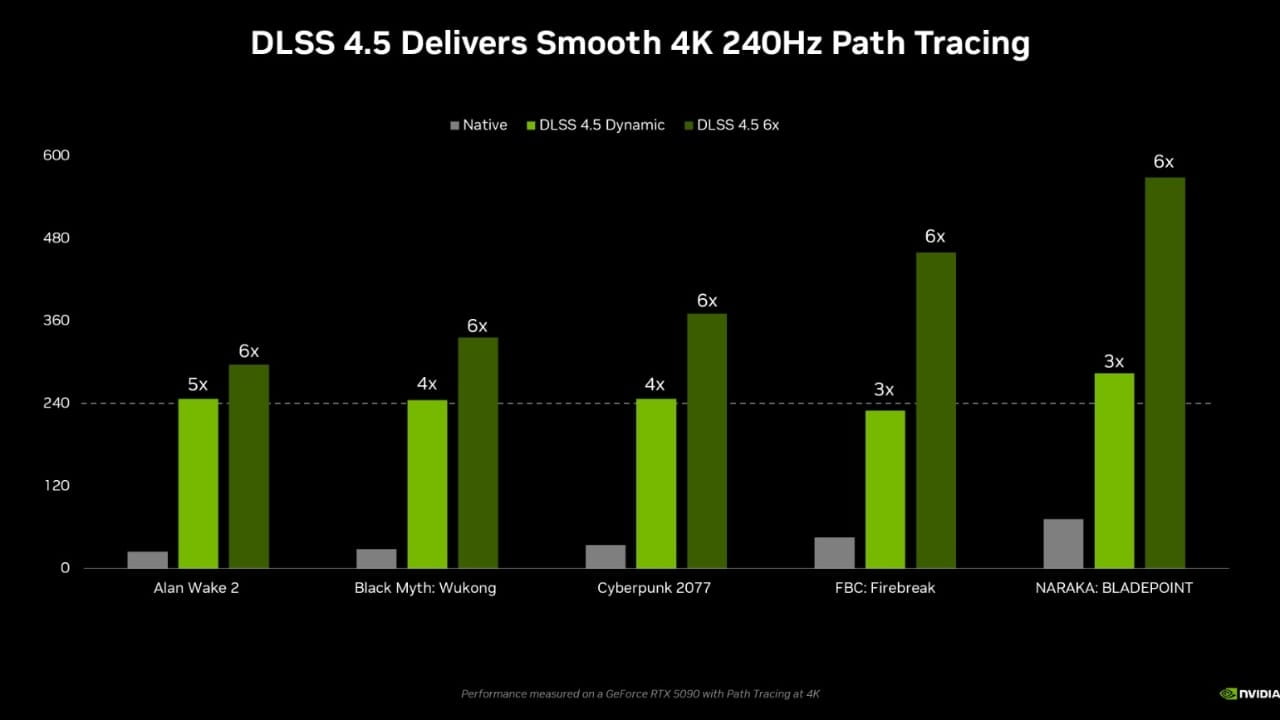
The key point here is that these frames are not generated randomly. The system uses motion direction data, depth maps, and previous frame history to produce physically consistent images. The difference is especially noticeable at 4K resolution and high refresh rates such as 144Hz to 240Hz. For players, the result is:
- Fewer micro-stutters
- Smoother transitions during camera turns
- Sharper animation in fast scenes
This technology plays a critical role in offsetting the performance drops that occur when ray tracing is enabled.
2. How Does Dynamic Frame Generation Work?
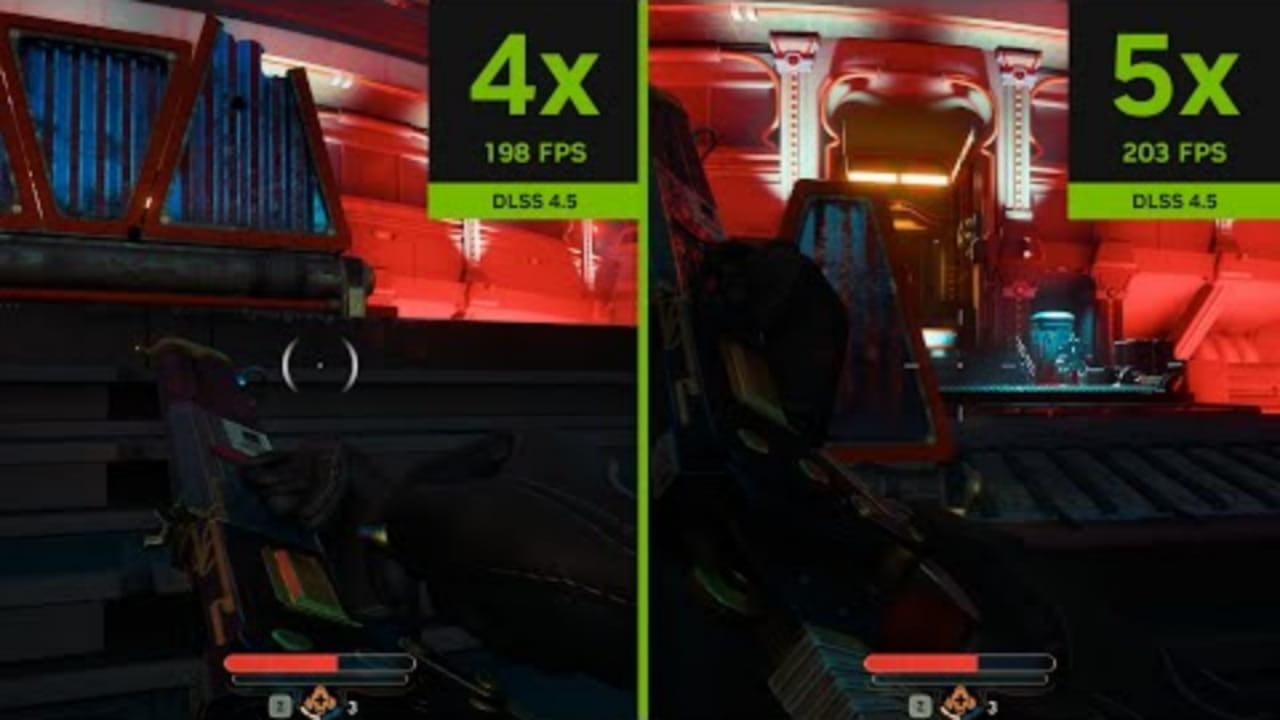
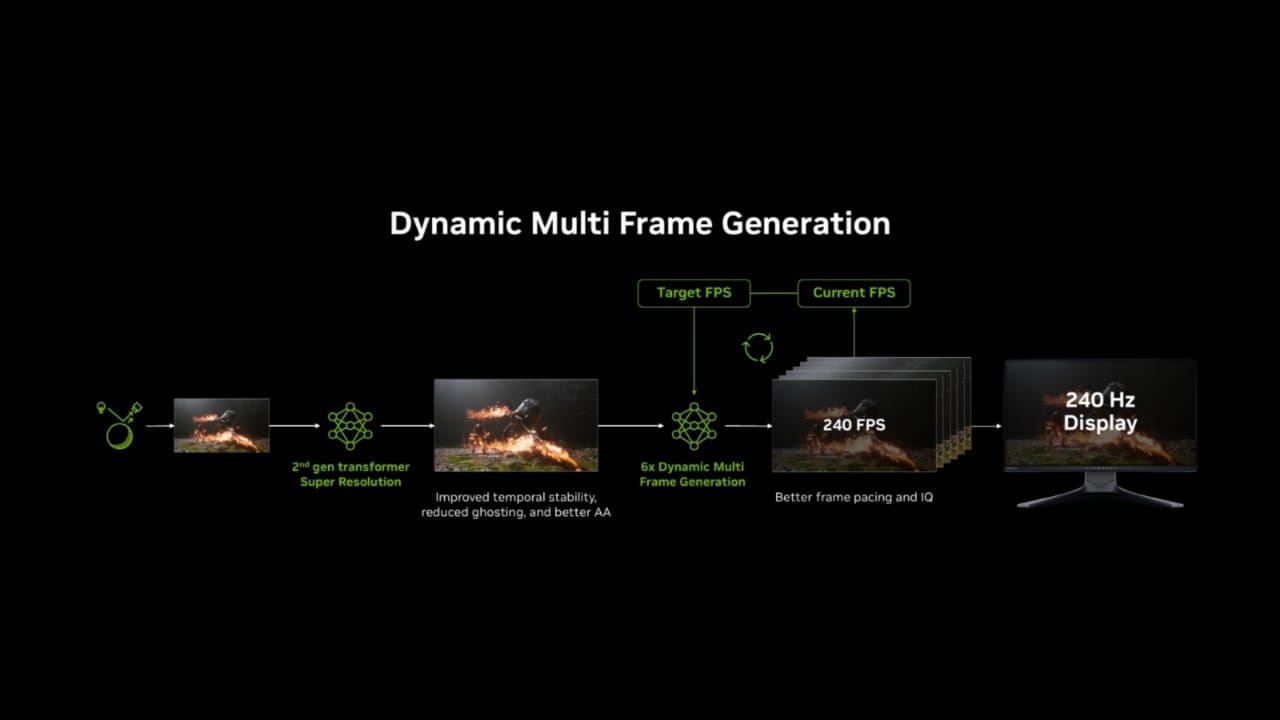
Unlike fixed-rate frame generation systems, Dynamic Frame Generation performs contextual analysis. In other words, the system does not generate the same number of AI frames in every scene; it evaluates the GPU load and scene intensity in real time.
For example:
- In an explosion, a crowded city scene, or a section with heavy ray tracing, the system activates more AI frame generation.
- In calmer scenes with little motion, intervention is reduced.
This approach provides three main advantages:
- It balances performance fluctuations.
- It smooths out sudden drops in frame rate.
- It keeps the increase in latency to a minimum.
The system works on the principle of generating only as much as needed rather than always generating at maximum. This provides a more stable flow in the gaming experience.
3. Super Resolution with the Second-Generation Transformer Model
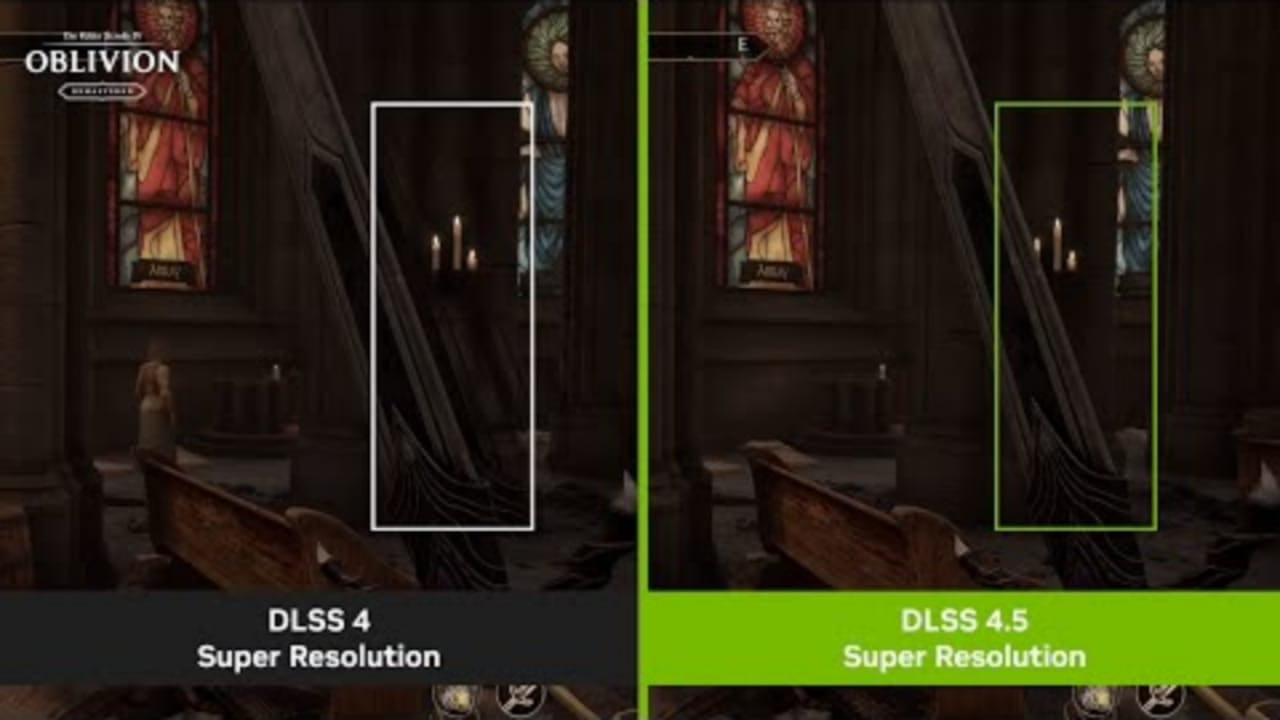
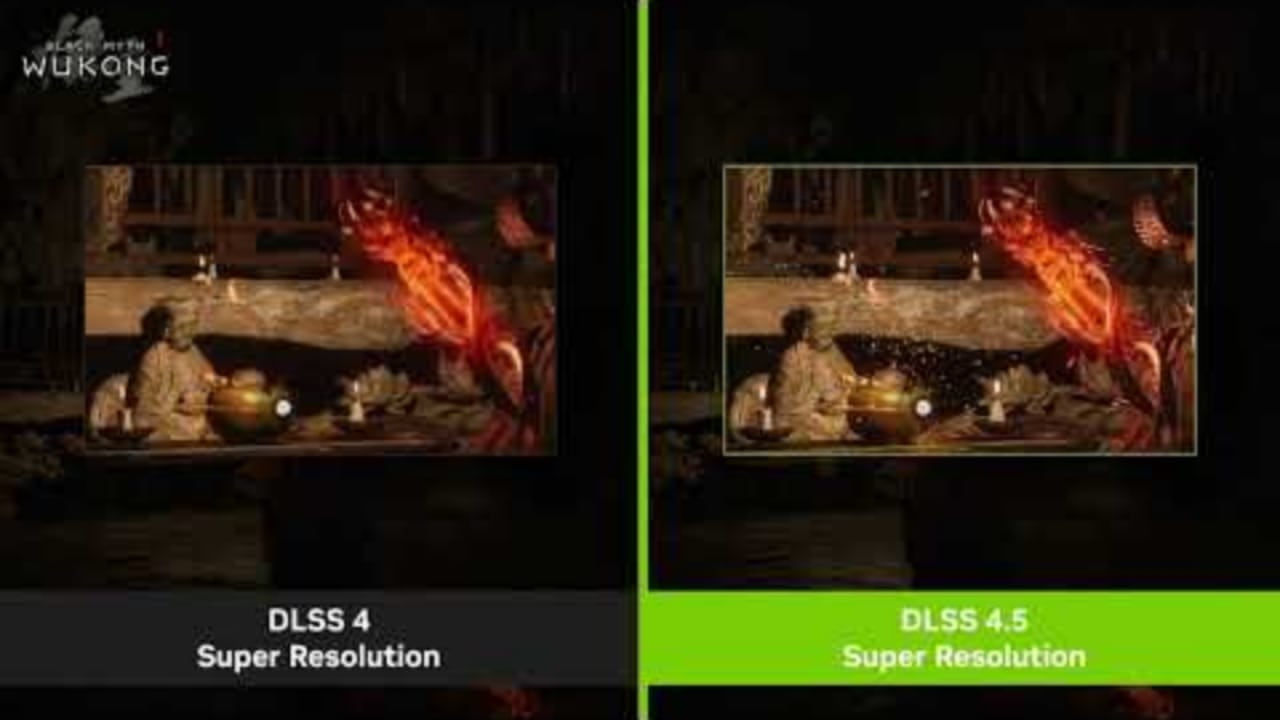
The most critical structural change within the DLSS 4.5 features is the second-generation transformer-based Super Resolution model. This model works completely differently from classic resolution upscaling methods. While traditional upscaling techniques mathematically enlarge pixels, DLSS 4.5 reconstructs the image.
The transformer architecture evaluates all the visual information in the scene contextually. In other words, it does not just look at a pixel's neighbors; it analyzes the entire scene. In this process:
- Object contours are identified.
- Motion directions are calculated.
- Light refraction and shadows are analyzed.
- Texture details are resynthesized.
With this method, the image is not simply enlarged; it is, in effect, redrawn.
Compared to previous versions, DLSS 4.5 improves the following:
- Reduced shimmering in fine details such as thin wires, fences, and hair
- Less ghosting on moving objects
- More accurate reflection calculations on shiny surfaces
- Sharper and more stable edges
Additionally, the complex light calculations that occur when ray tracing is enabled are processed more consistently by this model. This noticeably improves image quality, especially in cinematic games.
At this point, DLSS is no longer just a tool that boosts performance. It has become an AI layer that optimizes image quality, analyzes the scene, and reconstructs it in real time.
By combining frame generation, dynamic optimization, and advanced super resolution in a single integrated system, DLSS 4.5 offers a new architectural approach to graphics technology.
The Balance Between Performance and Image Quality
Technological progress often follows a path that strains hardware, requiring more powerful graphics cards and higher power consumption. However, NVIDIA DLSS 4.5, developed by NVIDIA, offers an approach that reverses this classic cycle. The core idea here is based on smarter computation rather than more computation.
Instead of waiting for the GPU to physically render every frame, DLSS 4.5 reconstructs the image with support from AI. This optimizes the load on the hardware while giving users higher resolution and a smoother experience.
At this point, the innovation of DLSS 4.5 can be summarized as follows:
Render fewer real frames, create smarter frames with AI, and achieve higher smoothness.
This approach separates graphics processing logic from classic pixel-based rendering and methods that rely purely on hardware power. Performance gains can now be achieved not only with a more powerful GPU but also with a more advanced AI model. In particular, offsetting the FPS drops that occur when ray tracing is enabled is one of DLSS 4.5's most critical contributions.
Games Supporting DLSS 4.5
The DLSS ecosystem expands with every release, and at launch DLSS 4.5 is supported by many AAA and competitive titles. The impact of DLSS 4.5 is especially noticeable in games focused on ray tracing and high resolution.
Some of the notable titles that support DLSS 4.5 or are planned to receive updates include:
- Cyberpunk 2077
- Alan Wake 2
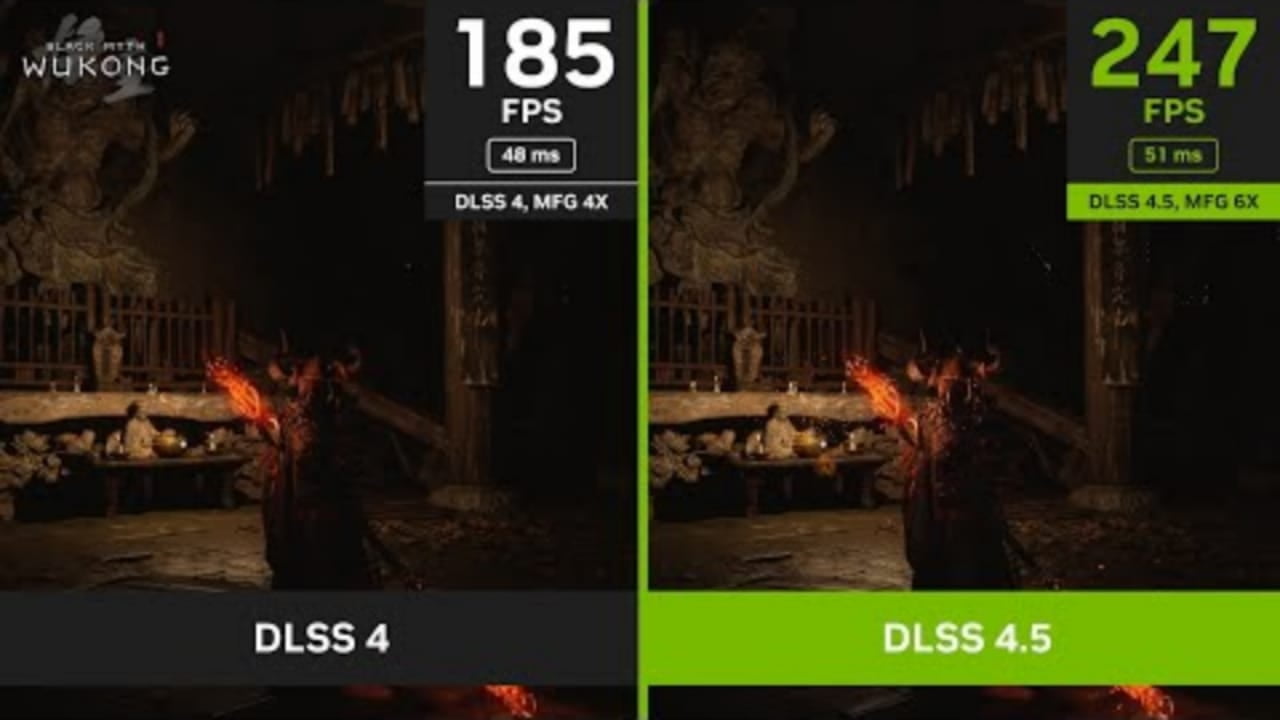
- Black Myth: Wukong
- Star Wars Outlaws
- Microsoft Flight Simulator
- Fortnite
In these games, particularly at 4K resolution with ray tracing active, the frame generation and super resolution technologies offered by DLSS 4.5 deliver significant performance gains.
Is DLSS 4.5 an Update or a Turning Point?
Looking at the DLSS 4.5 features, it is clear that this is not an ordinary version update. Considering 6x Multi Frame Generation, Dynamic Frame Generation, and second-generation transformer-based Super Resolution together, it is evident that the graphics production process has evolved toward an AI-centered architecture.
This technology is not just simple software; it is a system that analyzes, predicts, and restructures the image production process. In this context, DLSS 4.5 shows that AI in game graphics has become a central component rather than just an auxiliary tool.
DLSS 4.5 is an AI-driven graphics paradigm that transforms how modern game engines work, rather than merely a technical update. More games are expected to integrate this architecture in the coming years.
WriterAI Regülasyon, Etik ve Benchmark İçerikleri (2026 Rehberi)


Görsel Manipülasyon Aracı: Flux Labs AI


