



Claude Opus 4.7: The Next Generation AI Ecosystem
Automatically translated
 Writer
As the AI race continues without slowing down, Claude Opus 4.7, developed by Anthropic, has made a big impact in the technology world. The model stands out for its advanced reasoning abilities, safer output generation and an architecture suited for enterprise use. Beyond being a language model, it also shows signs of being a comprehensive AI model. Therefore, unlike known LLM architectures, Claude Opus 4.7 aims to offer higher accuracy at lower cost.

In particular, the new generation cybersecurity approach called Claude Mythos and its ability to work integrated with AI design tools are seen as developments that could shift the balance in the AI field. Another notable feature of the model is its long context capacity. This allows users to analyze very long data sets in a single pass. It offers more efficient work by supporting decisions and research in finance, law and academia.
What Does Claude Opus 4.7 Offer?
Claude Opus 4.7 stands out with a higher context capacity and long text processing ability compared to previous versions. The model is designed for large-scale data analysis and optimized for enterprise solutions. The system, optimized for critical sectors, is configured to keep the error rate to a minimum in areas such as finance, healthcare and software. One of the key advantages of Claude Opus 4.7 can be described as a hybrid intelligence approach. The system is continuously optimized with human feedback, allowing it to produce more reliable outputs. This approach, called Constitutional AI, means it works within a framework of human ethical values. In this way, it keeps situations such as misinformation and harmful output to a minimum in content generation. Thanks to these features, Claude Opus 4.7 has become popular not only with individual users but also with businesses operating at enterprise scale.
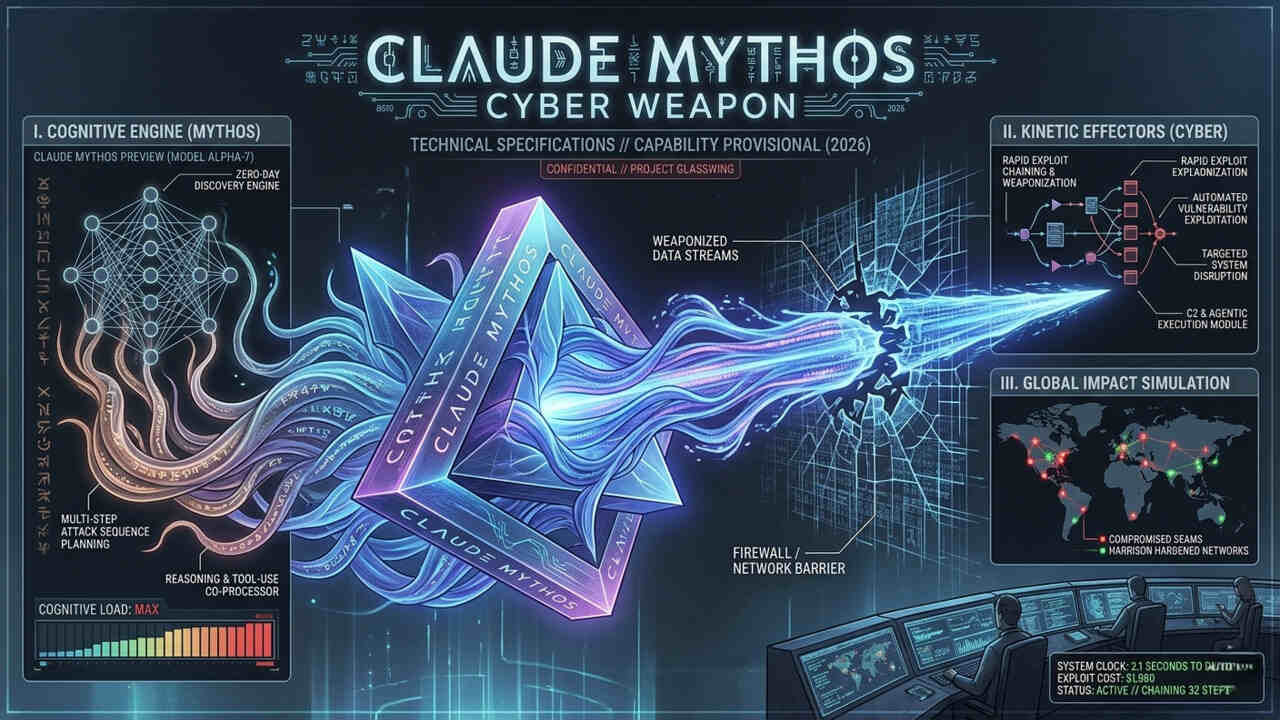
Claude Mythos: Cybersecurity Architecture
Another notable move by Anthropic is the cybersecurity concept called Claude Mythos. For those who closely follow AI technologies, security is an important feature, and the company is also following this area closely. This system positions AI not only as a tool for productivity but also as a defense mechanism. Claude Mythos focuses on taking action before any attack occurs by analyzing potential threats in advance. The system detects potential threats before they form by analyzing network traffic and user behavior. This is because, alongside known processes, the system is built on various anomaly detection methods. It also works integrated with cloud systems to create a distributed security architecture.
From an enterprise perspective, Claude Mythos's biggest advantage is that it reduces operating costs while increasing security levels. This helps companies achieve high ROI (security cost) scores on their cybersecurity investments.
Productivity Grows with Anthropic's AI Design Tool
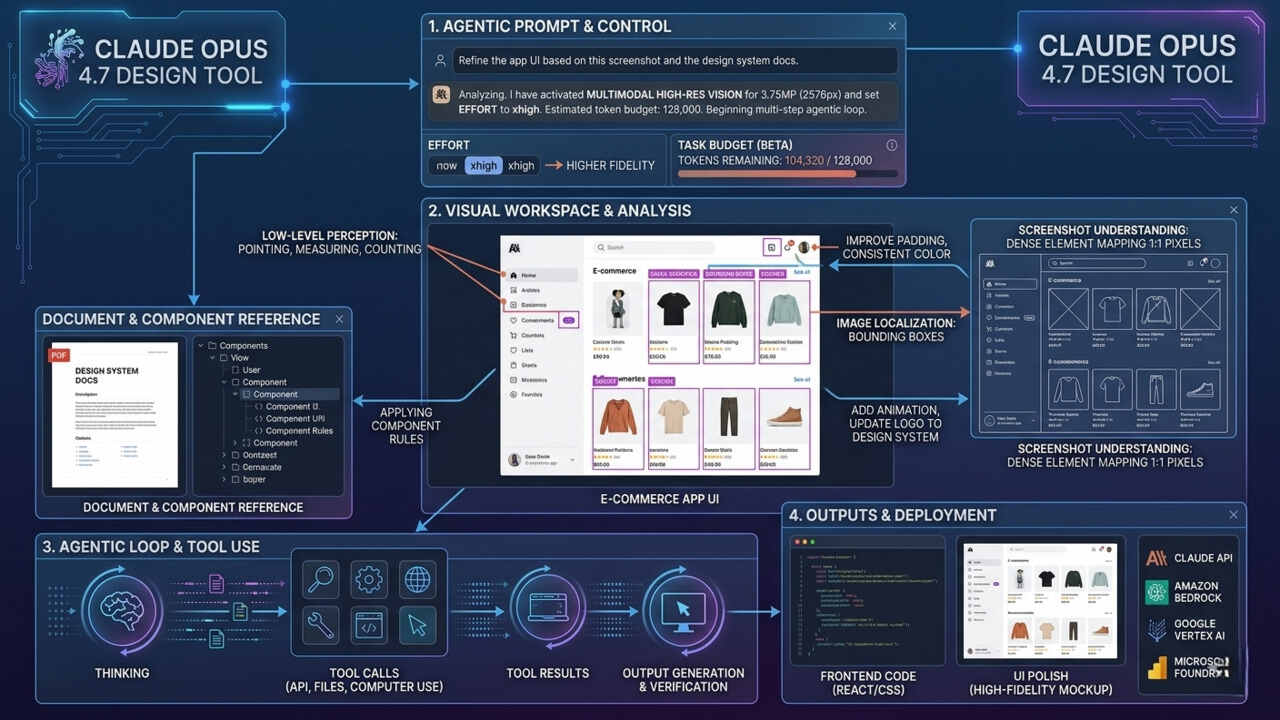
Another innovation Claude Opus 4.7 brings is its integration with Anthropic's AI design tool. This tool aims to offer developers and content creators faster and more active solutions. Beyond code generation, the tool also covers processes such as system architecture suggestions and performance optimizations.
One of the most important advantages for developers is context-aware coding. Claude Opus 4.7 analyzes the overall structure of a project and offers more accurate code suggestions that fit the context. It is highly valuable for creating a standard across large teams. The tool also bridges design and programming, allowing users with limited technical knowledge to develop software. In this way, the system shows that it has moved from a supporting role in design to an active part of creative processes.
End-to-End Production with an AI Studio Model
The AI studio model developed by Anthropic brings content production and project development processes together under one roof. This simplifies the user experience and makes work easier. The model integrates all processes, from content production to data analysis, from software development to visual design. The biggest impact of this approach is efficiency. Teams can manage all processes from a single platform instead of working across different tools. As a result, they can save time and speed, gaining more productivity in project management. This model offers significant opportunities especially for media, e-commerce and SaaS companies, because processes such as content production and data analysis are fully tied to revenue models. Serving a wide user base from small businesses to large enterprises, the system can be customized to needs and adapted to every business model.
New Balances in the AI Race
Claude Opus 4.7 and the innovations it brings are reshaping competition in AI. Innovations in security, productivity and integration keep Anthropic in the spotlight as a strong player. As AI integration into business processes rapidly increases, companies continue to sustain their investments in this direction. Given the state of AI stocks on Nasdaq, the process is moving quickly. Innovations such as Claude Opus 4.7, Claude Mythos and the AI Studio Model are likely to remain in the headlines and keep developing in the coming period.
WriterStanford 2026 Raporu: Yapay Zeka Yayıldı, Gençleri Eledi!


Klavye Hamallığı Bitti: En İyi Yapay Zeka Dikte Uygulamaları


