Claude, Qwen and DeepSeek Agents Used in Espionage Campaign
Automatically translated
 Admin
In a report published on September 3, 2026, Hunt.io documented an espionage campaign carried out across Asia. A Chinese-speaking operator used Claude, Qwen and DeepSeek agents in attacks against government and education systems. The operation, which surfaced through five exposed directories, spread to six countries. This article covers the campaign's architecture, the confirmed breaches, the outdated vulnerabilities it exploited, and the lessons organizations should draw from it.
SecFlow Campaign: What Is It and How Was It Discovered?
The operation was exposed by a mistake in the attacker's own infrastructure. According to Hunt.io's published report, researchers found a payload targeting the Kuomintang Party History Archives in Taiwan inside an open directory copied on July 24. A search on the proxy server address found in the payload returned matches for 120 file contents across five separate servers, linking five workspaces belonging to a single campaign.
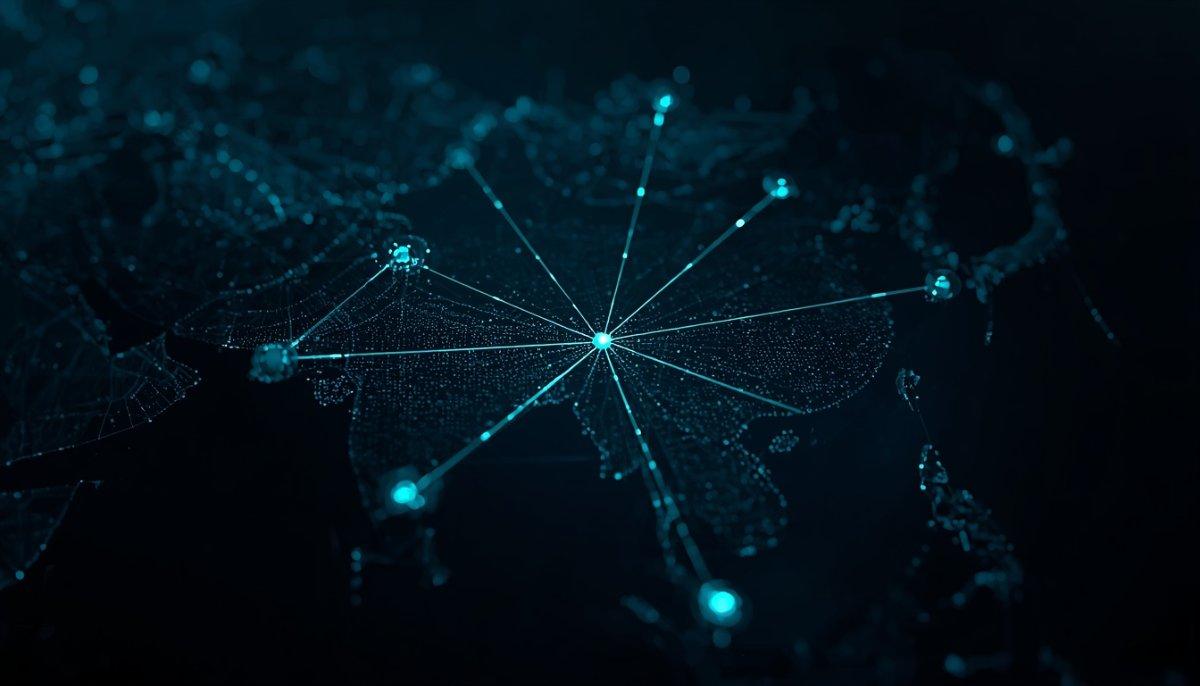
The five directories served different roles: an AI orchestration server, a Java exploitation workspace, a fake MySQL service, a credential testing node and a payload distribution repository. The campaign touched six countries and sectors close to them. Targets included the Indonesian Ministry of Foreign Affairs, government and education institutions in mainland China, industrial systems in Da Nang, Vietnam, and the corporate network of a telecom operator in Afghanistan.
Hunt.io first reported its findings under the TLP:AMBER label to national computer emergency response teams in the affected countries and held publication until the responsible disclosure process was complete. The team had also documented a separate campaign in which Claude Code and DeepSeek were used in July. The infrastructure, tools and targets differ; what recurs is the positioning of commercial AI models as operational components.
How Was the Model-Swappable Agent Architecture Built?
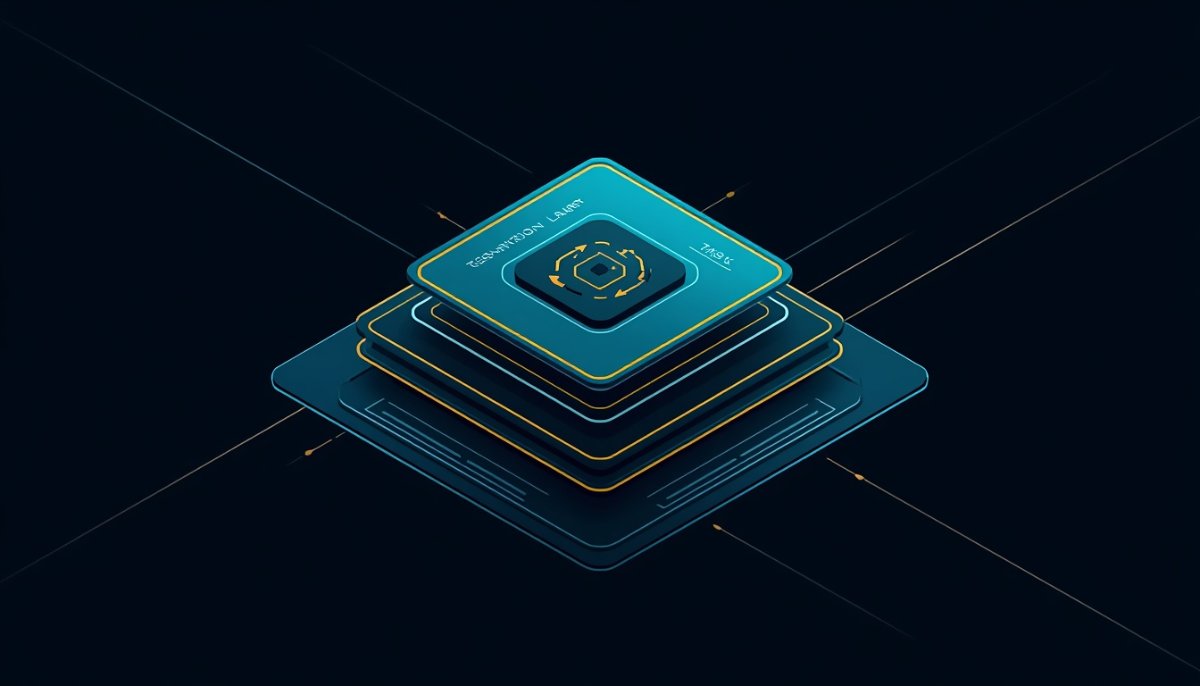
At the center of the campaign is an orchestration framework called SecFlow. SecFlow breaks campaign objectives into short tasks and distributes them to specialized agents. Each agent is given tools, target information, a shared file space and network routes. Because of the shared file space, later agents can access earlier findings, so a single target can branch into multiple specialist tasks.
The recovered runtime settings defined five model profiles. SecFlow would launch either a Claude ACP or a Qwen Code wrapper, inject a model name and API route into it, and then apply broad tool permissions. According to a GBHackers article, the profiles had the bypassPermissions setting and yolo approval mode enabled, meaning the agent's mechanism to ask for confirmation before acting had been disabled.
The most significant aspect of the architecture lies here. The task interface stayed exactly the same while operators could switch between Claude, Qwen and DeepSeek profiles. The attack workflow was made model-independent: if a provider changed, an account was closed, or a route was cut, the operation itself would survive. In agentic AI systems, separating the framework from the model is considered flexibility on the legitimate development side, but on the attack side it provides resilience.
The agents' instruction file was also written like a professional penetration testing guide. The central policy file moved each target through initiation, reconnaissance, exploitation, post-exploitation and reporting stages. In the reconnaissance step it listed the technology stack and possible attack paths in a sequential queue. Each candidate path was routed to a playbook specific to its vulnerability class.
What Data Was Taken in the Fengtai Breach?
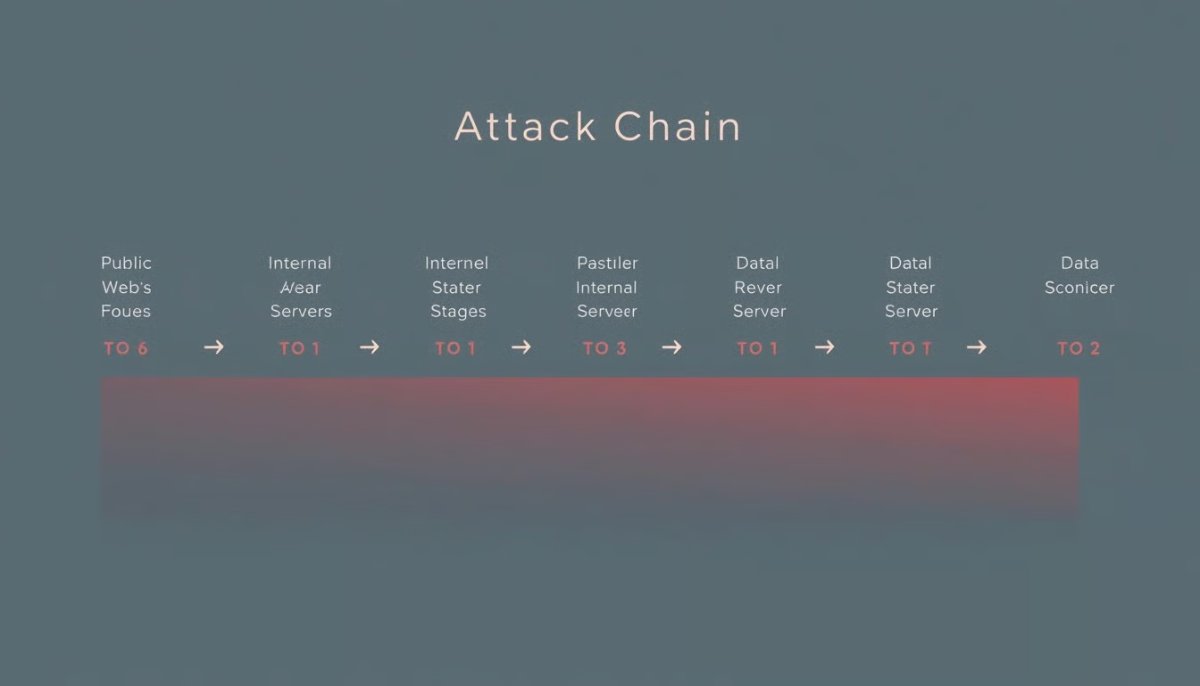
The deepest confirmed breach of the campaign took place in an office automation environment belonging to Fengtai District. The attack started from an internet-facing web application and progressed through Windows command execution, internal reconnaissance, credential theft, application-layer persistence, lateral movement attempts and data exfiltration.
Rather than pulling the server's memory dump in a single piece, the operator split it into 37 blocks. Each block was requested over an authenticated route, the expected byte count was verified, and the file was reassembled. System registry hives were also collected. On the database side, a total of 822 user account records were pulled from the results of two separate queries.
What followed is the most insidious part from a defensive standpoint. The operator added a new, active account with elevated privileges to the application and verified it. This created a persistence path independent of the Windows-side tools. Even cleaning up the command shells one by one does not stop this account from keeping access to the administrative functions.
The exfiltrated content included 949 additional files and roughly 1.28 GB of data. Alongside administrative workflow records were health-related documents and a chronic disease report containing patient information.
The second confirmed breach took place on a Chinese education AI platform, and here the picture takes on a different dimension. The management interface, which had no authentication, returned 23 agent configurations, 14 populated secret fields and 104 complete dialogue records as-is. Leaked Dify credentials were successfully used against the production API, consuming 631 tokens. Among the 92 message entries in the records were profile details such as student names, ID numbers, advisors and departments. The same interface also accepted a request to write a new agent configuration without authentication, which raises the risk of agent manipulation and supply chain abuse.
Which Known Vulnerabilities Were Exploited in the Attack?
There is nothing new in the campaign's technical toolkit. Eight named CVEs were used in active workflows, all of them long-known vulnerabilities with patches available. According to a Cyberpress article, these vulnerabilities span 2014 to 2024.
CVE | Target or context | Observed use |
|---|---|---|
CVE-2014-6271 | KMT Party History Archives | Shellshock function prefix with command chain |
CVE-2020-1938 | Liuzhou public applications | Ghostcat file read attempts |
CVE-2022-22965 | Liuzhou public applications | Spring4Shell data binding payloads |
CVE-2016-4437 | Shiro target | Default key and callback tests |
CVE-2021-43798 | Grafana workflow | Plugin path directory traversal |
CVE-2024-4956 | Nexus workflow | Repository path traversal requests |
CVE-2021-29441 | Nacos workflow | Authentication bypass attempt |
CVE-2021-44228 | Log4j target cluster | JNDI callback service |
The most familiar name on the list is Log4Shell. In the NVD record, this flaw, published at the end of 2021, was regarded as the event of the year in the industry, and most organizations had already applied its patch. Shellshock dates back to 2014. In an operation where AI agents sped up the work, every entry point was a door that should have been closed for years.
The table carries a direct message for defenders. The first step against an AI-supported campaign is not buying a next-generation tool, but closing the old vulnerabilities in your inventory.
How Did the AI Agent Amplify False Information?
The most instructive finding in the report is a mistake, not a success. One of the agents reported that an attempt against the Shiro vulnerability had succeeded. The recovered evidence did not support that claim. The problem was that the claim did not stay there.
Thanks to the shared file space, subsequent agents picked up this finding as if it were a verified fact. Based on the false premise, more than 27 follow-up tests were run, and all of them came to nothing. The agents nonetheless kept assigning themselves new tasks built on the same assumption.
This behavior shows the two-sided nature of agent architecture. Carrying context between workers sped up the operation, and the same mechanism spread one error across the entire workflow. The same phenomenon viewed from the defensive side carries a similar risk: an agent chain without a verification layer reinforces the mistake of the first step in every subsequent step.
A similar pattern appeared in the agent-assisted ransomware attack that was carried out as a fake test. There too, the agent could not produce most commands correctly on the first attempt and repeatedly fixed the scripts. Read together, the two cases show a clear picture: agents do not replace the operator, they increase its speed and multiply its mistakes at the same rate.
How Can Model Providers Prevent This Kind of Use?
The campaign did not use a specially jailbroken model. Commercial tools run by millions of developers and official APIs were in use. The problem lies in how this traffic appears to the provider.
Model requests did not travel only through official routes. Under the operator's own domain family, custom relays were set up, and these relays offered Claude- and DeepSeek-compatible endpoints. In the same domain family, an open-source AI gateway was also running. Such gateways pool multiple subscriptions or API keys and redistribute them through a single endpoint. They have legitimate uses, but they also serve to conceal account sharing and bypass regional restrictions. Next to it sat a proxy pool management panel.
The combined effect of these layers is that the requests visible to the provider are disconnected from the real user and the real target. When abuse detection relies on account behavior, the intervening pool and relay layers blur that behavior.
The debate about malicious AI models has for years centered on uncensored models sold on underground forums. The two documented campaigns shift the discussion elsewhere: the issue is no longer the model itself, but which layers a legitimate model passes through and who it ultimately serves. The isolation debate that unfolded over the summer around OpenAI's cybersecurity testing also concerned the laboratory side. This case, however, is playing out in the field, on production APIs.
What Should Organizations Do About This Risk?
The confirmed breaches in the campaign relied on classic weaknesses: internet-facing services, unpatched applications, stolen credentials and familiar post-exploitation tools. AI added speed and scale to this chain without inventing a new entry route. What can be done is ordered accordingly.
Close old vulnerabilities: Patches exist for all eight CVEs on the list. Applications in your inventory should be scanned for these flaws, and the result should go on this week's list rather than the next maintenance window.
Audit open directories: The campaign was unraveled because the attacker's own open directories were exposed. The same mistake is widespread on the defensive side too. Check whether directory listing is disabled on your organization's servers and whether backup and log files are reachable from the internet, and do so regularly.
Monitor application-layer accounts: In the Fengtai case, persistence was established in the application database rather than at the operating system level. The creation of privileged accounts and changes to permissions should be logged and reviewed regularly.
Shorten credential lifetimes: Long-lived keys sitting in configuration files, front-end bundles and container materials were directly harvested in this campaign. Short-lived credentials reduce the value of such harvesting.
Treat AI management interfaces as assets: The education platform breach happened because of an agent management panel with no authentication. Agent platforms running inside an organization should be subject to access controls at least as strict as those applied to database servers.
On the defensive side, AI itself is also positioned at the same speed. Security-focused models such as GPT-5.4 Cyber and agent-based defense systems are reaching the market with claims that they can match the tempo of attacks. According to a Security Affairs article, for the second time in two months, commercial AI coding tools were caught inside a live state-linked intrusion operation. The repetition of the pattern shows this is not an isolated case.
Frequently Asked Questions
What is SecFlow and how does it work?
SecFlow is an AI orchestration framework used by the attacker. It splits campaign objectives into short tasks and distributes them to agents specialized in areas such as reconnaissance, exploitation, data collection and reporting. It assigns each agent tools, target information, a shared file space and network routes. It was documented not as a commercial product but as a structure built by the operator itself.
Does using Claude, Qwen or DeepSeek create risk for organizations?
No, no security vulnerability has been identified in these models. The report does not claim that the products malfunctioned. The risk stems from the permissions under which agent-based tools run, the network routes they use and the oversight they operate under. Disabling the approval mode and granting broad tool permissions were decisive in this case.
What security vulnerabilities did the attackers use?
Eight named CVEs were seen in active workflows: Shellshock, Ghostcat, Spring4Shell, Shiro deserialization, Grafana and Nexus directory traversal, Nacos authentication bypass and Log4Shell. All are known vulnerabilities with published patches. No zero-days were used.
Did this campaign target organizations in Turkey?
The published report did not identify any targets in Turkey. Confirmed breaches and scanning activity were detected in Taiwan, Indonesia, China, Vietnam and Afghanistan. Since all the vulnerabilities used are found in widely deployed enterprise software, assuming a geographic security boundary would not be correct.
What should organizations do first?
Run an inventory scan for the eight CVEs listed in the report. Since all the entry routes used passed through flaws that already have patches, this is where the quickest gains are. This should be followed by an open directory audit, a review of privileged accounts at the application layer and shortening credential lifetimes.
The campaign was unraveled thanks to the attacker's own open directories. The trail left by operations run with agents is far more readable than classic command history: task definitions, instruction files and evidence files sit in plain text. The five workspaces recovered by Hunt.io show one operator's monthly workload, but how many servers are holding similar workspaces exposed is unknown.
AdminSağlıkta Büyük Dil Modelleri ve Açıklanabilirlik


Öğrenciler İçin Ücretsiz Yapay Zeka Araçları ve Paketleri