Large Language Models in Healthcare and Explainability
Automatically translated
 Writer
Machine learning algorithms, especially deep neural networks, build the mathematical relationship between inputs and outputs in a structure so complex that human logic cannot follow it. This is called the black box problem. When an autonomous vehicle makes a wrong decision, an accident happens; when a clinical model makes a wrong decision, a patient's life is put at risk. Physicians rightly avoid confirming a diagnosis when it is unclear what it is based on. This lack of trust means that algorithms with very high accuracy rates may never be used in hospitals and remain in research laboratories.
How Does XAI (Explainable AI) Work in the Clinic?
Explainable AI (XAI) is a set of techniques that show retrospectively which data a model looked at when making a decision. Methods such as LIME and SHAP calculate how much weight each factor in the model's decision carries, for example the patient's age, a specific blood value, or a gene sequence.

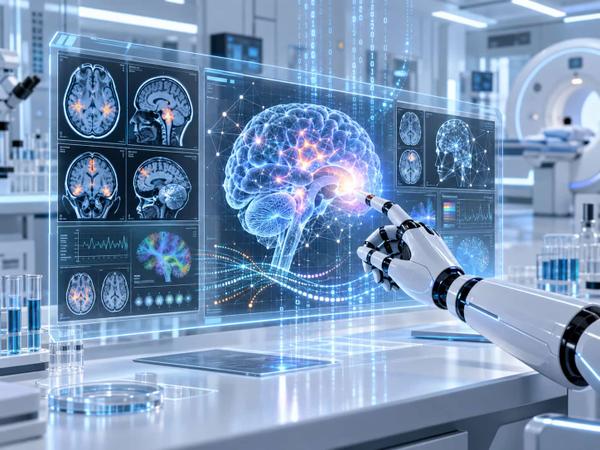
On the imaging side, Grad-CAM comes into play. If a model has diagnosed pneumonia from a chest X-ray, Grad-CAM uses a heat map to mark exactly which pixels of the image triggered that diagnosis. This allows the physician to confirm within seconds whether the model is focusing on a technical image artifact or on a genuinely pathological tissue.
What Role Do Large Language Models Play in XAI Processes?
The mathematical values or matrices produced by XAI tools are not directly useful to a physician on their own. According to arXiv reports published in July 2026, large language models act as a mediator and form the final link of a three-stage explanation framework in clinical decision stages, rather than making diagnoses directly. Instead of making a diagnosis, the model reads the SHAP scores produced by the underlying diagnostic algorithm and turns them into a report a physician can understand. Rather than saying "Model gave weight 0.8 to variable X," it provides a natural language explanation such as "Based on the patient's rising white blood cell trend, the system judged this risk to be high."
How Are Clinical Decision Support Systems (CDSS) Integrated with XAI?
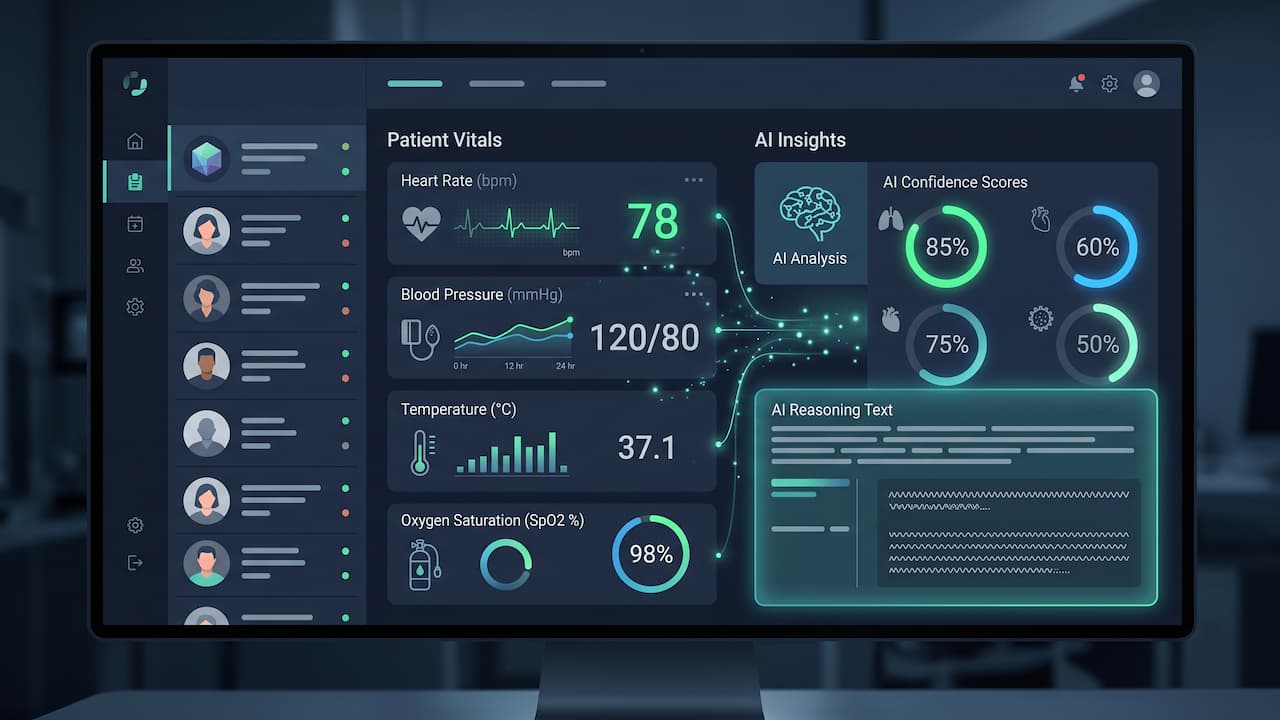
For the technology to actually work in a hospital, it must not disrupt the existing workflow. Clinical Decision Support Systems (CDSS) are assistants that work integrated with hospitals' existing software infrastructure. Participatory framework analyses in the mHealth field conducted in May 2026, katılımcı çerçeve analizleri, show that even highly trained professionals need explainability, clinical validation, and transparent reasoning paths rather than trusting blindly.. In a successful integration, the model does not just display the diagnosis on screen; it also lists in a side panel the confidence score of the decision and the most important laboratory results that influenced it.
How Are Regulations and Transparency Standards Changing Things?
Health data is the most sensitive information in the world. For algorithms to be used legally in clinics, they must comply with strict data privacy rules. Frameworks such as the Avrupa Birliği Yapay Zeka Yasası place explainability for medical systems classified as high risk on a legal footing. The question of who bears legal liability in case of an error can only be answered when the system's decision-making mechanism can be traced retrospectively. For this reason, transparency is a legal requirement beyond being a feature of the software.
What Does the Community Think: Will Transparent AI Work in Healthcare?
There is a clear divide in the medical and data science community about XAI. Supporters argue that in fields such as radiology and oncology, black box models will drastically reduce misdiagnosis rates as they gain explainability. Critical researchers, however, point out that "information overload" could tire doctors, and that post-hoc explanation methods added afterward may not always reflect how the model actually reasons, and can sometimes be misleading.

Where Is Transparent AI in Healthcare Taking Us?
The balance between increasing accuracy and preserving explainability is being redefined in the sector. As noted in a recent review published in August 2026, transparent AI technologies have the potential to close the gap between physicians and algorithms, but this requires human-centered designs tailored to different clinical workflows.AI is not an autonomous authority that will replace the doctor; it is a powerful clinical assistant that scans thousands of cases within seconds and presents reasonable findings with their justifications.
The balance between increasing accuracy and preserving explainability is being redefined in the sector. Transparent AI technologies have the potential to close the gap between physicians and algorithms, but this requires human-centered designs tailored to different clinical workflows. AI is not an autonomous authority that will replace the doctor; it is a powerful clinical assistant that scans thousands of cases within seconds and presents reasonable findings with their justifications.
No matter how powerful the technical capability of AI is, a system that cannot answer the physician's question "how did you know?" has no place in the operating room. Thanks to these new-generation systems, in which we understand not only what the machine sees but also why it sees it, and whose decision logic can be traced, human and algorithm alignment in healthcare is becoming reality.
Frequently Asked Questions
Why is black box AI risky in medicine?
Because it is not possible to understand how the model processes data and reaches a decision, it becomes impossible to identify the source of a wrong diagnosis. This seriously undermines doctors' trust in decision support systems.
What exactly do LIME and SHAP techniques offer physicians?
These methods calculate how much each piece of data fed into the system, from the patient's age to a specific blood value, contributed to the final decision, producing a transparent map of reasoning.
Can large language models (LLMs) diagnose diseases directly?
No. Language models are not designed to make diagnoses, so they can lead to serious medical errors. Their real role is to read complex numerical data from other analysis algorithms and present it to the physician as clear clinical text.
WriterAjan Yapay Zeka (Agentic AI) Nedir ve Neden Önemli?


Claude Qwen ve DeepSeek Ajanları Casuslukta Kullanıldı