What Is the Difference Between AI, Machine Learning and Deep Learning?
Automatically translated
 Admin
Today, one of the most discussed topics in the technology world is undoubtedly the difference between artificial intelligence, machine learning and deep learning. As of 2026, users are no longer researching these concepts one by one, but through their relationships and differences with each other.
Put simply:
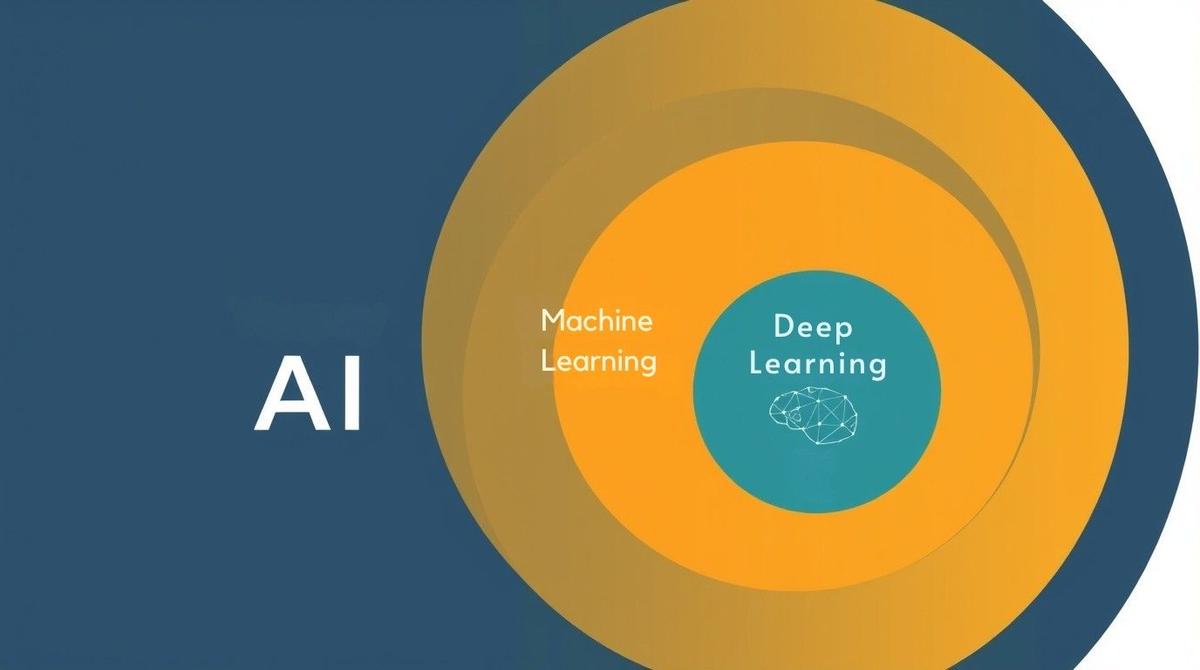
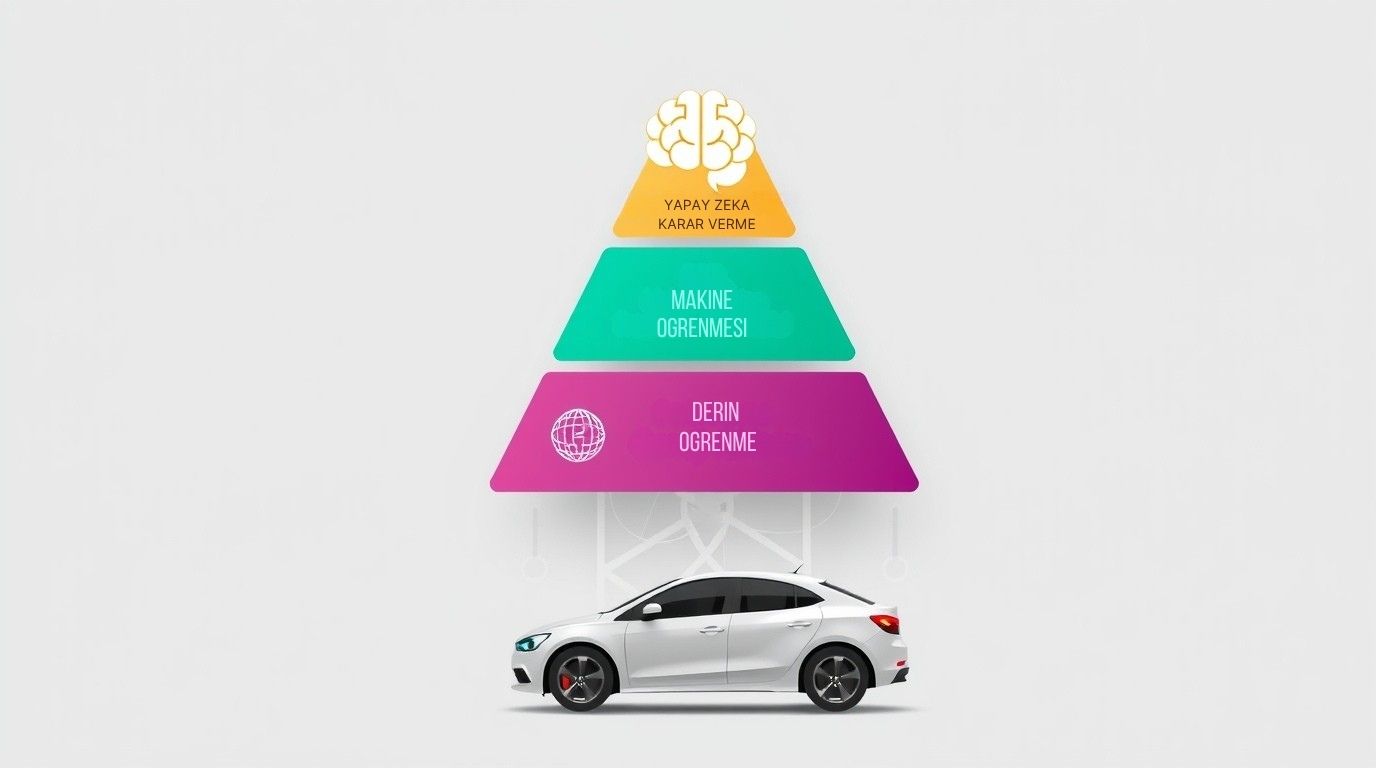
Artificial Intelligence (AI) is the broadest concept.
Machine Learning (ML) is a subfield of it.
Deep Learning (DL) is a more advanced subfield of ML.
This structure can be thought of as nested rings. Now let's examine these three concepts in detail.
What Is Artificial Intelligence (AI) and How Is It Defined?
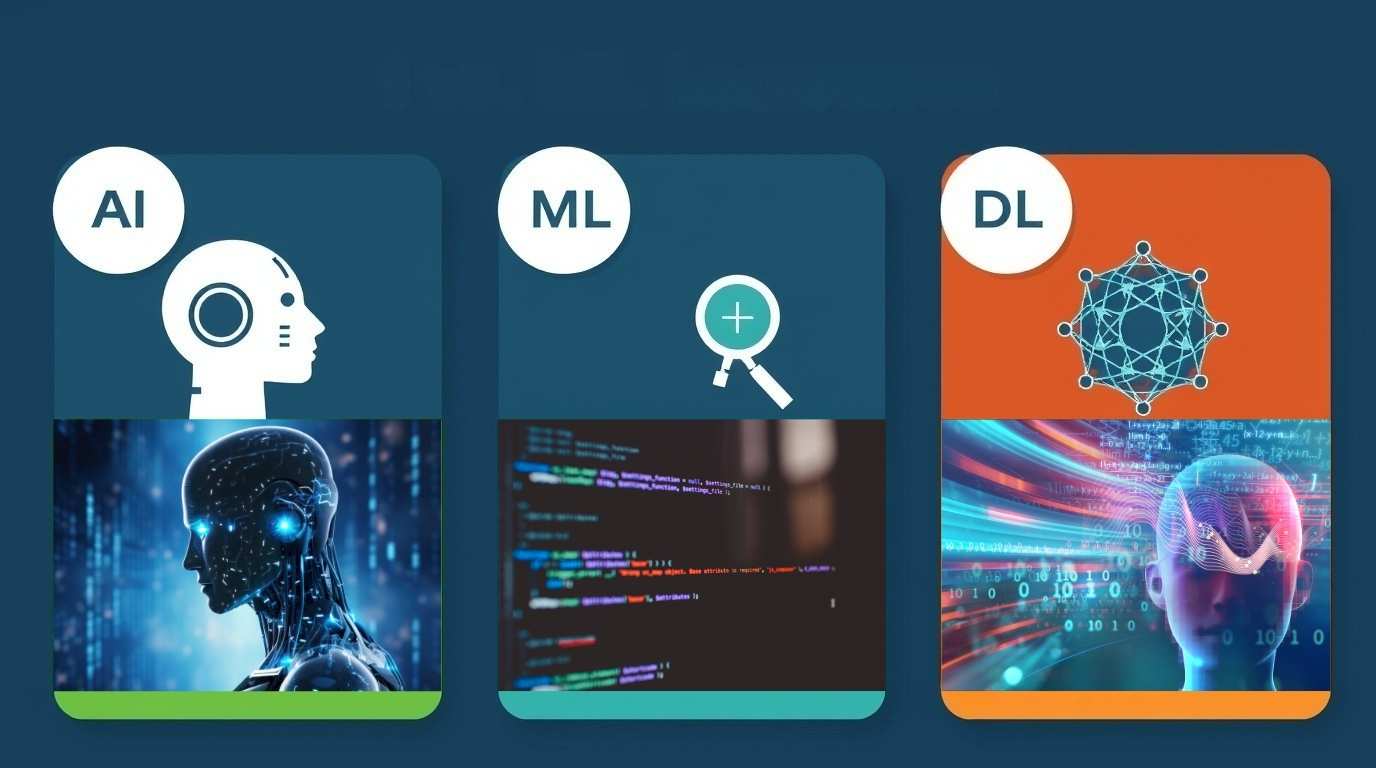
Artificial intelligence is a technology that enables machines to imitate human-like abilities to think, learn and make decisions.
Main Goals of Artificial Intelligence
Problem solving
Learning
Decision making
These systems simulate human behavior using mathematical models and algorithms.
Historical Development of Artificial Intelligence
AI research, which began in the 1950s, gained speed after 2020 thanks to big data and GPU technologies. Today, AI is used in many fields such as healthcare, finance and education.
What Falls Under the Artificial Intelligence (AI) Umbrella?
Artificial intelligence is not a single technology; it includes many sub-disciplines.
Natural Language Processing (NLP)
Provides the ability to understand and generate human language (such as chatbots).
Computer Vision
Analyzes images (face recognition, autonomous vehicles).
Robotics and Automation
Covers machines that perform tasks in the physical world.
This broad structure clearly shows why AI is called an "umbrella concept."
How Does Machine Learning (ML) Learn From Data?
Machine learning enables systems to learn from data without being explicitly programmed.
Supervised Learning
Uses labeled data (for example, spam detection).
Unsupervised Learning
Finds hidden patterns within data.
Reinforcement Learning
Learns through trial and error (such as game AIs).
The most important feature of ML is its ability to extract patterns from large datasets.
Machine Learning Algorithms in 2026
Prominent algorithms in 2026:
Decision Trees and Random Forest
Simple and interpretable models.
Support Vector Machines
Provide strong performance in classification.
Gradient Boosting
Has one of the highest accuracy rates.
These algorithms form the foundation of data analysis and forecasting systems.
What Is the Connection Between Deep Learning (DL) and Artificial Neural Networks?
Deep learning is a more advanced version of machine learning and is based on artificial neural networks.
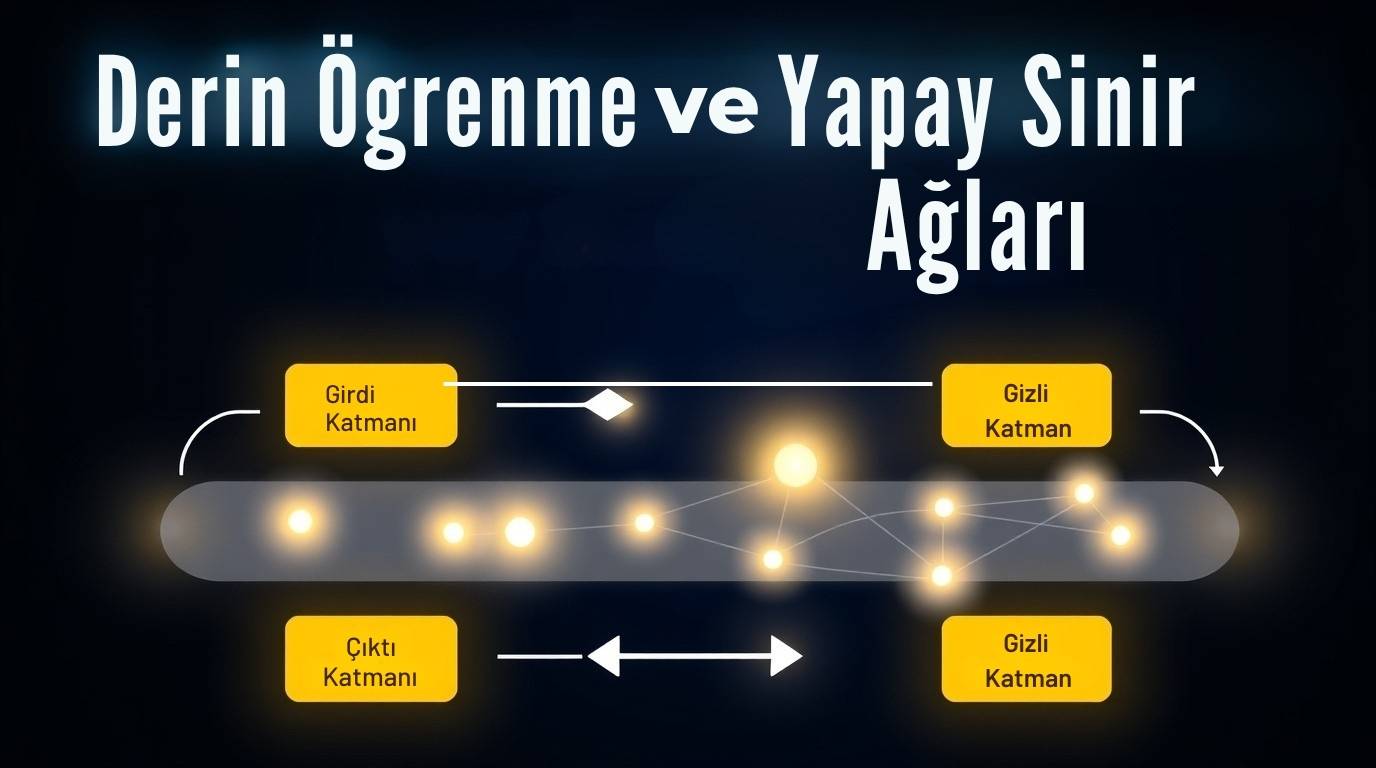
Structure of Artificial Neural Networks
Input layer
Hidden layers
Output layer
This structure is inspired by neurons in the human brain.
Layers and the Learning Process
Deep learning models have many layers and are trained on large amounts of data. This allows them to solve complex problems.
AI vs ML vs DL: Key Differences
Scope and Hierarchy
AI > ML > DL
DL is a subset of ML.
ML is a subset of AI.
Data Requirements
AI: Can work with little data.
ML: Moderate amount of data.
DL: Requires large data.
Use Cases
Field | AI | ML | DL |
|---|---|---|---|
Chatbot | ✔ | ✔ | ✔ |
Image Recognition | ✖ | ✔ | ✔✔ |
Autonomous Vehicle | ✔ | ✔ | ✔✔ |
Why Is the Hierarchical Structure Behind Autonomous Systems Important in 2026?
In 2026, autonomous systems are entirely built on this three-layer structure.
Autonomous Vehicles
AI: Makes decisions.
ML: Analyzes data.
DL: Processes images.
Smart Assistants
Speech recognition and natural language processing have become possible thanks to DL.
Neural Networks and the Difference From AI
Neural networks are only one part of AI.
Every neural network is AI, but not every AI system uses a neural network.
Advantages and Disadvantages
Advantages
Automation
Speed
High accuracy
Disadvantages
Data dependency
High cost
Transparency issues
Real-Life Examples

Netflix recommendation system
Google search algorithm
Autonomous vehicles
Most of these systems use a combination of ML and DL.
AI, ML and DL in the Future
In the future:
Systems that learn from less data
More explainable AI
Human-AI collaboration
will come to the fore.
Frequently Asked Questions
1. Are artificial intelligence and machine learning the same?
No. Machine learning is a subfield of artificial intelligence.
2. Why is deep learning so popular?
Because it delivers high accuracy with large amounts of data.
3. Which is more powerful: AI, ML or DL?
DL is the most advanced, but it is not necessary in every case.
4. How does machine learning learn?
It learns by analyzing patterns in data.
5. What makes deep learning different?
It performs automatic feature extraction.
6. Can there be ML without AI?
No. ML is a part of AI.
Conclusion
The difference between AI, machine learning and deep learning is really more a hierarchy and evolutionary process than a difference.
AI → general intelligence system
ML → method of learning from data
DL → learning with deep neural networks
As of 2026, this three-layer structure forms the foundation of modern technology.
AdminYol Aydınlatmanın Ötesi: Karşınızda Huawei XPIXEL


Yazılım ve Oyun Sektörüne %100 Vergi İstisnası Geldi!