Corporate Artificial Intelligence Transformation : New Ages Started
Automatically translated
The weight center of competition in artificial intelligence sector is changing. For the last two years, more powerful models, higher benchmark scores, and bigger context windows, the race now focuses on the question of how quickly companies can integrate artificial intelligence into organizational structure. The final moves of frontier AI companies such as OpenAI and Anthropic show that competition moved from the model layer to the corporate transformation layer.
New Period in AI Racing: Competition Layer Changed
The first growth wave of artificial intelligence ecosystem was built on model performance. More parameters, higher benchmark scores Larger context windows and more advanced reasoning capabilities have created the basic competitive area of the industry. In particular, the value of technology companies for 2023 and 2024 were largely shaped through model capabilities. However, the table consisting of 2026 shows that the frontier model competition is not enough alone.
In analysis published by Emerging Europe As highlighted, the sector is now going to the second big stage. Model development race continues but the layer of economic value is changing. Companies are no longer looking for only the best model. Instead, it focuses on how to deploy artificial intelligence in the organization, how to integrate processes and convert into employee productivity.
There are economic reasons behind this fracture. While Frontier model development costs reach billion dollars, the difference between models makes the application layer more important. From the point of view of the institutions, a few points of the benchmark difference, the operational efficiency creates greater value. Thus, the competition model is redistributed among those who manage the integration with those who produce.
Even the speaking format of the sector began to change. Two years ago the question “which model is more powerful” was in the center. Today, CIOs, CTOs and conversion teams ask different questions: Does this system work with ERP? Is the security layer enough? Will employees really use it? Can the operational efficiency be measured?
Why is OpenAI and Anthropic Enterprise Side?
Corporate customers are seen as one of the biggest income areas for technology companies for a long time. It consists of a similar table on the artificial intelligence side. While consumer products create high visibility, enterprise customers create longer contracts, higher license costs and multi-layer service revenues.
OpenAI’s latest enterprise data Homeshows how strong this strap is. It is noted that the use of reasoning increases significantly and deepens the use of the organization-wide. This growth does not only mean the increase in the number of users. It also shows that artificial intelligence begins to settle into everyday operations.
One of the important changes was the return of the individual model of use. At the first stage, employees are using tools with personal subscriptions, today central purchases and corporate distributions stand out. behind this, there is a need for security, data management and manageability.
On the Anthropic side a more controlled expansion strategy is seen. Claude has been positioned for a long time. This approach creates an advantage especially in finance, health and regulatory industries. Only model performance is not enough in terms of large institutions. Data access, auditability and risk management are also at the center of purchasing decisions.
The choice of model from enterprise customers is not only a technical decision. It also becomes operational and legal decision. Therefore OpenAI and Anthropic not only develops the model; but also builds the layer of corporate trust.
What Does Corporate Artificial Intelligence Conversion Come?
Corporate artificial intelligence conversion is often misinterpreted. Many organizations identify employees as conversion to chatbot access. However, real conversion is far more extensive.

Corporate transformation covers redesign of data flows, automation of processes, reshape of employee roles and changing decision mechanisms. Only technology investment is not enough to settle in the organizational structure of artificial intelligence.
If a company’s purchasing team is not working on the same system of customer service team and financial operations. For this reason, enterprise AI projects are no longer only responsible for IT departments. Human resources teams, operation managers and upper management are directly included in the process.
Research shows that technical problems in conversion projects are not decisive alone. Employee resistance, process complexity and organizational adaptation problems are among the main causes of unsuccessful projects.
That’s why the key concept of the new era is not model; it becomes the organization design.
New Layer in Enterprise AI Race: AI Consulting Economy
Corporate transformation consists of a new economy. This economizer is shaped around integration services and flow design.
Companies can buy model but the organizational change cannot be purchased as a package product. Here, the operating consulting companies, system integrators and conversion teams are entering.
The establishment of a single AI product in large institutions is not enough. Data layers are re-edited, access policies are created, rewrite department processes and planning employee training. Therefore, the AI marketing market began to grow independently from the model market.
Anthropic’s partner programs are expanding and working closely with consulting companies.
How to Build Anthropic Enterprise AI Strategy?
Anthropic was mostly talked about model safety, disaster studies and controlled scaling approach for the last two years. But when the company’s final moves are examined, the focus is markedly lost into the enterprise market. The security layers, access control mechanisms and data management tools Anthropic’s product strategy has started to settle.

Claude’s long context windows and document processing ability are often described as technical feature. On the enterprise side, these features are different meanings. The issue for large organizations is not able to write longer prompts; thousands of page contracts, policy documents, regulatory documents and internal information pools can be processed through one system. That’s why the context length means the operational advantage for the corporate user while it can be an interesting feature for individual user.
Anthropic’s expansion of security-oriented programs is evaluated as part of the same strategy. As risk management is critical in terms of regulatory sectors, it is decisive in purchasing processes that can explain how AI behaves and establish auditable systems. “the most powerful model” for customers on finance, health and public side is not the first criteria. The more important question is how safe and manageable the system.
This approach also affects enterprise sales cycles. Corporate customers act different from consumer market. Purchasing processes can take months, law teams are activated, security teams are auditing and redesigning data architectures. The positioning of Anthropic’s products around this reality shows that they play directly on corporate use scenarios.
OpenAI Enterprise Hamles Launches Operational Artificial Intelligence Period
A more aggressive and wider expansion model is seen on OpenAI side. The company achieved high visibility with consumer products during the first growth period. Today, the focus is to turn this visibility into operational use.
The most remarkable change on the enterprise side was the change of the way of use. During the first time users were using ChatGPT to ask questions, produce content or research. The new model of use is much more different. Now companies use AI systems in customer operations, financial processes, data analysis, software development and in-house information management.
Although this change looks small, the economic effect is quite large. Because systems integrated into daily operations create higher usage intensity. Higher use means more API consumption, larger license deals and deeper integration.
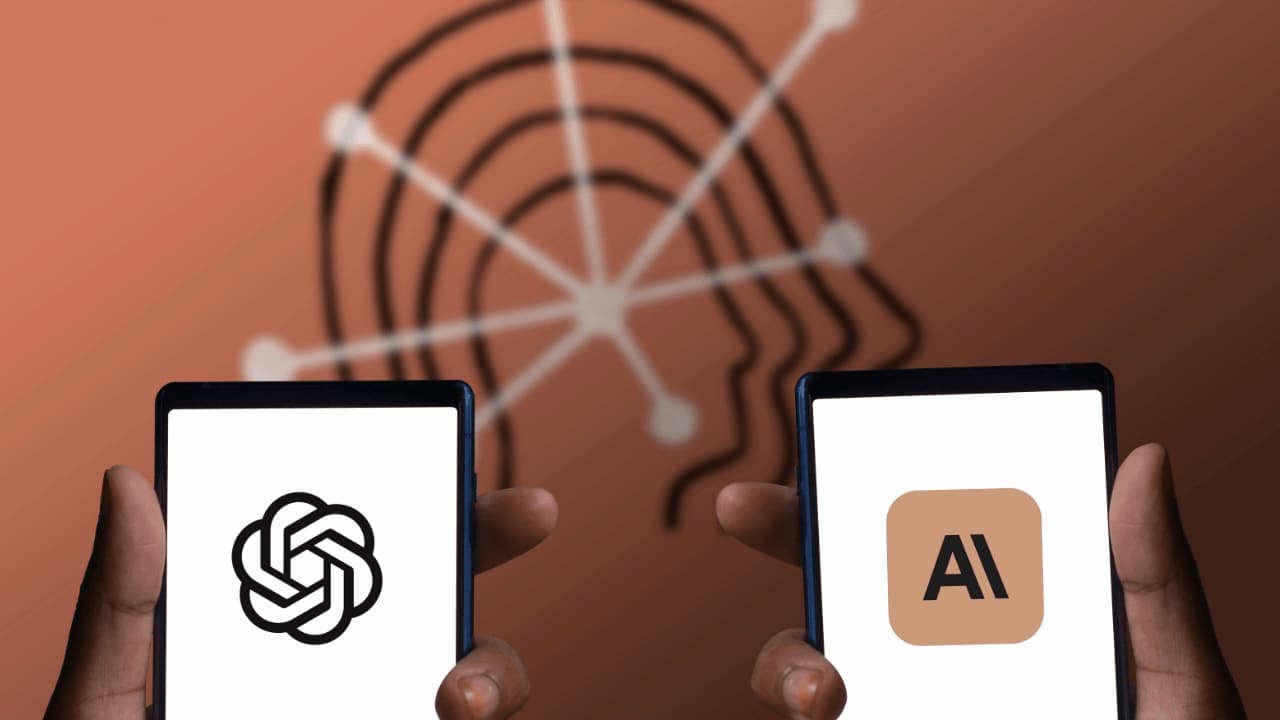
The weight that OpenAI provides to its agent systems is therefore important. Companies no longer want only respond-generating systems. The tools that move between systems and manage processes are requested. The second stage of Enterprise AI race is exactly here: it is passed to the stage of doing business without producing information.
One of the most important metrics for corporate customers is also becoming measurable. How much does the team use? How long does it save? Does it create cost advantage? When these questions are answered, conversion projects lose speed.
Pilot Project Period Expires
Many institutions developed experimental projects in the first big wave of artificial intelligence investments. Small teams were created, chatbot projects were launched and limited trials were made. But in the current phase of the enterprise AI, it is enough to try only.
Institutions now want to see the return of investment. The basic question for management teams has become that technology does not work and produces economical value.
This situation reveals a new problem called PoC fatigue. Many companies develop dozens of small projects but their important part cannot be moved to the production environment. This is because it is not technical deficiency. Scalable processes include basic problem areas of data access problems and organizational resistance.
Less number but larger scale projects are expected to be seen in the new period. Because institutions are now looking for operational results instead of experimenting.
Where to Stop Corporate Artificial Intelligence Transformation in Turkey?
Transformation on Turkey is moving heterogeneous. In the case of serious difference between large institutions and medium-sized companies.
Banking sector is moving faster on the integration side of telecom companies and large holdings. The main reason for this is that data infrastructures are more advanced and the conversion budget is greater. AI usage is accelerated especially in customer service, fraud detection, operation automation and internal process management.
Different problems are seen in medium-sized companies. The part of the data infrastructure slows down the standardization of processes and the transformation of a specialist deficiency. Many organizations still see vehicle usage as conversion.

Here, there are important opportunities. AI is an important gaps for initiatives developing process automation, agent installation and vertical solutions. As the enterprise AI ecosystem in Turkey has been in the early stage, specialized players are fast growth potential.
Passed System Race from Model Racing
The first stage of artificial intelligence economy was model oriented. Larger models attract more investments, better benchmark scores create greater value.
In the new period, the layer of advantages varies. It continues to be important to produce strong model but sustainable difference is that they can build the system.
What is purchased in terms of corporate customers is often not the model. Everything purchased is security, integration, workflow design and operational output.
Therefore, new winners in the artificial intelligence market are thought not only models manufacturers. Consultancy companies, system integrators, agent platforms and workflow providers are located at the center of this economy.
The discussion of corporate artificial intelligence conversion is precisely gaining importance here. Because competition in the coming period will not only be experienced among technology companies. At the same time, the company’s internal conversion speeds will also turn into the competition factor.
What is Expected in the Future Period?
After 2026, three major trends are expected to be strengthened on the enterprise AI side.
First trend, agent-based systems will be widespread. Companies are switching to systems that only manage process from respond-generating systems.
The second trend, consulting and integration layer will grow. Because the need for organizational change is growing faster than technical needs.
The third trend will be measurement printing. The budget of projects that cannot show the efficiency effect will be forced.
As a result of this transformation, models in the center of the artificial intelligence race will be included in the conversion capacity.
FAQ – Frequently Asked Questions
What is corporate AI conversion?
It is the process that companies integrate artificial intelligence not only as vehicles, operations, decision processes and workflows.
Why does OpenAI turn to the enterprise side?
Corporate customers create greater income potential and can spread AI usage throughout the organization.

What is Anthropic enterprise AI strategy?
Anthropic adopt enterprise approach focused on security, regulation compliance and controlled distribution.
Why does AI transport rise?
Companies can purchase model but need expert support for organizational transformation.
Are Turkey ready for AI?
The lack of data infrastructure and expertise continues to create significant obstacles in medium-sized companies while speeding large institutions conversion.
Where to start small companies?
It should be to determine the repeating processes of priority, organize data flows and create measurable usage scenarios.
AdventHealth ChatGPT ile İdari Yükünü Yüzde 80 Azalttı


Endava'nın AI Ajanlarla Yazılım Teslimatı Dönüşümü