



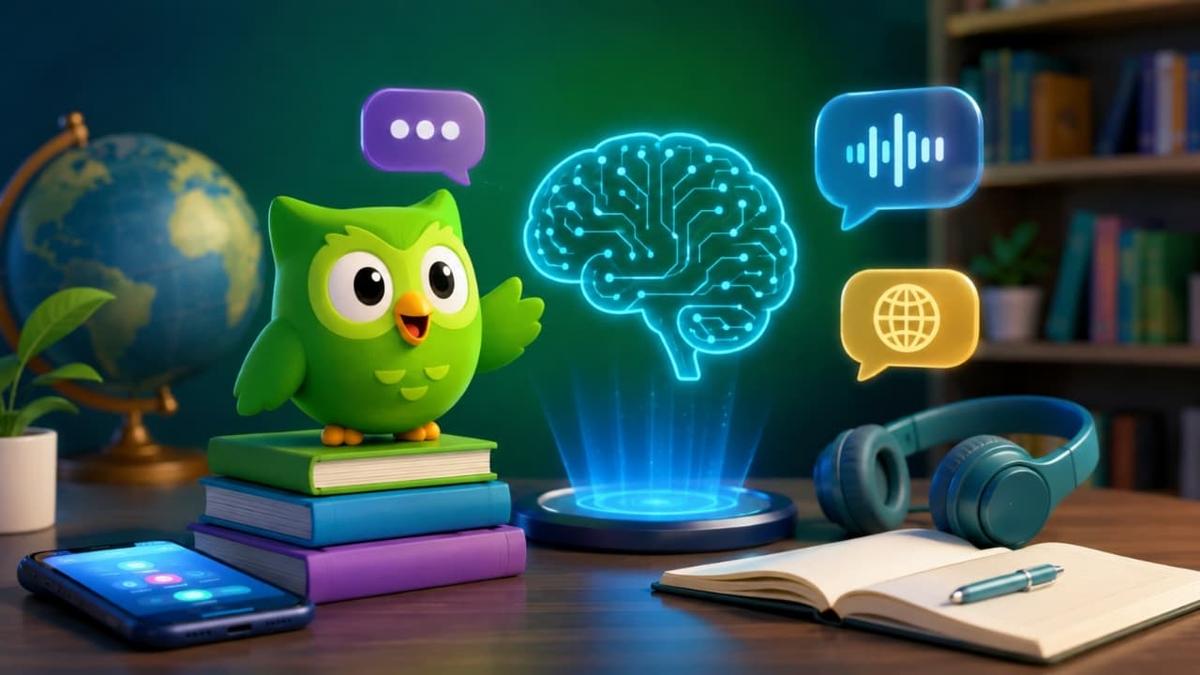
Duolingo CEO Explains How AI Will Change Language Learning
Automatically translated
 Writer
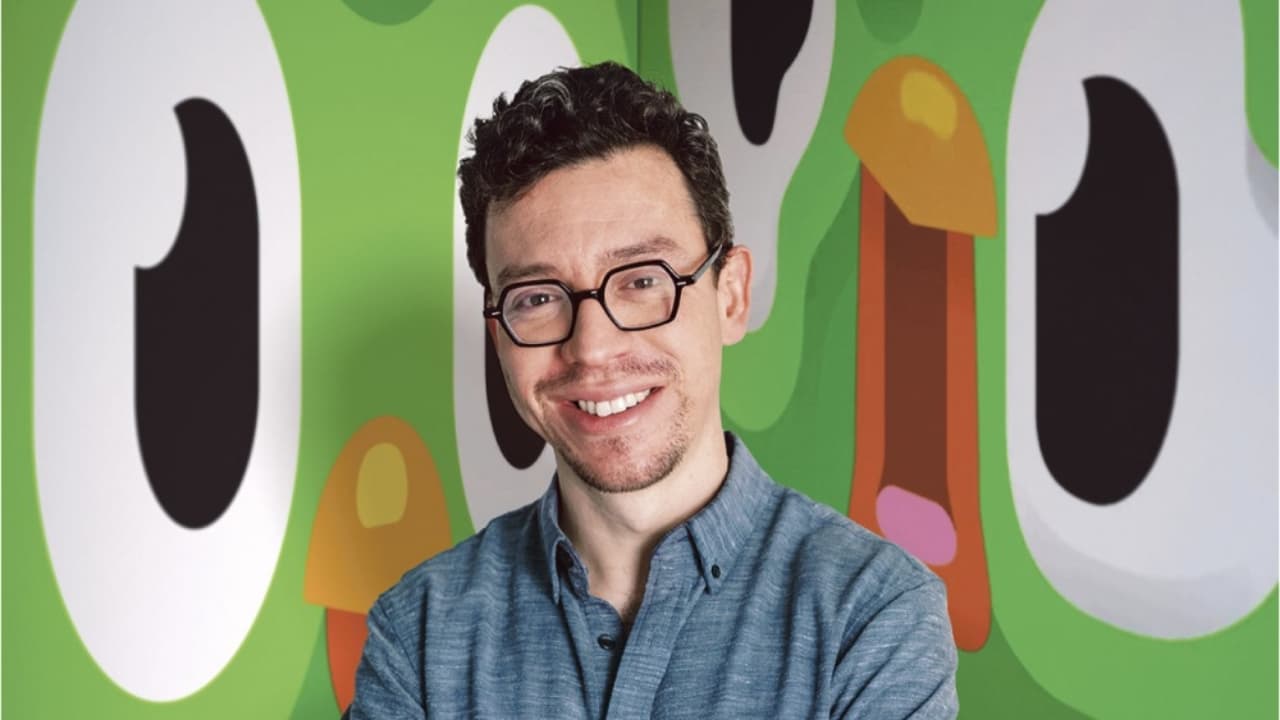
Education technology is one of the fastest-changing areas of the digital transformation. Duolingo, the world's most popular language learning app, is redefining the habits of millions of users and placing AI at the center of the process. In a comprehensive interview with TIME magazine, Duolingo CEO Luis von Ahn shared how generative AI will fundamentally transform education, the role of the human factor in this new ecosystem, and the company's strategic vision.
From Guatemala to a Global Education Vision
Von Ahn's obsession with education stems from the financial constraints of his childhood. Raised by a doctor and a single mother, von Ahn describes the moment he realized he was years ahead of the neighborhood children academically as a turning point in his career. In his view, this gap was not simply a matter of individual luck but a sign of structural inequality. Duolingo's founding philosophy grew out of this observation: anyone, whether they have money or not, should be able to access the same system.
The company started in 2011 with a small team. Initially it planned to teach mathematics, but it turned to language education because of English's decisive position in the global economy. While the number of people learning English worldwide approaches two billion, the number learning mathematics remains around one billion.
From Free to a Sustainable Model
The company's first four or five years were entirely free, with no ads and no subscriptions. Von Ahn admits that when he announced the decision to move to a revenue model in 2017, he met unexpected resistance: much of the team opposed it, asking why they needed to make money at all. Today Duolingo uses a freemium model, offering the app free to everyone while giving those who want an ad-free experience a subscription option.
AI Enters the Classroom: Transforming Speaking Practice
One of the most notable parts of the interview is the fundamental change AI has brought to Duolingo's speaking practice module. According to von Ahn, before AI, matching users with a real person was theoretically possible but practically almost useless, because most people were too embarrassed to speak with another person in a language they were not yet comfortable with.
Traditional course and education models have both economic and logistical limits when it comes to offering personalized one-on-one tutoring to large audiences. Duolingo, however, aims to break this taboo through AI integration. Luis von Ahn emphasizes that with the integration of advanced large language models (LLMs) such as GPT-4, they have taken the learning experience to the level of a fully personalized assistant.
The top-tier subscription the company developed, Duolingo Max, stands out for two core AI features:
Explain My Answer: Instantly explains the logical and grammatical reasoning behind the user's mistake in an interactive chat format.
Roleplay: Lets users practice freely with AI characters in real-life scenarios, such as ordering at a café or planning a trip.
Will AI-Powered Education Replace Human Teachers?
The rapid development of AI-powered education systems frequently raises the question of whether AI will replace teachers. The Duolingo CEO draws a very clear line on this: AI can optimize teaching methodology and content production, but it cannot manage human psychology and the desire to learn on its own.
Equal Opportunity in Education and the Role of AI
Access to quality education in developing countries is a serious problem. Von Ahn notes that AI is not a substitute for education but a huge lever and a tool for democratization. Thanks to AI, curriculum development and localization processes that once took years have dropped to weeks. This allows many more languages and dialects to be added to the platform quickly.
Gamification and User Motivation: The Psychological Power of Streaks
From a pedagogical standpoint, even if you have the most perfect curriculum in the world, it has no value unless the learner sits down for the lesson. The core secret behind Duolingo's success is gamification mechanics built on sophisticated algorithms.
Users' desire to keep their daily streaks is one of the most concrete examples of behavioral psychology. AI notification algorithms analyze the time of day when each user is most likely to open the app and send personalized, optimized reminders. In this way, the language learning app reaches a retention rate high enough to compete with social media or mobile games.
The Motivation Puzzle: Why Does "Guilt" Work?
One of the most frequent complaints from users is the app's insistent and sometimes guilt-inducing reminders. Von Ahn does not reject this criticism. Instead, he responds with a fact about human behavior he has drawn from fifteen years of observation: what people say, what they do, and what they think are often entirely different things. Truly learning a language takes hundreds or even thousands of hours, and there is no shortcut to cut that time. For this reason, the company deliberately uses gamification and reminders to keep users motivated.
Employee Performance and AI: A Reversed Decision
The company's AI strategy has not always been smooth. Last year, an internal memo from von Ahn announced that employee performance would be partly evaluated based on AI use. When the news leaked, it created the false impression that a large wave of layoffs was coming. Von Ahn, however, states that the company increased its headcount during that period rather than reducing it. Additionally, after employees argued that AI could not be directly applied to their work, the company rebased the evaluation criterion on the impact created for the company.
2011 Founded. Duolingo launches with the vision of equal access to education by offering free language learning.
2017 Move to a revenue model. The freemium system is introduced; the core experience remains free.
2021 IPO. The company goes public and reaches profitability.
2025 AI performance debate. The use of AI as a criterion in employee evaluations draws public backlash and is reversed.
Beyond Languages: A Vision That Extends to Math, Music and Chess
Duolingo is no longer just a language learning app. The platform is expanding with mathematics, music and chess modules, and in von Ahn's words, mathematics in particular holds great potential. The CEO believes this field could eventually reach a size comparable to language learning. The company's rapid growth in the Chinese market is also notable: despite regulatory challenges, China could overtake the US within the next year or two to become its largest market.
OPPORTUNITIES | RISKS |
• AI-powered speaking practice that removes the embarrassment barrier | • Criticism that AI-powered features are locked behind the paid tier |
• Speed and efficiency gains in development processes | • Loss of trust caused by using AI as a criterion in employee evaluations |
• A teaching model that can scale to new fields such as mathematics and music | • The possibility that excessive notifications and guilt-based motivation techniques cause user fatigue |
Before and After AI: The Transformation in Speaking Practice
To make the scale of the change that von Ahn describes more concrete, it is important to look side by side at speaking practice in language learning before and after AI. The difference shows that the psychological architecture and pedagogical foundation of the learning experience have been rebuilt from the ground up, far beyond simply adding a new software feature to a mobile app.

In traditional, pre-AI methods, the biggest obstacle to speaking practice was neither a lack of materials nor access restrictions. The real obstacle was shame and fear of making mistakes, which behavioral psychology describes as foreign language speaking anxiety. When practicing with a native speaker or a private tutor, learners tended to be passive, worried about making accent mistakes, choosing the wrong word, or freezing up. In addition, the high cost of private lessons and time constraints made sustained speaking practice a privilege that was hard for large audiences to maintain.
With the AI revolution, these psychological and economic walls have given way to a flexible learning space. Duolingo's AI integration and similar AI infrastructures offer learners a completely non-judgmental, highly patient, and always-available conversation partner, 24/7.
CRITERION | PRE-AI | POST-AI |
Practice Method | Attempting to match with a real user | AI-powered one-on-one conversation simulation |
Participation Rate | Estimated 5% willingness | Broad participation as the embarrassment barrier falls |
Psychological Barrier | Shame and reluctance toward a stranger | A free practice space without fear of judgment |
Accessibility | Need to find a suitable partner, scheduling problems | Instant, flexible access 24/7 |
Access Model | — | Offered within a subscription due to its cost |
An Education Revolution Beyond Technology
The AI strategy Duolingo has put forward proves that AI is not just a tool that speeds up education, but a transformative force that personalizes it and spreads it to large audiences. However, as Luis von Ahn also points out, even the most advanced large language models cannot alone replace a person's determination to learn and their emotional connection.
While AI-powered practice breaks down the embarrassment barrier and democratizes education, risks such as locking features behind paid tiers, employee trust, and notification fatigue form the delicate balances of this process. In the future education ecosystem, lasting success will belong to platforms that combine advanced technology with ethical, inclusive, and sustainable designs that understand human psychology.
WriterAi Weiwei Sergisi Cesaret ve Direnişi Nasıl Anlatıyor?


OpenAI Astra Kritik Siber Yetenek Eşiğine Dayandı


