



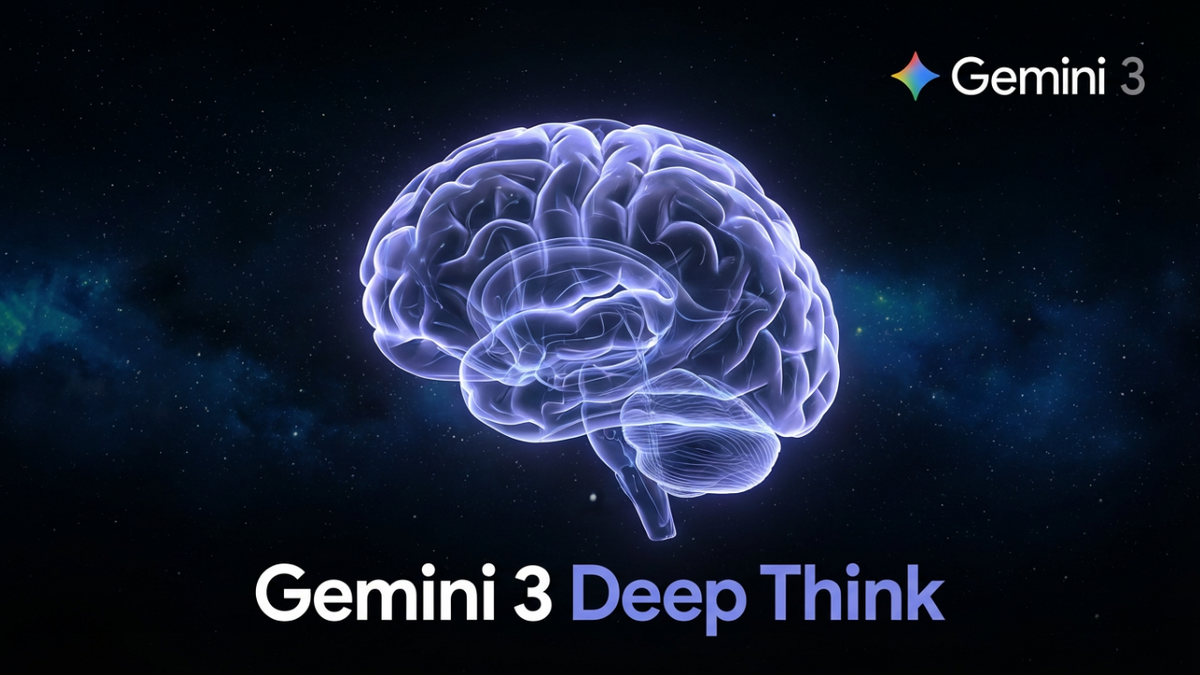
Gemini 3 Deep Think Mode Arrives in Google AI Ultra
Automatically translated
 Writer
In artificial intelligence, competition was first shaped by speed, scalability and multitasking performance. Recently, however, reasoning capability has gradually taken over these priorities. As large language models approach a certain saturation in text generation, technology companies now emphasize complex problem solving, establishing cause-and-effect relationships and abstract thinking. Google’s model developed along this line, Gemini 3 Deep Think, is drawing attention among the company’s AI moves.
Google designed Gemini 3 Deep Think specifically for tasks that require complex reasoning. The model is positioned through demanding evaluation sets such as ARC-AGI-2 and Humanity’s Last Exam, and it aims to serve high-level use cases within the Gemini app and the Google AI Ultra framework.
What Is Gemini 3 Deep Think?
Gemini 3 Deep Think, can be thought of as a sub-model within Google’s Gemini model family that aims to go beyond classic generative AI tasks. According to Google, this model goes through a longer and more structured thinking process before producing a response, which allows it to perform multi-dimensional reasoning rather than surface-level inference.
This approach stands out as the key element that distinguishes Gemini 3 Deep Think from standard language models. Tasks where the model excels include mathematical problem solving, logical reasoning, scientific inference, scenario analysis and multi-variable decision processes. With this model, Google is building a narrative of cognitive depth rather than one centered on productivity.
Why Is Complex Reasoning Central?
For a long time, AI models were treated as systems that make predictions over large datasets. Today, however, expectations are shifting toward systems that not only produce correct answers but also consistently show how they think and the stages of that thinking. In this context, complex reasoning is becoming one of the key determinants of the next-generation AI race.
The standout reasoning capabilities of Gemini 3 Deep Think include:
- Multi-step and chained problem solving
- Establishing cause-and-effect relationships
- Drawing consistent inferences from contradictory or incomplete data
- Connecting abstract concepts
- Developing analysis through hypothetical scenarios

Gemini 3 Deep Think Within the Gemini App
The Gemini app is the main platform where Google AI solutions are offered to end users and professionals. Within this app, Gemini 3 Deep Think is a dedicated sub-model that will be engaged for more complex and computation-intensive tasks.
Through the Gemini app you can use Gemini 3 Deep Think for:
- Analyzing long and multi-layered questions
- Examining academic texts in deeper context
- Handling problems that require a chain of logic
- Scenario-based evaluations will be possible.
The model’s response time is longer than other models, but Google aims for more consistent and logical results despite this delay.
Google AI Ultra
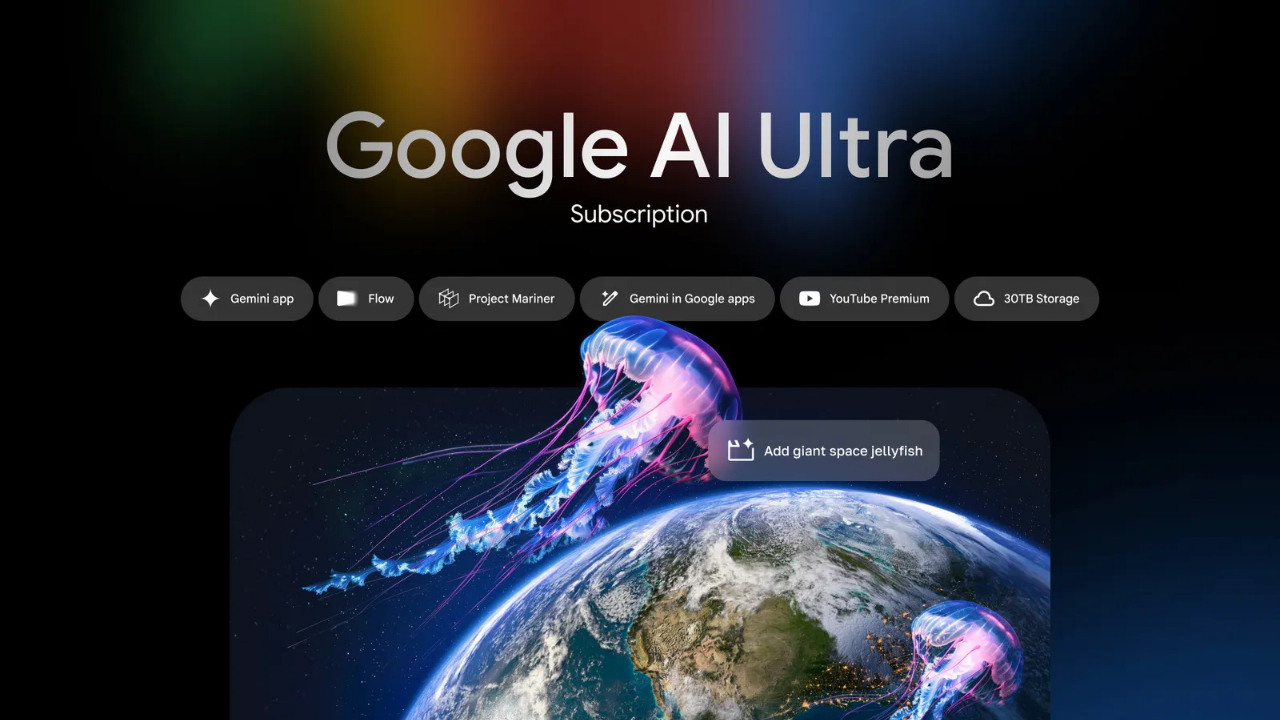
Google AI Ultra is a top-tier service that brings together the company’s most advanced AI capabilities. The fact that Gemini 3 Deep Think is offered under this umbrella also shows that Google developed the model for purposes beyond individual everyday use. Under Google AI Ultra, Gemini 3 Deep Think provides access to higher computing capacity, a longer context window, advanced safety and accuracy layers, and deeper reasoning processes. This structure indicates that Google wants Gemini 3 Deep Think to be used especially in research and analysis scenarios.
Humanity’s Last Exam
Humanity’s Last Exam, is a comprehensive evaluation set that aims to measure AI models’ reasoning, abstraction and creativity rather than their level of knowledge. Google emphasizes that Gemini 3 Deep Think performed strongly on this exam. At this point, however, a caveat is needed. Humanity’s Last Exam is not yet accepted as a standardized benchmark across the industry. Therefore, while performance on this exam offers meaningful signals about the model’s potential, it may not directly reflect real-world use scenarios, and the claimed capabilities need to be supported by independent tests.
ARC-AGI-2 and the General AI Debate
ARC-AGI-2 stands out as a benchmark that aims to measure AI systems’ ability to generalize rather than memorize. These tests analyze how a model behaves on previously unseen problems with limited data.
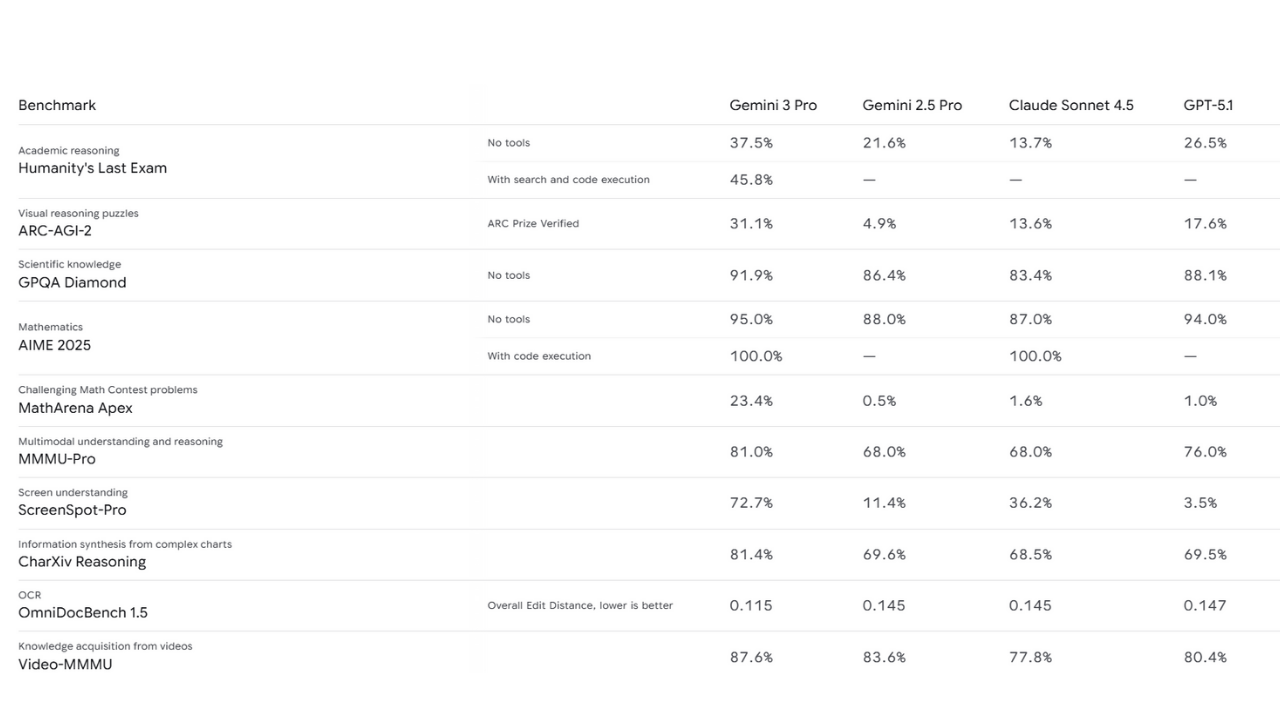
The notable aspects of Gemini 3 Deep Think within ARC-AGI-2 include:
- Rapid adaptation to new problems
- Associating visual and logical patterns
- Making meaningful inferences with minimal data.
At the same time, it is frequently emphasized that tests like ARC-AGI-2 work with limited datasets and cannot measure long-term performance on their own.
Who Is It For?
Gemini 3 Deep Think may not be a necessary model for every user profile. However, it is an ideal tool especially for academics, data scientists and engineers, legal, finance and policy analysts, and teams developing decision support systems. For everyday, simple questions, standard Gemini models are sufficient, while Gemini 3 Deep Think stands out in scenarios that require deep analysis and reasoning.
Gemini 3 Deep Think can be interpreted as an important part of Google’s effort to build a reasoning-focused narrative in the AI race. By placing complex reasoning capabilities at the center rather than speed and productivity, the company wants to move competition onto different ground. However, benchmarks such as Humanity’s Last Exam and ARC-AGI-2 are not yet standardized metrics across the industry. For this reason, how the capabilities promised by Gemini 3 Deep Think perform in real-world scenarios beyond benchmark results will become clearer in the coming period.
WriterAlgoritma Yönetimi: Instagram, TikTok ve YouTube Rehberi

Yapay Zekanın Yeni Evresi: 2025’te Hayatımızı Değiştiren Trendler


