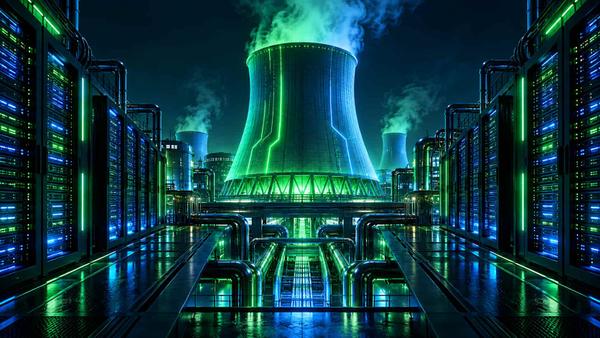




Global Sustainability Hamle in Artificial Intelligence: Green Codes
Automatically translated
Artificial intelligence is not only a technological revolution, but also become the strongest tool of global sustainability targets. Artificial intelligence systems integrated with environmental awareness in many areas from energy efficiency to prevention of climate crisis reshape the future of the planet. This conversion brings both economic development and the protection of nature in the same crucible.

Digital Transformation Green Face
Artificial intelligence (YZ), which is the largest technological revolution of the 21st century, is no longer just innovation, but also determining the future of the planet. Today, artificial intelligence-based solutions are applied in many areas from climate change to energy efficiency, protection of water resources from waste management.
Aygül Anavatan (2023) “Yapay Intelligence and Sustainability” As highlighted in the work titled, these technologies have the potential to reconcile historical conflict between economic growth and ecological balance. ”
However, this conversion requires not only the environmentalist, but also a systematic sustainability logic. Because the conveniences of artificial intelligence come with new risks such as energy consumption and carbon footprint of data centers.
In Turkey, artificial intelligence supported sustainability steps have won speed. Turkish Artificial Intelligence Initiative (TRAI) 2023 reportMore than 120 domestic initiatives across the country, developing artificial intelligence-based solutions in environmental technologies and energy optimization. Also carried out by Ministry of Industry and Technology “Artific Intelligence Strategy 2025” document, The environmental size of digital transformation is addressed as a separate header. This document, data centers Home green energy It contains concrete targets such as artificial intelligence use for energy efficiency in operation and public infrastructure.

Artificial Intelligence and Sustainability: New Paradigma That Two Bites
Artificial intelligence and sustainability concepts, at first glance, they serve a common purpose, and the intelligence of resources.
According to Article 2024 published in Yalova Journal of Social Sciences, the approach of “containable artificial intelligence” is forced to evaluate technological processes not only performance-oriented, but with environmental impacts.
Three-dimensional Effect of Artificial Intelligence
- Environmental Size:
- Data-oriented optimizations in areas such as energy, water, waste and carbon swing
- Management with artificial intelligence of traffic, lighting and waste systems in smart cities Home
- Economic Size:
- Reduces welding costs by gaining efficiency of production processes
- Strengthening investment planning with predictive analysis in renewable energy
- Social Size:
- Digital solutions for sustainable development purposes (education, health, transportation)
- Integration of climate justice and equality principles into artificial intelligence systems
This triple effect model also redefined ethical responsibilities for humanity, not only the limits of technology.
Combating Climate Crisis with Artificial Intelligence
With the acceleration of the climate crisis, artificial intelligence is now located in the center of scientific research and policy planning.
For example, according to the data of IPCC (Interdisciplinary Climate Change Panel), artificial intelligence-based climate modeling systems can increase forecast accuracy up to 40% in areas such as air pollution, carbon density and forest loss.
Early Warning Systems and Disaster Management
The project “Flood Forecasting Initiative” launched in 2023 of GoogleThe risks of flood and flood are estimated before weeks. 50 million people in pilot applications in India and Bangladesh benefit from this system.
Such examples indicate that the theme of “Clicon Crisis with Artificial Intelligence” has become a tangible reality, not only a vision. For disaster management, studies take early warning on the earthquake especially in Turkey.
Carbon Emission Reduction
- 2030 carbon neutrality target of Microsoft In line with the energy management of data centers is known to optimize energy management with artificial intelligence-supported systems.
- Similarly, Google aims to run all data centers with 100% renewable energy.
Such initiatives show that the sustainable artificial intelligence of the private sector becomes corporate strategy.

Energy Optimization and Artificial Intelligence
Energy is the most critical factor in the center of sustainability. Artificial intelligence technologies improve efficiency in every stage of the process from energy production to distribution.
Smart Grids (Smart Grids)
Artificial intelligence-supported smart grids are continuously analyzed by analyzing energy demand instantly. According to the International Energy Agency (IEA) report, electricity waste can be reduced by 20% thanks to these systems.
Forecast Models in Renewable Energy
Production capacities of wind turbines and solar panels vary depending on weather conditions. Artificial intelligence optimizes energy planning by predicting this variable.
The “DeepMind Energy Forecast” model developed in 2022 of Google provided 30% higher accuracy in renewable energy predictions.
Energy Footprint of Data Centers
Artificial intelligence infrastructure itself is an intensive sector as energy.
According to a research, artificial intelligence systems are 4% of global electricity consumption.
This situation shows that sustainable artificial intelligence is not only responsible for creating efficiency, but also reducing its own carbon load.

Artificial Intelligence and Sustainable Development Objectives (SKA)
17 Sustainable Development Goals (SDG) 14 of the United Nations determined, are directly contributing to artificial intelligence applications.
In particular, these four items attract attention:
- Purpose 7 – Accessibility and Clean Energy:
With artificial intelligence-supported energy optimization systems, access costs can be reduced. - Objective 11 – Sustainable Cities and Communities:
Smart city technologies reduce carbon release by regulating traffic flow. - Purpose 12 – Responsible Production and Consumption:
Industrial automation systems increase production efficiency by reducing raw material waste. - Objective 13 – Climate Action:
Thanks to data-oriented policies, carbon monitoring, forest fire prediction and water management processes develop.
In this context, artificial intelligence becomes the most active component of global sustainability strategies.
Ethics Size: How much ethical?
Until the environmental contribution of artificial intelligence, ethical infrastructure has to be part of sustainability. Fair and transparent systems need to pay attention to situations such as data ethics because the decision-making processes of artificial intelligence affect many areas from energy investments to environmental policies. Therefore, it is important for the protection of environmental justice to be transparent of systems. Non-transparent algorithms are able to weaken the principle of “a language transition” by missing or misleading data of developing countries in areas such as carbon trading.
However, most of the huge amount of data required for the development of artificial intelligence are collected in the hands of large technology companies. This situation is defined as “data emperyalysis” and is the risk of pushing the developing countries in global AI race into passive position. Therefore, ethical sustainability is not only nature, but also the fair access to data, technology and benefit.
Data Centers and Environmental Load
The invisible face of artificial intelligence, the energy-open infrastructure. According to a researchAs of 2024, data centers around the world consume about 340 TWh electricity annually. This is equivalent to the total electrical use of France. The sustainability of data centers is measured not only by electricity consumption, but also with the amount of water used for cooling.
According to the 2023 environmental report of Google, the water consumption of data centers has increased 40% in the last five years. This situation, especially in high areas of water stress, the environmental justice is poisoned.
However, the solution is increasing rapidly. Based on a news; Microsoft passed the cooling system with completely seawater in the data center in Ireland. Amazon Web Services transfers the hot air from the data center with heat recycling technology in Finland. These examples show that the strategies of artificial intelligence to cope with the carbon load are now entering the first day of technology giants.
Intelligence of the Sustainable Future
Artificial intelligence is a converter power in the center of global sustainability targets. But the direction of this power depends on how mankind uses it. If artificial intelligence systems are designed in compliance with environmental, ethical and social principles, they can relieve the load of climate crisis. Otherwise, it can turn into a new environmental crisis source with energy consumption and data inequalities.
The global sustainability move is not only an environmental project.
PromptLayer Yapay Zeka Projelerinde Yeni Soluk


TÜİK Yapay Zeka Haritası: Türkiye'nin Dijital Nabzı