Google Mandiant AVDH Found 100 Vulnerabilities in Two Days
Automatically translated
 Admin
Two days. More than 100 verified critical security vulnerabilities. The material scanned consisted of corporate code repositories stolen by attackers. On August 18, 2026, Google Threat Intelligence Group revealed for the first time the architecture of AVDH, a tool Mandiant had been using for ten months. Below, we explore how the tool works, which CVE numbers it has generated, and what it means for defenders.
What Is AVDH and What Does It Do?
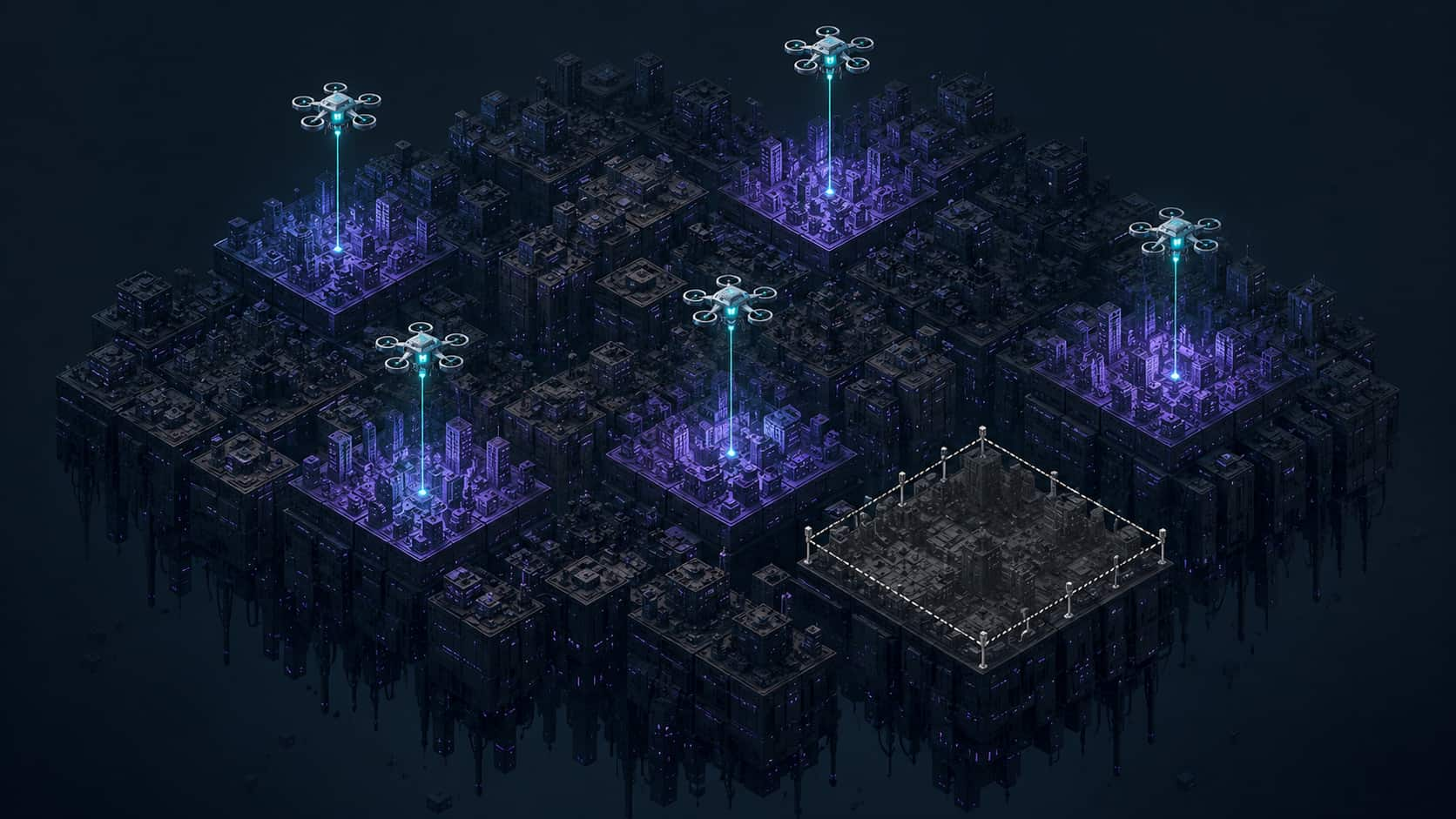
AVDH, short for Agentic Vulnerability Discovery Harness, is an internal tool used by Mandiant consultants during source code reviews. It consists of interconnected specialized AI agents designed to scan codebases and identify exploitable vulnerabilities and attack paths.
The tool's architecture was made public for the first time through a post published on the Google Cloud Threat Intelligence blog. The post is authored by Alex Tselevich and Michael Maturi. According to Google, the architecture was shared to guide defensive teams looking to build similar approaches in their own environments.
The infrastructure is built on the Google Agent Development Kit. Rather than operating randomly, agents are arranged in a sequential pipeline, much like a waterfall model: the next stage cannot begin until the previous one is complete. This structure was chosen to limit the unpredictable behavior of large language models. Instead of telling a single model to "find vulnerabilities in this repository," each agent is assigned a narrow, well-defined task following the principles of multi-agent systems.
Its applications are not limited to one area. AVDH is used in proactive code reviews, penetration testing, red team operations, and incident response activities.
How Did It Find 100 Vulnerabilities in Two Days?
The tool's most remarkable results came during an incident response operation. While examining corporate code repositories stolen by attackers, the harness identified more than 100 verified critical vulnerabilities within two days. According to Google, performing the same work manually would have taken considerably longer.
The scale has grown even further over its ten months of use. The tool has been deployed in environments containing tens of millions of lines of code, executed thousands of analysis pipelines, and generated tens of thousands of findings. According to a report published by Help Net Security, 12 of these findings have received CVE numbers, while roughly a dozen more are still going through the disclosure process.
Two Drupal vulnerabilities stand out among the assigned numbers. One was published in the contributed module advisory under CVE-2026-13242, while the other appeared in the core advisory under CVE-2026-55803. Widely used web plugins and open-source projects are among the areas where the tool is considered most effective.
It has also proven useful in targeted operations. When a customer's web application source code was processed through the harness, a remote code execution vulnerability that could enable initial access was discovered in a short time.
What Stages Does the Agent Pipeline Go Through?
The pipeline begins by developing a threat model. An agent called Explorer determines the purpose of the codebase: whether the software is a web application or a desktop application, what the available documentation says, and which directories, such as unit test folders, should be excluded from scanning. Specialist Explorer sub-agents then come into play, examining areas such as authentication, authorization, and routing separately. Their outputs are combined by the Threat Model Synthesis agent and transformed into a single threat model.
This is where a human steps in. The threat model is presented to the consultant in both text and visual formats, and the pipeline cannot proceed without approval. The goal is to prevent subsequent stages from operating on an incorrect foundation.
Once approved, parallel Discovery agents scan every file within the defined scope. A lightweight Gemini Flash Lite model is used at this stage because the task requires scale: it identifies entry points such as HTTP routes and inter-process communication listeners, along with the user inputs that reach these entry points.
Each selected entry point is assigned to an Enrichment agent. In enterprise applications, sanitizers, permission checks, and routing conditions are often scattered across different parts of the code. The Enrichment agent gathers these elements, completes the context, and then decides whether to hand the task over to the Access Control agent or the Data Flow Analysis agent.
Hypothesis generation is the responsibility of these two agents. The Access Control agent checks whether an entry point is actually protected and looks for flaws such as missing authorization, privilege escalation, and cross-site request forgery. The Data Flow Analysis agent, meanwhile, tracks the path user input takes throughout the application. If the input reaches a dangerous point, a vulnerability is identified: SQL injection, cross-site scripting, command injection, or directory traversal.

Why Is Human Verification Mandatory?
The long-standing problem with automated code scanners is noise: findings that appear reasonable on paper but do not hold up under closer examination. AVDH attempts to address this problem through two layers.
The first layer operates on the machine side. Every generated hypothesis is sent to multiple Validation agents configured with high temperature values. Higher temperature allows the model to explore a broader range of possibilities, meaning the agents evaluate and challenge one another's results. A single Validation Synthesis agent then reviews their reasoning and makes a decision. One of three outcomes follows: a confirmed finding, a disproven hypothesis, or a rejected hypothesis that does not align with the threat model.
The second layer involves human verification. After confirmed findings are deduplicated and assigned risk ratings, they are sent to a Mandiant consultant. The consultant reproduces the exploit, runs the proof-of-concept code, and checks whether an overlooked compensating control blocks the attack path. Any finding that fails this test is immediately discarded. Google recommends that defensive teams building similar pipelines manually verify their findings.
There is also a separate solution for false negatives. Consultants' accumulated expertise has been converted into rule sets categorized by programming language, framework, and vulnerability type, with the software domain at the top level, and injected directly into the pipeline. The response to the model reliability problem frequently discussed in AI security is built directly into the architecture here.

Differences Between AVDH, CodeMender, and MDASH
Agent pipelines are no longer experiments conducted by a single company. On Google's side, AVDH performs targeted, in-depth analysis, while CodeMender handles continuous scanning and patching. Their combined use is described as a two-layer defense strategy, and companies looking for a ready-to-deploy solution are directed to the Google AI Threat Defense platform.
Microsoft has a similar architecture. According to the announcement published on Microsoft's security blog, the system codenamed MDASH runs more than 100 specialized agents across multiple models. It identified 16 vulnerabilities in the Windows networking and authentication stack. Four were classified as critical remote code execution vulnerabilities. Cloudflare also pointed in the same direction by publishing the architecture of its own vulnerability harness: the product is not the model, but the pipeline itself.
Feature | AVDH (Mandiant) | CodeMender (Google) | MDASH (Microsoft) |
|---|---|---|---|
Operating approach | Targeted, in-depth analysis | Continuous monitoring | Production-scale scanning |
Agent structure | Sequential specialist pipeline | Continuous scanning pipeline | 100+ agents, multiple models |
Human approval | Threat model and findings | Within the patching workflow | At the evidence stage |
Reported results | 100+ findings / 2 days, 12 CVEs | Scanning and patching | 16 Windows vulnerabilities |
Use case | Incident response, penetration testing | Software development lifecycle | Internal corporate codebase |

Where Does Defense Stand Against Adversarial AI?
The framework Google chose for its post summarizes the concerns on the defensive side. When source code is leaked, defenders race to find and patch vulnerabilities while attackers deploy tools that operate on the same code at machine speed. As both sides accelerate, manual code review alone is no longer sufficient.
The threat is also beginning to take concrete shape. Discussions surrounding malicious AI models have shifted from models with their safeguards removed toward multi-agent attack frameworks. There is a different risk on the defensive side: incidents such as autonomous agents escaping isolated testing environments have shown that systems built for security can themselves become attack surfaces.
For security teams in Türkiye, the architectural aspects are particularly worth examining. The structure Google shared is not a ready-made product but a blueprint for implementation. Instead of connecting a model directly to a codebase, it establishes a four-part pipeline: threat modeling, narrowly tasked agents, adversarial validation, and a mandatory human approval checkpoint. This is an approach that can be replicated within organizations. Developments in autonomous coding models are also making it easier to move security auditing to the beginning of the software development lifecycle.

Frequently Asked Questions
What is AVDH and who uses it? AVDH is a multi-agent vulnerability discovery pipeline used by Google's Mandiant team for source code reviews. The tool has been in internal use for ten months and is deployed in proactive reviews, penetration testing, red team operations, and incident response. Its architecture was made public on August 18, 2026, but the tool itself is not distributed as a downloadable product.
How many vulnerabilities has AVDH discovered? The most concrete reported result is more than 100 verified critical vulnerabilities discovered in stolen corporate code repositories within two days. Over ten months of total use, tens of millions of lines of code were scanned and tens of thousands of findings were generated. Twelve of these findings received CVE numbers, while roughly a dozen are progressing through the disclosure process.
How is the accuracy of findings guaranteed? Verification operates in two stages. First, multiple agents configured with high temperature values independently evaluate each hypothesis, and a synthesis agent assesses their reasoning and makes a decision. Then, a Mandiant consultant reproduces the exploit and runs the proof-of-concept code; any finding that fails the test is discarded.
What is the difference between AVDH and CodeMender? AVDH is designed for in-depth analysis of a specific point in time, whereas CodeMender handles continuous scanning and patching. Google describes their combined use as a two-layer defense strategy: targeted investigation for complex attack chains and continuous visibility throughout the software development lifecycle.
Can companies build a similar pipeline themselves? Yes. Google published the architecture precisely for this purpose. Implementation requires threat model generation, narrowly tasked agents, an adversarial validation layer, and mandatory human review. For companies looking for a ready-made platform, Google AI Threat Defense is offered as an alternative that includes CodeMender scanning.
The tool's real test will become clear from how quickly the same approach spreads on the offensive side. The Mandiant team announced that it would present a live demonstration of the pipeline during a session at the Cyber Defense Summit, scheduled for September 15-16, 2026, in Washington. Until then, the only reported benchmark remains the 100 findings discovered in two days.
AdminOpenAI Model Eğitimini Durdurdu: Güvenlik Sınırı Aşıldı

OpenAI Siber Savunmada ReliaQuest ile Güçlerini Birleştirdi