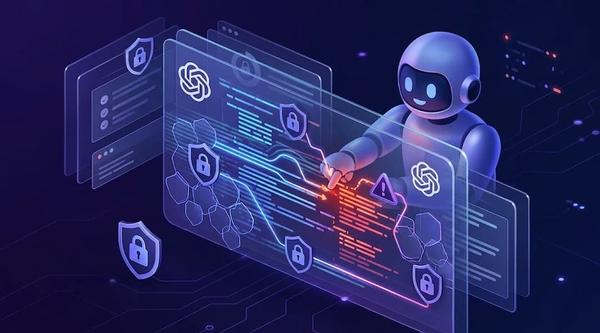
OpenAI Joins Forces with ReliaQuest in Cyber Defense
Automatically translated
 Writer
The scale and complexity of cyber threats have moved beyond traditional defense reflexes. Companies are stretching their human capacity to sort through thousands of security alerts every day, neutralize sophisticated phishing attacks, and close infrastructure vulnerabilities. To get past this operational bottleneck, OpenAI made a key move in cyber defense and entered a strategic partnership with ReliaQuest, a company specializing in security operations.
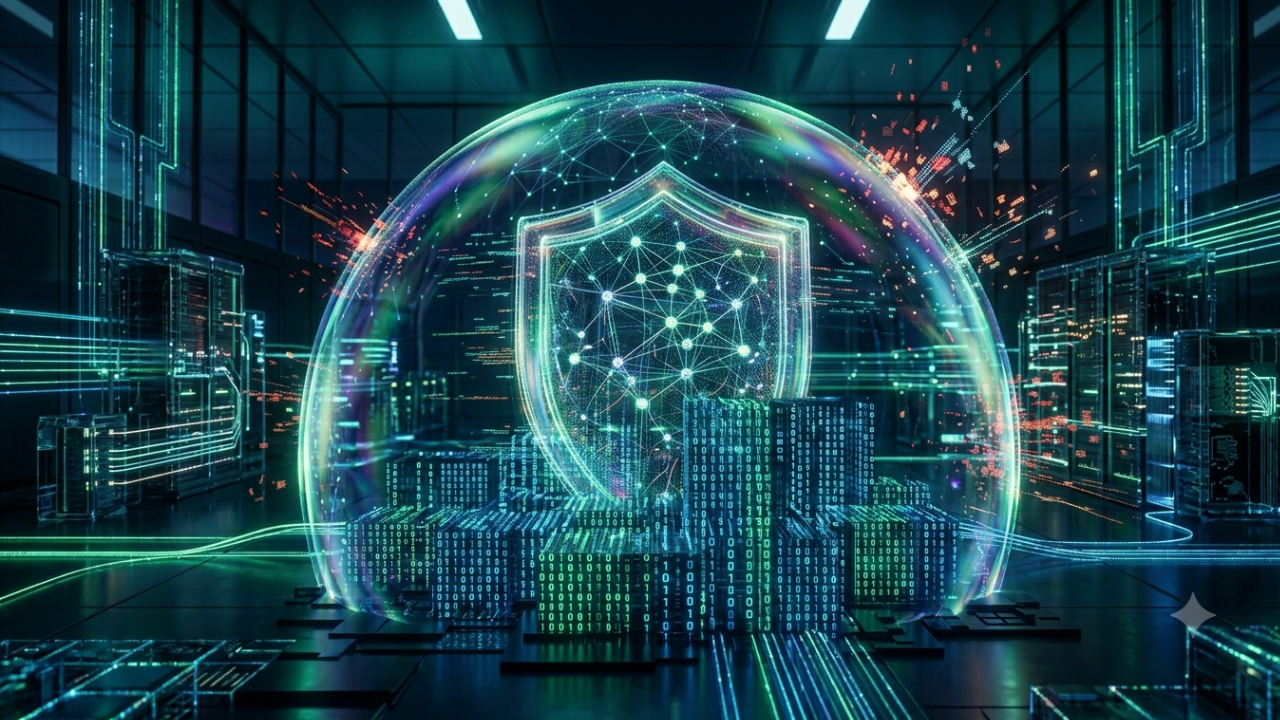
For entrepreneurs and technology leaders, this move means more than two major technology players working together. It is one of the clearest examples of how modern defense architectures are being fundamentally transformed by native AI.
Why Is Cybersecurity Now a Growth Factor for Startups?
For early-stage and growing startups, cybersecurity is often seen as a secondary operational item that is postponed and struggles to get budget. However, in today's digital ecosystem, a single data leak or system outage can erase a startup's reputation, customer base, and investor confidence within minutes.
Traditional Security Operations Centers (SOCs) remain mostly reactive due to alert noise and a shortage of expertise. While analysts manually review thousands of false positives every day, critical threats can quietly move through the system. Growing in the global technology market, enterprise AI cyber defense integrations remove this cognitive load from security teams and turn resilience directly into a growth factor.

What Does the OpenAI and ReliaQuest Partnership Bring?
ReliaQuest's GreyMatter platform, which brings cloud, endpoint, and network security together in a single center, integrates with OpenAI's advanced reasoning capabilities. The agent-based enterprise cyber defense architecture officially announced by the two companies aims to offer next-generation AI security solutions that reduce analysts' manual review and correlation processes from hours to seconds.
The core capabilities of the integration are:
Autonomous Threat Detection and Response: OpenAI models scan telemetry data on GreyMatter in real time and catch unusual movement patterns much faster than a human eye can.
Noise Filtering and Prioritization: False alerts are filtered out of thousands of warnings, and only verified, high-risk incidents are passed on to teams.
Incident Investigation in Natural Language: Instead of writing complex query languages or code, analysts can query threat history and affected systems directly with natural language commands.
Accelerated Incident Reporting: When a breach attempt occurs, clear and action-oriented reports that management can understand are generated automatically, alongside the technical details.

Threats Are Changing: Attackers Also Use AI
The main driver behind cyber defense tools turning to AI is that attackers use the same technologies as weapons. Malicious AI models and security threats developed by bad actors take operational risks to a different level, from phishing texts adapted to the communication style of the target executive to polymorphic code that can evade security software.
Evolving machine learning algorithms allow attackers to discover vulnerabilities in target systems autonomously. In this asymmetric contest, responding at human speed is mathematically insufficient, so building defense lines based on deep learning and machine learning and equipping enterprise cybersecurity strategies with algorithms that can keep pace with attackers has become a necessity.
Feature | Traditional Cyber Defense | OpenAI & ReliaQuest Based Defense |
|---|---|---|
Response Time (MTTD / MTTR) | Hours or days | Seconds or minutes |
Alert Management | Manual screening, high alert fatigue | Autonomous filtering and contextual prioritization |
Threat Analysis | Rule-based, previously known signatures | Behavioral, anomaly-focused predictive analysis |
Scalability | Dependent on hiring new staff | Minimal additional resources even as data volume grows |
4 Key Lessons Entrepreneurs Should Take From This Transformation
It is possible to protect infrastructure without the budgets of large companies by adopting AI-supported defense logic.
1. Position Security as Architecture, Not an Add-On
When developing software or a SaaS product, leaving security until after launch is one of the most costly forms of technical debt. When designing architecture, you need to ensure the security of third-party libraries and API integrations from the start. A solid codebase and transparent data policies directly make scaling the product easier.
2. Include Automation in Security Operations
Instead of hiring large security teams, you can benefit from API-based security audit tools, automatic code analysis software, and the automation capabilities offered by platforms like ReliaQuest. With the use of generative AI tools in development processes, security gaps and vulnerabilities that a developer might overlook can be detected within seconds.
3. Protect the Human Factor with Zero Trust
Even the most advanced algorithms may not be enough alone in a scenario where an employee loses their credentials. The principle of "never trust, always verify" should apply inside the company. Multi-factor authentication (MFA) and role-based access control (RBAC) should be operated as the default standard across all systems.
4. Turn Security into a Competitive Advantage in B2B Sales
For startups selling to enterprise customers, security standards directly determine the sales cycle. Having SOC 2, ISO 27001, and GDPR compliance, along with AI-supported monitoring protocols, speeds up the approval processes of large enterprise customers and creates a reliable alternative in the market.
Defense Standards of the Future
The OpenAI and ReliaQuest partnership clearly shows that the era of passive alert monitoring and manual rule definition in the cybersecurity world is closing, and the age of proactive and autonomous defense is beginning. The speed, deep pattern recognition, and contextual analysis that AI provides give teams the ability not only to stop an incoming attack but also to anticipate the attacker's next possible move and build the defense line in advance. At this level, automation frees human analysts in security operations from the burden of routine alert sorting, allowing them to focus on strategic threat hunting and strengthening system architecture.

As AI models become deeply integrated into defense software, the playing field is also leveling for growing technology companies facing capital constraints. Startups that cannot build security operations centers worth millions of dollars can now reach the same level of resilience as corporate giants through such intelligent agents and automation layers. However, when deploying these tools, companies need to set clear rules within the framework of AI ethics and security standards to protect data privacy. The essential requirement for entrepreneurs is to stop seeing cybersecurity as a postponable IT expense and to place an AI-based defense vision at the center of product development, data architecture, and operational processes. The fact that no business model that cannot build trust in the digital world can survive in the long run makes this transformation inevitable.
WriterGoogle Mandiant AVDH İki Günde 100 Açık Buldu


Ben Affleck AI Girişimini Netflix Satın Aldı mı?