




No-Code AI Tools in 2026: Build Solutions Without Writing Code
Automatically translated
 Writer
The technology world is witnessing a major paradigm shift as of 2026. Software development is no longer a jargon stack reserved for computer scientists. The philosophy of building applications without code, combined with the democratization of AI, has turned individual creativity into a production force on a global scale.
What Are No-Code AI Tools and Who Are They For?
No-code AI reduces complex machine learning algorithms and deep learning models to visual interfaces (drag and drop) that non-technical users can understand. From a 2026 perspective, these tools have moved beyond simple helpers and now offer enterprise-grade, scalable solutions. Who are these tools game changers for?
Entrepreneurs: Instead of spending tens of thousands of dollars to test an idea, they can build an MVP (Minimum Viable Product) in a few days using free no-code tools.
Marketing Specialists: They can build customer segmentation and forecasting models without needing data scientists.
Educators and Content Creators: They can create their own custom assistants and interactive learning platforms without writing code.

The Best No-Code AI Platforms for Apps and Automation
Unlike software that offers only standalone solutions, no-code AI tools in 2026 have become a digital ecosystem that can talk to each other, share data and work together. Within this ecosystem, each tool corresponds to a specific production layer: data, automation, content, visuals and decision-making.
For this reason, no-code AI tools should be read not only as applications to use but as parts of a production chain. Below, the most critical links in this chain are covered with detailed use cases and their strategic functions:
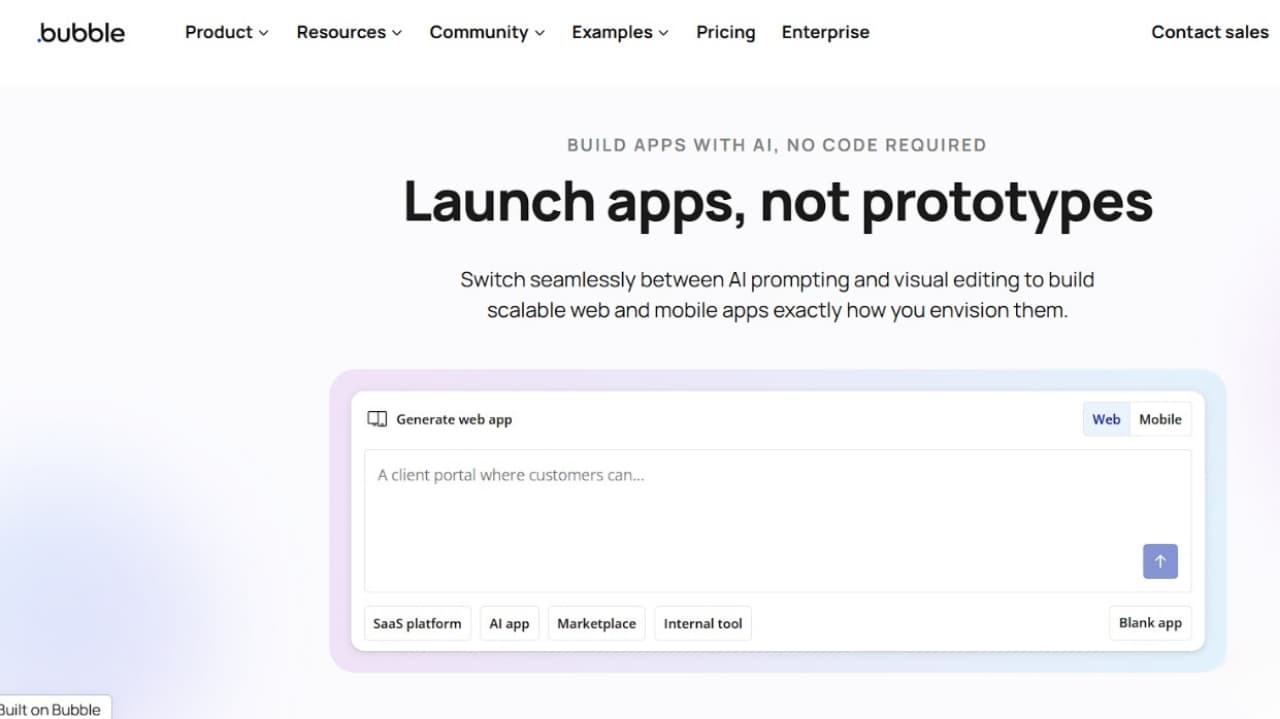
1. Bubble — Building Logical Architecture for Apps
Bubble may look like a simple drag-and-drop tool on the surface, but it is really a platform for building software architecture. It lets users create data flows, user interactions and system logic, not just interfaces.
Usage approach:
When building an app, first design the “data model.” (Users, content, transactions and so on)
Then set up pages and user flows that match this data structure.
Build conditional logic with the “Workflow” system. For example, automatically creating a profile when a user signs up.
Using the API Connector, you can integrate external AI services (text generation, analysis and so on). You can build a content platform that automatically analyzes the texts users write and offers suggestions. At this point, Bubble is not just an interface but the carrier of the decision-making mechanism.
2. Zapier — Turning Scattered Systems into One Mind
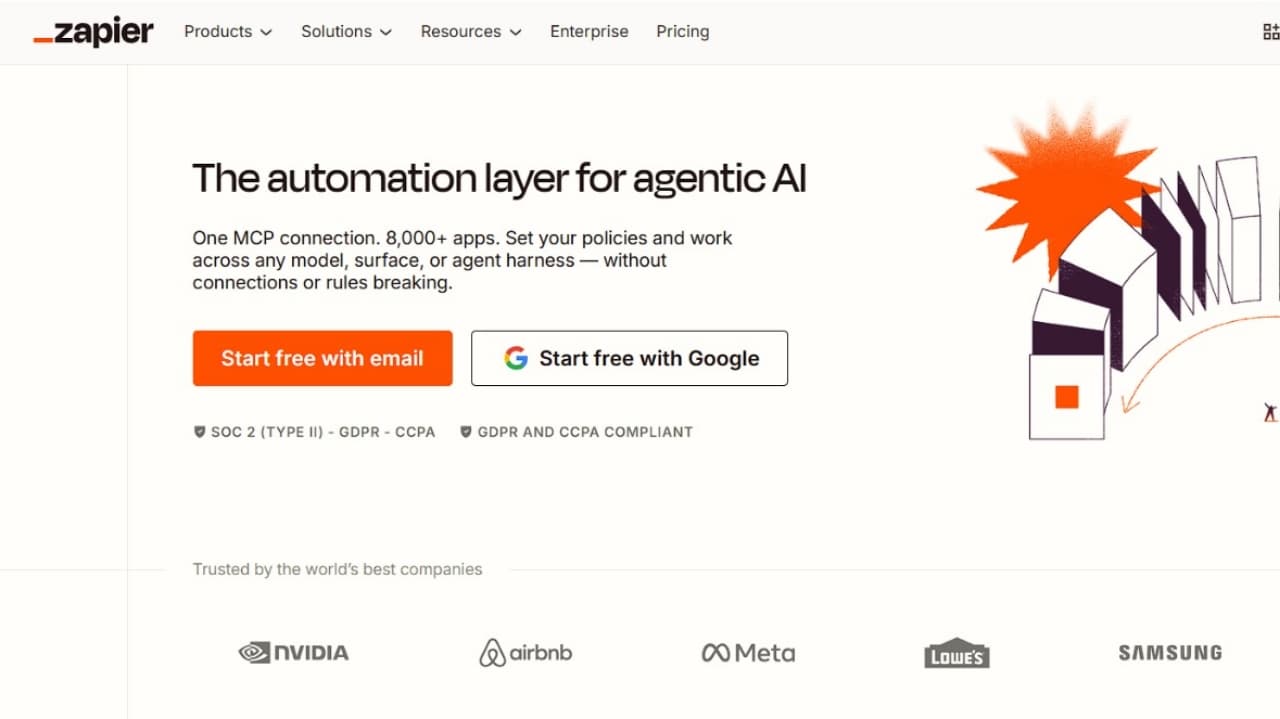
Zapier builds an invisible nervous system between digital tools. By automating data flow between different platforms, it minimizes the need for human intervention.
Usage approach:
The “Trigger–Action” logic looks simple, but it can be built in multiple layers.
Multiple actions can be chained to create complex automations.
Filters and conditions let you build smart systems that run only in specific cases.
When a user signs up on a website:
→ Their data is saved to Airtable
→ A welcome email is sent
→ A profile page is automatically created in Notion
This structure is the foundation for producing systems that make decisions in place of humans within AI automation platforms.
3. Notion AI — A Mental Space That Generates and Transforms Knowledge
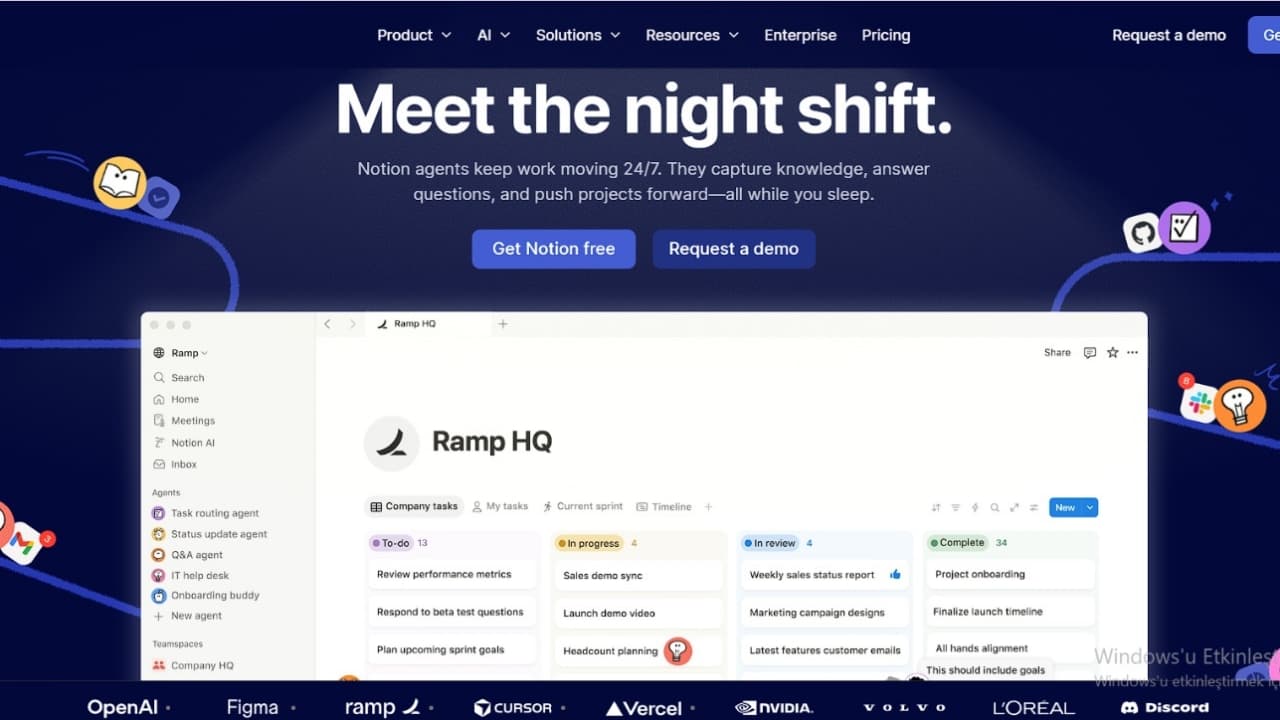
Notion AI is not just a note-taking tool. It is a thinking space where knowledge is created, transformed and organized.
Usage approach:
Dynamic knowledge systems can be built by linking databases with content.
AI commands can be used for text generation, rewriting and analysis.
Concept maps and summary systems can be created for academic content.
When you create a research file:
→ AI extracts summaries of the sources.
→ Concepts are categorized.
→ Automatic content suggestions are generated.
This process turns the idea of a generative AI guide into a practical production method.
4. Airtable — Understanding and Making Sense of Data
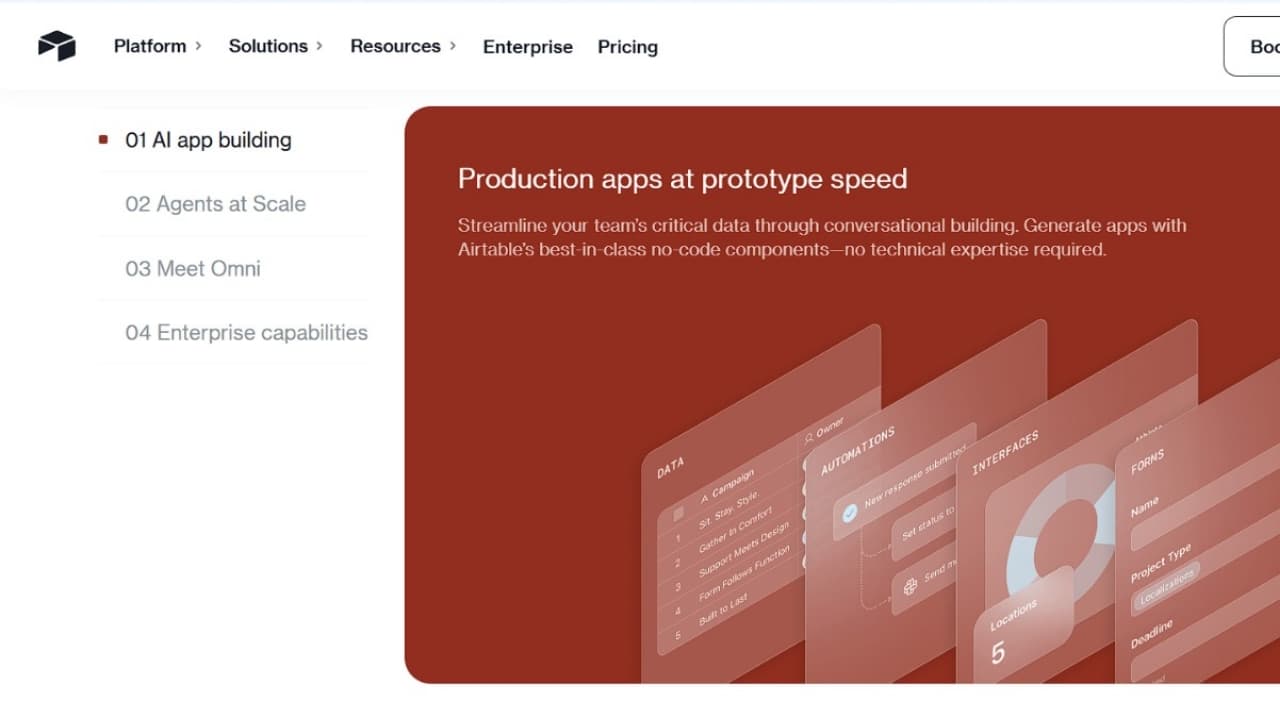
Airtable builds an intuitive relationship between data and the user.
Usage approach:
Complex structures can be created by linking data tables.
Automations can trigger data updates.
Data can be analyzed with AI-powered fields.
When you set up a content production system:
→ Content is categorized.
→ Performance is analyzed.
→ A content strategy is built with AI suggestions.
How to Get AI Support for Content Production and Text Analysis
Autonomous content production has become a core dynamic of the 2026 digital world, not just a passing trend. However, today's AI differs radically from the mechanical, context-free text generation trapped in past repetitions. The question is no longer just writing; it is building meaning, deepening context and bringing the message into a meaningful connection with the target audience. In this context, tools such as ChatGPT, Jasper and Copy.ai turn content production into a kind of intuitive engineering.
Deep Text Analysis: Mapping Meaning
No-code AI tools no longer just generate text. They decode the underlying layers of a text, detect gaps in discourse and make unfilled areas in the content ecosystem visible. The question “What hasn't been read yet?” stops being rhetorical here and becomes a data-driven strategy.
These systems perform multi-layered analyses such as keyword density, semantic proximity, sentiment analysis and competitor content mapping, giving creators a kind of meaning navigation. This way, content reaches a completeness that covers not only what is visible but also what is missing. This shows that generative AI functions like a critical reader.
Personalized Newsletters: Algorithmic Empathy
The traditional newsletter is a homogeneous format that sends the same content to everyone. AI-powered systems break this structure apart and build a unique narrative for each user. AI analyzes user behavior, click habits, reading times and interests to create a personalized content flow for each subscriber.
For example, platforms such as Mailchimp and HubSpot fully automate this process through no-code integrations. A newsletter sent to thousands of people is in fact composed of thousands of different texts combined. This creates a new form of communication that could be called algorithmic empathy: the machine not only measures an individual's interest but also builds a narrative suited to it.
Generative AI in Visual and Video Design: RunwayML and Lobe
Visual arts and production are among the areas where the no-code AI ecosystem has triggered the most radical transformations. Productions that once required large budgets, technical teams and long post-production processes have now become almost instant acts of creation with a few lines of prompt. This shift changes not only production speed but also the limits of aesthetic imagination.
RunwayML
RunwayML has, as of 2026, moved beyond being a video editing tool and taken on the identity of an algorithmic director. Features such as text-to-video generation, scene extension, background replacement and real-time effects reshape cinematic language.
One of Runway's most notable aspects is scene generation that respects physical rules. Details such as light refraction, shadow direction and motion dynamics are calculated by AI and integrated into the scene. This ensures the resulting content is not only aesthetic but also physically convincing.
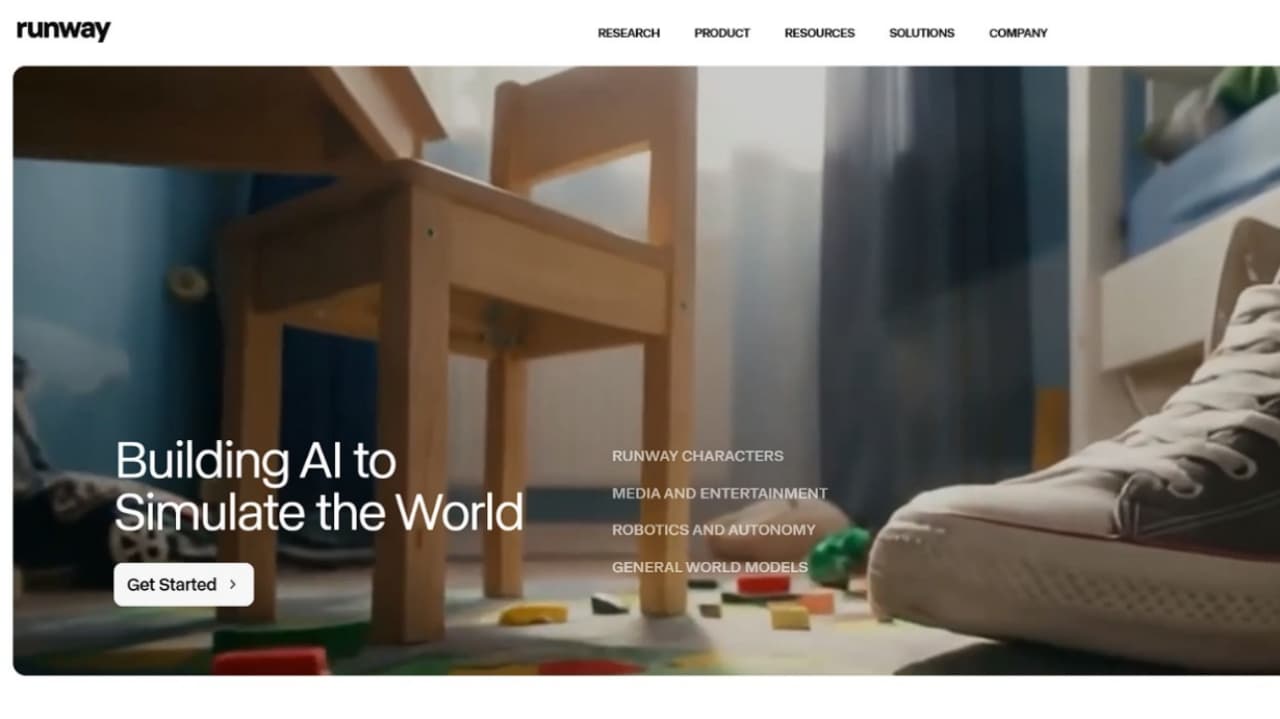
For independent filmmakers and content creators, this means the democratization of production. An idea no longer has to be shelved because of technical limitations; it can be visualized directly. In this way, RunwayML almost eliminates the distance between creative thought and visual reality. RunwayML turns video production from a technical process into a creative composition.
Usage approach:
Scene descriptions play a critical role in text-to-video generation.
Scenes can be rebuilt with green screen and background removal tools.
Videos can be transformed into different aesthetic forms through style transfer.
A blog post → is split into scenes → AI video is generated for each scene → and combined into a single narrative. This shows that content production is moving beyond being text-centric into a multi-layered process.
Lobe
Lobe represents a different dimension of generative AI: visual perception and learning. Developed by Microsoft, this tool makes machine learning accessible without requiring technical knowledge.
Lobe's most critical capability is that users can create and train their own datasets. For example, a user can upload photos of specific objects so the system learns to recognize them.
This makes it possible for a camera to issue an alert when it detects a particular object, for an application to generate different scenarios based on visual input, or for interactive digital systems to be built that engage with the physical world. Image recognition technology is thus opened up not only to large companies but also to individual developers and even students.
The perspective offered jointly by RunwayML and Lobe gives visual production a two-layer structure: one is aesthetic production (video, scene, image), and the other is perceptual production (recognition, response, interaction). When these two layers come together, responsive content emerges.
In this context, generative AI blurs the boundaries between art and engineering. A visual is now data, a trigger and a field of experience. No-code AI tools simplify this complex structure and turn it into a creative language anyone can access.
In 2026, visual and video design has evolved into a field shaped more by conceptual depth and creative intuition than by technical mastery, and this evolution places the dynamic relationship between human and machine at the center of production.
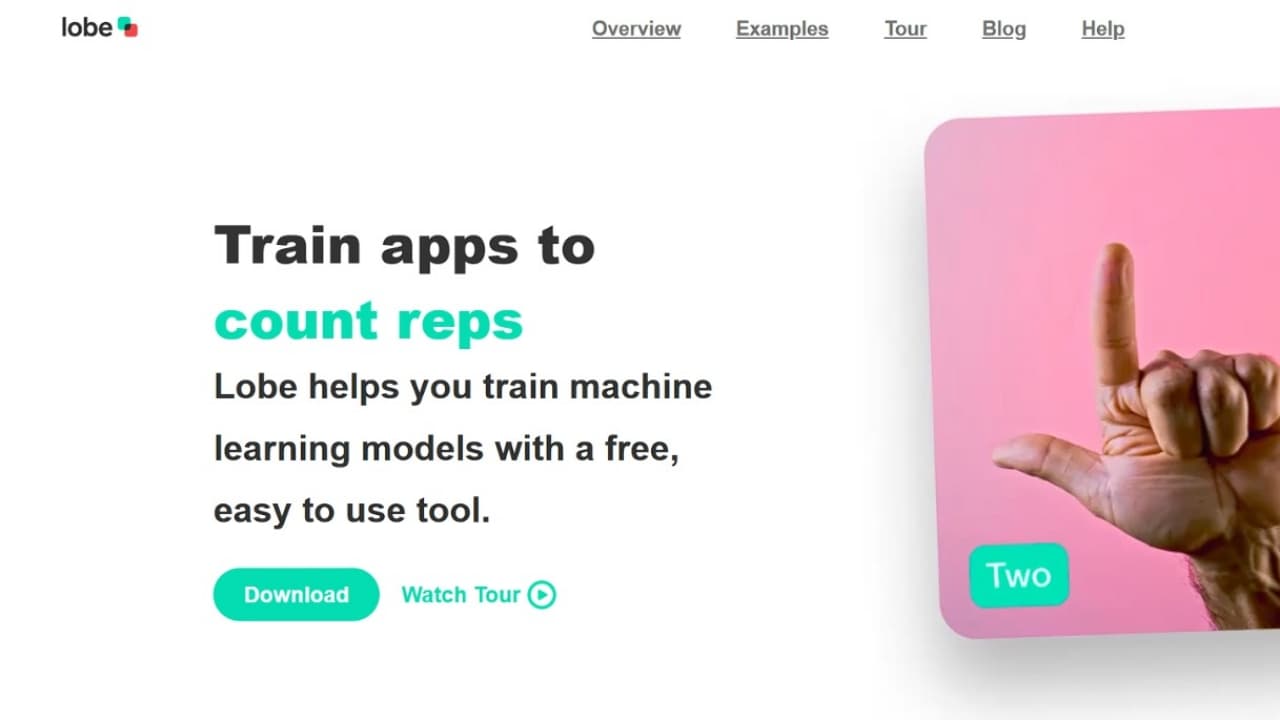
Lobe strips machine learning of code and turns it into an experiential process.
Usage approach:
Data quality directly affects model performance.
Categories should be clearly defined and balanced data provided.
After the model is trained, it should be optimized through real-time testing.
This tool turns AI from a theoretical concept into an everyday tool.
No-Code AI Strategies in 2026 Digital Marketing Trends
As of 2026, digital marketing has evolved from a discipline that works with data into an art of prediction that can sense data in advance. No-code AI strategies free marketers from being analysts lost in mountains of big data. They turn marketers into decision architects who take direct action and build strategy. In this transformation, tools such as Zapier, HubSpot and Make tools remove the distance between data and action.
Dynamic Pricing
Traditional pricing models relied on static analyses performed at set intervals, while no-code AI systems turn this structure into a real-time flow. Competitor prices, demand intensity, user behavior and even seasonal trends are analyzed instantly.
This way, autonomous models update product prices within seconds to maintain maximum profit and competitive balance. Here, dynamic pricing is an algorithmic reflex mechanism that keeps a pulse on the market.
Personalized Advertising
In 2026, advertising has shifted from a mass narrative to an individual dialogue. AI analyzes a user's past interactions, interests and even real-time behavior patterns to produce unique content for each user.
An ad image or slogan is now less a fixed text and more a dynamic structure that is rewritten and redesigned with each impression. In this process, tools such as Canva and Adobe Firefly automate visual production, while text-based AI systems complete these visuals contextually. Conversion rates not only increase but also become more sustainable and measurable.
Customer Churn Analysis
Customer churn is often a process that is noticed only when it is already too late. However, no-code AI models can continuously monitor user behavior and detect these silent departures in advance.
By analyzing data such as declining in-platform engagement, a drop in purchase frequency or changes in specific behavior patterns, the likelihood that a user will leave the system is predicted. This prediction is then met automatically with personalized offers, discounts or content recommendations. This way, churn stops being a passive outcome and becomes a actively managed process.
Autonomous Campaign Management and Continuity
One of the most notable aspects of no-code AI strategies is their ability to make campaign processes fully autonomous from end to end. Campaigns launched toward specific goals optimize themselves based on performance data, remove underperforming content and multiply high-performing variations.
At this point, the marketer's role becomes less about manually managing the campaign and more about feeding the system with the right parameters and setting its strategic direction. Marketing thus becomes an organism that keeps learning and updating itself.
In 2026, no-code AI tools have become less a software choice and more an essential component of competition. What matters now is not how well you write code, but how creatively, contextually and strategically you use this considerable AI power. The future will belong not to those who overcome technical barriers, but to those who can integrate their imagination with such systems.
WriterNörobotlar: İlk Yaşayan Makineler Dönemi Başladı
Teknoloji ve Kariyer Staj İlanları | 20 Nisan - 26 Nisan 2026


