



Nvidia's Quantum Leap: Ising, a New Open-Source AI Model Family for Quantum Computing
Automatically translated
 Writer
Nvidia's announced Ising ecosystem is seen as a significant milestone in the field of AI for quantum computing. According to the company's official statement, it is positioned as an open-source AI model aimed at reducing error rates, one of the biggest problems facing quantum computers. Quantum computers have long been considered theoretically revolutionary, but in practical use they have faced serious limitations. Chief among these are qubit instability and high error rates. Nvidia's Ising approach aims directly at this problem, making quantum systems more stable and predictable.
What Is Ising and How Does It Work?
Ising, developed by Nvidia, is a family of AI models that optimizes the behavior of quantum computers. Focused on real-time analysis of quantum hardware, this model aims to reduce error formation and improve system performance. According to the company's technical approach, Ising continuously monitors the operation of quantum circuits, predicts potential errors in advance, and dynamically reorganizes the computation process.
This capability is seen as an important answer to noise, the most fundamental problem quantum computers have faced to date. AI-powered control systems like this could take quantum computers out of the lab environment and accelerate their practical use.
Model Family
Rather than a single model, Ising is designed as a family of models optimized for different tasks, and it is structured around two main categories: calibration and error correction. In the ecosystem, Ising Calibration 1 model stands out as a vision-language model that automates the calibration of quantum processors, while on the error correction side there are two separate variants: Ising Decoder SurfaceCode 1 Fast and Ising Decoder SurfaceCode 1 Accurate.
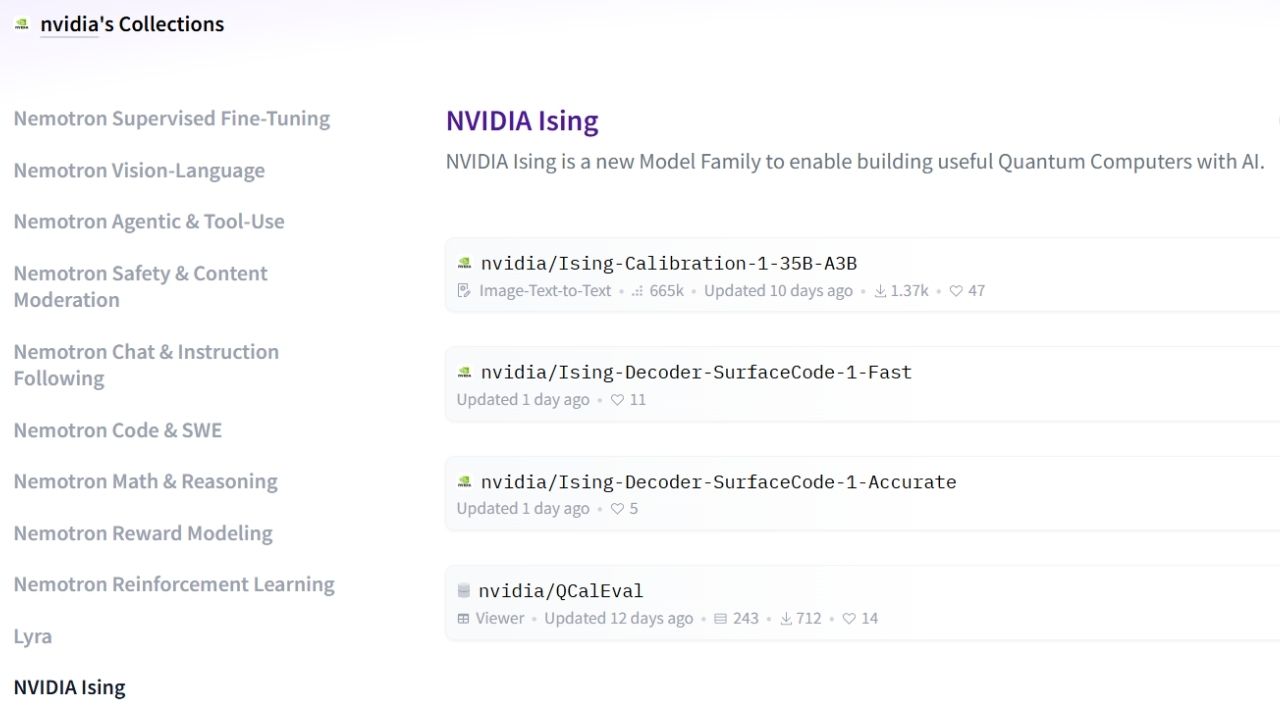
The Fast model focuses on real-time operation with lower latency, while the Accurate model offers higher accuracy and stronger error-chain correction capacity thanks to its larger parameter count. According to Nvidia's technical documentation, these decoder models deliver both faster speed and higher accuracy than classical methods, representing a significant performance gain in quantum error correction.
What Is Quantum Computing AI?
Quantum computing AI operates directly at the hardware level, unlike classical software layers. This allows systems like Ising to perform computation and hardware management. According to industry analysts, this approach signals a significant paradigm shift in computer architecture.
In traditional systems, software and hardware operate as separate layers, but in quantum systems this separation is gradually disappearing. AI is becoming an active component that optimizes the hardware. This development is especially important in fields that require high precision. Areas such as drug chemistry, financial modeling and climate simulations could be directly affected as quantum systems become stable.
Open-Source Strategy and Its Effects on the Ecosystem
Another notable aspect of the model family is that it is offered as open source. Nvidia's open-source approach has the potential to accelerate collaboration between academic institutions and the private sector. This may speed up innovation in quantum computing and help standards take shape faster.
In addition, Ising's integration with Nvidia's existing infrastructure reveals the company's long-term strategy. Considered together with CUDA-Q and high-speed interconnect technologies, the system is positioned as part of a broad ecosystem.
Where Do IBM, Google and Microsoft Stand Against Nvidia?
Three large companies have long stood out in quantum computing: IBM, Google and Microsoft. Each takes a different strategy in the market. IBM stands out with enterprise solutions and research platforms, while Google is better known for scientific breakthroughs and research projects. Microsoft aims to bring quantum computing to a broader audience through its cloud infrastructure. However, within this trio, AI-based hardware control is not yet sufficiently developed. For this reason, Nvidia's move has opened a new space in the competition in the field.
Technology analysts see Ising as an intermediate but critical step on the quantum computing roadmap. Some experts are more cautious about the tool, which is expected to accelerate the process even though it will not by itself make quantum computers widespread. Others argue that quantum systems are inherently very complex and that AI integration will not eliminate that complexity entirely. Still, the general view is that AI-assisted systems will noticeably speed up progress.
The Computing Technology of the Future: Hybrid Systems
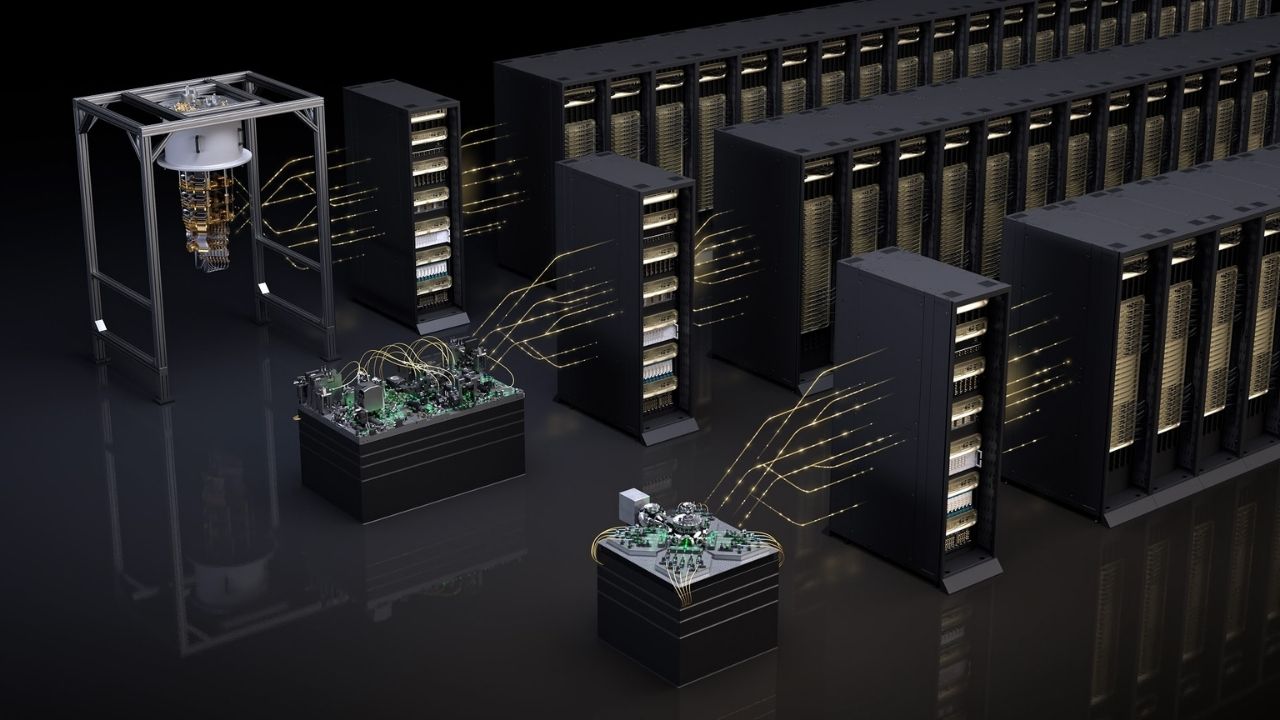
One of the most important trends emerging with Ising is hybrid computing systems. In these systems, GPUs, AI and quantum processors work together. This approach means performance gains and a new logic of computation. Computers are increasingly becoming systems that optimize their own performance. This transformation is expected to gain momentum over the next decade. Such systems are expected to spread especially in areas like big data analysis and scientific research.
Quantum computers are not expected to enter everyday use in the short term. Experts point out that the technology is still at an early stage. Nvidia's approach aims to speed up this process, but truly commercial and widespread quantum computers will take time. For this reason, it would be accurate to view the model family as a transitional technology.
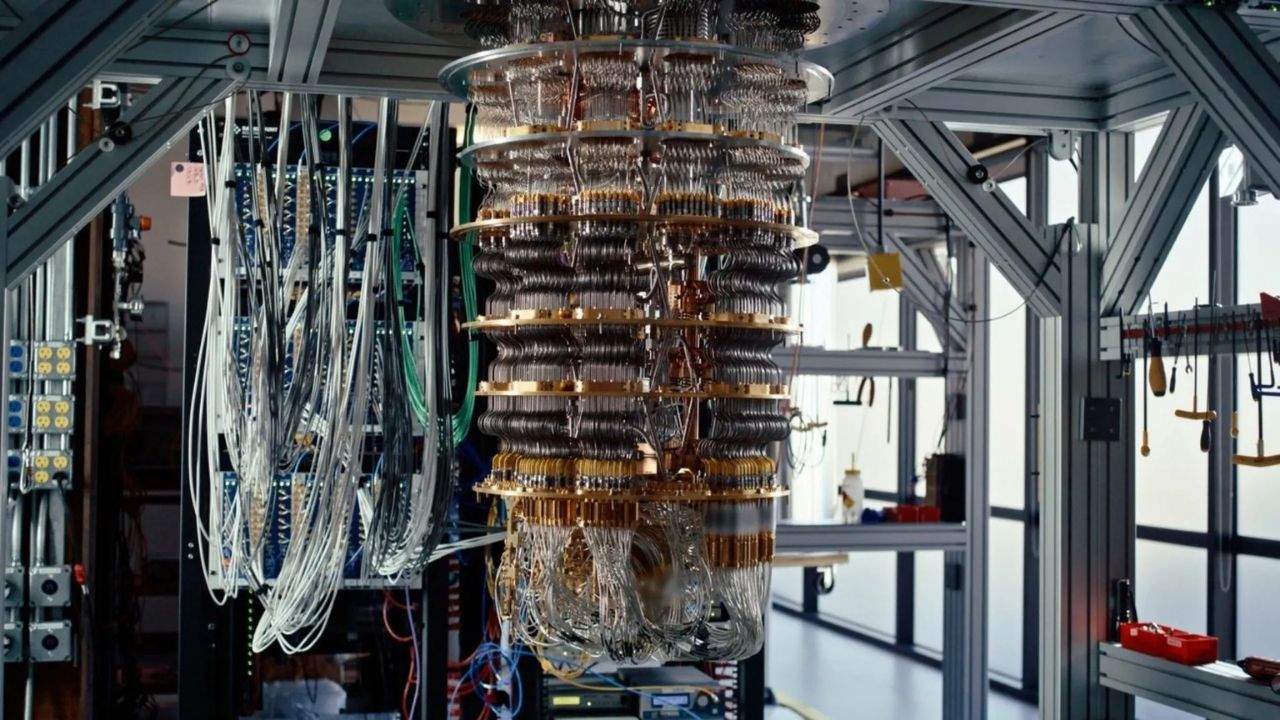
Ising stands out as an important development in the field of AI for quantum computing. Nvidia's move is considered a strategic step that could change the direction of the industry. Although the future of quantum computers involves uncertainties, solutions like these can help make this technology more accessible and usable. Ising may not be the beginning of a new era in technology, but it is true that it has opened the door to that era.
WriterRobotlara Beyin Geldi: Gemini Robotics-ER 1.6 ile Tanışın!
Yapay Zekanın Petrolü: Compute Ekonomisinin Derinleşen Etkisi


