
OpenAI Study: How Companies Are Using Agentic AI
Automatically translated
 Admin
It was once simply a helper tool for complex calculations. With the global artificial intelligence (AI) market reaching $514.5 billion as of 2026, AI is now becoming an execution engine in businesses. OpenAI's latest research reveals how agentic AI is reshaping the operational infrastructure of companies. In particular, tools such as ChatGPT and Codex are moving beyond traditional assistant roles and evolving into autonomous systems that manage workflows end to end. This transformation is especially visible in companies described as "frontier firms."

The Global State of AI Adoption
AI is no longer just a strategic priority for companies; it has become central to operational infrastructure. In 2026, 88% of companies use AI in at least one business function. 78% of companies on the Global 2000 list had moved at least one AI workload into production in the first quarter of 2026. This rate marks a notable increase from 41% in the first quarter of 2024. Enterprise AI spending reached $247 billion in the same year, growing 64% year over year.
What Is Agentic AI?
Agentic AI offers far more than traditional generative AI systems. It does not only produce text or content; it can manage entire workflows from start to finish. These systems can adapt their strategies based on intermediate results and environmental changes, make autonomous decisions, and plan and carry out multi-step tasks. By handling complex and unpredictable business scenarios without constant human supervision or reprogramming, they give businesses flexibility and efficiency.
Enterprise Use Cases and Transformation

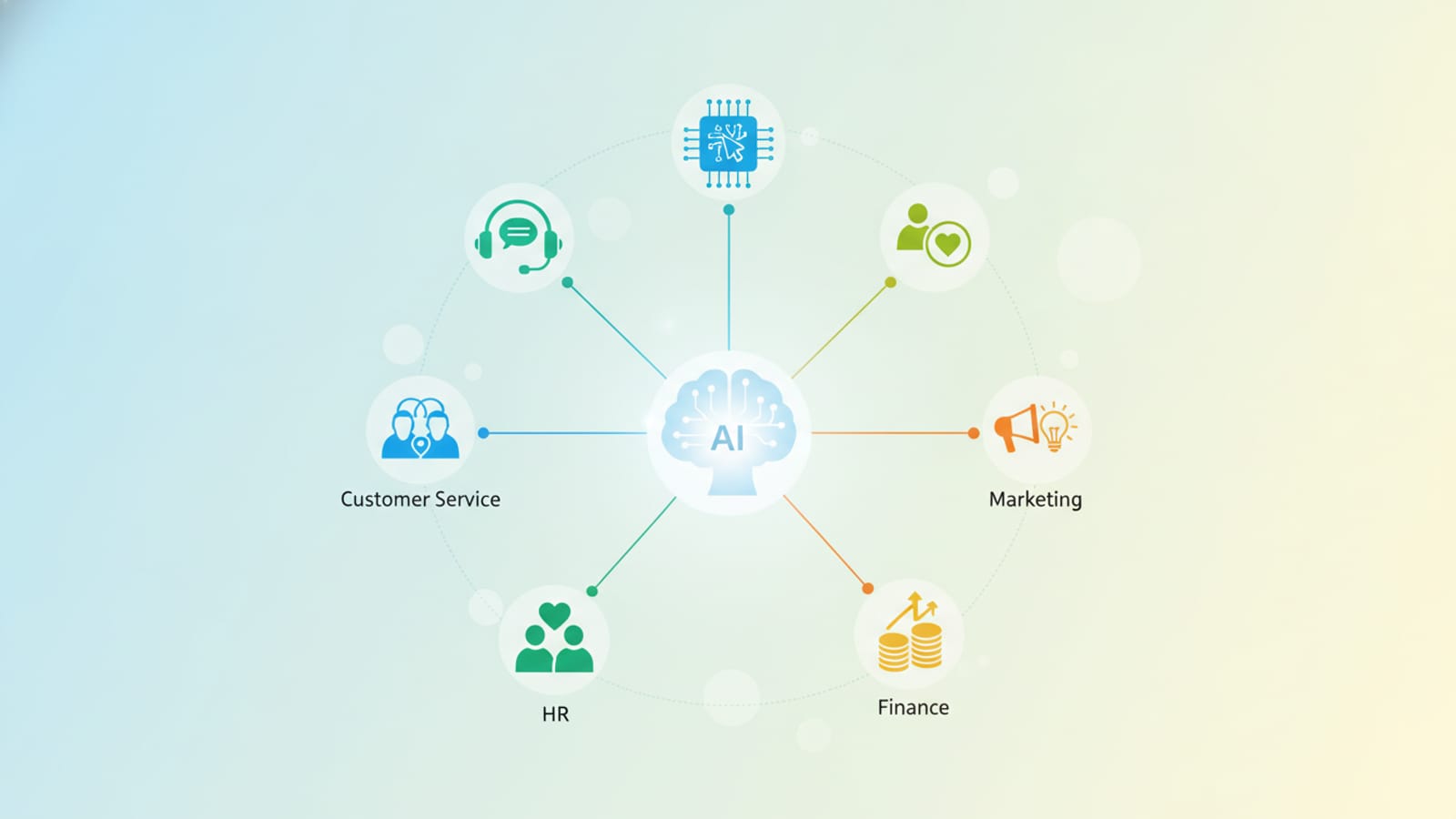
Agentic AI is creating transformative effects across many business functions. Customer support is one of the most common areas where the technology is used. 62% of companies use these systems to automatically answer customer questions, resolve complaints, perform sentiment analysis, and provide 24/7 virtual assistance.
Software development processes are also being largely automated with agentic AI. Adoption is at 58% for tasks such as code review and pull request management, and OpenAI states that by December 2025, its own engineers had carried out 99% of their AI usage through Codex. Document and contract analysis (47%), marketing and sales, human resources, finance and risk management, and operational efficiency are also areas where agentic AI is being increasingly integrated.
How Frontier Firms Are Making a Difference
Companies that are described as "frontier firms" and rank in the top 10% of AI use see this technology as more than an efficiency tool. They view it as a "reinvention engine" that redesigns business models. These firms generate 8.3 times more output tokens per active user than typical companies, and they have spread AI use across an average of seven different business functions.
Thanks to these strategic approaches, frontier firms report better results in brand differentiation (87%), cost efficiency (86%), revenue growth (88%), and customer experience (85%). These figures mean four times higher performance compared with companies that adopt AI more slowly. These leading firms, which allocate about 5% of their annual revenue to AI, also use advanced capabilities such as Plugins more often (21%) than typical firms (9%).

The Role of OpenAI Products: ChatGPT and Codex
OpenAI's research emphasizes the key role of its own products in enterprise AI's move from assistance to execution. ChatGPT Enterprise is widely used to improve business communication, automate customer service, create marketing content, and support internal documentation. Weekly enterprise ChatGPT messages have grown about eightfold over the past year, while the average employee sends 30% more messages.
Codex, which initially was central to agent-based AI adoption in software engineering, is now growing in a much broader area. As of June 2026, 64% of combined Codex and ChatGPT output tokens among enterprise customers are generated by agent-based AI use (defined as Codex tokens). Codex usage is growing much faster in knowledge-based business functions such as legal (108x), sales (41x), recruiting (41x), and marketing (26x) than in engineering (5x).
What the Community Thinks
Supporters
Agentic AI is believed to hold great efficiency and innovation potential for businesses. Supporters note that the ability to make autonomous decisions and manage multi-step tasks will significantly reduce companies' operational burden and allow human resources to focus on more strategic areas. Their cost-effectiveness and potential to create competitive advantage, especially for small and medium-sized businesses, are emphasized.
Critics
There are concerns that this technology carries risks due to governance models that are not yet mature. Only one in five companies has a mature governance model, and risks such as agents "hallucinating," getting stuck in loops, or using unsafe shortcuts raise concern. In addition, the possibility that AI outputs may be wrong, incomplete, or biased shows that caution is needed when moving to full autonomy.
Frequently Asked Questions
What Is the Difference Between Agentic AI and Traditional AI?
Unlike traditional AI, agentic AI does not only produce content. It can manage entire workflows from start to finish, make autonomous decisions, and adapt its strategies to environmental changes. It has the ability to plan and carry out multi-step tasks.
What Does the Future of the Enterprise AI Market Look Like?
The global AI market is expected to reach $514.5 billion in 2026 and grow to $3.5 trillion by 2033. 89% of companies say they expect to adopt generative AI by 2027, which points to rapid market growth.
How Much Return Are Frontier Firms Getting From AI Investments?
Companies report a median return on AI investment (ROI) of 2.4 times. Firms in the top quartile report ROI of 5.1 times or higher. According to Deloitte's 2026 AI report, the companies most ready for AI perform 7.2 times better than others.
What Are the Biggest Challenges in Adopting Agentic AI?
Cost, lack of governance, and the risk that AI outputs may be wrong or biased are among the major challenges in adopting agentic AI. Autonomous agents require robust governance models and new enterprise architectures.
OpenAI's research clearly shows that enterprise AI is no longer just a tool but has become a strategic force that transforms the core operations of businesses. In particular, agentic AI and the leadership of frontier firms in this area offer important clues about how future business models will take shape. The potential to add $15.7 trillion in value to the global economy by 2030 is a strong indicator of how large and far-reaching this transformation will be.
AdminTürkçe Prompt Nasıl Yazılır? Örnekli Prompt Rehberi


Yapay Zeka ile Para Kazanma: 6 Gerçekçi Yol ve Riskler