Public Cyber Security Alarm Data on Artificial Intelligence Age
Automatically translated
 Admin
Admin726 cyber security events. Taiwan’s government agencies reported this incident last year and their 68,6 percent were unauthorized access attempt. The table stands like the problem of a single country at first glance. Yet in a period where AI-supported attacks are speeded, the threat of public institutions is turning into a global view. In this article, Taiwan data, autonomous attack cases, defense methods and the table in Turkey is addressed.

What is Taiwan’s 726 Event Table?
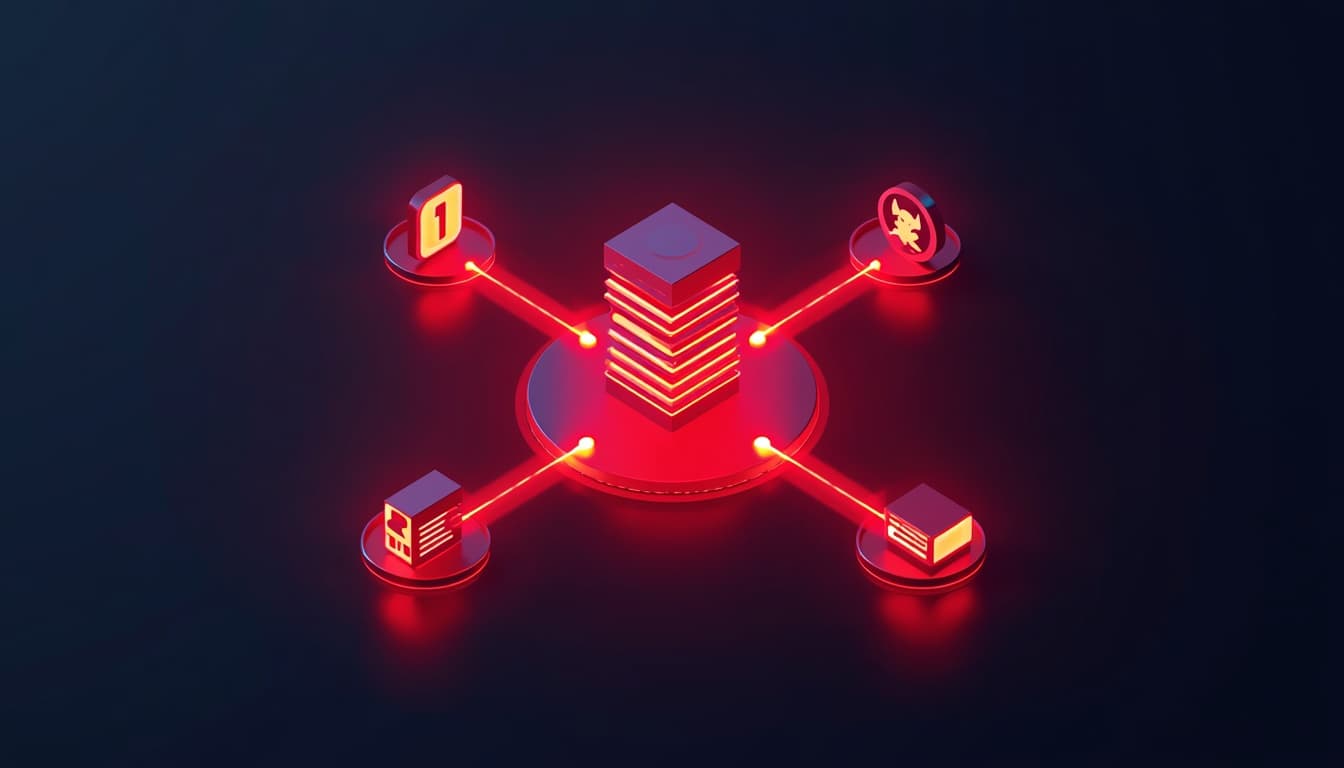
According to the news published in Taipei Times Taiwan’s state institutions reported 726 cyber security events last year. This number shows a slight drop compared to 755 events in 2024. The source of data, the country's Cyber Security Administration.
Events are classified from 1 to 4 according to the severity of its effects. The level 1, percent 9,78 percent level 2 and 2,89 percent level was recorded as 3 percent. No event in 4 of the most heavy category.
The table in terms of event types tells more. Unauthorised access attempts at the beginning of the list with 68,6 percent. Then the equipment failures with 15,43 percent, service interruptions with 4,96 percent and web page attacks with 2,48 percent. Two of the events have unauthorized access, revealing the attackers have become a more dominant risk than the technical failures.
Level distribution also carries a message per itself. It shows that events remain in the lightest category and no case in the level 4 does not appear, institutions do not have a devastating breach in critical systems. The total number of incidents does not mean that the threat changes direction in 755 to 726 in one year, but the attribute does not stand out in a table where the attack type is lost in the focus of leaking.
Public Institutions Target Area Four Large Tehdi Tags
Taiwan’s Cyber Security Administration also defined four basic threats that public institutions face. This list offers a concrete map to see where public sector security opens come from.
Fake messaging apps: In the case of downloading the newly received corporate computers, users malicious imitated messaging apps, the backdoor programs can be placed.
Bring-your-own-driver technique: Saldurganlar can avoid unauthorized access to the main system and detected by a driver installation method that disables security protection.
Infiltration through maintenance contractors: When contractors who have undertaken the system maintenance have installed remote access software to the web server, the attackers can access the website of the institution by means of password trial.
Network end device failures: It explains on network end devices or the risk of incorrect configuration can be grounded to malicious connection events.
Recommendations of the drug are also shaped according to these threats: the mandatoryness of the approval for all software and hardware installations, regular poor screenings and patch application, web application firewalls and current endpoint protection. Technical background of these vectors, AI security direct cuts with data and access control principles in discussions.
How Much Accelerated Artificial Intelligence Attacks?
The table of Taiwan shows that public institutions are already under a dense threat. Artificial intelligence takes this table to a new speed. Published on Business Wire Crowd Threat 2026 Global Threat Repor Tags According to the data, AI-supported attacks increased by 89 percent on the annual basis.
In the same report, the average leakage time from the first access to a network of attackers dropped to 29 minutes in 2025. The fastest leaking is only lasted for 27 seconds. The report also documents the attackers inject malicious prompt to productive AI tools in more than 90 institutions.
IBM side also points to a similar acceleration. Posted in Infosecurity Magazine IBM X-Force 2026 Threat Intelligence Index According to the report, attacks for public applications increased by 44 percent. Zafiyet abuse was the most common first method of access to 40% of the observed events. Active ransomware and blackmail groups grew 49 percent annually. In the same report, more than 300 thousand of the malicious software that steals information were associated with the leak of ChatGPT credentials.
The common point in the table is clear: the attackers do not invent new tactics, the existing tactics accelerate with artificial intelligence. When the discovery, password playback and exploit processes are automated, the time between the disclosure of an invasion is actively exploited.
IBM report shows that this acceleration is spread to the supply chain. As the software assembly environments automatically automate cloud-based applications and version distribution, large supply chain breaches have been around four times since 2020. In the same report, the manufacturing sector was the most targeted area in the fifth year with 27,7 percent; North America turned into the region, which was followed by 29 percent of the observed cases. The blurring of the line between criminals in pursuit of financial gain with state-supported actors facilitates the use of techniques into circulation in underground forums and reuse in small groups.

Otonom Attack Risk and Anthropic Case
The most striking point came at the end of 2025. Report Anthropic published The first large-scale artificial intelligence spout campaign was identified and stopped. The company connects the operation to a group with high confidence, which evaluates Chinese state-supported and code GTG-1002.
Operation was detected in the middle of September 2025. Saldurganlar Anthropic's Claude Code tool has surpassed the safety filters of the model by convincing it as a company that performs security testing for defense purposes. According to the company’s assessment, artificial intelligence carried out 80 to 90 percent of tactical operations in physically impossible request speeds, without human intervention.
The campaign directed to about 30 goals. Among the goals there were large technology companies, financial institutions, chemical producers and government institutions. Several leak attempts have successfully concluded.
After detection, the process also shows how public institutions need a threat intelligence reflex. Anthropic has mapped the scope of the operation for the next decade, suspended the detected accounts, reported the affected institutions, and coordinated with the authorities. Security researchers evaluate the case as the first public example that performs very step attacks against good defending goals. The probability of spreading autonomous attack capacity to less talented actors, the defending side of balance translates in favor of the attacker until they scale these capabilities.
"People were only in a few critical times." (Jacob Klein, Anthropic Threat Intelligence)
You need to understand the words of Klein correctly. Kastedilen is the opposite, not the attack is weak. Even when the human operator is activated only in ongoing decisions and at a few acres, the rest of the system worked autonomous. This situation creates a new risk threshold for public institutions to reduce the entrance barrier of sophisticated attacks. How to gun the filtered models, harmful artificial intelligence models Home with discussions on the same floor.

Difference Between Classic and Artificial Intelligence Age Defense
Autonomous attacks are forced to re-think the defending side. The difference between traditional attack and artificial intelligence-supported attack is marked in several sizes, primarily in speed and scale.
Dimensions Tags | Traditional Attack | Artificial Intelligence Supported Attack |
|---|---|---|
Processing time | Clocks or days | Up to 29 minutes |
Automation | Mostly manual | 80-90 autonomous |
Tags | Limited target | 30+ target simultaneously |
News | Slow, by hand | Real-time, automatic |
Home | General template | Personalized, deepfake-supported |
Remarkable steps on the defense side are also covered with the recommendations of Taiwan administration. The approval process for all installations is considered to be the basic layer of regular weakness scans, web application firewalls and current endpoint protection. The use of whitelist for external links is also listed in the closure of unnecessary ports and the regular updating of end device software.
On the data side, regular work continuity recommendations with backup, backup and recovery capacity. The Ministry of Digital Businesses in Taiwan promotes encrypted distributed backup in multiple cloud environments for critical public infrastructure systems. The purpose here is to reduce the risk of single point failure and improve endurance.
Since the attack surface grows through suppliers, the recommendations of the administration extend beyond the limits of the institution. Access control is recommended with supplier security management, regular audit and compliance controls covering data protection, poor management and event reporting. The blocking of malicious attachments and connections with email filtering and sand pool systems is added to the list, restricting cloud sharing permissions and scanning of uploaded files. As the social engineering initiatives that sound and image are imitated, deepfake and artificial intelligence law u discussions also constitute the legal foot of this defense plan.

Where Does Public Cyber Security Stop in Turkey?
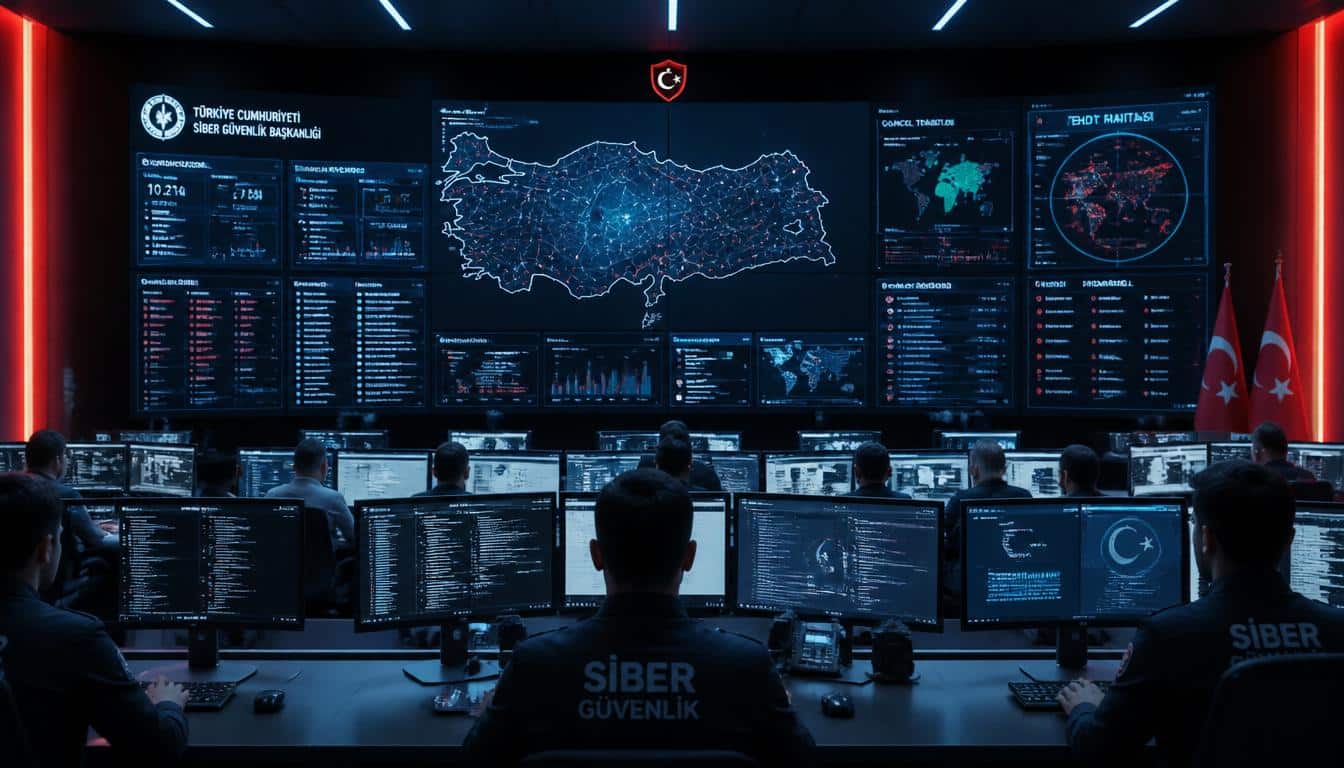
The table on the side of Turkey is intensive in terms of both threatening and preparation. According to statement reflected in Anadolu Agency Minister of Transport and Infrastructure Abdulkadir Uraloglu stated that 2025 reported and blocked cyber attacks on 182 thousand in the first ten months. In the same period, 74 thousand 594 malicious connection was closed to access infrastructure level.
The role of domestic AI in public security is also growing. The AI technology developed by USOM has identified and blocked its 74 thousand 205 domain name, which was established for the purpose of transferring citizens. Uraloğlu also transferred Turkey’s International Telecommunication Association in 2024 Global Cyber Security Index with 100 full points in the “Rol Model Country”. Cyber Security Law has entered into force on March 1925.
The structure is expanding on the organization side. The team of interfering with 14 sectoral and 2 thousand corporate cyber events at USOM coordination is working with thousands of expert staff. Native projects developed with internal sources such as "Avcı", "Azad" and "Karga" strengthen the interfering capacity at national level. Artificial intelligence-supported analysis systems are also used in cineration of critical websites.
The risk on the threat side is not decreased. According to the news of Anadolu Agency based on Kaspersky data In the first quarter of 2025, 26 percent of users in Turkey were affected by online threats. According to this, Turkey became the country with the highest risk level in the Middle East, Turkey and Africa region. In the same news, the APT groups targeting government institutions were given to the pursuit of strategic knowledge. The resource of the important part of the attacks from human error shows that personnel awareness is also a fundamental component of public safety.
What does the community think?
Supporters
Some of the security researchers defend that AI can also provide the same speed on the defense side. Automatic threat detection, real-time poor analysis and rapid incident intervention can balance the speed advantage of the attacker’s hand. As in the case of Anthropic, there were still artificial intelligence-based monitoring systems that detect the attack. According to this opinion, public institutions should try early rather than postpone the use of artificial intelligence in defense. Early experience in areas such as security operations, threat hunting and incident intervention, accelerates the learning curve of institutions.
News
The other side thinks that the speed race works structurally in favor of the attacker. Determining the time between the disclosure of a vulnerability and exploitation, patch cycle slows down public institutions. Since data shows that the large part of attacks is caused by human error, the technical investment is not enough alone. Qualified staff deficit and uncertain governance responsibilities come at the beginning of these concerns. In public institutions that have long budget and purchasing processes, the protection of the up-to-date of defense tools is also expressed as a separate challenge.

Frequently Asked Questions
What is the cyber attack supported by artificial intelligence?
Artificial intelligence-supported cyber attack is a type of attack that steps like discovery, password playback, exploitation and leaking data are automated with artificial intelligence models. Artificial intelligence in the case reported by Anthropic was autonomous 80 to 90 percent of the operation. This method accelerates both attacks and scales.
How many unauthorized access of Taiwan’s 726 event?
68,6 percent of events were unauthorized access attempt. Then the equipment malfunctions with 15,43 percent, service interruptions with 4,96 percent and web page attacks with 2,48 percent. This distribution shows that leak-oriented threats are more dominant than technical failures.
How much speeded the AI-supported attacks?
According to the Crowd. 2026 report, these attacks increased by 89 percent per year and the average leaking time fell to 29 minutes. The fastest leaked leaking lasted for 27 seconds. IBM X-Force reported that attacks on public applications increased by 44 percent.
What does Turkish public institutions do against these threats?
The USOM coordinates sectoral and corporate intervention teams are working, malicious connections are blocked at infrastructure level. Native AI technology detects domain names and entered into force in March 2025. Turkey is located in a 100-point role model category in ITU index.
How can public institutions protect in the era of artificial intelligence?
The approval obligation for all installations is between the basic steps of regular failure scan, web application firewall and current endpoint protection. This is added white list, email filtering, encrypted distributed backup and regular work continuity for external connections. Supplier security management also stands out in the list.
Taiwan’s 726 event table offers a preliminary impressions on where the public safety goes in the era of artificial intelligence is becoming a year report of a single country. When the attack side is automated and fast, the defending side will be cleared in the next months that the defending side can not capture and capture the same tempo. Public institutions will not download and download patch loops to minutes scale, which stands as the main question that determines the direction of this race.
AdminKuzey Kore Deepfake Yazılımcı Sızma Operasyonu


ChatGPT Finans Yönetimi Özelliği Kullanıma Açıldı