



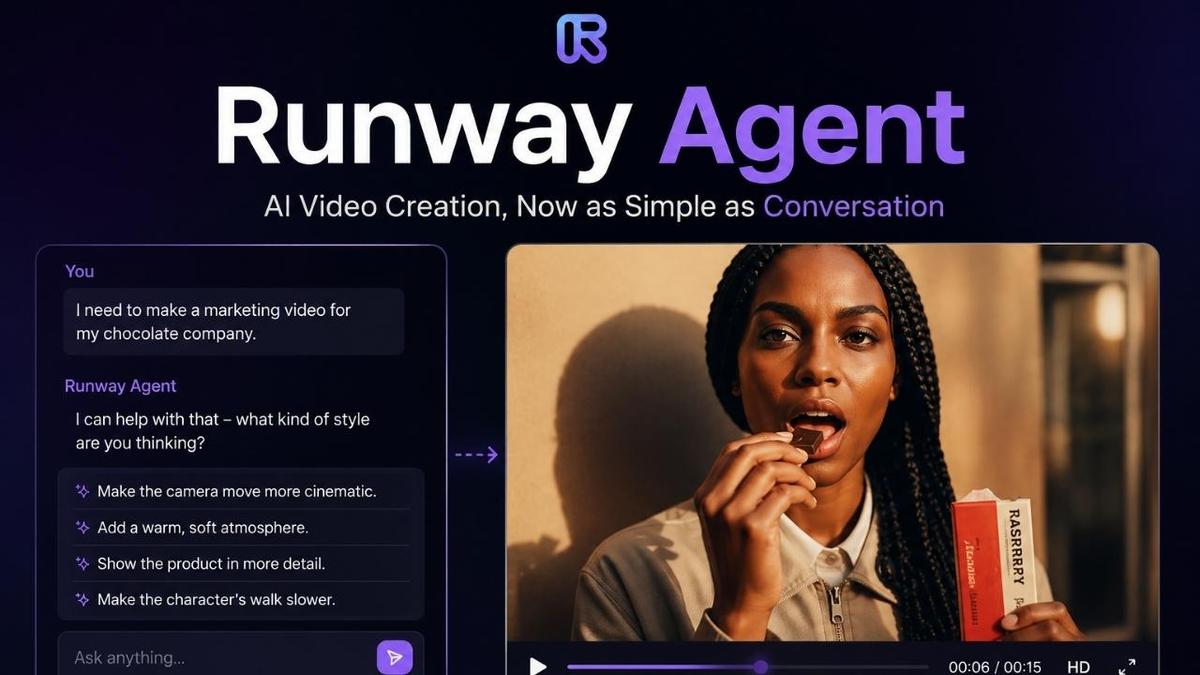
What Is Runway Agent? Create Cinematic Videos by Chatting
Automatically translated
 Writer
Runway has recently become one of the most talked-about companies in AI video generation, but not only because it produces higher-quality images. What stands out is that it is starting to change the video production process itself. For a long time, the AI video world worked on a "write a prompt and wait for the result" model. To get a good scene, users tried dozens of different prompts, steered the system with small changes, and often could not fully understand why something worked. Especially in cinematic video production, the process still felt quite technical.
x.com/runwayml/status/2054593196773011929
This may seem like a small difference, but it marks a real turning point in AI video production. Runway Agent moves video editing away from technical timeline management and closer to a relationship between a director and an assistant. This is exactly where making videos by chatting seems to be starting to become genuinely usable for the first time.
Why Was Runway Gen-3 Alpha Important?
The main reason Runway Agent has drawn so much attention is actually tied to the Gen-3 Alpha model. Runway has been working in AI video for a long time, but with Gen-3 Alpha, the system began producing results that felt truly "cinematic" for the first time.
The biggest problem in AI video has long not been resolution. It has been motion consistency. Characters would distort after a few seconds, the camera would move in ways that defied physics, and the atmosphere would fall apart, losing the sense of realism. That is why many AI videos looked impressive at first glance but began to feel artificial after a few seconds.
The Runway Gen-3 Alpha model began delivering stronger results than earlier systems, particularly in:
motion flow
camera behavior
light transitions
character continuity and scene atmosphere. For this reason, people working in the creator economy have started to see Runway as more than just an experimental tool.
For ad creatives, short film makers, and social media teams in particular, speeding up cinematic video production this much has become very important. Scenes that a small production team once spent days on can now be prototyped much faster. The demo video below offers good examples of the cinematic scenes Runway Gen-3 Alpha can produce.
Has the Era of Making Videos by Chatting Begun?
A very clear shift is happening in AI tools. Interfaces are becoming less and less visible. In the past, users had to learn complicated applications. They managed timelines, set keyframes, worked with layer systems, and needed technical knowledge. Now the system is trying to understand the user.
The Runway Agent approach matters here because it turns video generation from a technical editing process into a natural conversation. Users can improve a video with natural sentences like:
“Make the atmosphere darker.”
“Let the camera move more cinematically.”
“Have the character walk more slowly.”
“Add rain.”
This moves AI video production away from a race in prompt engineering and closer to a creative direction process. This could be a real advantage for creators who lack technical editing skills, because good-looking scenes may no longer require an After Effects expert. Producing good-looking scenes may no longer require being an After Effects expert.
Content production has accelerated enormously over the last few years. On TikTok, Reels, and Shorts, creators constantly have to produce new creatives. That is why the idea of making videos by chatting is becoming not just a technological novelty, but a new workflow that increases production speed.
How Does Runway Agent Work?
The system basically works with a context-aware creative AI logic. In other words, it does not operate on a single prompt alone. It tries to develop the scene by remembering the user's earlier instructions.
The major problem with classic text-to-video models was this: when a user wanted to change a scene slightly, the system often generated a completely different video. Character continuity and atmosphere were especially hard to preserve.
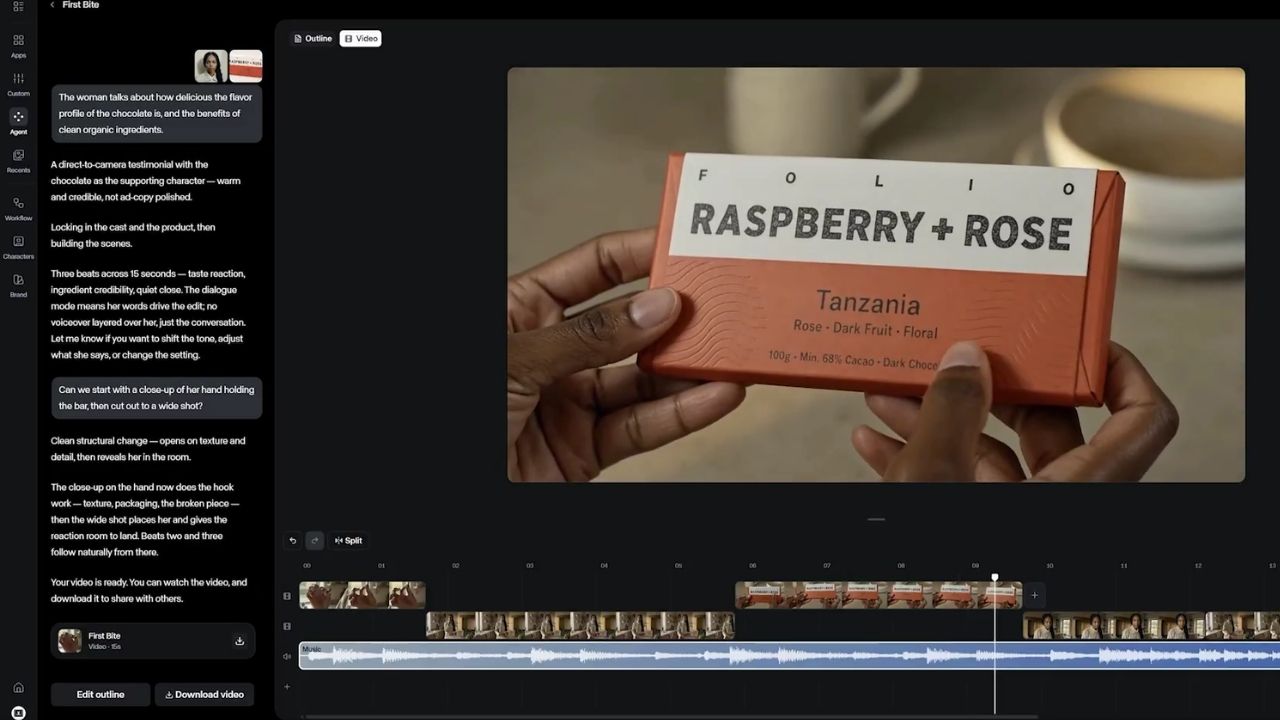
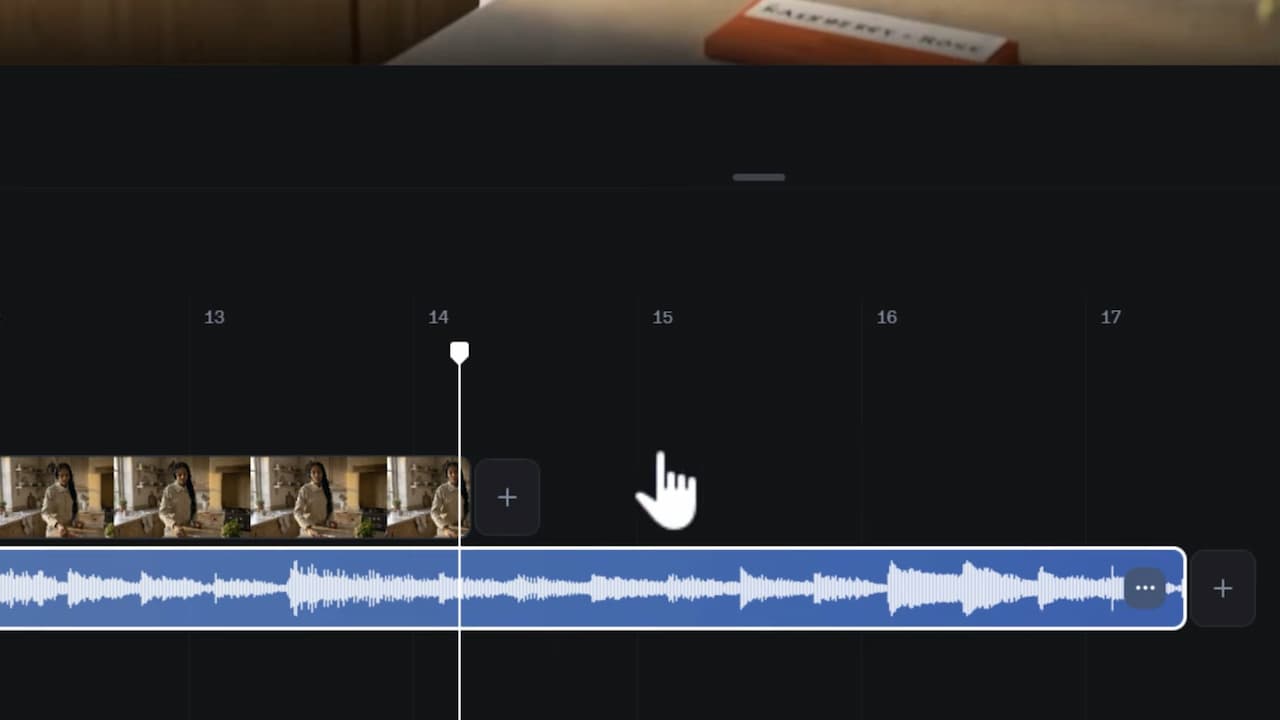
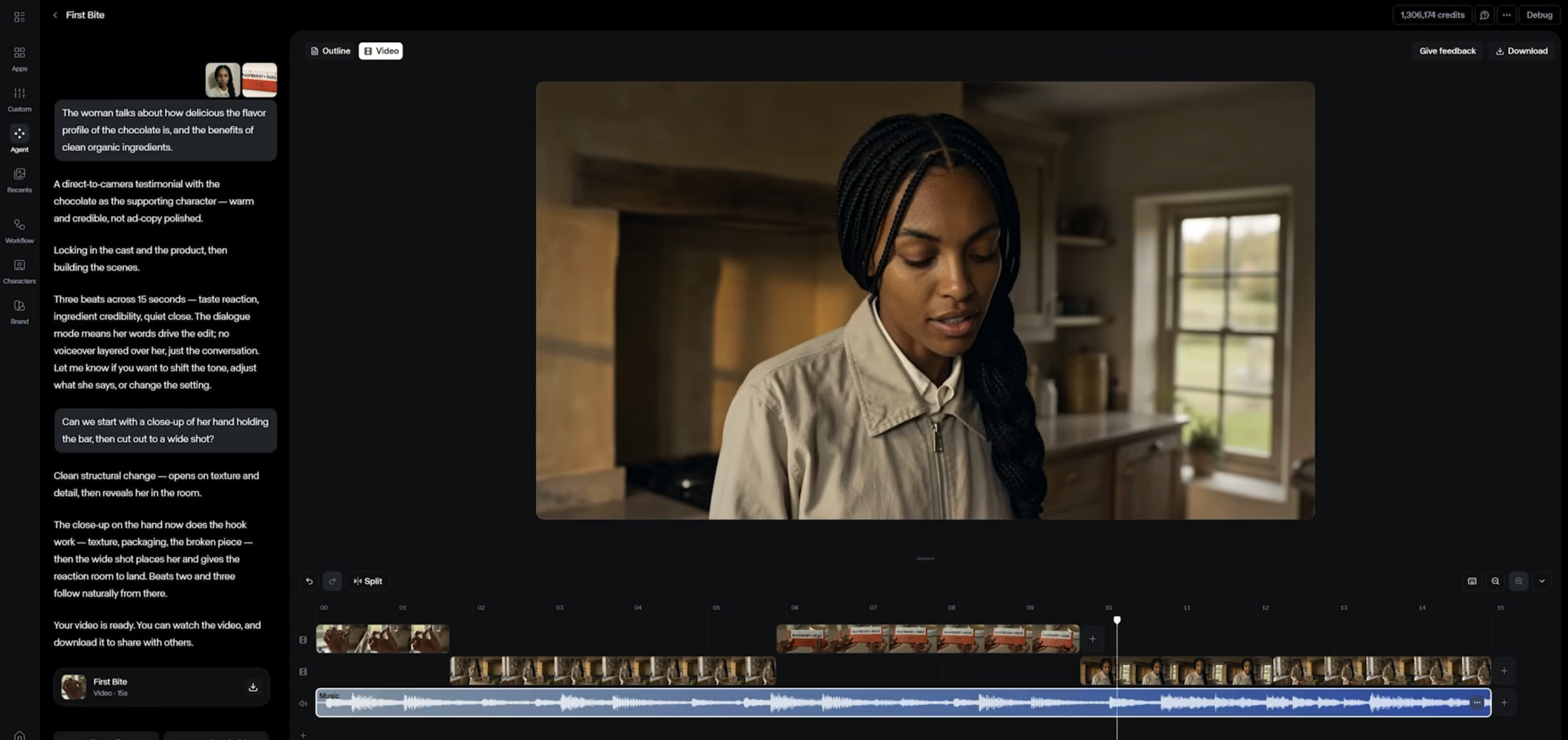
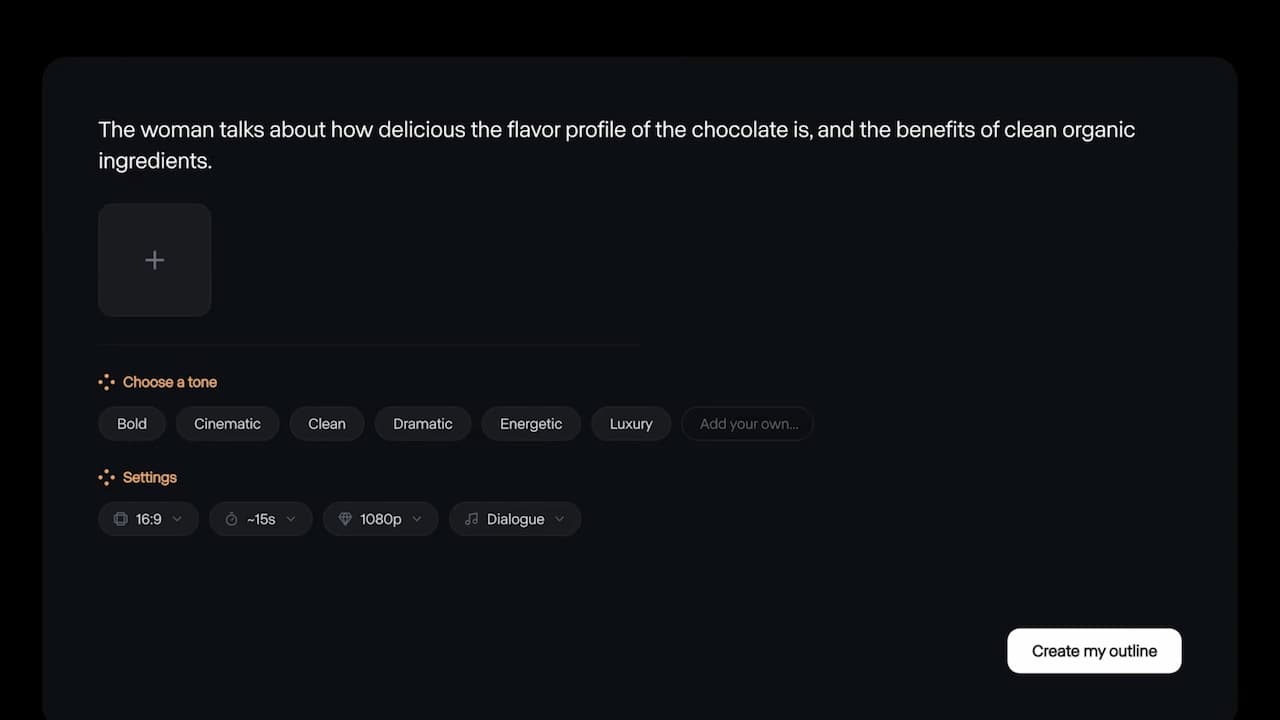
The Runway Agent approach tries to reduce this problem. Users can make changes to the same scene through natural language. The process looks very simple on the surface. The user first creates the scene with a short prompt. Then they start giving new instructions to the Runway Agent system in natural language. For example, they might first create a basic scene like:
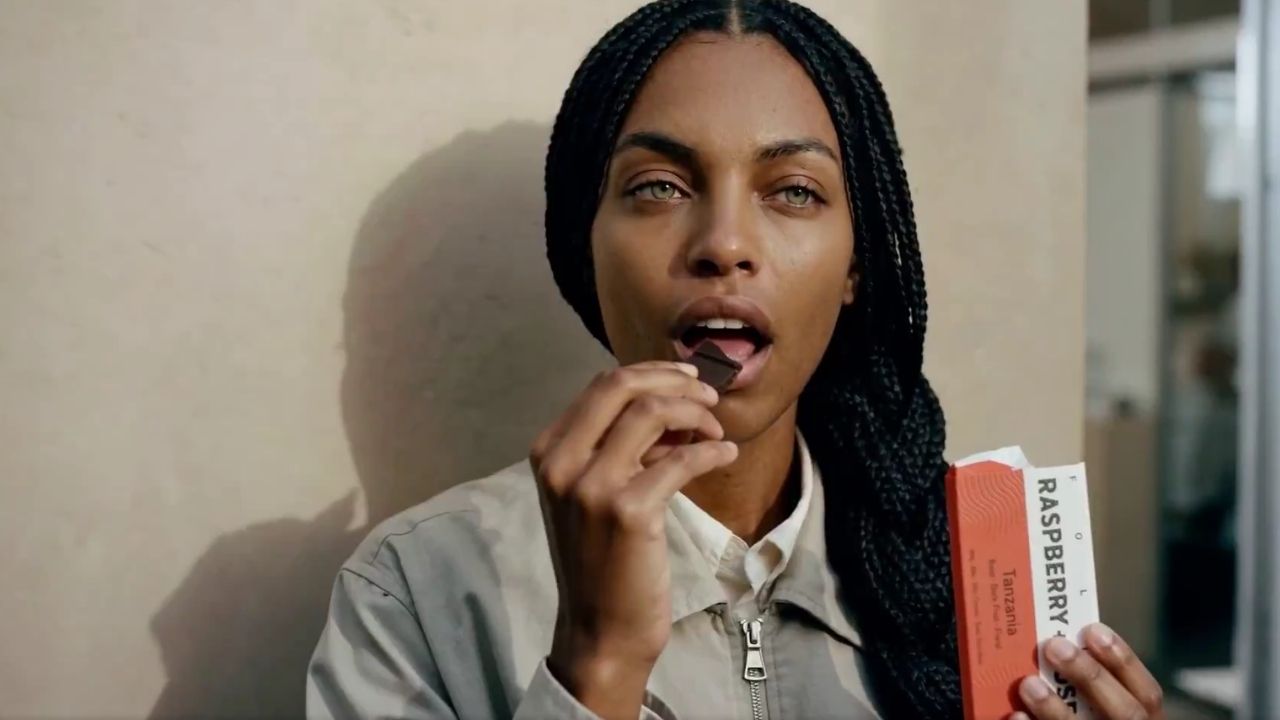
“A cinematic chocolate commercial showing the product experience in front of the camera.”
Then the user can improve the video with commands like:
“Show the product in a closer shot.”
“Make the lighting warmer and more cinematic.”
“Slowly move the camera closer while the character speaks.”
“Make the ad feel more natural.”. This approach looks very accessible, especially for users who are not used to classic video editing tools. The system works more on creative direction logic than on technical timeline logic.
It is especially powerful for areas such as:
short film production
storyboard preparation
cinematic teaser creation
ad creatives
music video concepts. Users no longer have to write a new prompt from scratch for every change. They can work as if they were talking to the scene.
Why Is Cinematic Video Production Now More Accessible?
In the past, producing cinematic visuals required serious technical knowledge. Camera language, lighting, motion design, lens behavior, color grading, and pacing all demanded professional production skills.
AI video systems have started to lower these barriers.
In particular, the Runway Gen-3 Alpha model has started producing stronger results in:
cinematic depth of field
atmospheric lighting
film-like motion
natural camera transitions
dramatic scene feel. For this reason, AI video tools are moving beyond toys used only by technology enthusiasts and becoming part of the creator workflow. The solo creator economy is becoming especially important here. A production feel that small teams once could not reach can now be created on one person's computer. This could significantly change the content production world.
Where Can Runway Agent Be Used?
The biggest current use case seems to be short-form content. There is significant potential in TikTok ads, YouTube Shorts, AI teaser videos, social media creatives, and product promotions. Brands now have to produce creatives at an incredibly fast pace. Performance marketing teams in particular constantly test different video variations. Traditional production processes have started to fall behind this speed.
Systems like Runway Agent matter here because a user can create different scene variations with just a few sentences. This can significantly increase creative production speed. For small teams in the creator economy especially, AI video tools are starting to become a direct part of the production pipeline.
What Is the Biggest Problem in AI Video Production?
Despite everything, AI video systems are still not perfect. Problems can still appear with:
character consistency
hand movements
physics rules
long scene continuity
natural facial animation. Some scenes can look incredibly cinematic and then fall apart within a few seconds. For this reason, it would be wrong to see AI video tools as systems that fully replace professional production for now.
They are more reasonably seen as:
accelerators
creative assistants
idea development tools
prototyping systems.
Another problem is aesthetic repetition. As AI video tools spread, the internet is starting to fill up with the same camera movements, the same pacing structures, and the same cinematic filters. The "AI cinematic look" already seems to be developing its own clichés. So creators who stand out in the future may not simply be the ones who use AI, but the ones who can keep their own style while using it.
Why Does Runway Agent Matter?
Runway Agent shows where AI tools are heading. The industry is no longer only racing to build bigger models. It has turned into a race over user experience.
In the near future, the winning systems may not be only the ones that produce the highest-quality images. The systems that work with users in the most natural way may become more important.
This is where the reason Runway Agent stands out becomes clear. The system does not expect technical commands from the user. It tries to understand what the user wants to do.
This approach will probably become standard not only in video production, but in many creative AI systems in the future.
In the near future, people will likely stop learning applications and simply describe what they want. The system will take care of the rest.
The world of video production seems to be heading exactly toward this point.
Frequently Asked Questions
What Is Runway Agent?
Runway Agent is a conversation-based creative system that enables AI video generation and scene editing through natural language.
Is it really possible to make videos by chatting?
Yes. New-generation AI video systems let users create scenes and edit videos using natural language.
Why Is Runway Gen-3 Alpha Important?
Because it delivers more advanced results than earlier AI video models in motion consistency, camera flow, and cinematic scene generation.
Is It Possible to Create Cinematic Videos with AI?
Yes. Models like Runway Gen-3 Alpha have made it much more accessible to produce cinematic camera movements and atmospheric scenes.
Will Runway Agent Replace Professional Video Editors?
Not completely, at least for now. It is seen as an assistant system that can significantly speed up the creative production process.
WriterOpenAI Modeli 80 Yıllık Matematik Problemini Çözdü


AI ile Teyit Uzmanlara Güveni Zedeliyor mu?


