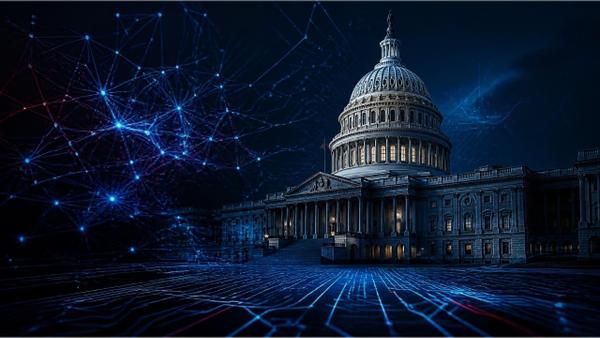
South Korean Artificial Intelligence Act Joined: Here Details
Automatically translated
 Admin
The South Korea Artificial Intelligence Act, which is considered as a new mile in the technology world, officially reacts the rules of the digital ecosystem. The technology giant of East Asia aims to achieve a strategic advantage in the competition with the US and China with this move, the artificial intelligence claims to create a global standard for its safe and ethical use.

This legal arrangement does not only promote innovation, but also build a wide range of audit mechanisms from deepfake content to high-risk algorithms. This step, characterized as the world’s first comprehensive AI law, has led to intensive discussions between civil society and local entrepreneurs, while launching a new integration process for technology companies.
What Responsibilities Does South Korea Artificial Intelligence Act bring to Companies?
South Korea Artificial Intelligence Act (SKAIA)brings strict transparency rules for organizations that improve artificial intelligence systems and market. The main purpose of this law is to reduce the manipulative effect of the content produced by artificial intelligence and to plant digital trust.
Within the scope of the law, all contents created with artificial intelligence are required. For exits that are clearly artificial as art works or cartoons invisible digital watermarks (watermark) When used; visible labels for realistic deepfake videos or sounds require users to easily notice. This structural measure is a technical barrier designed to prevent the spread of dezenformation.
How to Fix High Effective Artificial Intelligence Systems?
South Korea controls the effect of algorithmic decisions on human life under the category "high-impact" (high-impact). The operators of systems entering this class have to document their decision-making processes in detail and conduct periodic risk assessments.

Critical Areas in Control Gold:
- Health and Medicine: Artificial intelligence-supported diagnostic systems.
- Finance: Credit approval and risk ratings algorithms.
- Human Resources: Automatic filtering tools used in recruitment processes.
Risk assessments on these systems have to prove the impartiality and fairness of algorithms. If the final decision in a system is given by a person, the law may be considered an exception.
Who is the South Korean Artificial Intelligence Representative Condition?
One of the most remarkable substances of the law is the necessity of local representation, targeting global technology giants. South Korea AI representative requirement aims to increase the legal and operational accountability of giant companies operating in the country but located abroad.
The criteria to meet companies subject to this condition are:
- Annual global income 1 trillion won ($680 million) or more.
- The annual sales in South Korea over 10 billion won.
- Platforms with 1 million or more active users throughout the country.
In the light of these criteria, giants like OpenAI and Google have to assign an official representative in the South Korea limits. This step is a strategic move that strengthens cross-border applicability of local laws.
What Are Legal Compliance and Criminal Interventions?
South Korea AI Basic Act 2026severe sanctions are avoided if they do not follow the rules. Companies that violate the law may face a fine of up to 30 million won. Although this figure appears symbolic for technology giants, the main power of the law comes from the continuity of audits.

The government has introduced a minimum annual transition process (grace period) to adapt the private sector to this radical change. However, surveys made between local initiatives indicate that 98% of AI attempts are not yet ready for the compliance process. This situation also feeds criticisms in the direction of slowing down the speed of innovation of the law.
| Regulation Area | Complications | Applied Penalty |
|---|---|---|
| Deepfake Contents | Visible Labeling | 30 Million Won |
| Artificial Intelligence Art | Digital Filigran | 30 Million Won |
| High Risk AI | Risk Assessment | License Cancellation / Money Punishment |
| Foreign Companies | Local Representative Appointment | Activity Restriction |
Why Does The First Comprehensive Artificial Intelligence Act In The World?
This move of South Korea has different reactions from both technology and civil society. While local startups defend that innovation is restricted, other civil society organisations claim that the law is insufficient to protect citizens.
Specifically, non-governmental organizations defend that the definition of "user" in the law is not citizens; corporate users such as hospitals and banks are covered. In addition, South Korea’s global deepfake pornography victims host 53%, strengthens the demand for getting harder measures to protect citizens. The current law is focused on transparency and reporting, rather than prohibiting systems that produce such harmful contents.
Artificial Intelligence Vision and Global Effect of South Korea
South Korea is a structural foundation that promotes the industry not only as a restriction tool. According to the Ministry of Science and ICT, 80%-90 of the law is intended to support industrial growth. The goal of the government is to be one of the world’s first three artificial intelligence power with the US and China until the end of 2026.
The South Korea Artificial Intelligence Act draws a different way from the EU’s solid risk model and the US market-oriented strategy by adopting the "reliable incentive" model in artificial intelligence governance. This flexible but the principle-based frame will become a critical reference point for other countries in the following periods.
Healthy growth of artificial intelligence ecosystem, legal assurance with technological advancement The balance between will depend on how accurate it is installed.
AdminJavaScript SQL Engine Tarayıcı Tabanlı Veri tabanlarının Yükselişi

DeepSeek R2 Geliyor: Nvidia Olmadan AI'da Verimlilik Devrimi