



Best AI for Turkish? 2026 Comparison
Automatically translated
 Writer
Short answer: There is no single AI model that is best at every task in Turkish; results vary depending on the test, task, and model version. For example, GPT-4o scored 84.84% in the TR-MMLU test, narrowly ahead of Claude 3.5 Sonnet (84.40%). In an AYT Turkish Language and Literature test published in 2025, however, DeepSeek V3 achieved the highest score at 92%. Since newer versions have replaced these models, the most reliable approach is to test the same Turkish task from your own workflow in ChatGPT, Claude, Gemini, and DeepSeek and compare the results.
Last updated: 14.10.2026
For those looking to create Turkish content, edit text, conduct research, or automate customer communication, the Turkish language performance of AI tools has become an important selection criterion. Large language models such as ChatGPT, Claude, Gemini, and DeepSeek can understand Turkish prompts and generate Turkish text. However, being able to communicate in Turkish and using Turkish naturally, accurately, and appropriately in context are two different things.
For people who create Turkish content in particular, simply minimizing grammar mistakes is not enough. The text must sound natural to a native Turkish speaker, follow instructions, maintain context, and use a tone appropriate for the target audience. For students, academic accuracy and the ability to explain concepts are additional considerations, while for SMEs, customer communication, data security, cost, and integration with existing systems are among the key criteria.
Turkish benchmark results also show that model performance varies depending on the test and task being used. For example, in the TR-MMLU evaluation, GPT-4o achieved 84.84% accuracy, while Claude 3.5 Sonnet scored 84.40%. Since these results relate to a specific model version and testing conditions, they do not, on their own, represent the current performance of models used in 2026.
What Is Turkish AI?
Turkish AI refers to artificial intelligence systems that can understand Turkish instructions, generate Turkish text, or analyze Turkish content. This category includes not only chatbots but also translation tools, document analysis systems, voice assistants, text editing tools, and enterprise chatbots.
When discussing large language models, Turkish AI generally refers to communicating in Turkish with systems such as ChatGPT, Claude, Gemini, or DeepSeek and asking these models to generate Turkish content. Users can request explanations of a topic, summaries of lengthy texts, or analyses of academic studies.
However, there is an important distinction here. A model's support for Turkish does not mean it performs equally well on every Turkish task. One model may summarize a lengthy report effectively, while another may produce a more natural blog post. A different model may deliver better results on technical or analytical questions. Therefore, when comparing Turkish AI tools, the right question is: "How well does it use Turkish for different tasks?"

Why Should Turkish AI Be Evaluated Separately?
Due to its structural characteristics, Turkish is different from English from the perspective of large language models. Turkish's agglutinative structure, the ability of words to take numerous suffixes and transform into different forms, and the fact that meaning often depends on the context of the entire sentence make it necessary to evaluate Turkish AI performance separately.
For example, "ev," "evler," "evlerimiz," "evlerimizdekiler," and "evlerimizdekilerden" are forms derived from the same root but carry different meanings and grammatical functions. While human readers can interpret these changes naturally, tokenization plays an important role in how language models process text.
Moreover, Turkish performance is not limited to producing technically correct sentences. An AI model may generate a grammatically correct text, yet the resulting writing may sound like a translation to a native Turkish reader. This difference becomes more noticeable when idioms, everyday expressions, academic terminology, and cultural context are involved. Therefore, natural expression, context preservation, meaning transfer, and a tone appropriate for the target audience should also be included in the evaluation.
How Should Turkish-Supported AI Tools Be Compared?
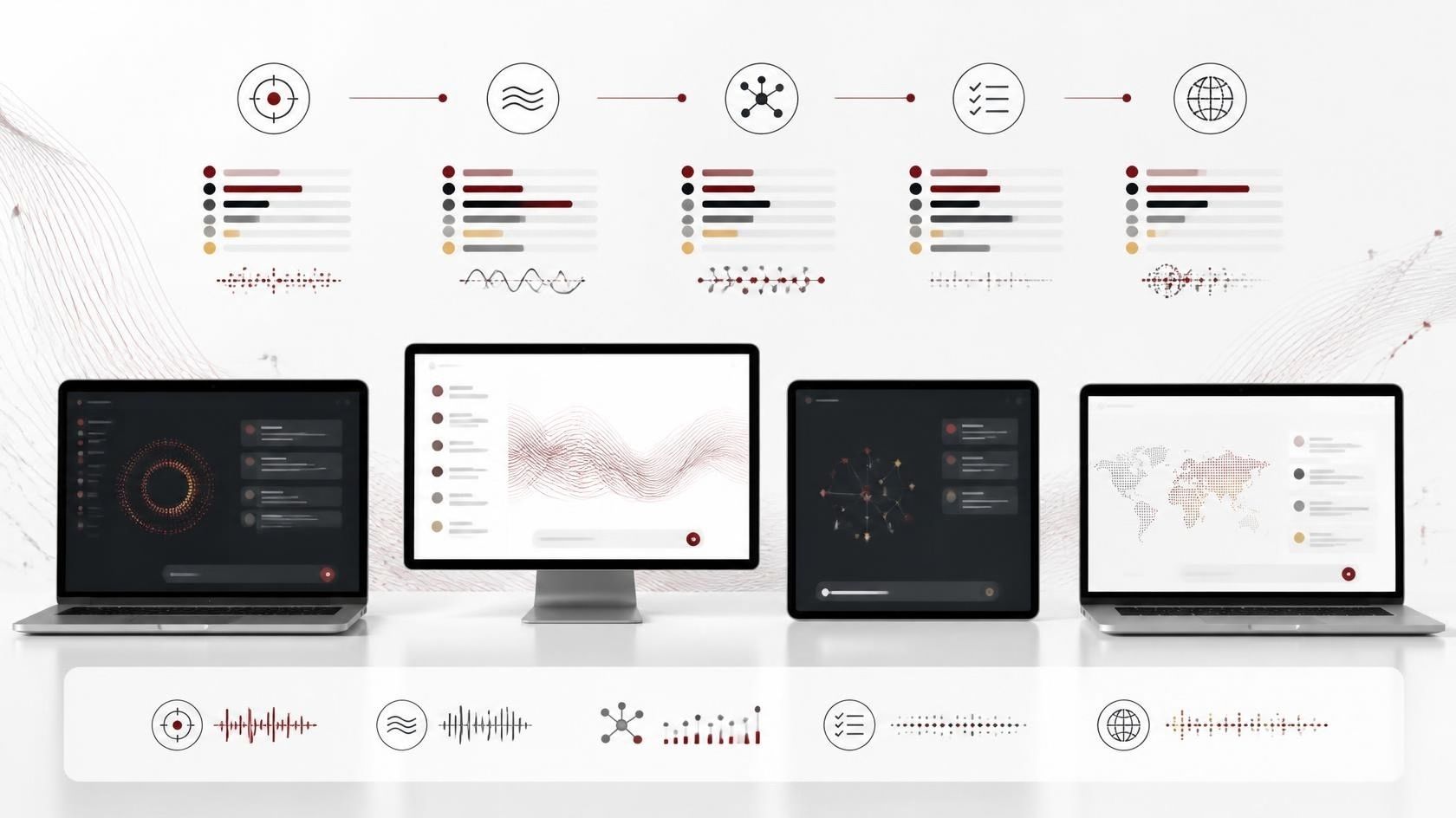
When evaluating a Turkish AI tool, it is necessary to examine several different characteristics together rather than looking only at its benchmark score. Turkish grammar and spelling accuracy are among the first criteria. However, the natural flow of the text, the model's ability to maintain context in long conversations, and its ability to follow user instructions completely are also important. Style control may carry more weight for content creators, academic accuracy for students, and the ability to work with corporate information for SMEs.
For this reason, the following criteria can be considered when comparing Turkish AI tools:
Criterion | What should you look for? |
|---|---|
Turkish accuracy | Are grammar, spelling, and punctuation correct? |
Fluency | Is the text written in natural Turkish? |
Context | Is previously provided information retained? |
Long texts | Can it understand large documents? |
Style | Are the requested tone and target audience maintained? |
Instruction following | Are all the specified requirements followed? |
Academic accuracy | Are concepts and information conveyed correctly? |
Source usage | Can information requiring sources be verified? |
Translation | Are meaning and context preserved? |
Integration | Can it work with the systems used by the business? |
The same model does not need to excel in all these criteria. In fact, Turkish benchmark studies also show that models can achieve different levels of performance across different tasks.
How Is Turkish AI Performance Measured?
Various benchmark studies are available for comparing the Turkish performance of large language models. One of them is TR-MMLU. TR-MMLU is a benchmark designed to evaluate the academic knowledge and conceptual abilities of Turkish large language models. Its dataset contains 6,200 multiple-choice questions across 62 different departments related to the Turkish education system.
An important aspect of this type of benchmark is that it conducts evaluations using questions originally prepared in Turkish. Translating an English benchmark into Turkish may not always adequately measure the linguistic characteristics and cultural context unique to Turkish. Nevertheless, benchmark results should not be interpreted as an absolute ranking of the "best model." TR-MMLU measures academic knowledge and comprehension skills; it does not directly demonstrate a model's performance in blog writing, customer service, or creative text generation. Therefore, benchmark results are an important data point when selecting a model, but they cannot replace real-world usage scenarios.
Why Do Turkish Test Results Differ?
The same model can achieve very different results across different Turkish tests. The following two studies clearly demonstrate this:
Test | What does it measure? | Notable results |
|---|---|---|
6,200 multiple-choice questions across 62 departments in the Turkish education system; academic knowledge and comprehension | GPT-4o 84.84%; Claude 3.5 Sonnet 84.40% | |
AYT Turkish Language and Literature Test (Journal of Data Science, 2025) | 24 questions from the 2024 AYT, 26 models; context comprehension, grammar, text interpretation | DeepSeek V3 92%; DeepSeek R1 88%; Gemini 2.0 Flash 83%; Claude 3.5 Sonnet 21% |
Claude 3.5 Sonnet scoring 84.40% in TR-MMLU but only 21% in the 24-question AYT test shows that a single test is not enough to answer the question of which AI is the best for Turkish. In addition, all the models used in these two studies had been replaced by newer versions by 2026.
Leading AI Tools Available in Turkish
Among the most frequently compared general-purpose AI tools for Turkish use are ChatGPT, Claude, Gemini, and DeepSeek. However, since the model families of these tools continued to receive updates throughout 2026, older benchmark results should not be treated as definitive indicators of the current models' performance.
Tool | Current models (14.10.2026) | What is it used for? | Is it free? | Who is it suitable for? |
|---|---|---|---|---|
ChatGPT (OpenAI) | GPT-6 Astra, GPT-6.1 Sol, GPT-6 Luna | Writing, research, summarization, data analysis, coding | Yes, there is a free plan; powerful models are available on paid plans | People who want to handle different tasks with a single tool |
Claude (Anthropic) | Claude Fable 5.1, Opus 5.5, Sonnet 5.5, Haiku 5.5 | Long documents, writing, coding, multi-step tasks | Yes, Sonnet and Haiku are available on the free plan; Opus and Fable are paid | People who work with lengthy reports and documents |
Gemini (Google) | Gemini 4 Argon, Gemini 3.1 Pro, Gemini 3.8 Flash | Research, working with Google applications | Yes, a free version is available; Gemini 4 Argon and 3.1 Pro are included in Google AI Pro and Ultra plans | People who make extensive use of the Google ecosystem |
DeepSeek | DeepSeek-V4.1-Flash, DeepSeek-V4-Pro | Technical content, coding, mathematics | Chat is available on the web and in the app; API usage is charged per use | Technical tasks and developers |
Local models (Kumru, BİLGE, T3 AI) | Turkish-focused models | Turkish text generation and enterprise use | Varies by model | People looking for Turkish-focused and local solutions |

ChatGPT
ChatGPT is one of the general-purpose options for using AI in Turkish. Various tasks, including content creation, text editing, research, summarization, document analysis, data work, coding, and learning, can all be performed in the same workspace.
OpenAI updated its model family twice in 2026. The GPT-5.6 family (Sol, Terra, and Luna) became available through the API on 09.07.2026. This was followed by GPT-6 Astra on 03.09.2026, GPT-6 Sol and GPT-6 Luna on 22.09.2026, and GPT-6.1 Sol on 29.09.2026. According to OpenAI's model page, GPT-6 Astra is currently recommended as the most capable model, GPT-6.1 Sol as a model offering performance close to Astra at a lower cost, and GPT-6 Luna as the most efficient model for high-volume tasks. All three have context windows of approximately 1 million tokens.
ChatGPT's free plan is still available. According to the archived record of the ChatGPT pricing page dated 11.10.2026, GPT-6 Luna is available on the free plan, while more powerful models are unlocked on paid plans. Since model access and limits vary by plan, we recommend checking the current details on the ChatGPT pricing page.
For Turkish content creation, ChatGPT can be used for a wide range of purposes, including blog posts, SEO content, text editing, summarization, research, translation, data analysis, and learning. Therefore, it can be considered a general-purpose option for users who want to bring different types of work together in a single tool.

Claude
Developed by Anthropic, Claude is among the models used particularly for long texts, document analysis, written content, and complex multi-step tasks. The Claude model family received several updates in 2026: Claude Opus 4.7 was announced on 16.04.2026, followed by Opus 4.8 on 28.05.2026. The 5.5 family arrived starting in September: Opus 5.5 was released on 22.09.2026, Sonnet 5.5 on 28.09.2026, and Haiku 5.5 on 07.10.2026. Anthropic's model page recommends Claude Fable 5.1 for challenging reasoning tasks and Opus 5.5 for most tasks. All current models have a 1-million-token context window and support multilingual work. Sonnet and Haiku models are available on Claude's free plan.
One area where this is important for Turkish usage is working with long documents. Context capacity becomes particularly valuable for tasks such as summarizing a report, extracting arguments from an academic text, or editing a lengthy document according to specific criteria. However, Claude's strength with long texts does not mean it performs better than other models on every Turkish task. Model selection should still be based on real-world usage scenarios.

Gemini
Developed by Google, Gemini is among the models worth considering because of its multilingual capabilities, including Turkish, as well as its integration options with the Google ecosystem. Google introduced Gemini 3.1 Pro on 19.02.2026 for tasks such as complex problem-solving and data synthesis. The model became available in the Gemini app, Gemini API, Vertex AI, and NotebookLM. On 13.10.2026, Gemini 4 Argon was announced. Google positions Argon for complex tasks in fields such as coding, finance, law, cybersecurity, and science. The model has a 1-million-token context window and is available in the Gemini app to Google AI Pro and Ultra subscribers. Gemini's free version is also available.
One of Gemini's strengths for Turkish use is not just text generation but also its ability to conduct research and work with different types of information. The Deep Research feature is also available in Gemini's free version. Therefore, students, researchers, and professionals who make extensive use of Google services should evaluate Gemini not only based on the quality of its Turkish text but also on its broader working ecosystem.

DeepSeek
DeepSeek significantly updated its model family in 2026. The DeepSeek-V4 preview was released on 24.04.2026, followed by the launch of DeepSeek-V4.1-Flash on 10.09.2026. According to DeepSeek's announcement about V4.1-Flash, it offers built-in visual understanding, improvements in text and agent tasks, and a more efficient architecture.
The V4-Pro and V4-Flash models in DeepSeek's V4 family, introduced in April 2026, were designed to support a context length of 1 million tokens. The company positioned V4-Pro particularly for technical fields such as mathematics, STEM, coding, and agent tasks.
There are also older independent studies on DeepSeek's Turkish capabilities. In a study published in the Journal of Data Science in 2025, DeepSeek V3 and R1 achieved 92% and 88% accuracy, respectively, on 24 AYT Turkish Language and Literature questions. However, it would not be appropriate to directly apply these results to the V4.1-Flash model from 2026, as the models and testing conditions are different. Therefore, users evaluating DeepSeek would be better off testing the current model within their own workflows, particularly for technical content, coding, analytical problem-solving, and tasks requiring long context.

Which AI Should You Use to Create Turkish Content?
For people creating Turkish blog posts, news articles, social media content, or SEO content, checking grammar accuracy alone is not enough when choosing an AI tool. During content creation, the model needs to understand the brief, consider the target audience, use keywords naturally, and maintain a consistent tone throughout the text.
For this reason, content creators can give the same text to several different models and compare the results. A more realistic assessment can be obtained by evaluating fluency, grammar, style, SEO compatibility, repetition rate, and instruction following together. In particular, AI-generated content should be reviewed by a human editor before being published directly. A model's ability to use natural Turkish does not mean that the dates, proper names, statistics, or sources it provides are accurate.

What Is the Best Turkish AI for Students?
For students, choosing a Turkish AI tool involves slightly different criteria than for content creators. The priority is not just writing proper Turkish but also explaining complex subjects, summarizing texts, showing relationships between concepts, and supporting the learning process.
A student can use AI to explain topics in fields such as history, literature, languages, mathematics, or social sciences. A lengthy academic paper can be broken down into its main arguments, unfamiliar concepts can be explained in simpler language, or practice questions can be generated for an upcoming exam.
However, information provided by AI must always be checked in academic use. The fact that a model can fluently recommend a book, article, or archival source does not mean that the source actually exists.
Especially in academic work, book titles, articles, DOIs, page numbers, dates, and archival references should be independently verified. AI should be used as a tool that supports the research process, not as a source that replaces research.

What Should SMEs Consider When Choosing a Turkish Chatbot?
For SMEs, the "best Turkish chatbot" does not simply mean the system that speaks the most natural Turkish. For a business, how the model connects to existing workflows, how it works with company data, API support, cost, and data security are just as important as Turkish language performance.
For example, when a customer asks an e-commerce business, "How many days do I have to return the product?", it is not enough for the chatbot to generate an answer based on general internet knowledge. Its response needs to be based on the business's current return policy.
For this reason, company product information, frequently asked questions, policies, and other internal information can be provided to enterprise chatbots through a suitable knowledge base.
Customer service
Turkish chatbots can be used to handle recurring customer requests, such as questions about shipping, product features, business hours, and frequently asked questions.
However, it is important to have a mechanism for transferring more complex or exceptional cases to human support. Particularly in situations that may have financial consequences, involve uncertainty about company policy, or are sensitive in terms of customer satisfaction, the chatbot should direct users to the appropriate channel rather than inventing definitive information.
Marketing and content creation
SMEs can also use AI to prepare product descriptions, social media posts, advertising copy, email drafts, and SEO content.
Here, the model's ability to learn the brand's voice and target audience is important. A social media post aimed at young consumers and an email sent to corporate customers should not use the same tone, even when promoting the same product.
Internal operations
Summarizing meeting notes, classifying documents, accessing internal company information, and preparing standard documents are also among the use cases for Turkish AI.
In such applications, access permissions and how company data is processed should be evaluated alongside Turkish language performance.
Sending customer or employee data to an AI service abroad may constitute an international data transfer under Article 9 of the KVKK. Therefore, before choosing a service, check where the data is processed and review the contractual terms. Use anonymized examples instead of real customer data for testing.
How to Compare Turkish AI Tools
Trying the same tasks across several different models before choosing an AI tool is a highly practical approach.
For example, content creators can give each model a similar prompt about the same topic:
"Rewrite this text in natural, clear, and professional Turkish. Do not change its meaning, remove unnecessary repetition, and avoid expressions that make it sound AI-generated."
For students, a test could look like this:
"Explain this academic text in a way that an undergraduate student can understand. Define the key concepts, preserve the main argument, and do not add information that is not present in the text."
SMEs, on the other hand, can create an anonymized test set using real customer questions:
"Prepare a professional, concise, and solution-oriented response in Turkish to this customer complaint. Do not invent information about company policy, and if you are unsure, direct the customer to the relevant support channel."
The results can then be compared in terms of accuracy, fluency, instruction following, context preservation, and usability.
This method may be more meaningful than general internet rankings because it directly measures the user's actual needs.

The Hallucination Problem When Using Turkish AI
The fact that a Turkish AI provides fluent answers does not mean the information it gives is accurate. Large language models sometimes present nonexistent sources as if they were real, provide incorrect dates, or attribute statements to people who never made them. This is generally referred to as a "hallucination."
This problem is particularly important in academic content because source names and bibliographic details may appear to be written correctly. Therefore, when dealing with important information, simply asking an AI "What is your source?" is not enough. You must also check whether the source actually exists and whether it supports the relevant claim.
The same applies to news, law, finance, and current developments. For texts requiring up-to-date information, features such as the model's knowledge cutoff date and web access should also be evaluated.

How Should You Write Prompts When Using Turkish AI?
The same AI model can produce very different Turkish results with different prompts. Therefore, when writing prompts in Turkish, a general instruction such as "Write an article about this topic" requires the model to guess the target audience, text length, and tone on its own. Instead, clearly specifying the context and expectations produces more controlled results.
For example:
"Explain this topic to university students in clear yet academic Turkish. First define the basic concepts, then describe its historical development, and in the final section reinforce the topic through three examples."
For content creation, information such as the target audience, search intent, keyword, content length, heading structure, and tone can be included in the prompt. When evaluating Turkish AI performance, it is important to remember that the prompt itself also affects the result. Therefore, the same or as similar as possible prompts should be used when comparing models.
There is no official equivalent of the patterns shared online as "secret codes" for ChatGPT. We explain what these patterns are used for in our article on ChatGPT secret codes.

So, What Is the Best Turkish AI?
Users who want to handle general-purpose conversations, Turkish content creation, research, and different tasks in the same environment can consider ChatGPT. Claude is worth exploring for tasks such as long-text and document analysis. Users who make extensive use of the Google ecosystem and want to benefit from its research features can consider Gemini. For technical, coding, and analytical tasks, different models, including DeepSeek, can be compared.
The goal here is not to place models in an absolute ranking. Results can change as current model versions and benchmarks evolve. For example, DeepSeek V3 and R1 achieved high scores in a Turkish test conducted in 2025, while DeepSeek V4 and V4.1-Flash were released in 2026. Similarly, OpenAI released the GPT-6 family, Anthropic the Claude 5.5 family, and Google Gemini 4 Argon during 2026. We have not yet found an independent study comparing these new versions on Turkish tasks. Therefore, in a current Turkish AI comparison, it is more important to look at which version was evaluated, in which test, and for which task than simply at the model's name.
Locally developed models such as BİLGE, Kumru, and T3 AI in Türkiye can also be evaluated specifically for Turkish. We explain who developed these models and how to access them in our article on Türkiye's locally developed AI models. We also take a closer look at Kumru, which VNGRS trained from scratch for Turkish, in our Kumru AI guide.
Frequently Asked Questions
What Is the Best AI for Turkish?
No single model performs equally well across all Turkish tasks. Results in independent tests vary depending on the test: GPT-4o and Claude 3.5 Sonnet were nearly tied in TR-MMLU (84.84% and 84.40%), while DeepSeek V3 led with 92% in a 24-question AYT test. The most suitable option depends on the intended use, such as content creation, academic work, research, coding, or customer service. The best approach is to test the models with your own tasks.
Are Turkish-Supported AI Tools Free?
Yes. ChatGPT, Claude, and Gemini have free plans, while DeepSeek also offers chat through its website and app. However, free plans generally offer lighter models and lower usage limits. For example, Claude's free plan includes Sonnet and Haiku, while Gemini's free version can use Gemini 3.5 Flash-Lite. The most powerful models are available on paid plans.
What Is a Turkish Chatbot?
A Turkish chatbot is a conversational AI system that can understand Turkish user messages and respond in Turkish. It can be used in processes such as customer service, information delivery, sales, and technical support.
Can AI Write in Turkish?
Yes. Current large language models can perform tasks such as Turkish text generation, summarization, translation, and text editing. However, outputs should be verified when dealing with texts that require expertise or rely on up-to-date information.
Can Students Use Turkish AI?
Yes. Students can use AI for purposes such as studying, getting explanations of subjects, summarizing academic texts, preparing questions, learning languages, and creating study plans. In academic work, information and sources provided by AI should be checked against reliable sources.
Why Does Turkish AI Sometimes Produce Unnatural Sentences?
The Turkish performance of large language models is influenced by many factors, including the quantity and quality of training data, tokenization, model architecture, and the task being performed. Turkish's agglutinative structure and patterns transferred from other languages can sometimes result in unnatural sentences.
Can Turkish AI Tools Replace Content Creators?
AI can accelerate research, drafting, text editing, and content creation processes. However, human oversight remains important for source verification, editorial decisions, target audience analysis, and final quality control.
Are There Locally Developed AI Models for Turkish?
Yes. There are models developed in Türkiye, such as BİLGE, Kumru, and T3 AI. For example, Kumru was trained from scratch for Turkish by VNGRS. For more details, see our article on Türkiye's locally developed AI models.
Is ChatGPT or Gemini Better at Turkish?
We have not yet found a current, independent Turkish test that provides a definitive answer. The GPT-6 family and Gemini 4 Argon were released in 2026. The most reliable approach is to test the same Turkish task in both tools and compare them in terms of accuracy, fluency, and instruction following.
WriterYapay Zeka ile Görsel ve Video Nasıl Oluşturulur?


AI ile Yazılan Kitap Goncourt Ödülü'nden Çıkarıldı