



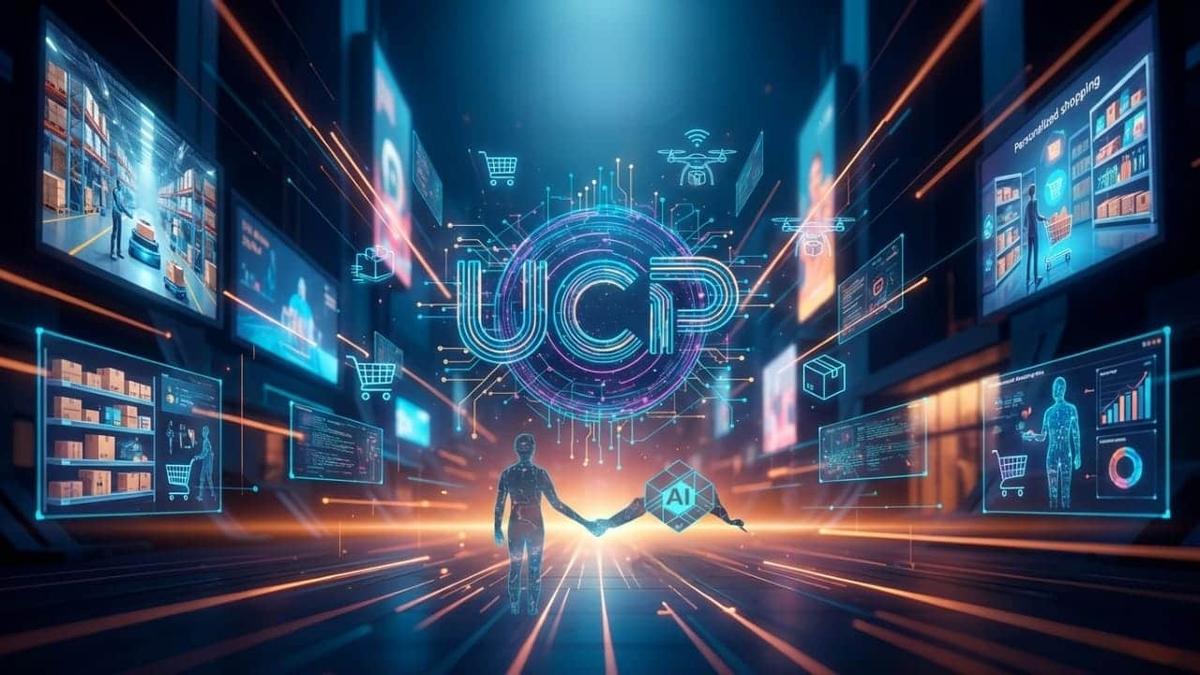
What Is UCP? The Era of AI-Powered Shopping
Automatically translated
 Writer
Digital commerce has long been an interaction space built on human-centered practices of searching, comparing, and deciding. As AI-driven systems become directly involved in decision-making, this structure is undergoing a break in which the question is no longer only how fast a purchase happens but who makes the decision. The Universal Commerce Protocol (UCP), developed under Google's leadership, turns shopping from a technical sequence of transactions into an autonomous decision structure in which AI agents perceive and complete the purchase.
Universal Commerce Protocol (UCP) and the Ontological Transformation of Commerce
Digital commerce is moving toward an autonomous phase in which AI agents take the initiative, beyond the limits of the traditional 'click and buy' paradigm. At the center of this transformation, UCP puts the question of who makes the decision, rather than the technical infrastructure, at the core of commerce. With this development, shopping stops being a linear process based on a person's conscious preference. In line with the agentic commerce concept, it evolves into a multi-layered structure in which AI agents are positioned as entities that perceive, compare, and act.
UCP Merchant Profile and the New Merchant Identity
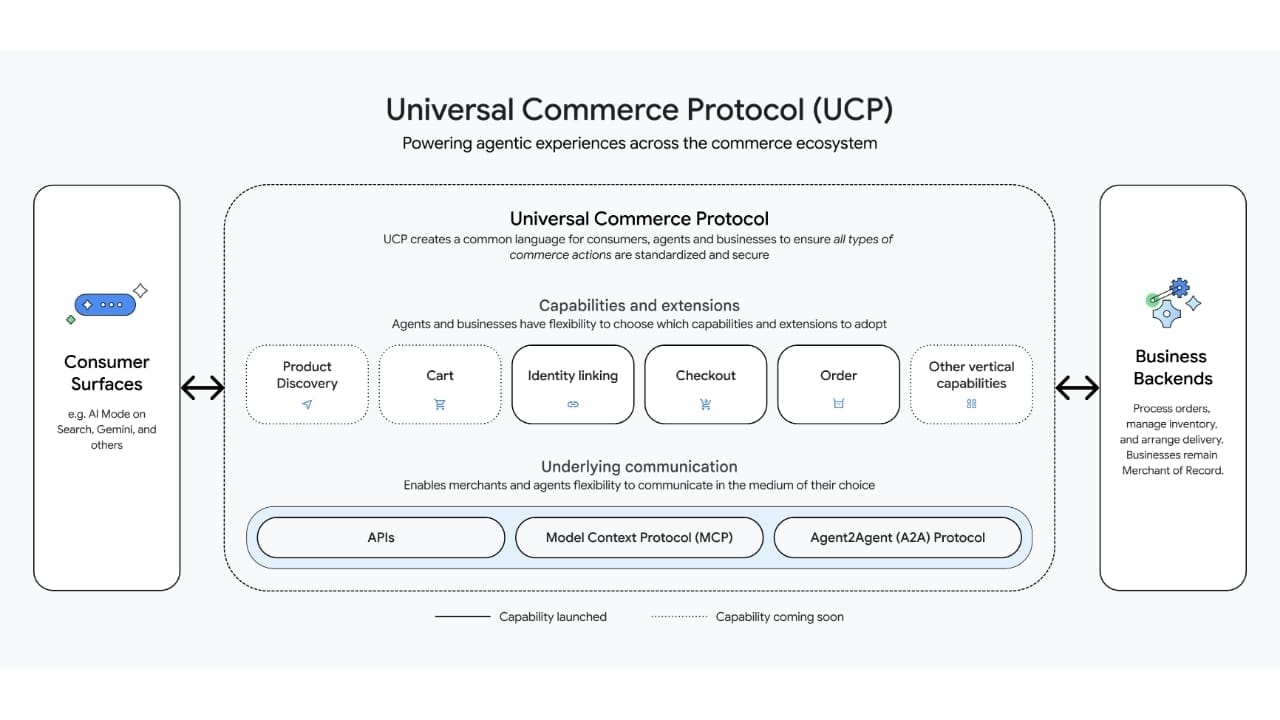
With UCP, merchant identity goes beyond being a digital storefront that only offers products. It becomes a readable entity that can build a direct relationship with AI agents. UCP Merchant Profile offers a new representation space in which the merchant declares its commercial capacity, transaction capability, and purchasing conditions at the machine level. This positions it as one of the key factors in how discoverable a merchant is within the agentic commerce ecosystem.
What Is the UCP Merchant Profile?
In this new commerce order, merchants are no longer passive actors that merely offer products. The UCP Merchant Profile defines the merchant as a commercial entity that AI agents can read, verify, and interact with. Google positions this profile as a basic requirement for AI agents that will complete purchases without the user visiting a website.
A Structure Beyond the Product Schema
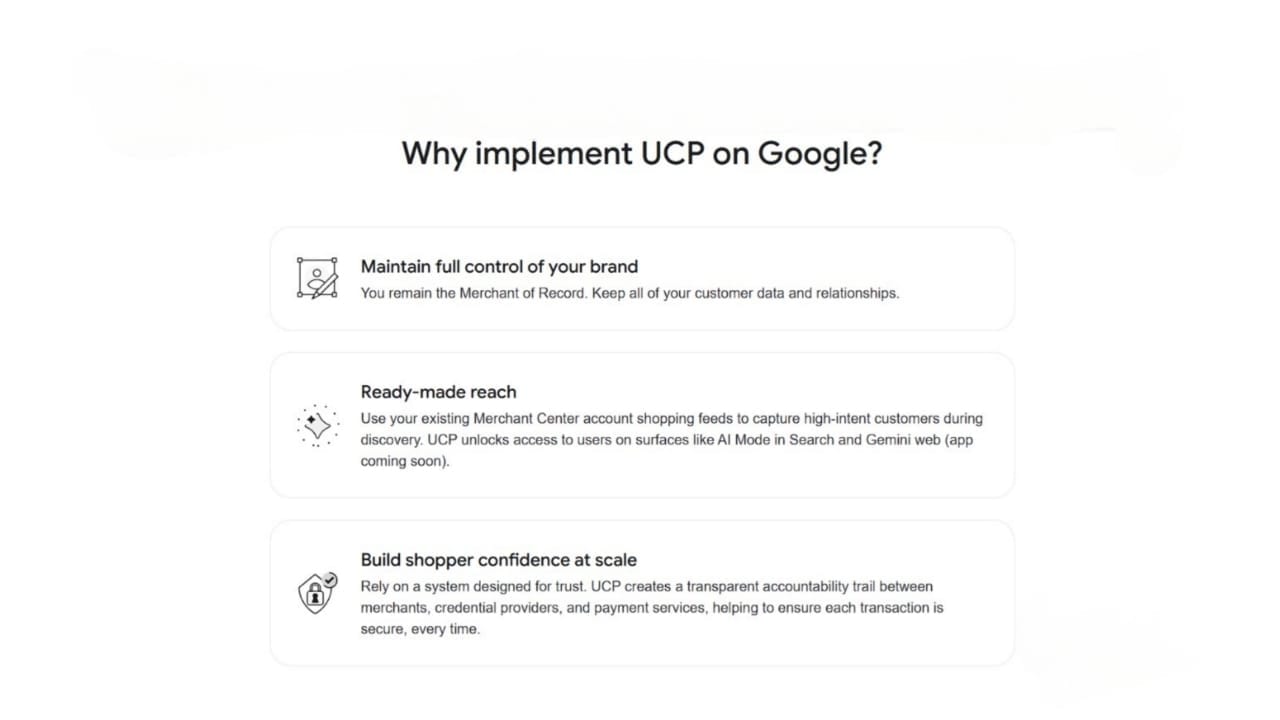
Classic Product schemas are sufficient for human-centered search and discovery, but they fall short in the agentic commerce era. The UCP Merchant Profile allows a merchant to declare at the protocol level not only what it sells but also how it can be purchased.
Why Is Machine-Readable Data Critical?
Machine-readable data makes information such as price, stock status, delivery options, and return policies contextual and verifiable for AI systems. AI no longer 'interprets' a product; it confirms it at the protocol level. This way, Google can evaluate purchasability signals directly without redirecting the user to a website.
The Era of Readability
In this new order, visibility becomes secondary while machine readability emerges as the core determining factor. The semantic depth of the technical infrastructure will directly affect brands' positions in the competitive market after 2026. This technical readability makes it possible for AI agents to engage with commercial systems not only through data exchange but also directly at the level of action.
Agentic Commerce: Gemini and Google AI Mode Shopping
Agentic commerce describes a new form of interaction in which shopping is partly detached from direct human participation and AI agents make goal-oriented decisions. Gemini and Google AI Mode shopping integrations make this transformation concrete by combining discovery, comparison, and purchase into a single autonomous flow. Commerce thus evolves from a search-based practice into a goal-based field of action.
The Autonomous Buying Experience
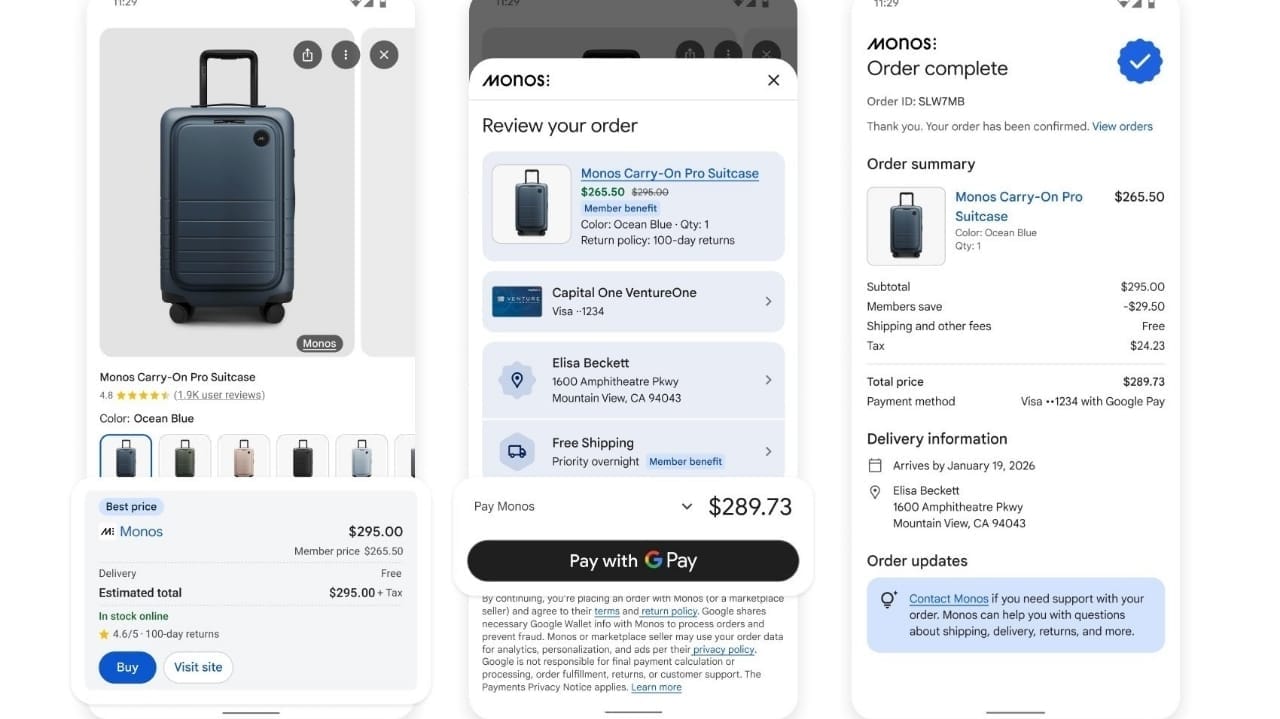
Gemini shopping integration and Google AI Mode shopping remove the gap between discovery and purchase. Users no longer search for products; they define their goal. The AI agent then selects the safest, most compatible, and most accessible option among thousands of merchants and completes the purchase.
The Merchant's New Role
At this point, being present on the platform is no longer enough for merchants. Protocol-compliant structures that can interact with the system dynamically become the preferred ones.
Agent Handshake and the Future of Checkout Architectures: Human or Agent?
As of 2026, Google is expected to be able to tell within milliseconds whether the entity performing the 'Buy' action is a human or an AI agent. This makes it necessary to radically redesign checkout architectures.
Secure and Controlled Collaboration
Traditional bot protections may become one of the biggest obstacles to this transformation in the new era. For this reason, Agent Handshake protocols are critically important. They are exempt from bot protections but ensure security through cryptographic verification. This structure offers controlled access to trusted AI agents while preserving system integrity.
A Concrete Scenario: The Moment the Agent Buys
Through Google AI Mode, the user defines the goal of 'a black pair of shoes that can be delivered within the next 48 hours, with low return risk and a high price-performance balance.' From this point on, the traditional search and comparison process is bypassed. The AI agent scans UCP-compliant merchant profiles and verifies signals such as stock accuracy, delivery commitments, return policies, and payment security at the protocol level. The purchase is completed without a person visiting any product page, contacting the merchant, or giving manual approval. The decision starts with the user's intent, but the evaluation and the action are carried out entirely by the AI agent.
A Future in Which Buying Goes Quiet
The Universal Commerce Protocol is much more than a technical update. It redefines the language, the subject, and the sense of time in commerce. This new order, which addresses machine perception more than human sight, makes the act of purchase quieter, faster, and more autonomous. In this context, compliance becomes not an optional strategy but an existential necessity for merchants.
WriterBiyometrik Robot Maya Kimdir ve Nedir?


TEKNOFEST 2025 Hepsiburada AI Adres Hackathonu


