Biometric Robot Maya: What Is It?
Automatically translated
 Writer
Considered one of the peak points reached by biometric robot technology today, Maya is more than an advanced engineering product. It is the closest point of contact between artificial intelligence and biological reality. The emergence of Maya is fundamentally shaking the long-dominant perception in robotics of a "cold, mechanical and unresponsive machine," and is redefining the boundary between humans and machines both technically and emotionally.
Future Robot Technology: Perception and Embodied Response
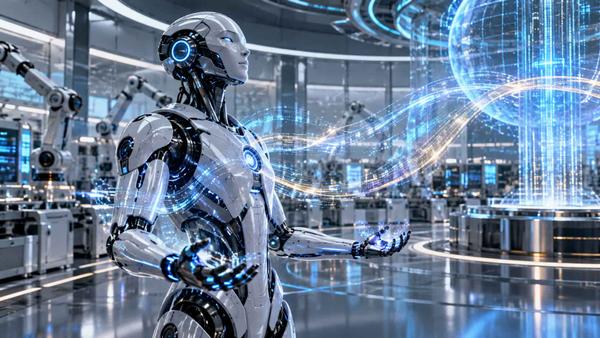
Future robot technologies are being shaped around embodied approaches that treat perception and action processes within a holistic structure. In this framework, integrating sensory inputs simultaneously with behavioral responses moves robots' interaction with their environment beyond mere data processing. The embodied response model stands out as a fundamental paradigm that provides contextual alignment and continuity in human-machine interaction.
Maya's Technological Infrastructure and System Architecture
What sets Maya apart from its rivals most fundamentally is that it is designed around the philosophy of "Embodied AI." As the leader of the biometric-sensor robot segment, Maya forms a physical bond with its surroundings thanks to thousands of heat and pressure sensors hidden beneath its synthetic skin.
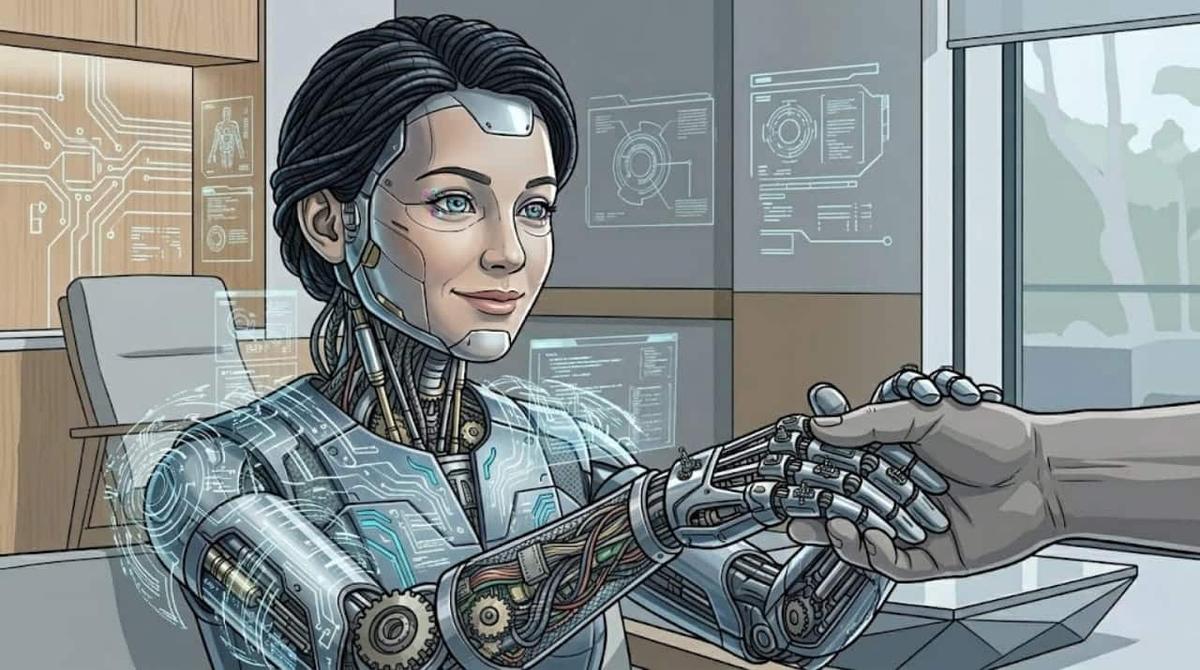
Maya's physical communication abilities push the limits of what a machine can do. By analyzing the pressure applied during a handshake, it can gauge the stress level of the person in front of it. Moreover, its body temperature, kept in the 32–36 °C range, evokes the sense that when you touch it, you are touching a living being. These features make Maya an indispensable aid in areas requiring empathy, such as elderly care and rehabilitation.

While many AI systems in robotics still operate on abstract data-driven processing models, Maya goes beyond this approach and is designed with the embodied AI paradigm. Thanks to this approach, the robot stops being merely a structure that analyzes its surroundings and becomes an entity that perceives the physical world through the senses and reflects that perception in behavior.
Standing about 1.65 meters tall and weighing 32 kilograms, Maya is designed in a form close to the bodily proportions of an adult human. In this respect, Maya is a concrete example that takes the concept of a robot that feels like a human from theory into practice.
Maya's technological backbone is built on a holistic perception system that can distinguish not only the mere presence of physical contact but also its qualitative and contextual meaning. Thanks to this structure, the robot produces responses that vary according to the intensity, duration and direction of contact, lifting the interaction from a purely mechanical reaction to a level of behavior that can be interpreted.

Ability to Respond Emotionally
Maya's interaction capacity rests less on the technical specifications of physical contact than on its ability to decode the communicative value of that contact. Rather than treating an interaction as a simple data input, the system interprets it as a form of contextual relationship and, in line with that interpretation, produces an emotional tone and behavioral response. The resulting response thus stops being an automatic reply and creates a sense of mutual communication.
Physical Communication Abilities
Maya does not merely grasp an object; it also "feels" the object's weight and fragility. This makes the robot a potential aid particularly in trust-based fields such as healthcare, rehabilitation and elderly care. Among biometric-sensor robots, what makes Maya distinctive is this level of sensitivity.
Visual Communication and the Art of Facial Expression
Starting from the fact that most of human communication takes place without words, Maya's design places visual communication at its center. The robot's facial expression capacity keeps it from being limited to speech and elevates it to the status of an entity that expresses itself.

Maya's Visual Communication Parameters
Eye Contact and Ocular Tracking:
Maya tracks the iris movements of the person in front of it, displaying active listening behavior. This quality blurs perceptual boundaries in human-machine interaction, creating a subjective sense of reciprocity in the user.
Smile and Social Approval:
The smile produced by micro-motor systems is not limited to lip movement. It has a multilayered facial structure that includes the muscles around the eyes. In this way, facial expressions are perceived not as isolated gestures but as a holistic expression.
Blink Dynamics:
The blink frequency, adjusted according to speech tempo and ambient light, is a critical element that keeps Maya from appearing dull and artificial.
Emotional Synchronization:
Maya can adapt its own expressions according to the facial expression of the person in front of it. It may interpret a frown as confusion or anger and shape its facial expression into a calming form.
The Uncanny Valley and 92% Realistic Walking
Among contemporary robotics work, Maya is regarded as one of the most advanced biomimetic systems developed to model human movement. Based on international biometric simulation test standards, Maya is shown to be able to imitate human walking kinematics with 92% mathematical accuracy. This figure is an important indicator that quantitatively describes Maya's movement performance and forms a comparable reference point in robotics literature.
Structural Harmony in Movement Kinematics
The fluidity of Maya's gait is achieved through advanced hydraulic systems integrated into its knee and ankle joints. These systems rely on movement models that show a high degree of mathematical consistency with human joint motion. The load transfer and balance shifts that occur during walking are damped in a manner similar to the principles of biological elasticity, supporting a natural perception of movement. This approach places Maya's mechanical performance among the applications cited as examples in the field of biomimetic robotics.

Perceptual Threshold and Interaction Design
When human likeness reaches a certain level, it raises a threshold zone that perception science calls the "Uncanny Valley." Maya's 92% likeness rate sits close to this perceptual boundary. The system design adopts a holistic approach that emphasizes emotional expression and interaction dimensions to balance the perceptual tension that may arise in this delicate region.
Rich facial expression capacity, empathy-based response algorithms and contextual communication structures are among the core elements that support Maya's movement realism through social interaction. These components strengthen the user's sense of trust, continuity and subjective closeness in the experience.
This integrated structure makes Maya an important research and application area for the future of human–machine interaction.
Technology, Society and a New Paradigm
Biometric AI Maya is not just an advanced robot. It is a threshold at which human emotion, movement and perception are renegotiated with a machine. Its ability to respond emotionally, communicate physically and interact visually with advanced capabilities moves the understanding of future robot technology in a human-centered direction.
This development also raises ethical, psychological and social questions. While Maya makes the idea of a robot that feels like a human possible, it also prompts us to question where the limits of this resemblance should be drawn. The distance between humans and machines has never been so short, so meaningful and so contested. Perhaps the real question is not how much machines have become human, but how ready humans are for a being that resembles them so much.
WriterGoogle Project Genie Nedir? Yapay Zeka ile Oyun Dönemi


UCP Nedir? Yapay Zeka Destekli Alışveriş Dönemi